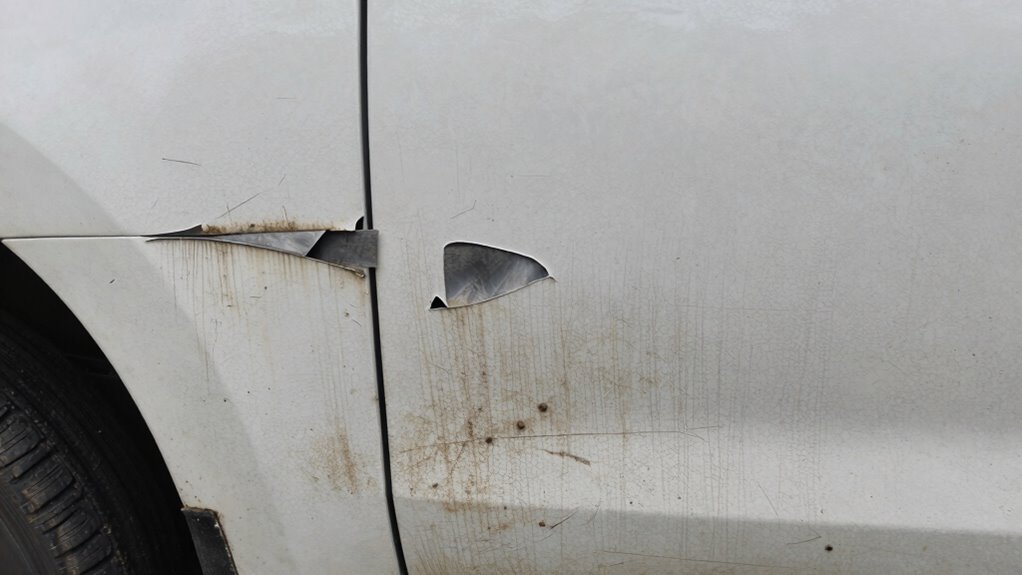

When you notice sidewall damage, first check for bulges, cuts exposing cords, or deformations, as these suggest internal issues. Superficial surface damage might be okay to continue, but any deep cuts, bulges, or damage reaching reinforcement layers mean you should stop driving immediately. Keep an eye on age and overall wear, and be cautious if the damage worsens. Want to know the key signs to decide if you should “send it” or “stop”? Keep exploring to learn more.

Get business pricing on garage and car supplies
- Business-only prices and quantity discounts
- Tax-exempt purchasing
- Multiple users, one account, clear invoices
Key Takeaways
- Assess whether the damage is superficial or involves bulges, cuts, or deformation indicating internal damage.
- Determine if reinforcement layers are exposed or compromised, increasing failure risk.
- Consider tire age and overall wear, as older or worn tires are less tolerant of damage.
- Limit driving distance and speed if damage is present; stop immediately if reinforcement is exposed.
- When in doubt, prioritize safety by stopping and replacing the tire rather than risking a failure.
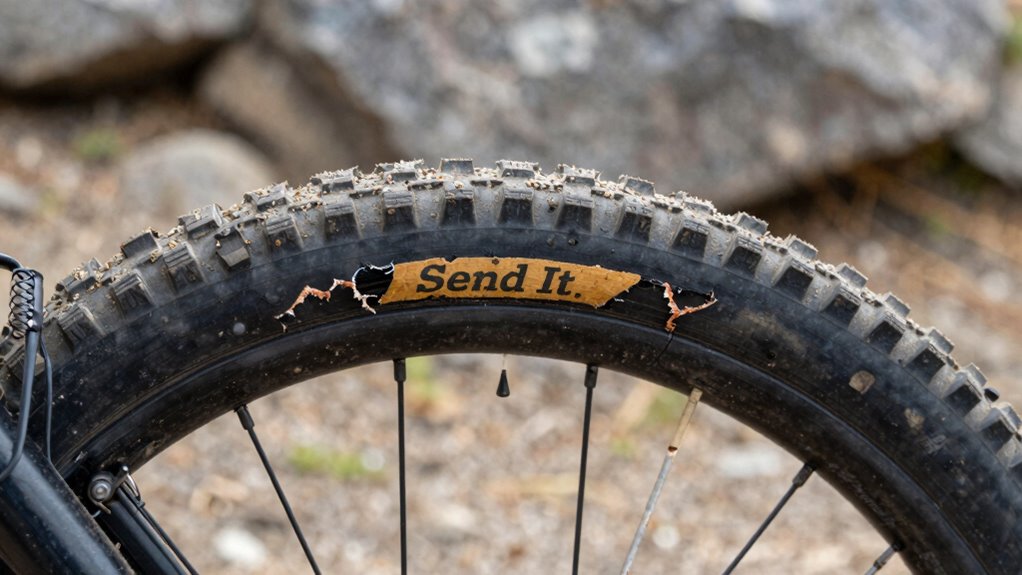
When you spot sidewall damage on your tire, the decision to “send it” or “stop” isn’t always clear-cut. The sidewall is a critical part of your tire’s structure, and damage here can be tricky to evaluate. The sidewall contains layers of tire reinforcement designed to handle stress, and any compromise can weaken the tire’s integrity. If the damage appears superficial and confined to the rubber surface, it might seem minor. But remember, the tire’s sidewall contains layers of tire reinforcement designed to handle stress, and any compromise can weaken the tire’s integrity. If you see a bulge or a noticeable deformation, that indicates a potential internal damage, and continuing to drive could lead to a blowout.
Inspect sidewall damage carefully—look for bulges or cuts, as internal damage risks blowouts and requires prompt attention.
Assess whether the damage has penetrated the tire’s internal structure. Sometimes, a small cut on the surface doesn’t necessarily mean the tire is unsafe—if the tire reinforcement layers are intact behind the damage, it might still be rideable for a short distance. However, if the damage exposes the cord or fabric reinforcement, that’s a clear sign to stop and replace the tire. When performing this damage assessment, consider whether the damage is fresh or has been worsened by driving. Heat and continuous stress can exacerbate the problem, making the tire more prone to failure. Understanding tire reinforcement behind the damage can help you make smarter decisions. Recognizing the significance of reinforcement layers is essential for understanding how damage impacts tire safety.
Deciding whether to “send it” or “stop” also depends on your tire’s age and overall condition. Even if the damage seems minor, an older tire with signs of wear might not handle the stress of continued use. You should also evaluate the tire reinforcement’s role; these layers are crucial for maintaining the tire’s shape and strength. If the reinforcement has been compromised, the risk of a sudden failure increases dramatically. When in doubt, err on the side of caution. Remember, a quick inspection isn’t enough—consider consulting a professional for a more detailed damage assessment. Additionally, understanding the tire reinforcement behind the damage can help you make smarter decisions.
It’s also worth noting that the quality of the rubber and overall construction can influence how well a tire withstands damage, making professional evaluation even more critical. Proper inspection techniques can greatly improve your ability to determine the severity of sidewall damage. If you decide to keep driving, limit your trip and avoid high speeds or heavy loads. Keep an eye on the sidewall for any new bulges, cracks, or changes. But if there’s any doubt about the tire’s safety, it’s best to stop and replace it. Sidewall damage isn’t something to take lightly, and understanding the tire reinforcement behind the damage can help you make smarter decisions. It’s always better to replace a compromised tire than risk your safety on the road.
As an affiliate, we earn on qualifying purchases.
Frequently Asked Questions
How Can I Prevent Sidewall Damage During Skiing or Snowboarding?
To prevent sidewall damage, you should carefully maintain your ski edges and avoid hitting rocks or hard objects. Keep your ski or snowboard core protected by staying on groomed trails and avoiding icy or rough terrain. Regularly inspect your gear for any signs of wear, and make sure your bindings are properly adjusted. By controlling your speed and line, you reduce impact, helping preserve the sidewall and extend your equipment’s lifespan.
What Are the Long-Term Effects of Ignoring Minor Sidewall Damage?
Ignoring minor sidewall damage can lead to long-term issues like increased core exposure and weakened structural integrity. The sidewall material may deteriorate further, causing cracks or separation. Damage assessment helps you decide whether to repair or replace your ski or snowboard. If left unaddressed, minor damage can escalate, reducing performance, increasing risk of failure, and shortening your equipment’s lifespan, ultimately affecting your safety on the slopes.
Are There Specific Tools Recommended for Inspecting Sidewall Integrity?
If you’re inspecting sidewall integrity, think of it as your modern toolkit meets old-school detective work. Use a flashlight and a magnifying glass to spot cracks or bulges in the sidewall materials. An electronic tire gauge with a dedicated inspection technique can help detect subtle damages. For thorough checks, a tread depth gauge and a sidewall probe are invaluable, ensuring you catch issues before they become serious.
When Should I Seek Professional Repair for Sidewall Issues?
You should seek professional repair when your sidewall inspection reveals deep cuts, bulges, or persistent cracks that won’t improve with basic repair techniques. If damage appears extensive or compromises tire integrity, don’t risk it—consult a specialist. They can perform thorough assessments and provide advanced repair techniques. Trust their expertise to guarantee your safety and prevent further damage, especially when visual signs indicate the need for expert intervention.
How Does Sidewall Damage Impact Overall Ski or Snowboard Performance?
Sidewall damage can considerably impact your ski or snowboard’s performance by compromising sidewall reinforcement and reducing material durability. You might notice less stability, increased vibrations, or difficulty turning. Damage weakens the integrity of your gear, making it less responsive and more prone to further issues. To maintain ideal performance, it’s essential to address sidewall damage promptly, ensuring your equipment stays durable and reliably supports your ride.
tire sidewall damage inspection tool
As an affiliate, we earn on qualifying purchases.
As an affiliate, we earn on qualifying purchases.
Conclusion
Next time you spot sidewall damage, remember there’s no one-size-fits-all answer. Some riders swear by risking it for the thrill, trusting minor damage won’t fail them. Others play it safe, believing that even small cracks can lead to big problems. The truth? It’s all about evaluating the damage carefully—sometimes, “sending it” pays off, but other times, stopping saves you from a costly mistake. Trust your judgment, but stay cautious. Your ride’s safety depends on it.
As an affiliate, we earn on qualifying purchases.
tire reinforcement layer inspection
As an affiliate, we earn on qualifying purchases.
As an affiliate, we earn on qualifying purchases.
Evergreen bestsellers Picks
bestsellers
As an affiliate, we earn on qualifying purchases.