To prevent corrosion in marine-style fuse blocks, choose materials like stainless steel or marine-grade alloys that resist rust. Apply protective coatings such as epoxy or marine-grade paint, and guarantee fuse blocks are installed in sealed enclosures away from saltwater exposure. Regularly inspect, clean, and recoat components, while using dielectric grease on connections. Understanding environmental factors helps you adapt protective measures, ensuring longevity and safety—keep going to discover more ways to safeguard your equipment effectively.
Key Takeaways
- Use fuse blocks made from corrosion-resistant materials like stainless steel or marine-grade alloys.
- Apply marine-grade coatings such as epoxy resins or conformal coatings regularly.
- Mount fuse blocks in well-ventilated, sealed enclosures to prevent moisture ingress.
- Keep connections tight, clean, and coated with dielectric grease to prevent corrosion buildup.
- Perform regular inspections and maintenance to identify and address early signs of corrosion.
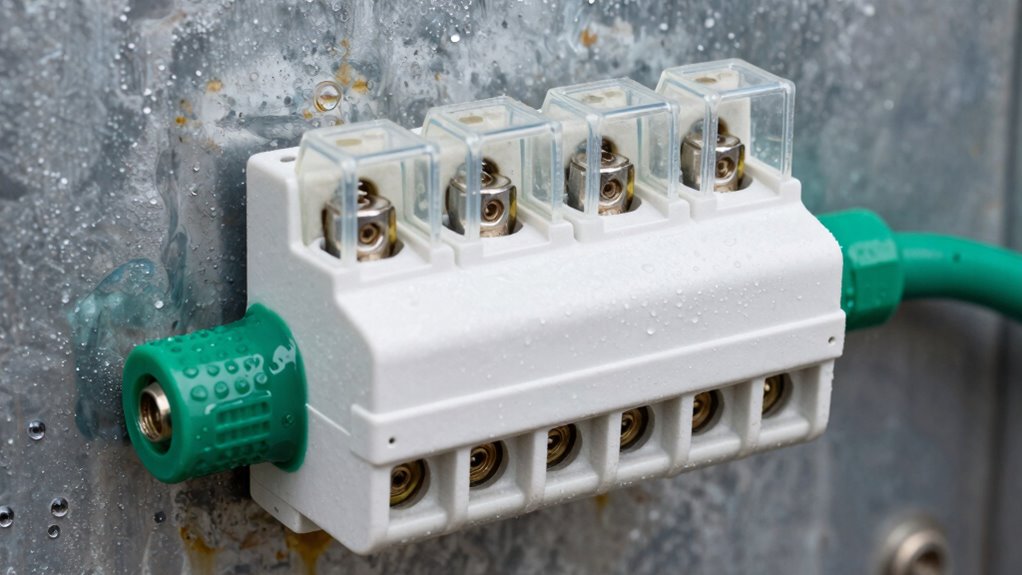
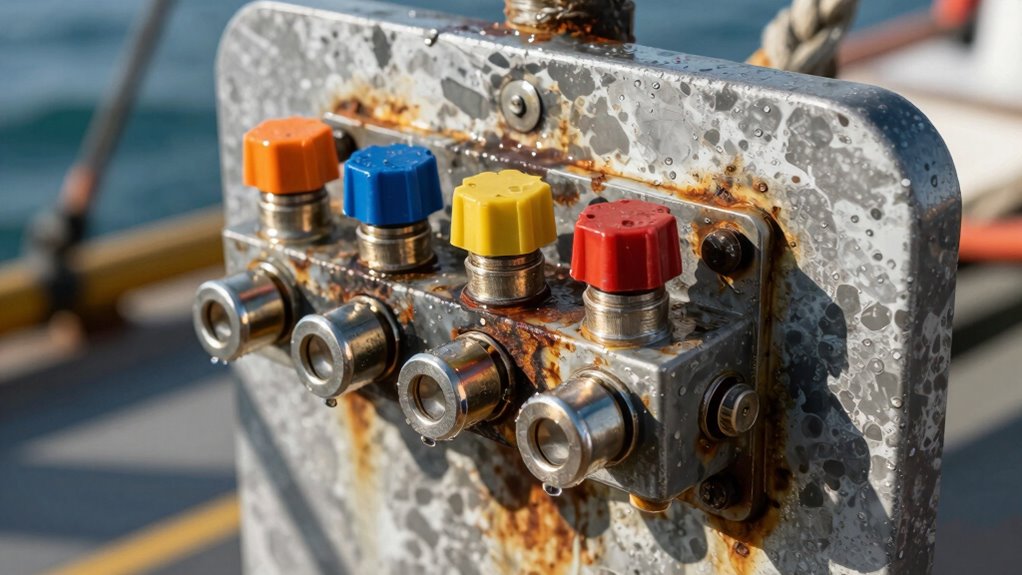
Corrosion in marine-style fuse blocks can quickly compromise electrical safety and performance, especially in harsh marine environments. Saltwater, humidity, and constant exposure to moisture accelerate corrosion, which can lead to poor connections, electrical failures, and even safety hazards. To combat this, selecting corrosion-resistant materials is essential. Look for fuse blocks made from stainless steel, marine-grade aluminum, or other alloys specifically engineered to withstand corrosive elements. These materials naturally resist rust and degradation, ensuring your fuse blocks stay reliable over time.
In addition to choosing the right materials, applying protective coatings can substantially extend the lifespan of your fuse blocks. Coatings like marine-grade paint, epoxy resins, or specialized conformal coatings create an insulating barrier that prevents moisture and salt from reaching the metal surfaces. These coatings are easy to apply and serve as an extra line of defense, especially in environments where exposure to the elements is unavoidable. Regularly inspecting and reapplying coatings as needed helps maintain their protective properties and prevents corrosion from taking hold.
Proper installation also plays a crucial role in preventing corrosion. Make sure your fuse blocks are mounted in areas with good ventilation to minimize moisture buildup. Use sealed or waterproof enclosures when possible, especially in saltwater environments, to keep out water and debris. When wiring, ensure connections are tight and free of corrosion, since loose or corroded terminals can trap moisture and accelerate deterioration. Using dielectric grease on connections adds an additional layer of protection, preventing moisture ingress and corrosion formation. Additionally, understanding the corrosion mechanisms that affect marine electrical components can help you select the most effective preventative measures. Incorporating corrosion-resistant techniques into your setup can further enhance durability and performance. Regular maintenance, including cleaning and inspecting for early signs of damage, is essential for ongoing protection, especially in marine environments where conditions can change rapidly. Recognizing how environmental factors influence corrosion can help you adapt your protective strategies more effectively.

Blue Sea Systems ST Blade Fuse Block 12 Circuit with Ground and Cover, 100 Amps, 5026
- Number of Circuits: 12 circuits with ground support
- Maximum Capacity: Supports up to 100 amps total
- Fuse Compatibility: Supports 30 amps per circuit
As an affiliate, we earn on qualifying purchases.
As an affiliate, we earn on qualifying purchases.
Frequently Asked Questions
What Are the Common Signs of Corrosion in Fuse Blocks?
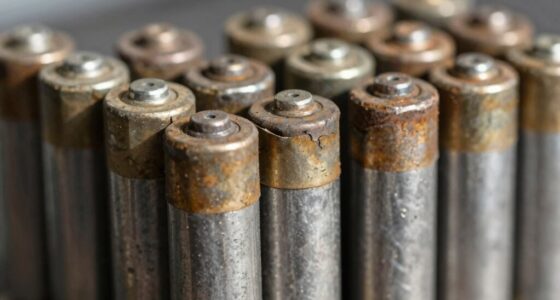
You’ll notice corrosion in fuse blocks through signs like rust, discoloration, or a powdery residue on metal parts. These signs compromise electrical insulation and metal protection, leading to poor connections or failure. Keep an eye out for corrosion around terminals and contacts, which can cause overheating or short circuits. Regular inspections and maintenance help detect early corrosion, ensuring your fuse block stays protected and functions reliably.
Can I Use Regular Household Cleaners to Remove Corrosion?
You shouldn’t rely on household cleaners for corrosion removal. They might seem tempting, but they often contain chemicals that can worsen corrosion or damage your fuse block. Instead, use specialized marine or electrical contact cleaners designed to safely remove corrosion without harming components. Ignoring this risk could lead to electrical failures or safety hazards, so always select the right product for corrosion removal to protect your equipment and ensure reliable performance.
How Often Should Fuse Blocks Be Inspected for Corrosion?
You should inspect fuse blocks for corrosion at least every six months, especially in harsh marine environments. During inspections, look for signs of rust or buildup and consider material upgrades or applying protective coatings to prevent future corrosion. Regular checks help catch issues early, allowing you to reapply protective coatings or upgrade materials as needed, ensuring your fuse blocks stay reliable and corrosion-free longer.
Are There Specific Brands Recommended for Corrosion-Resistant Fuse Blocks?
Did you know that stainless steel fuse blocks can last up to 10 times longer than traditional plastic ones? For corrosion-resistant fuse blocks, opt for brands like Blue Sea Systems and Blue Sea Systems, known for their durability. Material options like marine-grade stainless steel or thermoplastic with corrosion inhibitors are excellent choices. These brands and materials help guarantee your fuse blocks withstand harsh marine environments effectively.
What Are the Environmental Conditions That Accelerate Fuse Block Corrosion?
Environmental conditions like high humidity, saltwater exposure, and temperature fluctuations accelerate fuse block corrosion. You can combat this by applying marine-grade coatings and creating protective barriers around your fuse blocks. These measures prevent moisture and salt from reaching the metal parts, reducing corrosion risk. Ensuring proper sealing and regularly inspecting your fuse blocks also helps maintain their integrity in harsh environments.
Blue Sea Systems ST Blade Fuse Block 12 Circuit with Ground and Cover, 100 Amps, 5026
- Number of Circuits: 12 circuits with ground support
- Maximum Capacity: Supports up to 100 amps total
- Fuse Compatibility: Supports 30 amps per circuit
As an affiliate, we earn on qualifying purchases.
As an affiliate, we earn on qualifying purchases.
Conclusion
To keep your marine fuse blocks happily sailing smooth, a little preventative care goes a long way. Regularly inspecting and gently cleaning the contacts helps ward off the sneaky effects of moisture and salt. Applying a protective coating acts like a friendly shield, ensuring your connections stay strong and reliable. Think of it as giving your fuse blocks a gentle hug—keeping them cozy and corrosion-free, so your adventures remain trouble-free and full of confidence.
Blue Sea Systems ST Blade Fuse Block 12 Circuit with Ground and Cover, 100 Amps, 5026
- Number of Circuits: 12 circuits with ground support
- Maximum Capacity: Supports up to 100 amps total
- Fuse Compatibility: Supports 30 amps per circuit
As an affiliate, we earn on qualifying purchases.
As an affiliate, we earn on qualifying purchases.

BTAS Dielectric Grease for Electrical Connectors Automotive Spark Plug Boot Battery Terminal Marine Dialectical Electronics Wiring Die Electric Contact Silicone Dialectric Grease 1 oz 1 Pcs
- Secure Electrical Connections: Seals, lubricates, and insulates connectors
- Anti-Corrosion Protection: Resists oxidation and corrosion over time
- Suitable for Multiple Surfaces: Safe on rubber, plastic, and ceramic
As an affiliate, we earn on qualifying purchases.
As an affiliate, we earn on qualifying purchases.