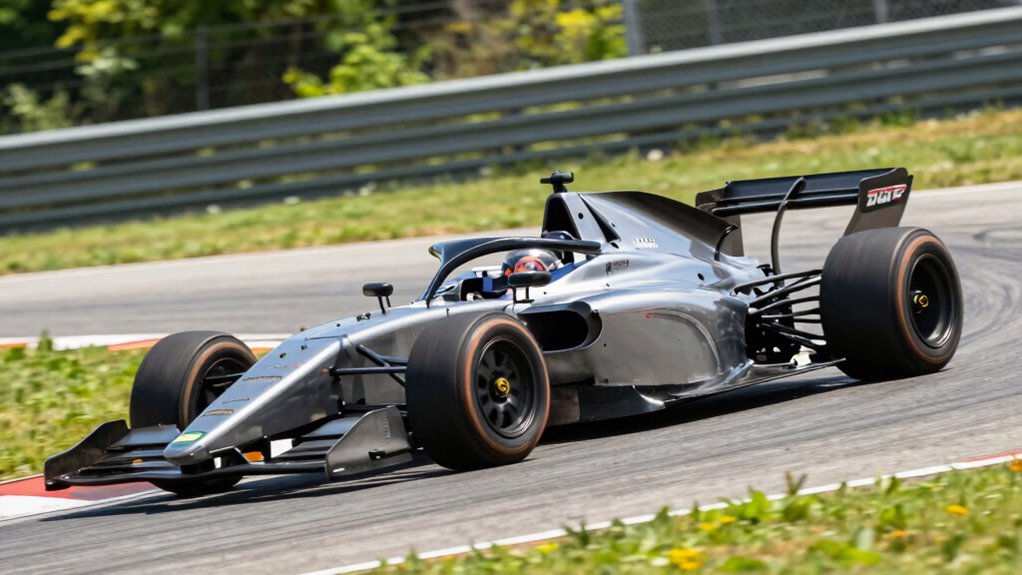

Your ride height greatly affects your cornering speed by influencing aerodynamics and tire contact with the road. Lowering your car reduces body roll, increases downforce, and improves grip, allowing you to take turns faster and more stably. However, going too low can cause suspension issues and reduce traction if the tires lose contact. Finding the right balance is key. Keep exploring to discover how fine-tuning your ride height can maximize your cornering performance even further.

Get business pricing on garage and car supplies
- Business-only prices and quantity discounts
- Tax-exempt purchasing
- Multiple users, one account, clear invoices
Key Takeaways
- Lower ride height increases downforce, improving tire grip and enabling higher cornering speeds.
- Proper ride height enhances aero balance, reducing body roll and maintaining stability through turns.
- Excessively low ride height risks suspension contact, negatively impacting handling and cornering performance.
- Higher ride height decreases downforce and increases aerodynamic drag, reducing cornering stability.
- Correct ride height ensures even suspension compression, maximizing tire contact and grip during cornering.
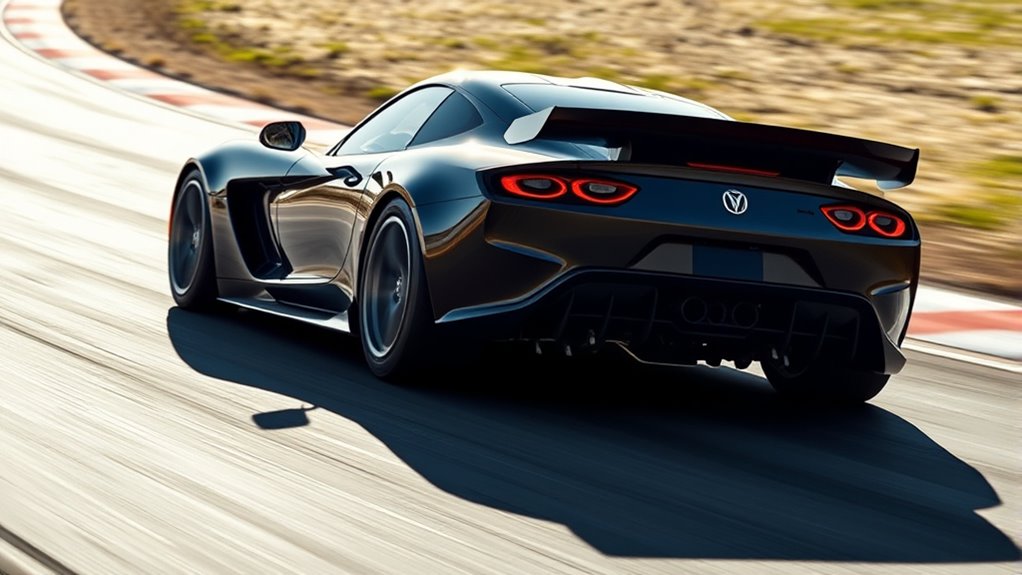
Ride height plays a pivotal role in determining how fast you can corner a vehicle. When you adjust your ride height, you’re essentially manipulating the car’s aero balance and tire grip, both of which are critical in cornering performance. Lowering the ride height generally improves aero balance by reducing the vehicle’s center of gravity, helping it stay more stable through turns. This lower stance minimizes body roll and enhances downforce, which presses your tires more firmly against the road. As a result, tire grip increases, allowing you to take corners at higher speeds with greater confidence. Tire contact patch is directly affected by both ride height and Tire contact patch, emphasizing the importance of proper adjustment for optimal cornering.
However, it’s not just about going lower. If you set your ride height too low, you risk compromising suspension travel and risking contact with the road surface or curbs, especially on uneven tracks. This can lead to unpredictable handling and reduce tire grip if the tires are forced into an unnatural shape or if the suspension becomes overly stiff. Conversely, a ride height that’s too high creates more aerodynamic drag and less downforce, which diminishes tire grip. This results in a less stable vehicle when cornering, limiting your ability to carry speed through turns.
Finding the ideal ride height involves balancing aero effects with tire contact patch and grip. When you get this balance right, you maximize the aero balance, directing airflow to generate enough downforce without creating excessive drag. This fine-tuning allows your tires to maintain maximum grip, especially during high-speed cornering. When approaching a turn, a well-adjusted ride height ensures your vehicle remains planted and responsive, letting you push the limits comfortably. Proper ride height adjustment can also help prevent uneven tire wear and prolong component life, making your setup both effective and durable.
Your choice of ride height also influences how your car’s suspension reacts under load. A properly set ride height ensures that the suspension compresses evenly during cornering, distributing forces across the tires efficiently. This not only boosts tire grip but also improves overall handling feedback, giving you better control and more precise steering input. If the ride height is off, you’ll notice increased body roll or understeer, making it harder to maintain speed and control through sharp turns.
In fundamentally, your ride height is a key factor in optimizing both aero balance and tire grip. Adjusting it properly means you can access higher cornering speeds, maintaining stability and control. It’s about finding that sweet spot where your vehicle’s aerodynamics work harmoniously with its mechanical grip, enabling you to carve through corners with confidence and consistency. Whether you’re racing or just enjoying spirited driving, understanding how ride height influences these elements will help you achieve better performance every time you hit the road or track.
As an affiliate, we earn on qualifying purchases.
Frequently Asked Questions
How Does Ride Height Impact Tire Wear During Cornering?
Lower ride height improves tire contact during cornering, but if set too low, it can cause uneven wear patterns. You might notice increased inner tire wear or scalloping, which indicates uneven pressure distribution. Maintaining a suitable ride height guarantees consistent tire contact, reducing abnormal wear and extending tire life. Regularly check and adjust your ride height to enhance tire wear patterns and maximize grip during sharp turns.
Can Adjusting Ride Height Improve Overall Vehicle Stability?
Adjusting your ride height can dramatically boost your vehicle’s stability, making it as steady as a mountain. Lowering it reduces aerodynamic drag and lowers your center of gravity, which helps you stay glued to the road through corners. Just be careful—going too low may cause scraping or handling issues. Find the perfect balance to enhance overall stability, giving you confidence and control in every turn.
What Ride Height Is Optimal for Different Types of Racing?
For different types of racing, you should set your ride height based on aero balance and driver positioning. In sprint racing, a lower ride height improves aerodynamics and cornering, while in endurance racing, a slightly higher stance offers better stability and comfort. Adjusting ride height influences how your car interacts with the track, so tailor it to your specific race conditions, ensuring ideal handling and safety.
How Does Suspension Setup Interact With Ride Height in Cornering?
Suspension setup and ride height work together to shape your cornering. When you lower ride height, you reduce ground clearance, increasing aerodynamic drag but enhancing stability. Your suspension’s stiffness supports this, controlling body roll and improving grip. Softer suspensions absorb bumps, while stiffer setups resist body movements. Adjusting both guarantees your car maintains ideal contact with the road, maximizing grip, minimizing aero drag, and boosting cornering confidence.
Are There Disadvantages to Lowering Ride Height Too Much?
Lowering your ride height too much can reduce ground clearance, increasing the risk of scraping and damaging the undercarriage on uneven surfaces. It also raises aerodynamic drag, which can decrease top speed and fuel efficiency. Additionally, excessive lowering may compromise suspension travel, leading to a harsher ride and poorer handling. You should find a balanced ride height that enhances cornering without sacrificing ground clearance or increasing drag unnecessarily.
performance coilover suspension kit
As an affiliate, we earn on qualifying purchases.
As an affiliate, we earn on qualifying purchases.
Conclusion
Think of your car as a tightrope walker balancing on a wire. Lower your ride height, and you’re closer to the wire, giving you better control and faster, sharper turns. Raise it too high, and you risk wobbling and losing balance. Just like that daring performer, finding the perfect height keeps you steady and confident through every twist and turn, letting you master the dance of cornering with grace and speed.
As an affiliate, we earn on qualifying purchases.
sport suspension lowering springs
As an affiliate, we earn on qualifying purchases.
As an affiliate, we earn on qualifying purchases.
Fall Picks
fall essentials
As an affiliate, we earn on qualifying purchases.