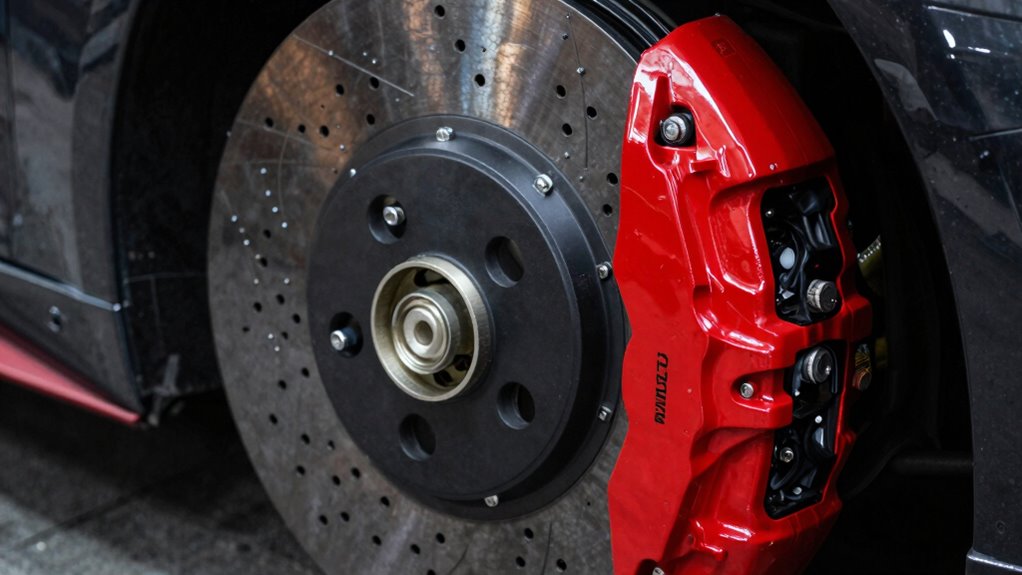

In motorsport, brake materials like carbon ceramic composites are vital for high performance. They provide excellent heat resistance, high friction, and lightweight benefits essential for quick stops at extreme speeds. These advanced materials help you brake later into corners and improve responsiveness while maintaining durability during intense races. With their low thermal expansion and reduced brake dust, they guarantee consistent, reliable performance race after race. Keep exploring to learn more about how these innovative materials keep racers safer and faster.

Get business pricing on garage and car supplies
- Business-only prices and quantity discounts
- Tax-exempt purchasing
- Multiple users, one account, clear invoices
Key Takeaways
- Motorsport brakes primarily utilize carbon ceramic composites for high heat resistance and lightweight properties.
- These materials combine carbon fibers with ceramic matrices to deliver consistent, fade-resistant stopping power.
- Carbon ceramic brake discs are favored for their durability, thermal stability, and low maintenance needs.
- Ceramic composites enable better thermal management, allowing drivers to brake later and more aggressively.
- Their low dust output and corrosion resistance contribute to cleaner wheels and longer-lasting brake components.

In motorsport, brake materials are essential for ensuring maximum stopping power and safety at high speeds. You rely on these materials to bring your vehicle to a halt quickly and reliably, often under extreme conditions. Among the most advanced options are carbon ceramic and ceramic composites, which have revolutionized braking systems in racing. These materials are prized for their ability to withstand intense heat, reduce weight, and deliver consistent performance lap after lap.
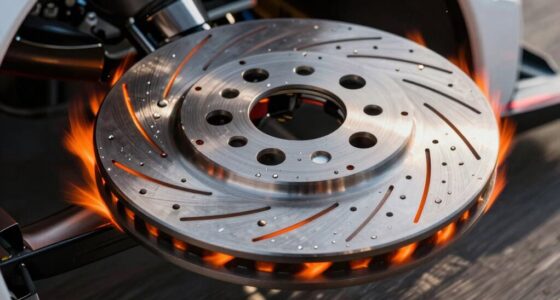
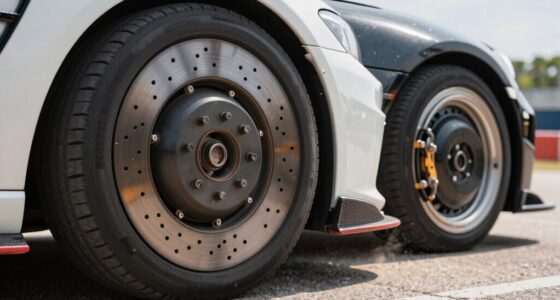
Carbon ceramic brakes are a standout choice in high-performance racing. They consist of a composite material that combines carbon fibers with a ceramic matrix, creating a brake disc that is incredibly strong and heat-resistant. When you press the pedal, these brakes generate high friction levels while remaining cool, preventing fade even during prolonged use. This means you can brake later into corners and maintain higher speeds without sacrificing safety or control. The ceramic components are also much lighter than traditional steel or iron discs, reducing unsprung weight and improving handling and responsiveness. As a result, you’ll notice a more agile feel and quicker acceleration after braking. Additionally, their thermal management capabilities help in maintaining optimal braking temperatures during intense sessions. The manufacturing processes used for these materials also involve advanced composite fabrication techniques that enhance their overall performance. Furthermore, their resistance to corrosion helps maintain their integrity over time, reducing the need for frequent replacements.
Carbon ceramic brakes offer high heat resistance, low weight, and enhanced responsiveness for superior racing performance.
Ceramic composites, in general, encompass a range of materials designed for advanced braking systems. They include not just carbon ceramic but also other ceramic-based materials engineered for specific racing needs. They feature a combination of ceramic particles, fibers, and binders, tailored to optimize thermal stability, wear resistance, and friction characteristics. Their ability to operate at high temperatures means you don’t have to worry about brake fade, even during aggressive racing conditions. Plus, their durability means fewer replacements and less maintenance, giving you more confidence on the track. Additionally, their low thermal expansion ensures consistent braking performance under extreme heat. Modern manufacturing processes also contribute to their precise dimensional stability, which enhances braking consistency. This stability is crucial for maintaining predictable and safe braking behavior during high-stress racing scenarios. As a result, these materials contribute to improved overall vehicle performance and driver confidence.
One of the key advantages of using ceramic composites in motorsport is their low thermal expansion. When you’re pushing your car to its limits, the materials won’t warp or deform under heat, ensuring consistent braking performance. This stability helps you brake with precision and trust your equipment at all times. Additionally, these materials produce less brake dust, which keeps your wheels cleaner and improves overall vehicle aesthetics and performance. Their environmentally friendly dust reduction benefits also contribute to cleaner racing environments.
As an affiliate, we earn on qualifying purchases.
Frequently Asked Questions
How Do Brake Materials Affect Vehicle Weight and Handling?
Your brake material density directly impacts vehicle weight and handling dynamics. Lighter materials, like carbon composites, reduce overall weight, enhancing agility and braking response. Heavier materials, such as cast iron, add weight that can hinder handling but offer durability. By choosing brake materials wisely, you can optimize handling dynamics, ensuring better control during high-speed maneuvers and sharp turns, making your vehicle more responsive and efficient on the track.
Are There Environmentally Friendly Brake Materials Used in Motorsport?
Yes, environmentally friendly brake materials are increasingly used in motorsport. You might find eco-friendly composites and biodegradable brake pads, which reduce environmental impact without sacrificing performance. These materials are designed to minimize toxic waste and promote sustainability, making them a smart choice for teams aiming to lower their ecological footprint. As motorsport evolves, expect more innovations focused on combining high safety standards with eco-conscious solutions.
How Often Do Brake Materials Need to Be Replaced During a Race Season?
During a race season, you typically replace brake materials based on their lifespan and replacement intervals, which depend on factors like driving style and track conditions. Generally, brake pads and discs last several races but may need replacement after 3,000 to 5,000 miles or when you notice decreased braking performance. Regular inspections help you determine if the brake material lifespan has been surpassed, ensuring ideal safety and performance.
What Safety Considerations Are Associated With Different Brake Materials?
Think of brake materials as the heart of your safety gear—they need to be reliable. Different materials, like ceramics or carbon composites, have unique risks such as brake material toxicity and thermal stability issues. You must guarantee they can withstand extreme heat without breaking down or releasing harmful substances. Proper handling, ventilation, and choosing high-quality, tested materials help mitigate these dangers, keeping you safe during high-stakes racing.
Do Brake Materials Influence Tire Wear and Longevity?
Brake materials do influence tire wear and longevity. You’ll notice that high abrasion resistance in brake pads can reduce excessive wear on tires, while good thermal stability prevents overheating, which can cause tire degradation. When you select brake materials with these properties, you help assure smoother braking, less tire abrasion, and longer tire life. Properly matched brake and tire systems optimize overall performance and durability on the track.
high performance racing brake pads
As an affiliate, we earn on qualifying purchases.
As an affiliate, we earn on qualifying purchases.
Conclusion
You’ve now uncovered the vital chemistry behind brake materials in motorsport. From fiery ferrous compounds to advanced composites, each material maximizes performance under pressure. Remember, choosing the right brake material means better braking, boldness, and a safer, more skilled stint on the track. So, stay savvy, stay sharp, and suit up with the best brake materials—because in motorsport, mastery means making every moment matter.
As an affiliate, we earn on qualifying purchases.
As an affiliate, we earn on qualifying purchases.
Halloween Picks
halloween
As an affiliate, we earn on qualifying purchases.