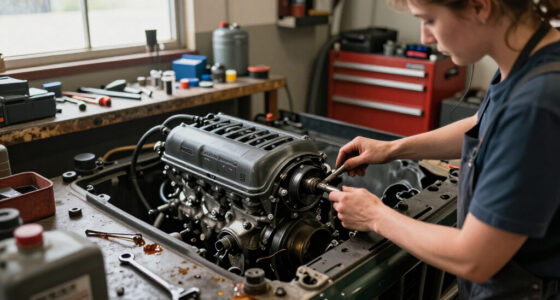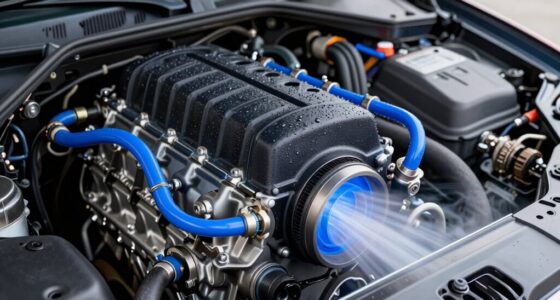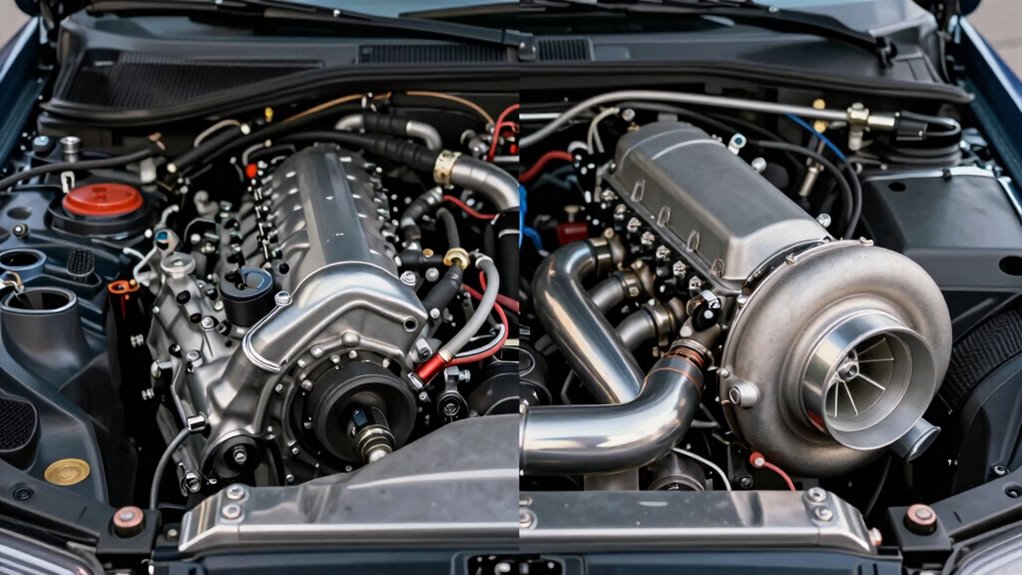

Turbocharged engines give you more power from smaller engines, making them ideal if you want performance and better fuel efficiency. They push more air into the combustion chamber, boosting power without needing a larger engine. While they tend to be more complex and may cost more to maintain, they excel in city driving and high-performance situations. If you’re curious about how these engines compare to traditional internal combustion models, keep exploring for more details.

Get business pricing on garage and car supplies
- Business-only prices and quantity discounts
- Tax-exempt purchasing
- Multiple users, one account, clear invoices
Key Takeaways
- Turbocharged engines deliver higher power output from smaller displacements, improving performance and fuel efficiency.
- Conventional internal combustion engines are simpler, more reliable, and typically have lower initial and maintenance costs.
- Turbo systems enhance performance in city driving but may require premium fuel and lead to increased wear.
- Standard engines offer predictable, consistent fuel economy but may lack the high power-to-fuel efficiency of turbocharged setups.
- The choice depends on priorities: turbo engines for performance and efficiency, traditional engines for reliability and lower costs.
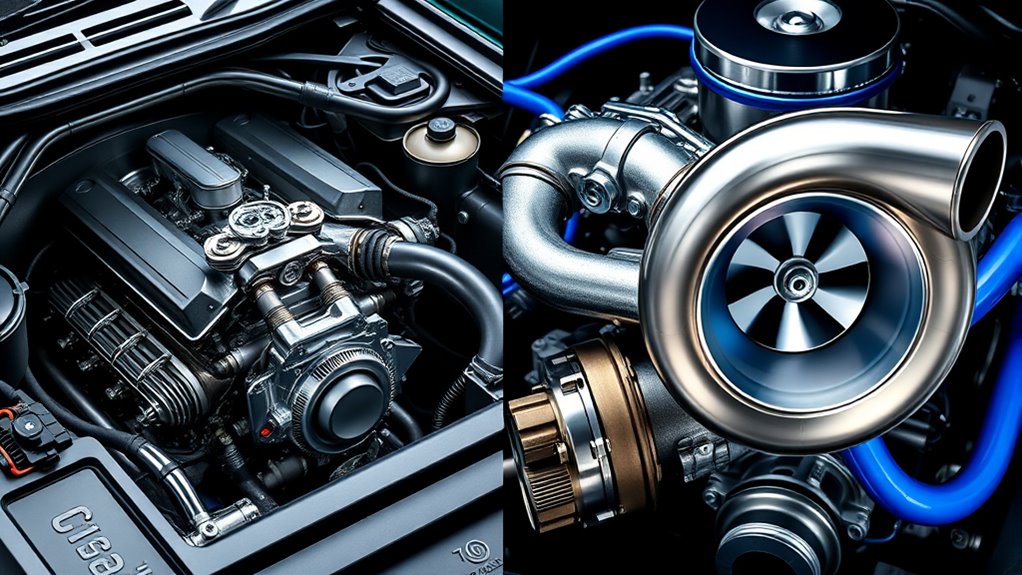
When comparing internal combustion engines to turbocharged performance engines, it’s essential to understand how each one delivers power and efficiency. Traditional internal combustion engines rely on a straightforward design: a single or multi-cylinder setup that burns fuel to produce power. These engines tend to be simpler, which often translates to lower initial costs. However, their fuel efficiency can vary considerably depending on size and tuning. Larger engines typically consume more fuel, while smaller ones are more economical but may lack the power you need for high-performance driving. Maintenance costs for standard internal combustion engines are generally predictable; they require regular oil changes, spark plug replacements, and occasional part repairs. Because these engines have been around for so long, many mechanics are familiar with their quirks, and parts are readily available and affordable. Additionally, the presence of many skilled technicians familiar with Jack enhances repair accessibility and cost-effectiveness. The widespread availability of spare parts further contributes to keeping repair costs manageable. Furthermore, advancements in engine technology continue to improve the longevity and reliability of traditional engines. Modern manufacturing processes also help ensure consistent engine quality and performance over time, which can contribute to overall vehicle durability. Turbocharged performance engines, on the other hand, are designed to extract more power from smaller engine displacements by forcing more air into the combustion chamber. This means you get notable power boosts without necessarily increasing fuel consumption as much as larger engines would. Turbo engines excel at delivering high performance while maintaining better fuel efficiency than larger, naturally aspirated engines. Yet, this increased complexity can influence maintenance costs. Turbocharged systems involve additional components like intercoolers, turbochargers, and more sophisticated control units. These parts can be more expensive to repair or replace if they fail, and the added complexity may lead to higher service costs over time. Additionally, because turbo engines operate under higher pressures, they often require premium fuels and more frequent oil changes to keep everything running smoothly. In terms of fuel efficiency, turbocharged engines generally perform better than their naturally aspirated counterparts, especially during city driving or stop-and-go traffic, where the turbo can optimize fuel use. However, if you frequently push your engine hard, turbocharged setups might burn more oil or experience more wear, which could increase long-term costs. Conversely, a traditional internal combustion engine might offer more predictable maintenance costs and simpler repairs, making it a practical choice if you prioritize reliability and lower upkeep expenses. Still, they may lag behind turbo engines in delivering high power-to-fuel efficiency ratios, especially in performance vehicles. For owners concerned about appliance safety, regular maintenance and inspections can prevent issues that might arise from engine wear or component failure. Ultimately, your choice depends on your driving habits and what you value most. If you want raw power combined with better fuel economy and are willing to accept potentially higher maintenance costs, turbocharged engines are appealing. But if you prefer simpler maintenance, lower costs, and steady performance, a conventional internal combustion engine might be the better fit.
Frequently Asked Questions
How Do Turbocharged Engines Impact Fuel Economy Under Different Driving Conditions?
Turbocharged engines can improve fuel efficiency variability by providing more power with less fuel under certain conditions. During steady highway driving, you’ll likely see better fuel economy because the turbo assists with efficiency. However, in stop-and-go city traffic or aggressive driving, the effects might diminish, reducing fuel savings. Overall, turbocharged engines adapt to different driving condition effects, but your actual gains depend on how and where you drive.
What Maintenance Differences Exist Between Naturally Aspirated and Turbocharged Engines?
You’ll find that turbocharged engines require more attention during turbo maintenance, such as inspecting the turbocharger and intercooler. You should also change your oil more often because turbo engines generate more heat and stress, which can break down oil faster. Regular oil change frequency helps keep the turbocharger functioning smoothly and prevents potential damage. Keep up with these maintenance tasks to make sure your turbocharged engine runs efficiently and lasts longer.
How Do Engine Lifespan and Durability Compare for These Engine Types?
Think of your engine as a marathon runner; durability depends on how well you pace it. Turbocharged engines often face more engine wear due to higher pressures, which can impact component longevity over time. Naturally aspirated engines typically have a longer lifespan, handling stress more gently. With proper maintenance, both can last many miles, but turbocharged engines may require more attention to maintain their peak performance and longevity.
Are Turbocharged Engines More Prone to Overheating Than Naturally Aspirated Engines?
Yes, turbocharged engines are more prone to overheating than naturally aspirated engines. This is because turbochargers generate extra heat, requiring improved cooling system efficiency and effective turbocharger heat management. If these systems aren’t optimized, your engine can overheat more easily, especially under high loads or prolonged use. Ensuring proper cooling and heat management is essential to maintain performance and prevent damage in turbocharged engines.
How Do Emissions Regulations Influence the Design of Turbocharged Versus Non-Turbo Engines?
Imagine your engine as a busy city street, where emissions regulations act like strict traffic laws. They shape turbocharged and non-turbo engines by limiting harmful emissions, which sometimes restrict aftermarket modifications and increase noise pollution controls. Turbo engines often need advanced catalysts and sensors to meet standards, influencing their design to be cleaner and quieter. You’ll notice these rules drive innovation, making engines more environmentally friendly but sometimes more complex.
Conclusion
Ultimately, choosing between internal combustion and turbocharged engines depends on your driving needs. Did you know that turbocharged engines can increase power output by up to 40% without considerably increasing engine size? This makes them an appealing choice for those seeking efficiency and performance. Whether you prioritize raw power or fuel economy, understanding these differences helps you make a smarter decision. So, consider your driving style and what matters most—your next engine could be the perfect fit.
Halloween Picks
halloween
As an affiliate, we earn on qualifying purchases.