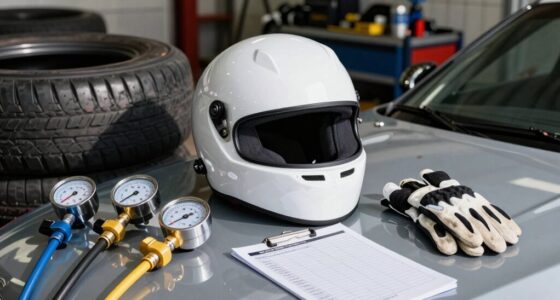
To manage heat on track days, monitor your tire temperatures regularly and use cooling techniques like water sprays or tire blankets to prevent overheating. Stay hydrated by drinking water and sports drinks to avoid heat stress and maintain focus. Keep an eye on your vehicle’s cooling systems and brake temps to prevent mechanical issues. Proper heat control guarantees consistent grip and safety, and if you continue exploring, you’ll discover more strategies to optimize your performance.
Key Takeaways
- Use tire cooling techniques like water sprays or tire blankets to dissipate heat and maintain optimal tire temperatures.
- Monitor tire temperatures regularly to prevent overheating and reduce the risk of tire failure.
- Stay well-hydrated with water and electrolyte drinks to prevent heat stress and maintain focus during track sessions.
- Manage heat buildup by adjusting driving style, avoiding aggressive acceleration and hard cornering when tires are hot.
- Incorporate cooling systems or strategies that actively regulate tire and brake temperatures for consistent performance.
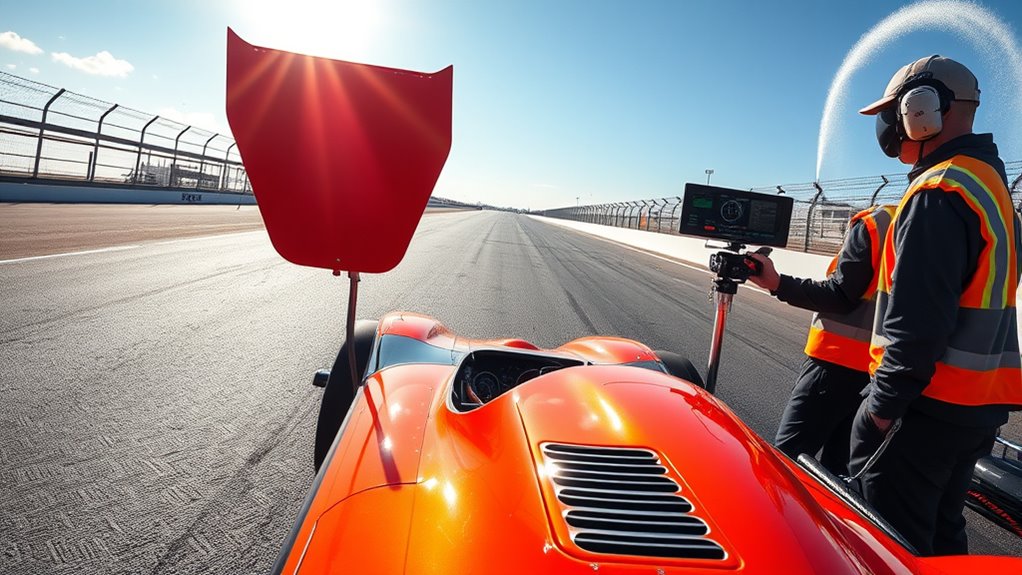
On track days, managing heat is vital to maintaining peak performance and safety. The intense conditions you face can quickly push your vehicle and yourself beyond comfortable limits. To stay sharp, you need to pay close attention to tire cooling and driver hydration. Proper tire cooling prevents overheating, which can lead to reduced grip and even tire failure. As you push your car through turns and accelerate on straights, your tires generate a lot of heat, causing the rubber to soften and lose its ability to grip the asphalt effectively. To combat this, consider using cooling techniques like water sprays or tire blankets, especially during longer sessions. These methods help dissipate heat and keep your tires within ideal temperature ranges, ensuring consistent handling and safety. Remember, overheated tires don’t just lose grip—they can also degrade faster, leading to potential blowouts or unpredictable behavior on the track. Smart cooling systems can further optimize tire temperature management by actively adjusting cooling methods based on real-time data. In addition, understanding the importance of seasonal maintenance can help you ensure your cooling equipment remains effective throughout the year.
Alongside maintaining your tires, you must keep yourself well-hydrated. Driver hydration is essential because heat stress and dehydration impair your focus, reaction times, and overall performance. As temperatures rise, your body sweats to cool down, losing essential fluids and electrolytes in the process. If you neglect hydration, you risk fatigue and impaired judgment, which can be dangerous at high speeds. Make it a habit to drink water frequently during breaks, even if you don’t feel thirsty. Sports drinks can also be beneficial, as they replenish electrolytes lost through sweating. Avoid caffeine and alcohol, as they tend to dehydrate you further. Carry a water bottle with you in the paddock or in your car’s cup holder, and take small sips regularly. Staying hydrated helps maintain your mental clarity and physical endurance, allowing you to react swiftly to track conditions and make precise maneuvers. Additionally, understanding heat management techniques can further enhance your safety and performance during demanding track sessions.
Frequently Asked Questions
How Do I Prevent Heat Exhaustion During Long Track Sessions?
To prevent heat exhaustion during long track sessions, stay hydrated by following effective hydration strategies, drinking water regularly before, during, and after driving. Wear lightweight, breathable clothing that helps wick away sweat and keeps you cool. Take frequent shade or cool-down breaks, and listen to your body’s signals. These steps make certain you maintain your energy and focus while reducing the risk of heat exhaustion on the track.
What Are the Best Cooling Products for Drivers?
Think of cooling technology as your personal breeze on a scorching day—you’ll want it close at hand. For drivers, the best cooling products include cooling towels, neck wraps, and portable fans that activate with a simple snap. Stay ahead with effective driver hydration by drinking electrolyte-enhanced fluids. These tools work together to keep your core temperature down, ensuring you stay sharp and comfortable during every lap.
How Does Ambient Temperature Affect Car Cooling Systems?
Ambient temperature directly impacts your car’s cooling system efficiency. When it’s hot outside, your radiator struggles to dissipate heat quickly, reducing overall radiator efficiency. High ambient humidity also hampers cooling because moist air doesn’t absorb heat as effectively. You’ll notice your engine runs hotter, so it’s vital to monitor temperature gauges and consider additional cooling measures, especially on extremely hot or humid days, to keep your car performing at its best.
Can Tire Heat Affect Overall Vehicle Performance?
Tire heat definitely impacts your overall vehicle performance. When your tires heat up, their pressure rises, which can alter handling and reduce grip. Using the right tire compound helps manage heat better, maintaining ideal traction. Don’t ignore tire pressure; it’s key to controlling heat buildup. Properly heated tires improve steering response and stability, making your car more predictable on track. Staying aware of tire heat ensures you get the best performance and safety out of your vehicle.
What Are Quick Fixes for Overheating Issues on Track?
To quickly fix overheating issues on track, start by checking your radiator maintenance—ensure it’s clean and free of debris. Switch to the right coolant types, like a high-performance mix, to improve heat transfer. You can also add a radiator fan or upgrade your cooling system temporarily. These steps help reduce engine temperature fast, preventing damage and keeping your car performing at its best during intense track sessions.
Conclusion
Managing heat on track days is vital to keep your car performing at its best and guarantee your safety. Did you know that engines can lose up to 50% of their efficiency when operating above 220°F? By monitoring and controlling your temperature, you not only extend your vehicle’s lifespan but also boost your lap times. Stay cool, stay focused, and remember that proper heat management makes all the difference between a good run and a great one.