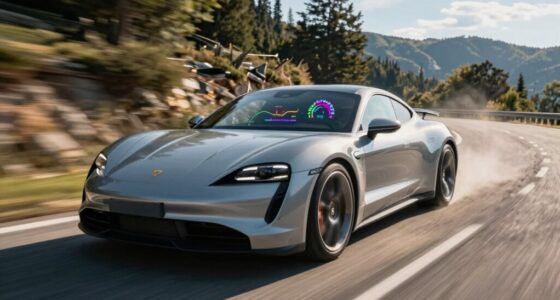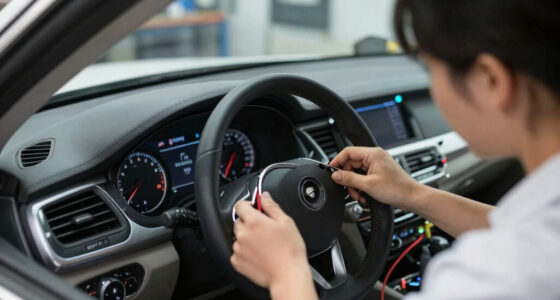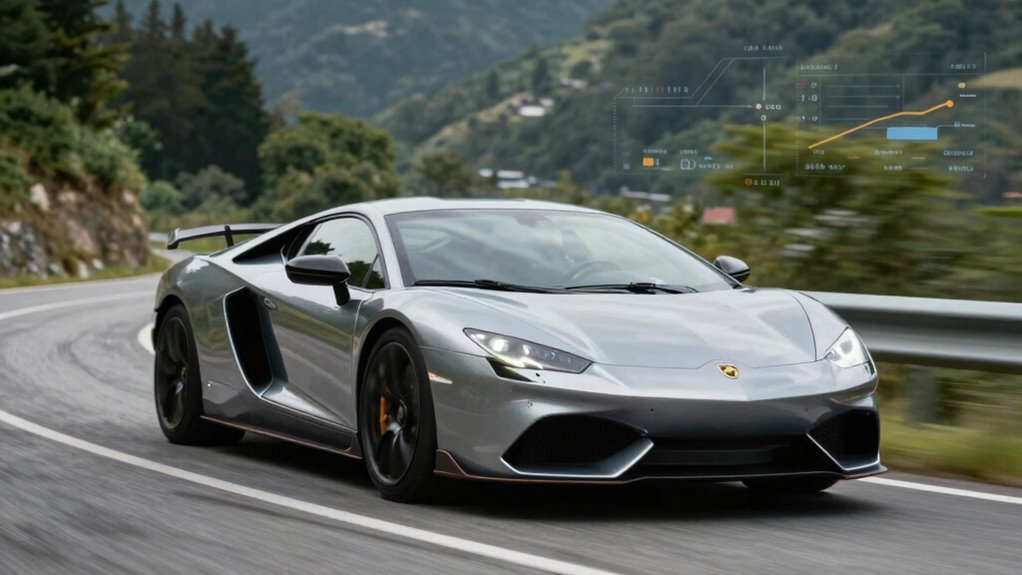

Electronic stability control (ESC) in performance cars actively helps you stay on your intended path by monitoring wheel speed, steering, and lateral forces. It automatically intervenes by applying brakes to specific wheels and adjusting engine torque when it detects loss of grip or drifting. This technology enhances your control during sharp turns, slips, or challenging conditions, allowing you to push your car confidently. Keep exploring to discover how ESC integrates with other vehicle dynamics systems to elevate your driving experience.
Key Takeaways
- ESC maintains vehicle stability during aggressive maneuvers by automatically adjusting brakes and engine torque.
- It enhances traction management by preventing wheel spin during acceleration and cornering.
- ESC monitors chassis response, including yaw rate and lateral acceleration, to ensure predictable handling.
- It combines traction and chassis control for comprehensive safety and dynamic driving support.
- ESC empowers performance driving while ensuring safety on challenging roads and unpredictable conditions.
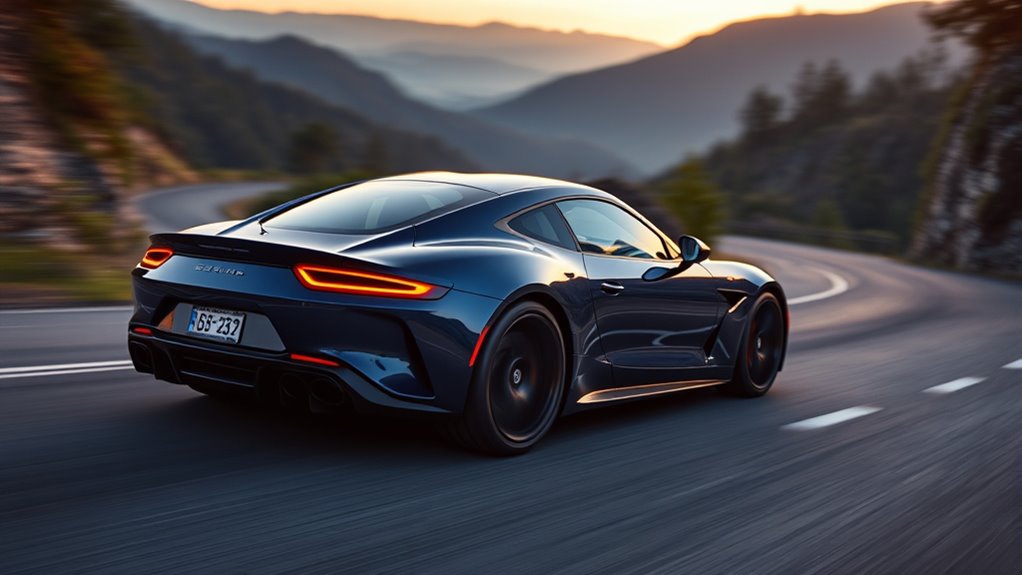
Electronic Stability Control (ESC) has become a essential feature in performance cars, helping drivers maintain control during aggressive maneuvers or challenging road conditions. When you push your car to its limits, ESC works behind the scenes to manage traction and chassis dynamics, ensuring you stay on your intended path. This technology constantly monitors wheel speed, steering angle, and lateral acceleration, allowing it to detect when your vehicle is starting to lose grip or drift. Once it recognizes these signs, it automatically applies braking to individual wheels and adjusts engine torque, giving you a helpful nudge back toward stability.
ESC helps performance cars stay on track by monitoring and adjusting traction and stability automatically.
Traction management is at the heart of ESC’s capabilities. As you accelerate out of a corner or navigate uneven surfaces, your tires’ grip varies. ESC intervenes by subtly reducing engine power or applying brakes to wheels that are slipping or spinning faster than others. This prevents excessive wheel spin and helps you maintain ideal traction, whether you’re tackling a sharp turn or accelerating on slick pavement. Without this system, you might find yourself oversteering or understeering, especially during spirited driving or sudden maneuvers. By fine-tuning traction in real-time, ESC allows you to push your performance car more confidently, knowing it’s actively working to keep you safe.
Chassis dynamics, another critical aspect managed by ESC, involves controlling how your vehicle responds to steering inputs and road conditions. When you turn sharply, the system assesses the vehicle’s yaw rate and lateral acceleration to determine if the chassis is responding as intended. If it detects excessive yaw or understeer, ESC can selectively brake individual wheels to counteract these tendencies. This helps maintain the car’s balance and directional stability, ensuring that your inputs translate accurately into the desired response. Whether you’re navigating tight corners or correcting a slide, ESC’s management of chassis dynamics keeps your car predictable and responsive.
Together, traction management and chassis dynamics form a sophisticated safety net that enhances your driving experience. Rather than limiting your ability to perform aggressive maneuvers, ESC complements your skills by providing an extra layer of control. It allows you to explore the full potential of your performance car while minimizing the risk of losing control. As driving conditions become unpredictable—wet roads, gravel, or sharp turns—this system becomes your reliable co-pilot, helping you maintain composure and confidence behind the wheel. In summary, ESC isn’t just about safety; it’s about empowering you to drive more dynamically and precisely. Additionally, vehicle dynamics control enhances your ability to handle unexpected road situations more effectively. A deeper understanding of vehicle dynamics can help drivers anticipate and respond to these challenges more intuitively.
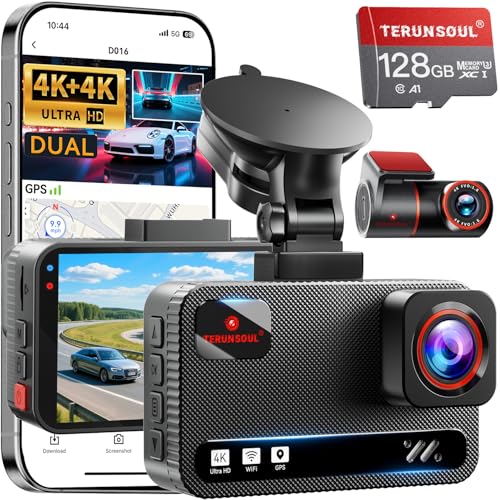
TERUNSOUl 4K+4K Dash Cam Front and Rear, Free 128GB Card Included, 5.8GHz WiFi Dash Camera for Cars, Built-in GPS, G-Sensor, 170°Wide Angle, 3" IPS Screen, 24H Parking Mode, Support 512GB Max
Ultra HD 4K Front + 4K Rear Recording: The Terunsoul dash cam supports dual-channel simultaneous recording, capturing both...
As an affiliate, we earn on qualifying purchases.
Frequently Asked Questions
Can ESC Be Turned off in Performance Cars?
Yes, you can usually turn off the ESC system in performance cars, but it’s often limited to specific driving modes or settings. Many vehicles allow ESC system customization, enabling you to disable it for better control during spirited driving. Keep in mind, though, that turning off ESC safety features may increase risk, so only do it when you’re confident in your driving skills and aware of the potential safety implications.
How Does ESC Affect Driving Experience on Track Days?
You might notice that turning off ESC improves driving dynamics on track days, as it allows more control during aggressive maneuvers. Studies show ESC reduces crashes by 30%, highlighting its safety benefits, but some drivers prefer to disable it for a purer driving experience. On the track, ESC can sometimes interfere with your style, so knowing how it affects your control helps you decide whether to keep it engaged or turn it off for peak performance.
Is ESC a Legal Requirement in All Performance Cars?
You’ll find that Electronic Stability Control (ESC) isn’t legally required in all performance cars, though it markedly boosts vehicle safety and helps prevent accidents. Laws vary by country and region, so you should check local legal compliance standards. While ESC enhances safety, some enthusiasts prefer disabling it for a more raw driving experience. Overall, it’s a valuable feature that supports safer driving, especially in high-performance vehicles.
What Are the Maintenance Costs for ESC Systems?
You’ll find that maintaining your ESC system usually costs between $100 and $300 annually, depending on your car and repairs needed. Regular ESC sensor calibration is essential to keep the system functioning smoothly, and upgrades may be necessary over time to enhance safety features. Staying proactive with these costs can prevent expensive repairs later, ensuring your performance car stays safe and responsive on the road.
How Does ESC Differ From Traction Control?
You’ll find that Electronic Stability Control (ESC) differs from traction control by focusing on overall vehicle dynamics, not just wheel slip. ESC integrates with your vehicle’s systems to detect skids or loss of control and automatically applies brakes to individual wheels, helping you maintain stability. Traction control mainly prevents wheel spin during acceleration. Their system integration guarantees safer handling, especially in challenging driving conditions, by working together to keep you on course.

ROVE R2-4K DUAL Dash Cam Front and Rear, STARVIS 2 Sensor, FREE 128GB Card Included, 5G WiFi - up to 20MB/s Fastest Download Speed with App, 4K 2160P/FHD Dash Camera for Cars, 3" IPS, 24H Parking Mode
4K FRONT + 1080P REAR RECORDING – ROVE R2-4K DUAL dash cam offers dual-channel recording capabilities, capturing footage...
As an affiliate, we earn on qualifying purchases.
Conclusion
Imagine you’re steering a sharp turn in your high-performance car, feeling confident but knowing the electronic stability control is there like an invisible safety net. It kicks in seamlessly, helping you stay on course even when your instincts say otherwise. Studies show ESC reduces crashes by up to 33%, proving it’s your reliable co-pilot. With this technology, you can push limits confidently, knowing that behind the scenes, advanced systems are working tirelessly to keep you safe and in control.

REDTIGER 4K Dash Cam Front Rear, STARVIS 2 Sensor, Free Card Included, 5.8GHz WiFi-20MB/s Fast Download, Dash Camera for Cars with GPS, WDR Night Vision, 170°Wide Angle, 24H Parking Mode(F7NP)
[4K+1080P Front & Rear Recording] REDTIGER F7NP dash cam captures every detail with stunning 4K front and 1080P...
As an affiliate, we earn on qualifying purchases.

Pelsee P1 Pro 4K Dash Cam Front and Rear, STARVIS 2 Sensor, 64GB Card, Dual Dash Camera for Cars with Full-Color Night Vision, HDR WDR, ADAS, GPS, WiFi & Voice Control, 24H Parking Mode, 3.39" Screen
【HDR Front & WDR Rear Recording】The front 4K HDR dash cam slices through blinding sunlight, capturing license plates...
As an affiliate, we earn on qualifying purchases.