Portable jump starters have largely replaced jumper cables for most drivers, and the choice comes down to raw cranking amps, battery capacity, and whether you want extras like a built-in air compressor or USB power bank. The TREKURE 8000A 26800mAh stands out as the best overall pick for its massive starting power and capacity, while the YaberAuto 5000A with 150PSI air compressor makes more sense for drivers who want a two-in-one roadside tool, and the Clore Jump-N-Carry JNC660 remains the go-to for shop-grade reliability. The main tradeoffs in this category are between lithium units that are light and feature-packed versus heavier lead-acid boxes that tolerate daily abuse, and between paying more for compressor combos versus standalone starters. Keep reading for the full breakdown of all 15 models and which one fits your vehicle and budget.

Get business pricing on garage and car supplies
- Business-only prices and quantity discounts
- Tax-exempt purchasing
- Multiple users, one account, clear invoices
Complete the kit


Key Takeaways
- Peak amp claims varied wildly across the lineup, but anything above 3000A comfortably starts full-size trucks and SUVs — models like the OXILAM 6000A and TREKURE 8000A are overkill for sedans and small cars.
- Built-in air compressors (YaberAuto, GOOLOO A3, and both compressor combo units) add genuine roadside value but increase size, weight, and price; skip them if you only want starting power.
- The Clore JNC660 was the only lead-acid unit in the field — heavier and feature-free, but better suited to frequent, professional use than any lithium option here.
- Lower-amp models like the AstroAI S8 1500A are fine for four-cylinder commuter cars but will struggle or fail on diesel engines and cold-weather starts.
- Reverse-polarity and spark-proof protection were standard across the entire lineup, so safety tech no longer separates premium from budget — capacity and extras do.



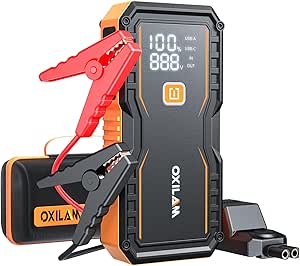
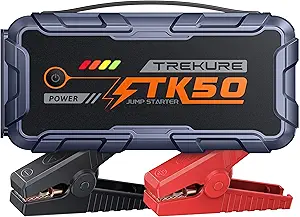


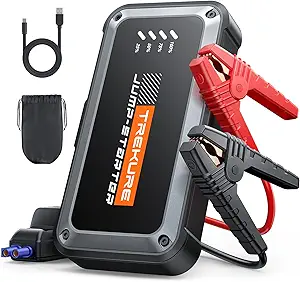


| portable jump starter | Peak Current | Operating Temperature | Voltage |
|---|---|---|---|
| 4500A Car Battery Jump Starter | 4500A | -4°F to 140°F | — |
| Clore Automotive Jump-N-Carry | — | — | 12V |
| SZEVZO ET03 4000A Car Jump Sta | 4000A | — | — |
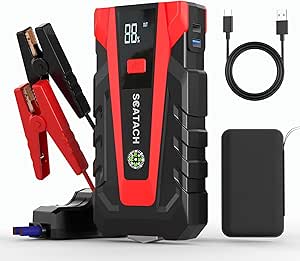
| Scatach 3000A Car Battery Jump | 3000A | — | 12V |
| BIUBLE Car Jump Starter 5000A | 5000A | -4°F to 140°F | 12V |
| OXILAM 6000A Portable Car Jump | — | — | 12V |
| TREKURE Car Battery Jump Start | 8000A | -4°F to 140°F | — |
| 6000A Jump Starter with Air Co | 6000A | -4°F to 140°F | — |
| Povasee A30 5000A Car Jump Sta | 5000A | -22°F to 140°F | — |
| TREKURE Portable Car Battery J | 4000A | -4°F to 140°F | — |
| TREKURE TK60 Portable Car Jump | 5000A | — | 12V |
| YaberAuto 5000A Car Jump Start | 5000A | -4°F to 140°F | — |
| AstroAI S8 Car Battery Jump St | 1500A | — | 12V |
| GOOLOO A3 12V 3000A Portable J | 3000A | — | 12V |
| GOOLOO GP4000 4000A 12V Portab | 4000A | -4°F to 140°F | 12V |
More Details on Our Top Picks
4500A Car Battery Jump Starter with 150PSI Air Compressor and Power Bank
Most portable jump starters in this roundup do one job well; this option stands out for doing three. Alongside its 4500A peak output, it packs a 150PSI tire inflator with auto-shutoff, a 500-lumen emergency light, and USB-C power bank duty — a genuinely useful combination for a glovebox or trunk emergency kit. Compared with the SZEVZO ET03, which matches the flashlight and power bank features but skips the compressor, this model saves you from carrying a separate inflator on road trips. The 3.3-inch display showing both battery status and tire pressure is larger and more readable than the typical pin-sized indicator screens on budget units. The tradeoff is upkeep: like most lithium units, it demands a top-up charge every 2-3 months, and the force-start function only works reliably if you keep it above 50% charge — a habit casual owners may not maintain.
Pros:- 4500A peak current with force-start for completely dead batteries
- Integrated 150PSI compressor with auto-shutoff replaces a separate tire inflator
- 8-in-1 design including power bank, flashlight, and SOS signaling
- 10 safety protections plus a V0 fireproof battery shell
Cons:- Requires recharging every 2-3 months even when idle
- Must stay above 50% charge for reliable vehicle starting
Best for: Road-trippers and daily commuters who want a single trunk tool covering dead batteries, flat tires, and phone charging
Not ideal for: Buyers who want a set-and-forget emergency unit — the required quarterly recharging makes it a poor fit for neglectful owners
- Peak Current:4500A
- Max Air Pressure:150 PSI
- Gas Engine Capacity:Up to 9L
- Diesel Engine Capacity:Up to 8L
- Light Output:500 Lumens
- Operating Temperature:-4°F to 140°F
- Standby Time:24 Months
- Display Size:3.3 inches
Our verdict“The most complete emergency kit on this list — buy it if you want one device that handles flats and dead batteries together, and you can commit to periodic charging.”
Clore Automotive Jump-N-Carry JNC660 12V Jump Starter
The JNC660 takes the opposite approach from lithium units like the BIUBLE or Scatach: instead of a pocket-sized power bank, it’s a traditional lead-acid workhorse built around a 22Ah Clore Proformer battery. That design choice matters for anyone who jump-starts vehicles regularly — the #2 AWG cables and 46-inch length are far more robust than the thin-gauge leads on lithium packs, and they reach awkward battery terminals in engine bays or work trucks without straining. A built-in voltmeter lets you confirm both the unit’s charge and the vehicle battery’s state before connecting, something the SZEVZO ET03 only partially covers with its LCD. The tradeoff is obvious: this is heavy shop equipment, not something you slip into a backpack. It also lacks the USB charging, flashlights, and inflators that make the 8-in-1 style units appealing for casual drivers. Its 1700A peak is plenty for trucks and vans but well below the 4000A+ ratings of modern lithium rivals.
Pros:- Rugged #2 AWG copper cables rated for repeated professional use
- 46-inch cable reach handles awkward engine bay layouts
- Built-in voltmeter for monitoring both unit and vehicle battery health
- 22Ah lead-acid battery holds cranking power through repeated cycles
Cons:- Bulky and heavy compared with pocket-sized lithium jump starters
- 1700A peak output is far below modern 4000A-6000A lithium units
- No USB charging, flashlight, or air compressor functions
Best for: Mechanics, fleet operators, and truck owners who jump vehicles frequently and need durable cables plus a voltmeter
Not ideal for: Everyday commuters wanting a compact emergency backup — the size and weight make it impractical to carry casually
- Model:JNC660
- Voltage:12V
- Peak Amps:1700
- Battery Capacity:22Ah
- Cable Gauge:#2 AWG
- Cable Length:46 inches
Our verdict“Buy this if starting vehicles is a routine task rather than an emergency, and skip it if you want something you can carry in one hand.”
SZEVZO ET03 4000A Car Jump Starter with Power Bank and LED Light
Of all the mid-range lithium units here, the ET03 hits the broadest sweet spot between power and portability. At 1.4 pounds and roughly the size of a large paperback, it still delivers 4000A — enough for engines up to 8.0L gas or 7.0L diesel, which covers nearly every passenger vehicle on the road. Compared with the BIUBLE, which claims 5000A but only supports 7.0L gas engines and carries a modest 6000mAh battery, the ET03’s 20,000mAh capacity means more jump attempts and far more phone charges per fill. The force-start function handles fully drained 0V batteries, and a two-year warranty beats the one-year support offered with the Scatach. The weaknesses are honest ones: the unit must sit above roughly 14V before it will jump a dead battery, and its USB ports are stuck at 5V/2A — sluggish for charging modern phones compared with quick-charge rivals.
Pros:- 20,000mAh capacity supports up to 8.0L gas and 7.0L diesel engines
- Force-start function revives fully discharged 0V batteries
- Lightweight 1.4 lb design with included storage case
- Two-year warranty and multi-mode 500-lumen emergency light
Cons:- Must be recharged above 14V before starting a dead-battery vehicle
- USB outputs limited to 5V/2A charging speeds
Best for: Owners of cars, trucks, vans, and even tractors who want one dependable unit covering the whole household fleet
Not ideal for: Buyers who also want a fast phone charger — the 5V/2A USB output trails quick-charge competitors like the BIUBLE
- Battery Type:Lithium-ion
- Peak Current:4000A
- Battery Capacity:20,000 mAh (74Wh)
- Engine Compatibility:Up to 8.0L gas / 7.0L diesel
- USB Outputs:Two 5V/2A ports
- LED Brightness:500 lumens
- Weight:1.4 lb
- Warranty:2 years
Our verdict“The most sensible default choice in this lineup — strong cranking power, generous capacity, and wide vehicle compatibility for the money.”
Scatach 3000A Car Battery Jump Starter, 12V Portable Power Bank with 3-Mode Flashlight
Not everyone needs maximum amperage — and this is where the Scatach earns its place. It covers engines up to 9.0L gasoline or 7.0L diesel at 3000A, which is a wider gasoline rating than the pricier BIUBLE manages at 5000A, and promises up to 50 jump starts per charge. For a second car, a teenager’s first vehicle, or a glovebox backup, that capability at a budget-friendly position makes more sense than paying extra for the 4500A compressor combo unit. Its spark-proof, reverse-polarity protections match what the premium picks offer, and the three-mode flashlight covers nighttime emergencies. The compromises are real, though: support is limited to a one-year warranty, the shortest commitment in this batch, and the manufacturer doesn’t publish the battery capacity in mAh — a transparency gap that makes it hard to compare real-world runtime against the SZEVZO ET03’s clearly stated 20,000mAh.
Pros:- 3000A peak handles up to 9.0L gasoline and 7.0L diesel engines
- Up to 50 jump starts per charge
- Compact power-bank-sized body with storage case included
- Spark-proof and reverse-polarity safety protections
Cons:- One-year warranty — the shortest support period among these picks
- Battery capacity in mAh is not disclosed, complicating comparisons
Best for: Budget-conscious buyers adding a backup jump starter to a second vehicle or a young driver’s car
Not ideal for: Buyers who value long-term support or spec transparency — the one-year warranty and unstated battery capacity leave questions unanswered
- Peak Current:3000A
- Voltage:12V
- Gasoline Engine Capacity:Up to 9.0L
- Diesel Engine Capacity:Up to 7.0L
- Jumps Per Charge:Up to 50
- Flashlight Modes:3 (Flash, Strobe, SOS)
- Included Accessories:Smart jump cable, USB-C cable, storage case, manual
Our verdict“A sensible low-cost backup for a household’s second or third vehicle, provided you accept the shorter warranty and thinner spec transparency.”
BIUBLE Car Jump Starter 5000A Peak 12V with USB-C Quick Charge and LED Light
BIUBLE leads this batch on headline amperage — 5000A peak — but the more interesting story is its engine coverage versus its rivals. Despite out-rating the SZEVZO ET03 by 1000A, it actually covers smaller engines: 7.0L gas and 5.5L diesel versus the ET03’s 8.0L and 7.0L. Peak-amp figures alone don’t tell the whole story, and that’s a useful lesson when comparing these listings. Where the BIUBLE genuinely pulls ahead is charging: its 5V/3A USB output with USB-C input refills phones noticeably faster than the ET03’s 5V/2A ports, and it survives -4°F to 140°F conditions. The catch is a 6000mAh battery — a fraction of the ET03’s 20,000mAh — meaning fewer jump attempts and phone charges before it needs a wall outlet. BIUBLE also advises a full charge before first use even when the unit arrives showing full, hinting at calibration quirks, and the usual 2-3 month recharge schedule applies.
Pros:- 5000A peak output with 8 types of safety protection
- 5V/3A USB output charges devices faster than most rivals
- Wide -4°F to 140°F operating range for seasonal climates
- Two USB ports plus multi-mode LED flashlight
Cons:- 6000mAh capacity limits jumps and device charges per fill
- Engine coverage (7.0L gas/5.5L diesel) trails lower-amp rivals like the SZEVZO ET03
- Requires full recharge before first use and every 2-3 months after
Best for: Drivers of sedans and small SUVs who prioritize a compact unit that also quick-charges their phone
Not ideal for: Owners of large diesel trucks or anyone needing many jumps per charge — the 6000mAh capacity and 5.5L diesel ceiling fall short of the SZEVZO ET03
- Peak Current:5000A
- Voltage:12V
- Battery Capacity:6000 mAh
- Battery Type:Lithium
- Gas Engine Capacity:Up to 7.0L
- Diesel Engine Capacity:Up to 5.5L
- USB Outputs:2 (5V/3A and 5V/2.4A)
- Charging Input:USB-C
- Operating Temperature:-4°F to 140°F
Our verdict“A fine pick for small-to-midsize vehicles where its quick USB charging shines, but big-engine owners should opt for the higher-capacity SZEVZO ET03 instead.”
OXILAM 6000A Portable Car Jump Starter with Power Bank and LED Light
Most 6000A-class units promise big numbers but hedge on diesel support — the OXILAM doesn’t, covering all gas engines and diesels up to 12L, which puts full-size pickup and work-truck territory firmly in reach. Compared with the Povasee A30, which tops out at 8L diesel, this model is the safer bet for anyone towing or running a Cummins or Power Stroke. The up-to-60 jump starts per charge means a single top-up covers an entire season of neglect-induced dead batteries, and the 800-lumen three-mode LED outshines the 400-lumen lights on smaller rivals. The tradeoff is fussier battery discipline than the TREKURE 8000A: it wants above 50% charge before cranking and a recharge every three months in storage. Skip it if you know you’ll forget maintenance.
Pros:- Handles all gas engines plus diesel engines up to 12L
- Up to 60 jump starts on a single charge
- Bright 800-lumen LED with flashlight, strobe, and SOS modes
- 10 safety protections with a clear LED battery-status display
Cons:- Must be charged above 50% before attempting a jump start
- Requires recharging every three months during storage
Best for: Diesel truck owners and anyone with engines up to 12L who wants jump-start, power bank, and emergency lighting in one unit
Not ideal for: Drivers who leave gear untouched for a year — the 50%-before-start rule and quarterly recharge demands make it a poor fit for set-and-forget glovebox storage
- Peak Output Current:6000A
- Voltage:12V
- Compatible Engines:All gas; diesel up to 12L
- Jump Starts per Charge:Up to 60
- USB Outputs:2 (5V/3A, 9V/2A, 12V/1.5A)
- LED Light:800 lumens; flashlight, strobe, SOS
- Safety Protections:10
- Dimensions:8.7 × 4.7 × 3.5 in
Our verdict“The pick for diesel owners who will keep up a simple charging routine and want maximum engine coverage with emergency extras.”
TREKURE Car Battery Jump Starter 8000A 26800mAh
When the job is a cold-soaked 12L diesel, peak amperage is the spec that matters, and nothing else in this batch matches the TREKURE’s 8000A output. The OXILAM 6000A covers the same engine range, but the TREKURE’s larger 26800mAh reserve and up to 24 months of standby time make it far more forgiving between uses — a real advantage over units demanding quarterly recharges. Its 1000+ recharge cycles also stretch the usable lifespan well past cheaper alternatives. The compromises are procedural: the clamp cable must connect to the unit before the battery or it won’t fire, and first-time users have to drain the battery to 25% before a full charge. Annoying once, then forgotten — but a genuine hurdle for someone in a panic at midnight.
Pros:- Highest peak current in this group (8000A) for large diesel engines
- 26800mAh capacity doubles as a serious 18W fast-charge power bank
- Up to 24 months standby and 1000+ recharge cycles
- Compact design with built-in handle and V-0 flame-retardant shell
Cons:- Cable-to-unit-first connection order is mandatory or the jump fails
- First use requires draining to 25% before charging fully
Best for: Owners of large diesel trucks, boats, or equipment who need maximum cranking power and long standby between charges
Not ideal for: Occasional users who want zero-thought operation — the strict connection order and initial battery-conditioning steps add failure points under stress
- Peak Current:8000A
- Battery Capacity:26800mAh
- Engine Compatibility:All gas; diesel up to 12.0L
- Operating Temperature:-4°F to 140°F
- Charging Speed:18W USB fast charge
- Standby Time:Up to 24 months
- Safety Features:10 protections; V-0 flame-retardant
- Light Output:800 lumens
Our verdict“The strongest cranking option here for big engines, provided you can live with its particular startup ritual.”
6000A Jump Starter with Air Compressor, 10-in-1 Portable Car Jumper Starter, 150PSI Tire Inflator, LED Flashlight
This is less a jump starter than a complete roadside kit in one box: 6000A of cranking power, a 150PSI compressor with auto-shutoff, an LCD pressure readout, and device charging. Against the YaberAuto 5000A with compressor, it wins on raw amperage and engine range — up to 10.0L gas and 8.0L diesel versus YaberAuto’s smaller footprint. The compressor is the real differentiator for anyone who’s ever limped home on a slow leak; smart auto-shutoff means you can set a pressure and walk away instead of babysitting a gauge. The honest tradeoff is transparency: no stated battery capacity in mAh, so you’re trusting the runtime claims rather than verifying them, and at 400 lumens the flashlight is half as bright as the OXILAM’s. Buyer beware if you like hard numbers.
Pros:- 10-in-1 design bundles jump starter, 150PSI compressor, and power bank
- Smart auto-shutoff inflator with accurate LCD pressure display
- 6000A output covers engines up to 10.0L gas / 8.0L diesel
- Rugged construction rated from -4°F to 140°F with spark-proof protections
Cons:- No published battery capacity (mAh), so power-reserve claims can’t be verified
- 400-lumen flashlight is dimmer than similarly priced standalone jump starters
Best for: Drivers who want one trunk-ready device covering dead batteries, flat tires, and phone charging on long trips
Not ideal for: Spec-driven buyers who want verified battery capacity figures — the missing mAh rating makes runtime comparisons with rivals impossible
- Peak Current:6000A
- Max Air Pressure:150PSI
- Engine Support:Up to 10.0L gas / 8.0L diesel
- Operating Temperature:-4°F to 140°F
- Flashlight Brightness:400 lumens
- Safety Protections:10 (spark-proof, reverse polarity, etc.)
- Warranty:1-year replacement
Our verdict“The most complete emergency tool here for road-trippers, as long as the unlisted battery capacity doesn’t bother you.”
Povasee A30 5000A Car Jump Starter
The Povasee A30 hits a sweet spot the extremes miss: 5000A for engines up to 10L gas or 8L diesel, a genuinely light 2.2-pound body, and a storage case that keeps clamps from rattling around a trunk. Compared with the TREKURE 4000A, it covers notably larger diesel engines for not much more bulk; compared with the TREKURE 8000A, it gives up big-diesel headroom in exchange for simpler, ritual-free operation. Its -22°F cold rating is actually the widest in this batch, beating units that quit at -4°F — a real factor for northern-climate buyers. Around 60 jump starts per charge means it won’t run dry mid-winter. Two gripes keep it from an easy win: no AC adapter in the box, so you’re supplying your own charger, and the smart clamps stay dead until connected in exactly the right order.
Pros:- 5000A handles gas engines up to 10L and diesels to 8L
- Light 2.2 lbs with included storage case and smart cables
- -22°F operating rating, the coldest tolerance in this group
- Dual USB ports with QC3.0 fast charging
Cons:- AC adapter not included
- Smart clamps produce no output until connected in the correct procedure
Best for: Everyday drivers and cold-climate commuters who want strong engine coverage in a light, cased package
Not ideal for: Buyers who expect everything in the box — the missing AC adapter means an extra purchase before first use
- Peak Current:5000A
- Capacity:74 Wh
- Max Gas Engine:10L
- Max Diesel Engine:8L
- Weight:2.2 lbs
- Operating Temperature:-22°F to 140°F
- USB Output:5V/2.4A & 5V/3A (QC3.0)
- Jump Starts per Charge:~60
Our verdict“The best blend of power, portability, and cold-weather reliability for typical passenger vehicles — just budget for a charger.”
TREKURE Portable Car Battery Jump Starter, 4000A, 16800mAh
At 0.8 pounds, this TREKURE is the lightest option in the batch — light enough to live permanently in a glovebox or saddlebag, which is exactly the point. It trades capability for that portability: gas engines cap at 8.0L and diesels at 6.5L, comfortably below the OXILAM’s 12L diesel ceiling or the Povasee A30’s 8L. For a commuter car, sedan, or small SUV, that ceiling is theoretical anyway. The 16800mAh reserve still charges phones respectably, and the four light modes — including a distinctive orange strobe unavailable on most rivals — make it useful as a roadside signaling tool. Like the OXILAM, it demands at least 50% charge before jumping and a quarterly top-up, so treat it as a maintained tool rather than a forgotten gadget.
Pros:- Ultra-light 0.8 lb design fits anywhere
- Four light modes including a unique orange strobe for visibility
- 16800mAh capacity doubles as a capable USB power bank
- Weather-resistant shell with 10 safety protections
Cons:- Needs at least 50% charge before it will jump a vehicle
- Requires recharging every three months when idle
Best for: Owners of sedans, small SUVs, and motorcycles who want the lightest possible trunk-or-glovebox insurance
Not ideal for: Truck and large-diesel owners — the 6.5L diesel ceiling rules out most pickups and work vehicles
- Peak Current:4000A
- Capacity:16800mAh
- Max Gas Engine:8.0L
- Max Diesel Engine:6.5L
- Operating Temperature:-4°F to 140°F
- Weight:0.8 lbs
- Light Modes:Flashlight, white strobe, orange strobe, SOS
- Safety Protections:10
Our verdict“The lightest, simplest choice for small-vehicle drivers willing to do a quick quarterly recharge.”
TREKURE TK60 Portable Car Jump Starter 5000A
At 0.8 lbs, the TK60 is the lightest option in this roundup by a wide margin, and that alone shapes who it’s for. Compared with the YaberAuto 5000A, which packs a compressor and a big screen into a heavier chassis, the TK60 strips everything down to jump starting, device charging, and lighting — and it still claims the same 5000A peak current and 8L diesel capability. The magnetic full-panel LED light is the standout detail: you can stick it to the hood and work hands-free, something the AstroAI S8’s handheld flashlight can’t match. The tradeoff is that Force Start for fully drained 0V batteries requires a deliberate manual sequence, and the plastic housing feels less rugged than metal-clad rivals. For glovebox storage rather than workshop duty, that’s a fair exchange.
Pros:- Featherweight 0.8 lb build is genuinely pocketable
- Magnetic full-panel 2000LM light enables hands-free under-hood work
- Force Start can revive completely drained 0V batteries
- Doubles as a power bank for phones and tablets
Cons:- Force Start requires a manual activation sequence that’s easy to fumble in the dark
- Plastic casing feels less durable than metal-bodied competitors
Best for: Drivers who want emergency jump-start capability they’ll actually keep in the glovebox rather than the trunk
Not ideal for: People who want one device for everything — there’s no air compressor, and it can’t replace a YaberAuto or GOOLOO A3 on road trips
- Peak Current:5000A
- Battery Capacity:7200 mAh
- Voltage:12V
- Weight:0.42 kg (0.8 lbs)
- Battery Type:Lithium Polymer
- Compatible Engines:Up to 10L Gas / 8L Diesel
- Light Output:2000LM
- Safety Features:10-Protection System (Reverse Polarity, Spark-Proof)
Our verdict“If portability is your top priority and you don’t need an inflator, this is the easiest jump starter in the roundup to always have with you.”
YaberAuto 5000A Car Jump Starter with 150PSI Air Compressor
This is the most complete single-box emergency kit in the batch. Where the GOOLOO A3 offers a similar jump-plus-inflate combo, the YaberAuto pulls ahead with its 3.3-inch display and ±1 PSI inflation accuracy, which makes topping off tires a precision job rather than guesswork. The 800-lumen light, USB-C charging, and V0 fireproof battery construction round out a genuinely versatile tool for people who road-trip or tow. The compromises are real, though: the compressor needs a cooling break after 10 minutes of continuous use, and the unit must sit above 50% charge to start a vehicle reliably — meaning you can’t drain it charging phones all weekend and expect it to jump your truck on Monday. Standby life of 24 months softens the maintenance burden considerably.
Pros:- 9-in-1 design consolidates jump starter, inflator, and power bank
- Inflation is precise to ±1 PSI with auto shut-off
- V0 fireproof battery housing and 10 protection modes
- 24-month standby and 1000+ charge cycles for long-term reliability
Cons:- Compressor requires cooldown after 10 minutes of use
- Battery must stay above 50% charge for effective jump starting
- Needs recharging every 2-3 months in storage
Best for: Road-trippers and RV owners who want jump starting, tire inflation, and device charging in one trunk-mounted kit
Not ideal for: Anyone wanting a set-and-forget glovebox unit — the compressor adds bulk, and the 50% charge requirement demands attention
- Peak Current:5000A
- Air Pressure:150 PSI
- Air Flow Rate:35 L/Min
- Light Brightness:800 LM
- Screen Size:3.3 inches
- Compatibility:Up to 9.0L Gas / 8.0L Diesel
- Operating Temperature:-4°F to 140°F
- Standby Time:24 Months
- Warranty:2 Years
Our verdict“The closest thing to a complete roadside emergency station, provided you accept the maintenance discipline it demands.”
AstroAI S8 Car Battery Jump Starter 1500A
The S8 is the right-sized choice for ordinary commuter cars. Its 1500A peak current covers gas engines up to 6.0L and diesels to 3.0L — enough for the vast majority of sedans and small crossovers — without paying for the 5000A headroom of the TREKURE TK60 that most drivers will never use. It keeps the essentials: a power bank, a three-mode flashlight, and eight safety protections including reverse polarity cutoff. At under a pound and roughly eight inches long, it stores as easily as the TK60. The honest tradeoffs: smart boost mode must be manually engaged for fully drained batteries, and cold weather degrades performance — a concern for buyers in northern climates where the GOOLOO GP4000’s broader -4°F to 140°F operating range gives more margin. For mild climates and four-cylinder engines, those caveats rarely matter.
Pros:- 1500A handles most passenger-car engines including dead batteries
- Compact 0.95 lb build stores easily in a cabin or bag
- 5-in-1 functionality with power bank and 3-mode flashlight
- 8 integrated safety protections including reverse polarity
Cons:- Performance may degrade in extreme cold
- Boost mode requires manual activation for fully drained batteries
Best for: Owners of sedans and small crossovers who want a simple, affordable emergency starter for the glovebox
Not ideal for: Diesel truck owners and drivers in harsh winter climates — the 3.0L diesel limit and cold-weather performance are limiting
- Peak Current:1500A
- Voltage:12V
- Battery Type:Lithium
- Max Gas Engine:6.0L
- Max Diesel Engine:3.0L
- Dimensions:7.9 x 4.5 x 3.7 inches
- Weight:0.95 lbs
- Safety Protections:8 integrated protections
Our verdict“A sensible, no-frills pick if your vehicle is a typical gas commuter car and you live where winters are mild.”
GOOLOO A3 12V 3000A Portable Jump Starter with Air Compressor
Where the YaberAuto leans on its big screen and 9-in-1 scope, the A3 focuses on doing the compressor job exceptionally well. It runs for up to 45 minutes continuously — more than four times the YaberAuto’s 10-minute duty cycle — which matters if you’re inflating multiple tires, a trailer, or pool toys at the campsite. Five preset modes (SUV, car, bike, ball, custom) with auto shut-off make it friendly for non-gearheads. As a jump starter, its 3000A covers 9.0L gas and 6.5L diesel, a meaningful step up from the AstroAI S8 but short of the GOOLOO GP4000’s 10.0L ceiling. The annoyances: it ships needing a full charge before first use, wants recharging every three months, and won’t charge below 14°F — a real constraint for unheated garages in cold regions.
Pros:- Up to 45 minutes of continuous inflation time
- Five preset inflation modes with automatic shut-off
- Wide engine coverage up to 9.0L gas / 6.5L diesel
- Generous accessory kit with 5 nozzles and carrying bag
Cons:- Must be fully charged before first use and recharged every 3 months in storage
- Charging only works between 14°F and 113°F
Best for: Families and campers who inflate tires, bikes, and balls regularly and only occasionally need a jump
Not ideal for: Owners of large diesel trucks wanting maximum starting headroom, or anyone storing it in a freezing garage where it can’t charge
- Peak Current:3000A
- Voltage:12V
- Supported Gas Engines:Up to 9.0L
- Supported Diesel Engines:Up to 6.5L
- Maximum Air Pressure:150 PSI
- Continuous Inflation Time:Up to 45 minutes
- Charge Cycles:Over 1000
- Warranty:18 months
Our verdict“The better choice over the YaberAuto when tire inflation is your primary use and jump starting is the backup role.”
GOOLOO GP4000 4000A 12V Portable Car Jump Starter
The GP4000 earns its place through sheer starting authority: 4000A and a 10.0L engine ceiling that covers full-size diesel pickups and work trucks the AstroAI S8 simply can’t touch. Its BOOST function handles very low-voltage batteries without the multi-step ritual the TREKURE TK60 demands, which is exactly what you want when you’re stranded in the rain. Compared with its sibling GOOLOO A3, it trades the air compressor for a stronger starting output plus three USB charging ports and an EVA storage case — so it’s a choice about priorities, not quality. The frustrations are avoidable but annoying: no wall charger ships in the box, and it needs periodic recharging during storage like every lithium unit here. Ten safety protections and durable metal clamps round out a tool built for serious vehicles.
Pros:- Starts gas and diesel engines up to 10.0L
- BOOST function revives very low-voltage batteries easily
- Three USB ports including fast charging and USB-C
- Durable metal clamps, 10 safety protections, and EVA storage case
Cons:- Wall charger not included
- Requires periodic recharging during extended storage
Best for: Owners of full-size trucks, vans, and diesel vehicles who need maximum cranking power without extras
Not ideal for: Buyers who expect everything in the box — the missing wall charger is an extra purchase — or those who want tire-inflation capability
- Peak Current:4000A
- Voltage:12V
- Supported Engine Size:Gas and diesel up to 10.0L
- USB Outputs:2 USB ports, 1 fast-charging
- USB-C Output:5V/3A
- Operating Temperature:-4°F to 140°F
- Safety Protections:10 types
- Warranty:18 months
Our verdict“The pick for big-engine vehicles when raw starting power matters more than bundled accessories.”

How We Picked
I evaluated each jump starter against the factors that actually determine whether it works when you need it: realistic starting power for different engine sizes, battery capacity (which dictates how many starts you get per charge and how well the unit doubles as a power bank), safety circuitry, build quality of clamps and cables, and the practical value of extras like air compressors and LED lighting. A 1500A unit and an 8000A unit serve completely different vehicles, so I ranked models by how well they match their intended buyer rather than raw specs alone.
The ranking also weighs versatility and longevity. Units with USB-C charging, forced start modes for deeply drained batteries, and durable cases scored higher for everyday drivers, while the lead-acid Clore earned its position on durability and sustained cranking power despite lacking modern conveniences. Models that bundle useful tools without inflating size or complexity — like the YaberAuto compressor combo — ranked above units that add features you’re unlikely to use.
| portable jump starter | Operating Temperature |
|---|---|
| 4500A Car Battery Jump Starter | -4°F to 140°F |
| Clore Automotive Jump-N-Carry | — |
| SZEVZO ET03 4000A Car Jump Sta | — |
| Scatach 3000A Car Battery Jump | — |
| BIUBLE Car Jump Starter 5000A | -4°F to 140°F |
| OXILAM 6000A Portable Car Jump | — |
| TREKURE Car Battery Jump Start | -4°F to 140°F |
| 6000A Jump Starter with Air Co | -4°F to 140°F |
| Povasee A30 5000A Car Jump Sta | -22°F to 140°F |
| TREKURE Portable Car Battery J | -4°F to 140°F |
| TREKURE TK60 Portable Car Jump | — |
| YaberAuto 5000A Car Jump Start | -4°F to 140°F |
| AstroAI S8 Car Battery Jump St | — |
| GOOLOO A3 12V 3000A Portable J | — |
| GOOLOO GP4000 4000A 12V Portab | -4°F to 140°F |
Factors to Consider When Choosing Portable Jump Starters
Peak amps get all the marketing attention, but they’re just one of several factors that determine whether a jump starter will actually save you on a cold morning. Here’s what matters most when choosing between these options.Match Cranking Power to Your Engine, Not the Biggest Number
The single most common mistake is buying amps you don’t need — or worse, not enough. A four-cylinder commuter car starts reliably with 1500–2000A, while V8 trucks, diesel pickups, and cold-climate starts genuinely benefit from 4000A and up. Overshooting costs you money and added bulk, while undershooting means the unit clicks uselessly at the worst possible moment. Check your engine size and typical winter temperatures before comparing peak amp claims. Also remember that peak amps differ from cranking amps: peak is a momentary surge figure, and manufacturers measure it inconsistently, so treat the number as a rough tier indicator rather than a precise spec. If you drive one vehicle, size for it; if you want one unit for a household with a car and a truck, buy for the truck.
Capacity Determines How Many Starts You Get
Battery capacity, measured in milliamp-hours, controls how many jump starts you can perform per charge and how useful the unit is as a USB power bank. A 16800mAh model might deliver 20+ starts of a small engine but far fewer on a big V8, and capacity fades over months of sitting in a trunk. Larger capacities like 26800mAh add weight and cost but provide a real margin for repeated starts or forgotten recharges. This matters most for people who store the unit in a vehicle long-term, because lithium packs self-discharge slowly and you may go six months between uses. A bigger buffer means the unit still works even if you’ve neglected it. If you only carry it on road trips, a mid-size capacity is plenty.
Compressor Combos: Genuine Value or Added Bulk?
Several units in this category bundle a 150PSI tire inflator, and the value depends entirely on your driving habits. If you regularly tow, drive on rough roads, or check tire pressure often, a combo unit replaces two separate tools and earns its extra size. If you only want starting power, the compressor adds weight, a second failure point, and typically a meaningful price premium. Combo units also tend to have shorter jump cables because the chassis houses both systems, which can make positioning the unit under a hood awkward in tight engine bays. Consider where the unit will live: a combo tool belongs in the trunk of a family vehicle, not squeezed into a motorcycle bag. Dedicated starters remain the better choice for minimalists and glove-box storage.
Lithium vs. Lead-Acid: The Chemistry Tradeoff
Nearly every modern portable jump starter uses lithium chemistry, and for good reason — light weight, small size, and slow self-discharge. But lead-acid units like shop-grade boxes still exist because they tolerate sustained cranking, extreme temperatures, and daily professional abuse better than compact lithium packs. Lithium units struggle in sub-zero weather and should be warmed up indoors before a winter start attempt. They also degrade if left fully depleted, so a quarterly top-off charge is part of ownership. Lead-acid units are heavier, need mains charging more often, and offer no power-bank features, but they’re nearly indestructible. Weekend drivers should choose lithium; mechanics, fleet operators, and anyone starting vehicles daily should still consider lead-acid.
Cable Length, Clamp Quality, and Usability Details
The details that get overlooked in spec sheets often cause the most frustration in real use. Short cables force you to balance the unit on a fender or battery while connecting clamps, and cheap clamps with weak springs make poor contact on corroded terminals. Look for heavy-gauge cabling, clamps that open wide enough for side-post batteries, and clearly labeled polarity indicators. A bright display showing remaining charge beats a row of ambiguous LEDs, and a forced-start mode helps when a battery is too drained for the unit’s automatic safety system to engage. USB-C input for recharging the unit itself is faster and more convenient than legacy barrel chargers. These small factors separate units that feel dependable from units that feel disposable.
Don’t Pay for Features You Won’t Use
The budget end of this category has ballooned with features — LED strobes, SOS modes, DC outputs, and 10-in-1 tool claims — that sound impressive but rarely get used. Before paying a premium, honestly assess what you need: most drivers use a jump starter once or twice a year and want it to simply work. A flashlight mode is genuinely useful for nighttime connections, but multiple lighting patterns are filler. Power-bank capability is worth having only if the capacity supports it; a small pack won’t meaningfully charge a phone more than once or twice. Conversely, don’t strip features so aggressively that you lose the safety protections or display that make a unit trustworthy. The best value in this category consistently sits in the middle: adequate amps, decent capacity, solid clamps, and nothing gimmicky.
Frequently Asked Questions
How many peak amps do I actually need for my vehicle?
For four-cylinder cars and small SUVs, 1500–2000A is sufficient, and models like the AstroAI S8 cover this range well. Six-cylinder engines and full-size trucks are safest with 3000A–4000A, which is why mid-tier options like the GOOLOO GP4000 and SZEVZO ET03 are popular all-around choices. Diesel engines, large V8s, and bitterly cold climates justify 5000A and above, territory covered by the OXILAM, BIUBLE, and TREKURE flagships. Buying well above your needs wastes money and adds bulk, but buying too low means the unit simply won’t turn over a cold engine. When in doubt, size up one tier — the price difference is usually smaller than the cost of a tow.
Are jump starters with built-in air compressors worth the extra cost?
If you ever deal with slow leaks, trailer tires, or seasonal pressure checks, a combo unit like the YaberAuto 5000A or GOOLOO A3 replaces two tools you’d otherwise buy separately, which usually works out cheaper overall. The tradeoffs are real: these units are noticeably larger and heavier, the inflator adds a component that can fail, and jump cable reach is often shorter. Dedicated starters make more sense if you already own a tire inflator or want something compact enough for a glove box or saddlebag. Also check the compressor’s duty cycle — most consumer units need cooling breaks after ten minutes of continuous inflation. For family vehicles and roadside emergency kits, the combo approach earns its keep; for minimalists, skip it.
Why choose a lead-acid unit like the Clore JNC660 over a modern lithium pack?
Lead-acid jump starters survive conditions that degrade lithium packs: sustained multi-second cranking, extreme heat in a service truck, and daily professional use cycle after cycle. The JNC660 can crank a stubborn engine far longer than a compact lithium unit before its protection circuit cuts power, which matters when a battery is deeply drained rather than simply dead. The downsides are weight, no power-bank features, and the need for regular mains charging to keep the internal battery healthy. For a homeowner who jump-starts a car once a year, lithium is the smarter buy. For mechanics, fleet yards, and anyone starting vehicles weekly, lead-acid remains the more dependable tool.
How often do I need to recharge a portable jump starter sitting in my car?
Lithium packs self-discharge slowly but not zero, and heat inside a parked car accelerates degradation, so a recharge every two to three months is a sound habit. Most quality units hold a usable charge for six months to a year, but the last thing you want is discovering a dead jump starter when the battery is already dead. Check the unit’s charge display monthly and top it off via USB-C whenever it drops below about 70 percent. Also avoid leaving the pack in a car through extreme summer heat if you have another storage option, since sustained high temperatures permanently shorten lithium battery life. A simple calendar reminder solves the whole problem.
Can a portable jump starter damage my car’s electronics or battery?
Modern units include reverse-polarity protection, spark-proof clamps, and over-current cutoffs, and every model in this roundup carries these safeguards, so the risk to your vehicle is low when connections are made correctly. The safety circuit can actually refuse to engage on a deeply drained battery — that’s what forced-start or override modes on higher-end models are for, and they should be used sparingly and only after verifying clamp polarity. The bigger caution is clamping onto a visibly damaged, leaking, or frozen battery, which no jump starter can safely rescue. Match the unit’s voltage to your vehicle as well; all 15 models here are 12V systems, correct for cars and light trucks but not for some commercial equipment. Used properly, these tools are far safer than traditional jumper cables.
Conclusion
The right pick depends less on specs and more on what you drive and how you use it. For the best overall choice, the TREKURE 8000A 26800mAh handles everything from commuter cars to diesel trucks with capacity to spare, making it the safest single purchase for a mixed household. The best value sits with the GOOLOO GP4000 and SZEVVO ET03-tier 4000A units — the SZEVZO ET03 in particular delivers ample starting power without paying for a compressor or oversized battery you may not need. For buyers who want a premium two-in-one roadside tool, the YaberAuto 5000A with its 150PSI compressor covers dead batteries and flat tires in one package, with the 6000A 10-in-1 combo as a larger alternative.
Beginners and small-car owners are well served by the AstroAI S8 or Scatach 3000A — simple, affordable, and more than enough for a four-cylinder daily driver. Professional users and frequent jumpers should skip lithium entirely and go with the Clore JNC660, which will outlast every other unit here under daily abuse. Whatever you choose, set a recurring reminder to recharge it every few months — the best jump starter is the charged one sitting in your trunk when you need it.
Fall Picks
fall essentials
As an affiliate, we earn on qualifying purchases.