
Shopping for the best 48V power monitors means choosing between three very different tiers: simple voltage-only meters, mid-range shunt-based capacity monitors, and full smart-battery systems with app connectivity. My top pick overall is the Victron Energy SmartShunt, because true shunt-based state-of-charge tracking beats voltage guessing on any 48V bank, and its Bluetooth connectivity adds monitoring without extra wiring. For tighter budgets, the Renogy 500A Battery Monitor delivers the same shunt accuracy at a lower cost, while the DROK 8–100V color LCD meter suits buyers who just want a quick voltage-and-current readout. The main tradeoff in this category is precision versus price: voltage-only units cost less but can misread lithium state of charge by 20% or more. Read on for the full breakdown of all 15 monitors.

Get business pricing on garage and car supplies
- Business-only prices and quantity discounts
- Tax-exempt purchasing
- Multiple users, one account, clear invoices
Complete the kit


Key Takeaways
- Shunt-based monitors (Victron, Renogy, LiTime, BINTA, AILI) consistently outperformed voltage-only meters for tracking true state of charge on 48V lithium banks, where voltage stays flat across most of the discharge curve.
- The Victron SmartShunt earned the top spot for its Bluetooth app connectivity and proven accuracy, but the Renogy 500A offers nearly identical core functionality for buyers who don’t need wireless monitoring.
- Sub-$30 voltage meters like the DR DRACLISS and QWORK are fine as dashboard gauges for lead-acid banks, but they cannot estimate remaining capacity on 48V lithium systems.
- The ECO-WORTHY ESM100 stands alone with its 4.3-inch touchscreen — the clearest interface in the lineup — but it demands panel space that compact bracket-mount units don’t.
- Waterproofing varied widely: the IPX7-rated bracket mount and OBDResource units suit exposed golf cart and marine installs, while most LCD units need sheltered mounting.
| Digital Battery Capacity Indicator with LCD Display, Green Backlight, and Waterproof Surface | 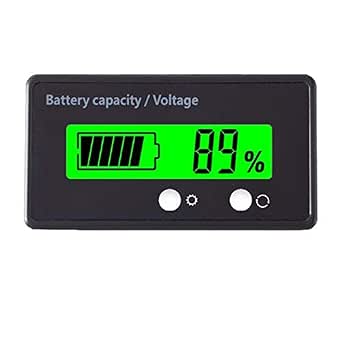 | Best for Simple Charge Checks | Voltage input: DC 12–84V | Compatible batteries: Lead-acid and 3S–26S lithium | Display: LCD with green backlight | VIEW LATEST PRICE | See Our Full Breakdown |
| DROK Digital Multimeter and Battery Monitor, 8–100V, 100A, Color LCD |  | Best for Multi-Metric Readings | Voltage range: 8–100V | Current range: 0.05–100A | Power range: 0–50kW | VIEW LATEST PRICE | See Our Full Breakdown |
| OBDResource Multi-Voltage LED Battery Monitor Meter (12V-72V) |  | Best Weather-Ready Pick | Model: BM210 | Voltage settings: 12V, 24V, 36V, 48V, 60V, 72V | Display: 10-segment LED bar graph | VIEW LATEST PRICE | See Our Full Breakdown |
| DROK Waterproof Battery Monitor, 8–100V, LCD Color Display |  | Best Compact Panel-Mount Pick | Working voltage: 8–100V | Operating current: ≤15mA | Battery types: Lithium, lead-acid, ternary lithium, polymer lithium-ion | VIEW LATEST PRICE | See Our Full Breakdown |
| LiTime 500A Battery Monitor with Shunt | 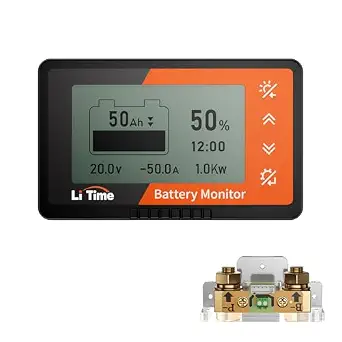 | Best for High-Current 48V Banks | Maximum current: 500A | Operating voltage: 8–120V | Capacity range: 0–9999Ah | VIEW LATEST PRICE | See Our Full Breakdown |
| Victron Energy SmartShunt Battery Monitor, 6.5–70 V, 500 A |  | Best Smart Ecosystem Pick | Voltage range: 6.5–70 V | Connectivity: Bluetooth | App: VictronConnect | VIEW LATEST PRICE | See Our Full Breakdown |
| BINTA Battery Monitor with Shunt, 8–120V, 0–500A, Voltmeter and Ammeter with Backlight |  | Best Value Pick | Compatible voltage: 8–120V | Maximum peak current: 500A | Maximum continuous current: 350A | VIEW LATEST PRICE | See Our Full Breakdown |
| AILI TR16 Shunt Battery Monitor, 8–120V, 500A, 999Ah |  | Best for Low Standby Drain | Voltage range: 8–120V | Maximum current: 500A | Capacity range: 0.1–999Ah | VIEW LATEST PRICE | See Our Full Breakdown |
| ECO-WORTHY ESM100 48V Battery Monitor with 4.3-Inch Touchscreen |  | Best Premium Display | Compatibility: ECO-WORTHY 48V 100Ah Server Rack Series, V3 and newer | Display: 4.3-inch full-color capacitive touchscreen | Interface: RS232 | VIEW LATEST PRICE | See Our Full Breakdown |
| QWORK Battery Monitor Voltmeter Ammeter (WD3062) |  | Best for RV Panel Installations | Model: WD3062 | Voltage range: 8V–80V | Current capacity: Up to 350A | VIEW LATEST PRICE | See Our Full Breakdown |
| Renogy 500A Battery Monitor with Shunt |  | Best Overall | Maximum current: 500A | Measurement accuracy: 1% | Compatible system voltages: 12V, 24V, 48V | VIEW LATEST PRICE | See Our Full Breakdown |
| CGELE DC Multifunction Battery Monitor with Shunt, 0–200V, 0–100A |  | Best for Detailed Diagnostics | Measurement functions: 9 (voltage, current, power, impedance, internal resistance, capacity, SOC, energy, run time) | Voltage range: 0–200 V | Current range: 0–100 A | VIEW LATEST PRICE | See Our Full Breakdown |
| DR DRACLISS Digital Battery Voltage Meter with Bracket, 7–100V |  | Best Simple Value | Voltage measurement range: DC 7–100V | Compatible battery voltages: 12V, 24V, 36V, 48V, 60V, 72V, 84V | Compatible battery types: Lithium, LiFePO4, lead-acid, solar | VIEW LATEST PRICE | See Our Full Breakdown |
| DROK 10–100V LCD Battery Monitor with Temperature Gauge |  | Best for Tuned State-of-Charge Accuracy | Voltage range: 10–100V | Compatible battery types: Lithium, lead-acid, lithium iron phosphate, NiMH | Temperature display: Fahrenheit | VIEW LATEST PRICE | See Our Full Breakdown |
| IPX7 Waterproof 7–100V Battery Monitor with Bracket, Temperature Display, and Buzzer Alarm |  | Best Weatherproof Monitoring with Custom Alarms | Voltage range: 7–100V | Compatible battery types: Ternary lithium, lead-acid, AGM, LiFePO4 | Alarms: Adjustable high and low voltage buzzer | VIEW LATEST PRICE | See Our Full Breakdown |
| 48V power monitor | Display |
|---|---|
| Digital Battery Capacity Indic | LCD with green backlight |
| DROK Digital Multimeter and Ba | 2.4-inch color LCD |
| OBDResource Multi-Voltage LED | 10-segment LED bar graph |
| DROK Waterproof Battery Monito | Multicolored LCD; white, blue, or green |
| LiTime 500A Battery Monitor wi | — |
| Victron Energy SmartShunt Batt | — |
| BINTA Battery Monitor with Shu | Backlit LCD |
| AILI TR16 Shunt Battery Monito | Backlit LCD |
| ECO-WORTHY ESM100 48V Battery | 4.3-inch full-color capacitive touchscreen |
| QWORK Battery Monitor Voltmete | Backlit LCD |
| Renogy 500A Battery Monitor wi | Backlit high-definition display |
| CGELE DC Multifunction Battery | Backlit LCD |
| DR DRACLISS Digital Battery Vo | — |
| DROK 10–100V LCD Battery Monit | — |
| IPX7 Waterproof 7–100V Battery | — |
More Details on Our Top Picks
Digital Battery Capacity Indicator with LCD Display, Green Backlight, and Waterproof Surface
This is the simplest choice here for a quick read on a 48V bank: its 12–84V input range covers 48V systems, and the screen switches between estimated battery percentage and voltage. The green backlight makes readings easier to see than the OBDResource BM210’s 10-segment LED bar, while the BM210 has a stated IP65 rating and this meter does not list an IP rating. Its broad lead-acid and lithium compatibility is useful when the battery chemistry changes, but a percentage based on voltage may be less informative than the LiTime monitor’s shunt-based current, capacity, and remaining-time readings. The short 30 cm cable also suits installations where the battery and panel are close together. Treat the waterproof surface as splash protection of unspecified level, not proof of immersion resistance.
Pros:- 12–84V range includes common 48V battery banks
- Switches between voltage and battery percentage
- Works with lead-acid and 3S–26S lithium batteries
- Reverse-polarity protection helps guard against wiring mistakes
Cons:- No stated accuracy or measurement tolerance
- Water resistance has no IP rating or immersion specification
- 30 cm cable may be too short for separated battery and display locations
Best for: Owners of 48V golf carts or small battery systems who want a basic, at-a-glance voltage or charge estimate.
Not ideal for: Users who need current, power, or remaining-time data, or who need a monitor with a stated waterproof rating or measurement accuracy.
- Voltage input:DC 12–84V
- Compatible batteries:Lead-acid and 3S–26S lithium
- Display:LCD with green backlight
- Display modes:Battery percentage or voltmeter
- Power cable length:30 cm
- Surface protection:Waterproof surface with PVC film
- Polarity protection:Reverse-polarity protection
Our verdict“Choose this for a compact, basic 48V charge check when voltage and percentage are enough.”
DROK Digital Multimeter and Battery Monitor, 8–100V, 100A, Color LCD
Among the direct-reading meters in this group, this DROK gives the broadest view of system activity: it reports voltage, current, power, and capacity on a 2.4-inch color screen. That makes it more useful for spotting charging behavior than the simpler Digital Battery Capacity Indicator, which only switches between voltage and a percentage estimate. Its flashing backlight can flag low voltage or capacity and high charging current, adding an alert without requiring a separate display. The 8–100V range covers a 48V system, but its current ceiling is 100A, well below the LiTime 500A shunt monitor’s capacity for larger banks. It also needs a mounting base, and the stated voltage accuracy is ±1% plus two digits, so buyers who need tighter documented precision should account for that limit.
Pros:- Shows voltage, current, power, and capacity
- 8–100V input range includes 48V systems
- Flashing backlight alerts for low voltage, low capacity, and high charging current
- Color LCD is specified for indoor and outdoor viewing
Cons:- 100A current limit excludes higher-current applications
- Requires mounting with a base
- Voltage accuracy is specified as ±1% plus two digits
Best for: RV, boat, and solar owners with 48V systems below 100A who want voltage, current, power, and capacity on one display.
Not ideal for: Owners of high-current battery banks above 100A or buyers seeking a shunt monitor with a 500A rating.
- Voltage range:8–100V
- Current range:0.05–100A
- Power range:0–50kW
- Capacity range:0.1–99,999Ah
- Voltage accuracy:±1% + 2 digits
- Current precision:±0.5% + 2 digits
- Display:2.4-inch color LCD
- Warranty:1 year
Our verdict“Pick this DROK when you want several live electrical readings in a 48V system that stays within its 100A limit.”
OBDResource Multi-Voltage LED Battery Monitor Meter (12V-72V)
The BM210 is the clearest fit for a 48V vehicle exposed to weather: it supports selectable 48V operation and carries an IP65 rating, while the Digital Battery Capacity Indicator only describes a waterproof surface without an IP rating. Its 10-segment LED bar gives a fast charge-level glance, but it cannot show the voltage, current, and capacity figures available on the DROK 8–100V color monitor. That simplicity can be an advantage on a golf cart or motorcycle where a quick status check matters more than detailed diagnosis. The tradeoff is setup: you must configure the DIP switches for the battery voltage, and installation may require cutting a panel opening. At 10 g, it adds little weight, though its compact status display is less suited to readers who want numerical detail.
Pros:- Selectable 48V setting within a 12V–72V range
- IP65 rating for protection against dust and water jets
- Supports lead-acid, lithium-ion, and LiFePO4 batteries
- Reverse-polarity protection and no external power supply requirement
Cons:- DIP switches must be set to match the battery voltage
- 10-segment bar graph offers less detail than a numerical LCD
- May require drilling or cutting a panel opening
Best for: Golf-cart, motorcycle, and electric-vehicle owners who need a weather-rated 48V charge indicator and a simple bar display.
Not ideal for: Battery-system owners who need exact voltage or current readings, or who do not want to configure DIP switches or cut a panel opening.
- Model:BM210
- Voltage settings:12V, 24V, 36V, 48V, 60V, 72V
- Display:10-segment LED bar graph
- Weight:10 g
- Dimensions:2.48 × 2.05 × 1.81 inches
- Certifications:IP65, CE, FCC, RoHS
- Compatible battery types:Lead-acid, lithium-ion, LiFePO4
- Installation:Plug-and-play; DIP switch voltage selection
Our verdict“Choose the BM210 for a compact, IP65-rated 48V status display when a charge bar is enough.”
DROK Waterproof Battery Monitor, 8–100V, LCD Color Display
This DROK packs voltage, capacity, and remaining-charge percentage into a small panel display, making it a practical fit when dash space is limited. Its 8–100V range includes 48V systems, and its low-voltage alarm and saved settings add useful safeguards that the basic Digital Battery Capacity Indicator does not describe. Compared with the DROK Digital Multimeter, it has a more compact installation footprint and a broader choice of battery chemistries, but it does not provide that model’s current and power readings. The product is described as waterproof, though no IP rating or measurement tolerance is supplied; buyers needing a published ingress rating can look to the OBDResource BM210’s IP65 specification. Panel mounting is required, so the compact size helps after installation, not for a temporary plug-in setup.
Pros:- 8–100V working range covers 48V banks
- Displays voltage, capacity, and remaining-charge percentage
- Low-voltage alarm and automatic saving after power loss
- Compact panel dimensions with multiple LCD color options
Cons:- Requires panel installation and a correctly sized cutout
- No stated accuracy tolerance or measurement resolution
- Waterproofing is not accompanied by an IP rating
Best for: Owners of 48V motorcycles, boats, or RVs who have a panel opening and want a compact charge display with a low-voltage alert.
Not ideal for: Users who want a portable meter, current and power data, or a stated ingress rating and accuracy tolerance.
- Working voltage:8–100V
- Operating current:≤15mA
- Battery types:Lithium, lead-acid, ternary lithium, polymer lithium-ion
- Display:Multicolored LCD; white, blue, or green
- Protections and alerts:Waterproofing, reverse-polarity protection, automatic save, low-voltage alarm
- Product size:61.3 × 33.3 × 13.5 mm
- Installation dimensions:58.5 × 28.5 mm
- Power source:Corded electric
Our verdict“Choose this compact DROK for a permanently mounted 48V voltage and charge display with a low-voltage alarm.”
LiTime 500A Battery Monitor with Shunt
For a 48V bank where knowing current flow and remaining runtime matters, the LiTime offers a more complete picture than the voltage-oriented DROK Waterproof Battery Monitor. Its 500A shunt capacity and readings for current, power, state of charge, and estimated remaining time suit larger systems, while the 20-foot shielded cable gives more freedom to place the display away from the batteries. Preset voltage and capacity alarms add both a flashing screen and buzzer. The tradeoff is placement: unlike the IP65 OBDResource BM210, this monitor is not waterproof and belongs in a dry location. Its ±1% accuracy is specified, but the device is larger and more involved than a basic panel voltmeter. The one-year warranty is also the stated coverage.
Pros:- Tracks current, power, capacity, state of charge, and estimated remaining time
- 500A maximum current supports larger battery banks
- 20-foot shielded cable allows flexible display placement
- Audible and visual alarms flag preset voltage or capacity thresholds
Cons:- Not waterproof and must be installed in a dry environment
- Shunt installation is more involved than fitting a basic voltage indicator
- One-year warranty
Best for: Owners of 48V RV, marine, or off-grid battery banks who need shunt-based current tracking and estimated remaining time up to 500A.
Not ideal for: Users who need a monitor installed in an exposed wet area, or who only need a small, simple voltage display.
- Maximum current:500A
- Operating voltage:8–120V
- Capacity range:0–9999Ah
- Accuracy:±1%
- Supported battery types:Li-ion, LiFePO4, AGM, Gel, and more
- Terminal size:M8
- Cable length:20 ft
- Display and alarms:Adjustable backlit LCD; flashing display and buzzer
- Waterproof:No
Our verdict“Choose the LiTime when a high-current 48V bank calls for shunt-based charge tracking and runtime estimates in a dry installation.”
Victron Energy SmartShunt Battery Monitor, 6.5–70 V, 500 A
Victron’s SmartShunt stands out for turning battery monitoring into a phone-first experience: instead of squinting at a small panel like the QWORK WD3062, everything lives in the polished VictronConnect app, including state of charge, discharge history, and alarm notifications. The wireless sharing with other Victron devices is what separates it from budget shunts like the AILI TR16 — if you already run a Victron inverter or charger, this becomes the data hub of the whole system. The auxiliary input adds a second battery, midpoint, or temperature reading, though temperature needs an optional sensor. The tradeoff is real: outside the Victron ecosystem, much of the value goes unrealized, and there’s no dedicated display at all — a dealbreaker for anyone who wants readings at a glance without opening an app.
Pros:- Detailed state-of-charge tracking plus discharge history in the VictronConnect app
- Alarm notifications pushed to your phone
- Shares battery data wirelessly with compatible Victron devices
- Auxiliary connection supports a second battery, midpoint, or optional temperature sensor
Cons:- Full value depends on owning other Victron equipment
- Temperature monitoring requires a separately purchased sensor
- No built-in display — app access required for all readings
Best for: Boat, RV, and off-grid owners already running Victron gear who want app-based monitoring and system-wide data sharing
Not ideal for: Buyers without any Victron equipment or those who want a physical always-on display — the app dependency adds friction
- Voltage range:6.5–70 V
- Connectivity:Bluetooth
- App:VictronConnect
- Auxiliary connection:Second battery, midpoint monitoring, or optional temperature sensor
- Additional use:DC energy meter
Our verdict“This pick makes the most sense for Victron-ecosystem owners who value app-based analytics over a dashboard display.”
BINTA Battery Monitor with Shunt, 8–120V, 0–500A, Voltmeter and Ammeter with Backlight
The BINTA monitor delivers the core shunt-based experience — state of charge, voltage, current, and capacity up to 999Ah — at a price point that undercuts the Victron SmartShunt while still offering something Victron doesn’t: a physical backlit display. Its 8–120V range is wider than the QWORK WD3062’s 80V ceiling, giving headroom for higher-voltage experiments beyond a stock 48V bank. Two-way current detection means charging and discharging both count toward the state-of-charge math, which cheaper voltage-only indicators like the Digital Battery Capacity Indicator simply can’t do. Compared with the AILI TR16, BINTA’s weakness is idle draw — its auto-sleep mode still pulls under 50mA, versus the AILI’s microamp-level standby, so it slowly drains a small bank left unattended for weeks.
Pros:- Tracks state of charge, remaining capacity, voltage, and current in one unit
- Wide 8–120V compatibility across lead-acid, LiFePO4, and lithium-ion chemistries
- Two-way current detection captures both charge and discharge
- Memory retains settings and last recorded data through shutdowns
Cons:- Auto-sleep draw under 50mA can slowly drain an idle battery
- Shunt and shielded cable wiring make installation a real afternoon job, not a clip-on accessory
Best for: Budget-conscious 48V solar or LiFePO4 system builders who want full shunt-based capacity tracking with a display
Not ideal for: Small battery banks left in storage for long stretches — the sub-50mA sleep draw adds up over weeks of disuse
- Compatible voltage:8–120V
- Maximum peak current:500A
- Maximum continuous current:350A
- Maximum remaining capacity:999Ah
- Compatible battery types:Lead-acid, LiFePO4, lithium-ion
- Display:Backlit LCD
- Included cables:3 m shielded cables, 1 m positive wire
Our verdict“A solid choice for 48V builders who want Victron-style capacity math on a budget, as long as the standby draw won’t matter on their bank size.”
AILI TR16 Shunt Battery Monitor, 8–120V, 500A, 999Ah
Where the BINTA can sip up to 50mA in sleep mode, the AILI TR16 drops to a claimed 50–60 microamps — roughly a thousand times less — which matters enormously for batteries that sit unused between trips. That efficiency, combined with data memory through power-offs, makes it the better pick for seasonal RVs, boats in winter storage, or backup banks. Real-time state-of-charge, voltage, current, and capacity figures cover the same fundamentals as the Renogy 500A, and the included 2 m extension cable plus shunt gives flexible mounting options. One annoyance: the listing doesn’t confirm whether you receive the 350A or 500A shunt, so buyers pushing sustained high loads should verify before ordering. The backlit LCD is functional rather than elegant — no touchscreen like the ECO-WORTHY ESM100 — but it stays readable where it counts.
Pros:- Extremely low 50–60μA standby current preserves idle batteries
- Real-time state of charge, voltage, current, and capacity readings
- Broad chemistry support: LiFePO4, lithium-ion, AGM, gel, and lead-acid
- Complete kit with display, shunt, extension cable, and manual
Cons:- Unclear whether the included shunt is rated 350A or 500A
- Shunt wiring installation required — no plug-and-play option
Best for: Seasonal RV and boat owners, or anyone with a 48V bank that sits idle for months between uses
Not ideal for: High-load systems running sustained currents near 500A — the ambiguous shunt rating creates uncertainty
- Voltage range:8–120V
- Maximum current:500A
- Capacity range:0.1–999Ah
- Supported systems:12V, 24V, 36V, 48V
- Compatible battery types:LiFePO4, lithium-ion, AGM, gel, lead-acid
- Standby current:50–60μA
- Display:Backlit LCD
Our verdict“The strongest choice when parasitic drain is your main concern and your 48V system spends long stretches unused.”
ECO-WORTHY ESM100 48V Battery Monitor with 4.3-Inch Touchscreen
Nothing else in this lineup offers a 4.3-inch full-color capacitive touchscreen, and that alone redefines what monitoring feels like compared to the segment-style LCDs on the AILI TR16 or QWORK WD3062. The ESM100 goes beyond bank-level numbers: four temperature sensors and per-cell status give visibility that generic shunt monitors physically cannot match, since that data comes straight from the battery’s BMS over RS232. It even configures inverter parameters, acting as a control surface rather than just a gauge. The catch is severe — it only works with ECO-WORTHY 48V 100Ah Server Rack batteries V3 and newer, so anyone with V2 units, other brands, or DIY packs gets nothing. Power consumption is impressively frugal at under 1W operating, and the magnetic mounting strip avoids drilling entirely.
Pros:- Cell-level status and four temperature sensors for deep battery visibility
- 4.3-inch color touchscreen with auto-sleep after 30 seconds
- Doubles as an inverter parameter configuration tool
- Magnetic mounting and sub-1W power consumption
Cons:- Strictly limited to ECO-WORTHY 48V 100Ah Server Rack batteries, V3 and newer
- No compatibility with V2 batteries or other brands
- Wired RS232 connection limits placement relative to the rack
Best for: Owners of ECO-WORTHY 48V 100Ah Server Rack V3-or-newer batteries who want cell-level insight and touchscreen control
Not ideal for: Anyone with V2 batteries, other battery brands, or mixed DIY 48V banks — the RS232 lock-in leaves them with a paperweight
- Compatibility:ECO-WORTHY 48V 100Ah Server Rack Series, V3 and newer
- Display:4.3-inch full-color capacitive touchscreen
- Interface:RS232
- Temperature sensors:4
- Operating temperature:-4°F to 167°F
- Power consumption:<1W operating, <0.1W standby
- Languages:English, Chinese, Ukrainian
- Compliance:ROHS 2.0
Our verdict“A premium companion for the specific ECO-WORTHY rack ecosystem it serves — brilliant within that niche, useless outside it.”
QWORK Battery Monitor Voltmeter Ammeter (WD3062)
The QWORK WD3062 is built for the classic RV and motorhome use case: a clean panel-mount install where voltage, current, and state of charge sit permanently in the dashboard, readable via backlit LCD even at night. Its 13-foot cable outstretches the AILI TR16’s 2 m run, giving far more routing freedom between battery bay and living area, and the reinforced 350A shunt holds steady under sustained loads that would push lighter units. Compared with the BINTA, the lower 80V ceiling is tighter but still comfortable for a 48V nominal bank, and NIST-traceable certification with CE marking gives confidence the readings aren’t guesswork. Tradeoffs: it demands a cutout in your panel, which isn’t reversible, and the 40°C upper temperature rating is the lowest in this batch — an engine bay or hot climate install could exceed it.
Pros:- Reinforced 350A shunt for stable high-current monitoring
- 13-foot cable allows flexible battery-to-dashboard routing
- Automatic data memory survives power disconnects
- NIST-traceable accuracy with CE certification
Cons:- Requires cutting a panel opening — not renter-friendly or easily reversible
- 40°C maximum operating temperature limits hot-environment placement
Best for: RV and motorhome owners who want a permanent, professionally integrated dashboard monitor with generous cable reach
Not ideal for: Hot-climate or engine-compartment installs — the 40°C rating is the strictest thermal limit in this roundup
- Model:WD3062
- Voltage range:8V–80V
- Current capacity:Up to 350A
- Capacity tracking:Up to 999Ah
- Cable length:13 ft
- Display:Backlit LCD
- Certifications:NIST Traceable, CE Marked
Our verdict“The right pick for a permanent RV dash install where cable length, shunt toughness, and certified accuracy matter most.”
Renogy 500A Battery Monitor with Shunt
True shunt-based monitoring is what separates accurate battery monitors from simple voltage readers, and this Renogy unit is the strongest execution of that principle at a mid-range price. Because it counts every amp flowing in and out rather than estimating from voltage, its 1% accuracy and degradation-rate readout give 48V solar and off-grid users data they can actually act on. Compared with the CGELE, which tops out at 100A, the 500A ceiling here handles whole-system loads, inverters included — putting it in the same performance class as the LiTime and Victron SmartShunt elsewhere in this roundup. The 20-foot shielded cable also allows flexible panel placement. The tradeoff: installing the shunt means breaking into the main negative cable run, so this is a real project, not a clip-on accessory, and mounting hardware for the display isn’t clearly specified.
Pros:- Shunt-based measurement delivers true amp-hour counting at 1% accuracy
- 500A rating covers inverter and whole-system loads
- Supports 12V/24V/48V across lead-acid, LiFePO4, lithium-ion and NiMH
- 20-foot shielded cable allows remote display mounting
Cons:- Requires wiring a shunt into the main negative cable — not a plug-and-play install
- Included mounting hardware is not clearly specified, so you may need extra brackets or screws
Best for: 48V off-grid and solar system owners who need amp-hour-accurate state-of-charge data across high-current loads
Not ideal for: Anyone wanting a five-minute install — the shunt must be wired into the main negative cable path, which takes real effort
- Maximum current:500A
- Measurement accuracy:1%
- Compatible system voltages:12V, 24V, 48V
- Compatible battery types:Lead-acid (AGM, GEL), LiFePO4, lithium-ion, NiMH
- Display:Backlit high-definition display
- Cable length:20 ft shielded
- Alarms:High and low battery capacity
Our verdict“If you want trustworthy, whole-system state-of-charge data on a 48V bank and accept a shunt install, this is the pick to beat.”
CGELE DC Multifunction Battery Monitor with Shunt, 0–200V, 0–100A
This is the data-density pick of the lineup: nine simultaneous measurements including internal resistance, impedance, and energy totals that none of the simple voltage readers here — like the DR DRACLISS or DROK temperature model — can touch. Internal resistance in particular is a genuine diagnostic tool, letting a 48V bank owner spot a degrading cell before capacity crashes. The 0–200V range also clears the 48V system with huge headroom, unlike the 7–100V meters that sit close to their ceiling. The screw-free press terminals make wiring less fiddly than traditional shunt setups such as the Renogy. The catch is the 100A current limit: fine for monitoring a battery bank’s baseline behavior, but not for tracking a big inverter load, and its minimum 9.99V operating voltage rules out low-voltage banks.
Pros:- Nine measurements including internal resistance, impedance, and energy totals
- Wide 0–200V range gives ample headroom above 48V systems
- Screw-free press terminals speed up wiring changes
- Backlit LCD stays readable at night
Cons:- 100A current ceiling limits use to modest loads, unlike the Renogy’s 500A
- Requires a shunt installation like all amp-counting monitors
- Interface is data-dense and takes time to learn for casual users
Best for: Technically minded hobbyists and maintenance-focused users who want internal resistance and energy logging, not just state of charge
Not ideal for: Users running high-current loads through an inverter — the 100A shunt ceiling will be exceeded
- Measurement functions:9 (voltage, current, power, impedance, internal resistance, capacity, SOC, energy, run time)
- Voltage range:0–200 V
- Current range:0–100 A
- Power range:0–60000 W
- Measurement accuracy:1%
- Display:Backlit LCD
- Dimensions:3.59 × 1.97 × 0.96 inches
Our verdict“Choose this when diagnostics matter more than raw current handling — it reads batteries the simple voltage meters simply can’t.”
DR DRACLISS Digital Battery Voltage Meter with Bracket, 7–100V
Not everyone needs amp-hour counting, and this meter makes the honest case for keeping it simple: voltage, remaining capacity, a backlit display, and an IP67 waterproof housing that’s sealed against real weather. Compared with the more feature-laden IPX7 model later in this list, the DR DRACLISS trades adjustable alarms for a cleaner out-of-box experience and broader chemistry support, covering everything from 12V to 84V packs including LiFePO4 and lead-acid. Its sub-15mA draw (under 1mA in low-power mode) means it won’t meaningfully drain the bank it watches — a real consideration for seasonal vehicles. The compromises are structural: voltage-based capacity estimates are rougher than shunt data from the Renogy, the alarm only fires below 10% (near empty, not early), and you need a flat panel or surface to mount it.
Pros:- IP67 water and dust resistance handles outdoor and exposed installs
- Broad 12V–84V compatibility across lithium, LiFePO4, lead-acid and solar batteries
- Very low power draw with sub-1mA low-power mode
- Power-off memory retains capacity readings
Cons:- Voltage-based capacity estimate is less accurate than shunt-based monitors like the Renogy
- Mounting requires a panel or flat surface — no adhesive-only option mentioned
Best for: Golf cart, e-bike, and small solar owners who want a weatherproof, no-fuss voltage and capacity readout
Not ideal for: Users who need early low-voltage warnings — the alarm only triggers below 10%, when the battery is nearly depleted
- Voltage measurement range:DC 7–100V
- Compatible battery voltages:12V, 24V, 36V, 48V, 60V, 72V, 84V
- Compatible battery types:Lithium, LiFePO4, lead-acid, solar
- Water and dust resistance:IP67
- Low-voltage alarm:Activates below 10%
- Power consumption:<15mA operating, <1mA low-power mode
- Dimensions:2.36 × 2.36 × 1.97 inches
Our verdict“A dependable, weatherproof basic meter for anyone who values simplicity and durability over precision analytics.”
DROK 10–100V LCD Battery Monitor with Temperature Gauge
What sets this DROK apart in a crowded field of voltage readers is its programmable capacity percentage: instead of accepting a generic voltage-to-SOC curve, you can dial in setpoints that match your specific battery, which narrows the gap between cheap voltage estimates and shunt-level accuracy without any shunt install. It ships defaulted to a 48V lead-acid profile, so for many readers of this roundup it works reasonably well right away — though LiFePO4 owners will want to reprogram it since that chemistry’s flat voltage curve hides true capacity. Chemistry support (lithium, lead-acid, LiFePO4, NiMH) is broader than most here, and the Fahrenheit temperature readout is a nice touch for US buyers versus the Celsius-only IPX7 model. Just know the temperature sensor reads the meter’s internals, not the air around it, so treat it as a coarse indicator.
Pros:- Programmable capacity percentages let you match your specific battery’s voltage curve
- Broad chemistry support: lithium, lead-acid, LiFePO4, NiMH
- Temperature display in Fahrenheit suits US users
- Default configuration targets 48V lead-acid systems out of the box
Cons:- Temperature reading reflects the meter’s internal temperature, not ambient or battery temperature
- Requires reprogramming for chemistries other than the 48V lead-acid default
Best for: Owners who want a more accurate voltage-based capacity reading without installing a shunt, especially on 48V lead-acid banks
Not ideal for: LiFePO4 users unwilling to reprogram the capacity curve — the default lead-acid profile will misreport SOC
- Voltage range:10–100V
- Compatible battery types:Lithium, lead-acid, lithium iron phosphate, NiMH
- Temperature display:Fahrenheit
- Capacity programming:Adjustable percentage setpoints
- Default configuration:48V lead-acid battery
- Power source:Battery powered
Our verdict“The best middle ground between a dumb voltmeter and a shunt system — accurate if you invest a few minutes in setup.”
IPX7 Waterproof 7–100V Battery Monitor with Bracket, Temperature Display, and Buzzer Alarm
This monitor’s headline advantage over the DR DRACLISS is adjustable high and low voltage alarms: rather than waiting until the battery is nearly dead, you set your own thresholds, so a 48V system owner gets warned before sulfation or BMS cutoff territory. The IPX7 housing and reverse-polarity protection make it forgiving for exposed installs on boats, golf carts, and outdoor enclosures, and the bundled hardware — bracket, adhesive, screws, and 23.62-inch leads — is more complete than most rivals here, including the DROK temperature model. It’s still a voltage-based reader, so it won’t match the Renogy’s shunt accuracy on capacity, and two quirks demand attention: readings need initial setup to display a meaningful percentage, and temperature is Celsius-only, which US users may find unintuitive.
Pros:- Adjustable high/low voltage buzzer alarms give early warning, unlike fixed 10% alarms
- IPX7 waterproof housing with reverse-polarity protection suits harsh installs
- Complete mounting kit: bracket, adhesive, screws and 60cm wires included
- Power-off memory retains your alarm settings
Cons:- Requires an initial setup procedure for accurate battery percentage readings
- Temperature displayed in Celsius only
- Voltage-based SOC estimates are less precise than shunt monitors like the Renogy
Best for: Boat, golf cart, and outdoor-equipment owners who need user-settable voltage alarms in a fully weatherproof package
Not ideal for: US users who want plug-and-play readings and Fahrenheit temperature — setup is required and the display is Celsius-only
- Voltage range:7–100V
- Compatible battery types:Ternary lithium, lead-acid, AGM, LiFePO4
- Alarms:Adjustable high and low voltage buzzer
- Protection:Reverse-polarity protection
- Wire length:23.62 inches (60 cm)
- Memory:Retains settings when power is removed
Our verdict“The right pick when outdoor exposure and custom alarm thresholds matter more than lab-grade accuracy.”
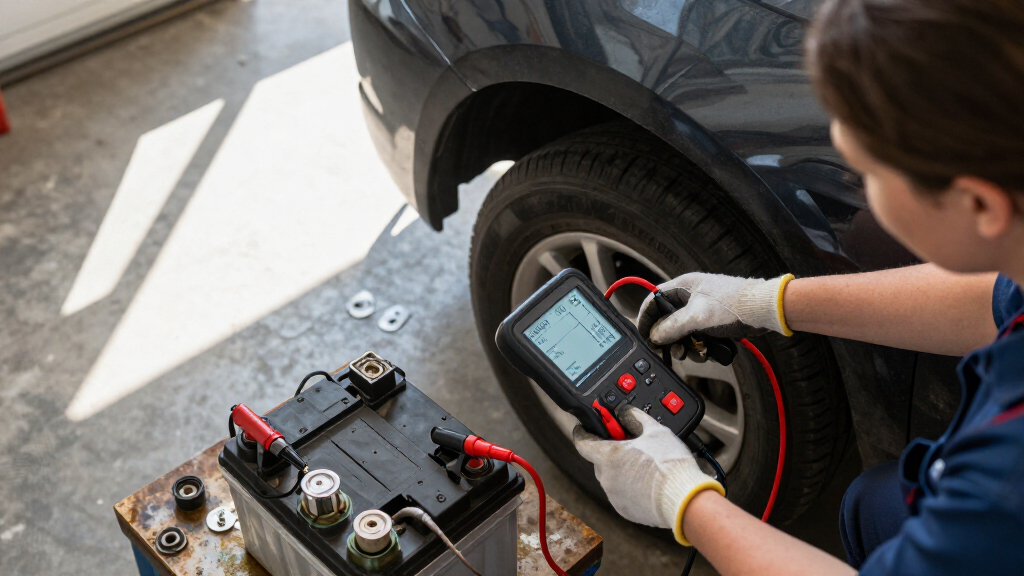
How We Picked
I evaluated each monitor against the demands specific to 48V systems: solar banks, golf carts, e-bikes, RVs, and off-grid setups. The first filter was measurement method — shunt-based monitors that count actual amp-hours in and out of the battery rank above voltage-only meters, because 48V lithium chemistry holds a flat voltage curve that makes voltage readings unreliable for state of charge. The second filter was voltage range compatibility: a nominal 48V lithium bank charges to nearly 54V, so anything capped below 60V was flagged as risky.
From there, I weighed display readability (screen size, backlight, viewing angles), build quality (waterproofing, shunt and wire gauge), ease of installation (included shunts, brackets, wiring diagrams), and value relative to capability. Units with smart features like Bluetooth or alarms earned consideration for whole-system monitoring, while budget voltage meters were judged honestly as gauges, not battery managers. That hierarchy — accuracy first, usability second, price third — is what drives the ranking order below.
Factors to Consider When Choosing Best 48V Power Monitors
Before settling on a monitor, it helps to understand what actually separates an accurate, long-lasting unit from one that will frustrate you within a season. These are the factors that matter most for 48V installations specifically.Shunt vs. Voltage Monitoring
This is the single biggest decision, and it’s where most buyers go wrong. A voltage-only meter reads the battery’s resting voltage and guesses at charge level — workable for lead-acid, misleading for lithium. A 48V lithium pack can sit at 53V at 80% charge and 51V at 30% charge, a window so narrow that cheap meters swing wildly with load. A shunt-based monitor measures every amp flowing in and out, giving a true state-of-charge percentage. If your battery cost more than a few hundred dollars, skipping the shunt to save money on the monitor is a false economy.
Voltage Range Headroom
Never buy a monitor rated exactly at your system voltage. A nominal 48V battery reaches 54.6V or higher during absorption charging, and equalization cycles on lead-acid can push even higher. Monitors with an 8–100V or 0–200V range give comfortable headroom and survive voltage spikes from chargers or inverters. Units capped near 60V work but leave little margin, and a single transient spike can kill the display. Check the spec sheet for maximum continuous voltage, not just the advertised nominal range.
Current Rating and Shunt Sizing
The shunt’s amp rating determines what loads you can measure without damage or clipping. A 500A shunt covers most 48V inverter systems and golf cart controllers, while 100A shunts suit lighter loads like e-bikes or small solar setups. Undersizing causes inaccurate readings at high draw; oversizing hurts resolution at low draw, making small loads hard to detect. Match the rating to your actual peak current with roughly 20% headroom, and confirm the included wiring is heavy enough gauge for the amps involved.
Display, Alerts, and Data Access
Think about where and how you’ll actually read the monitor. A backlit LCD in a battery compartment is useless if you check it from the driver’s seat — that’s where Bluetooth-enabled units like the SmartShunt earn their premium, letting you check state of charge from your phone anywhere on the property. Touchscreens offer the richest interface but demand flat panel space. Also weigh alarms: low-voltage buzzers and programmable alerts protect against over-discharge, which is one of the fastest ways to kill a lithium pack.
Environmental Protection
Installation environment should dictate the enclosure rating. Golf carts, boats, and outdoor battery enclosures expose monitors to spray, dust, and condensation — an IPX7-rated face or sealed design will outlast an open LCD board. Interior installs in a dry RV cabinet or server rack can get away with standard units. A common mistake is mounting a non-waterproof display on a cart dash where it survives one rainy season; check whether the waterproofing covers the whole unit or just the front face, since rear connections are the usual failure point.
Installation Complexity and Peukert Settings
Shunt monitors require cutting the negative cable so all current flows through the shunt — a job that’s straightforward on a bench but awkward in a cramped battery bay. Cheaper units also skip programmable battery parameters, locking you to default charge-efficiency assumptions that don’t match lithium. Before buying, confirm you can set capacity in amp-hours and adjust charge efficiency, or the state-of-charge reading will drift over time. If you’re not comfortable wiring a shunt, a quality voltage meter plus a separate Bluetooth battery meter from your battery maker is a legitimate alternative path.
Frequently Asked Questions
Can I use a 12V/24V battery monitor on my 48V system?
Only if its voltage range explicitly extends to at least 60V — and many budget monitors marketed as universal cap out at 30V or 36V, which will destroy the unit the moment your 48V bank charges. A nominal 48V lithium battery reaches 54.6V at full charge, and 48V lead-acid banks can spike higher during equalization. Look for ranges like 8–100V, 8–120V, or 0–200V in the specs. Monitors such as the Victron SmartShunt (6.5–70V) and the AILI TR16 (8–120V) handle 48V comfortably. Also confirm the shunt rating, since a monitor designed for 12V systems may assume current levels that don’t match your 48V loads.
Do I really need a shunt, or is a voltage meter enough for 48V lithium?
For lithium chemistry at 48V, a voltage-only meter is genuinely inadequate for tracking remaining capacity. Lithium cells hold a flat voltage curve across most of the discharge range — a 48V pack might read 53V at 80% charge and 51V at 30%, and load current pulls that reading down further. That means a voltage gauge can easily be off by 20–30% in either direction, right at the point where you’re deciding whether to recharge. A shunt counts actual amp-hours consumed and replaced, giving a reliable percentage. Voltage meters still have a place as quick dashboard gauges or backup checks, but they shouldn’t be your primary battery management readout on an expensive 48V bank.
Is the Victron SmartShunt worth the extra cost over the Renogy 500A?
It depends entirely on whether you value wireless monitoring and ecosystem integration. The SmartShunt’s core measurement accuracy is similar to the Renogy — both use a 500A shunt and both track state of charge properly. What you pay extra for is Bluetooth connectivity, so you can check your battery from a phone without walking to the display, plus compatibility with VictronConnect, historical data logging, and integration with other Victron gear like MPPT controllers and Cerbo hubs. If you’re building a Victron-based solar system or want remote monitoring in an RV or boat, the premium pays off. If you just need a reliable wired display at the battery, the Renogy covers the fundamentals for less.
How do I size the shunt rating for my 48V system?
Add up the peak current your system can draw, then add about 20% headroom. A 3000W inverter on a 48V bank pulls roughly 65–75A continuously but can surge far higher at startup, which is why 500A shunts are the safe standard for inverter-based systems. Golf cart controllers typically draw 200–300A under acceleration, again pointing to a 500A rating. Smaller loads like a 1000W inverter or an e-bike charger might only need 100A, and a 100A shunt actually gives better resolution for detecting small parasitic draws. The tradeoff is resolution versus survivability — you never want your peak current exceeding the shunt rating, or readings clip and accuracy suffers.
Why does my shunt monitor’s state-of-charge reading drift over time?
Drift happens because a shunt counts current but must estimate the battery’s actual charge efficiency, and those estimates are never perfect. If your monitor’s capacity setting doesn’t match your battery’s true amp-hour rating, or the charge efficiency is set to a default that doesn’t match lithium (which should be near 100%, not the 85–90% typical of lead-acid defaults), errors accumulate with every cycle. The fix is to program the correct capacity and efficiency values during setup, and periodically run a full charge cycle so the monitor can resynchronize at a known 100% point. Monitors with programmable parameters handle this well; fixed-setting budget units will drift more and can’t be corrected, which is a real argument for spending slightly more on an adjustable model.
Conclusion
After comparing all 15 monitors, the right choice comes down to what you’re monitoring and how precisely you need to know it. For best overall, the Victron Energy SmartShunt is the clear leader — shunt-based accuracy, Bluetooth monitoring, and a track record that justifies its price for serious 48V solar and off-grid systems. For best value, the Renogy 500A Battery Monitor delivers nearly the same measurement quality with a wired display, and the AILI TR16 and BINTA monitors are solid budget alternatives if Renogy is unavailable. On the premium end, the ECO-WORTHY ESM100 with its 4.3-inch touchscreen is the pick for buyers who want a polished, always-visible interface at the battery bank.
For beginners or anyone intimidated by shunt wiring, the DROK color LCD meter offers a simple two-wire install that still shows voltage and current — just understand it can’t track lithium capacity accurately. For specific needs: the IPX7 bracket-mount monitor suits wet golf cart and marine installs, the DROK with temperature gauge fits setups where battery temperature matters, and the OBDResource multi-voltage monitor works well across a mixed fleet of 12V–72V equipment. Whatever you choose, match the shunt to your peak current, verify the voltage range clears 60V, and program the correct battery capacity — those three steps matter more than any brand name on the box.
Fall Picks
fall essentials
As an affiliate, we earn on qualifying purchases.