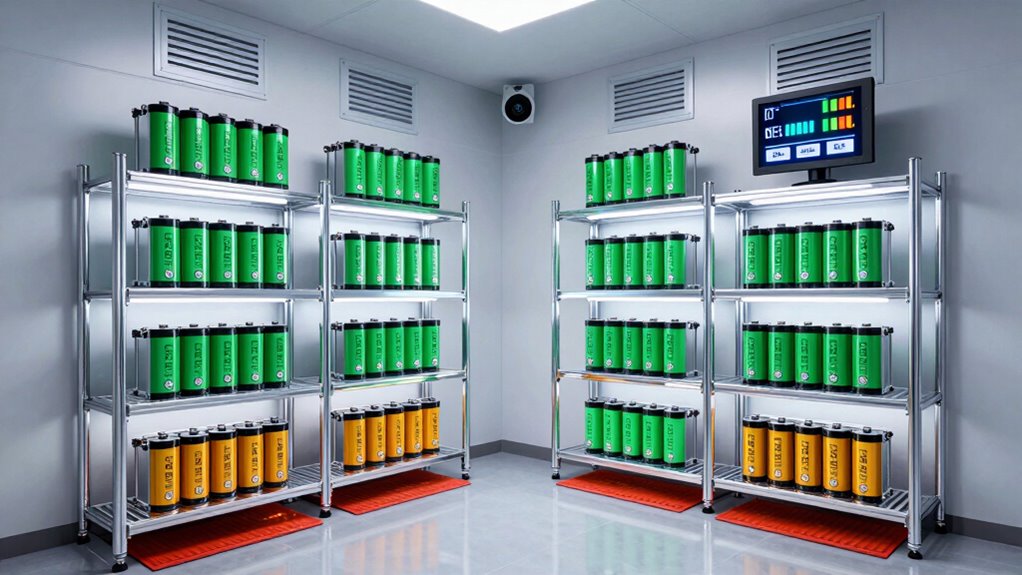

To store lithium batteries safely and extend their lifespan, keep them at around 30-50% charge, avoiding fully charging or discharging. Store them in a cool, dry, well-ventilated place away from heat and direct sunlight. Regularly inspect for damage or swelling and recharge every few months. Following these simple rules helps prevent damage, swelling, and safety hazards. If you’re curious, you’ll discover more tips to maximize battery safety and longevity.
Key Takeaways
- Store lithium batteries at a 30-50% charge to minimize stress and prolong lifespan.
- Regularly check and recharge batteries to maintain optimal charge levels during storage.
- Avoid fully discharging or overcharging batteries to prevent capacity loss and damage.
- Keep batteries in cool, dry, and ventilated areas away from heat sources and flammable materials.
- Use proper containers and safety measures to reduce the risk of fire or thermal runaway during storage.
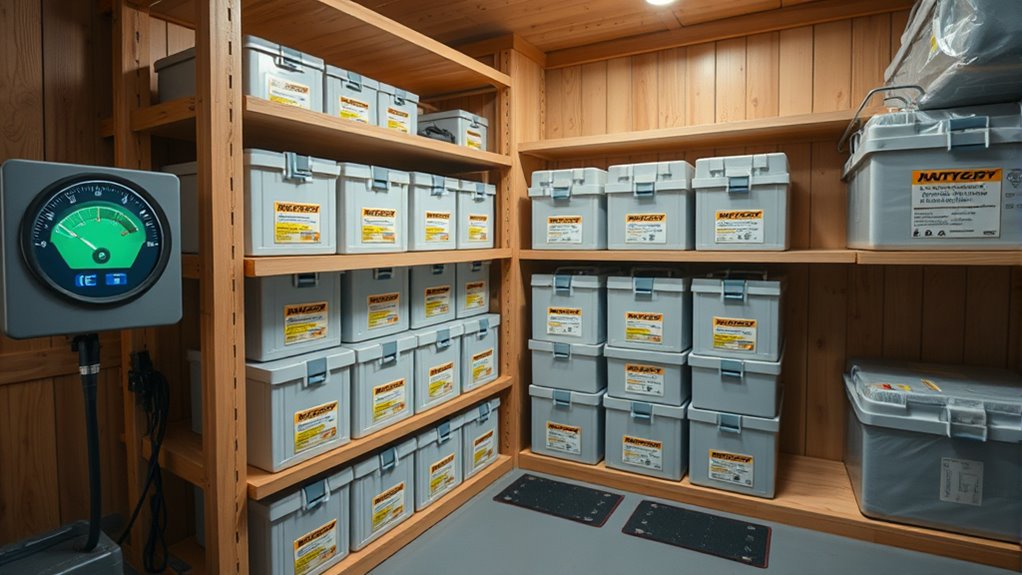
Lithium power has become essential for portable electronics, electric vehicles, and renewable energy storage, but handling and storing these batteries safely is critical to prevent accidents. Proper storage practices not only extend the lifespan of your batteries but also markedly reduce the risk of fire hazards. One of the most important aspects of safe storage is maintaining the correct state-of-charge, which directly impacts battery health and safety. When batteries are stored at too high or too low a charge, they become more susceptible to damage, swelling, or even thermal runaway, increasing the danger of fires. To prevent this, you should aim to store lithium batteries at about 30-50% charge, a level that minimizes stress on the cells and preserves their longevity.
Battery maintenance during storage is crucial to ensure safety and prolong battery life. Regularly checking the voltage levels and inspecting for any signs of damage, swelling, or corrosion helps catch issues early. If a battery is stored for an extended period, it’s wise to recharge it to the ideal state-of-charge every few months. Doing so prevents the battery from becoming overly discharged, which can lead to capacity loss or internal damage. Conversely, overcharging or leaving a battery fully charged for long durations can accelerate aging and pose fire risks, especially if the battery’s internal protection mechanisms fail. Always follow manufacturer recommendations for storage and maintenance routines to keep your batteries in the best condition. Additionally, understanding the role of contrast ratio in projectors can help in creating optimal viewing environments for your home cinema setup.
Fire safety is a critical concern when storing lithium batteries, as they can ignite if damaged, improperly handled, or subjected to high temperatures. To mitigate fire risks, store batteries in a cool, dry, well-ventilated area away from flammable materials. Avoid exposing batteries to direct sunlight or heat sources, which can increase internal temperature and trigger thermal runaway. Use fire-resistant containers or storage cabinets designed specifically for lithium batteries, especially if you have a large number. Handling batteries carefully during installation and maintenance prevents punctures or other damage that could lead to short circuits and fires. Keep a fire extinguisher suitable for electrical fires nearby, and never attempt to suppress a lithium battery fire with water—use a Class D fire extinguisher or sand instead.
In essence, safe storage of lithium power hinges on diligent battery maintenance and prioritizing fire safety. By maintaining proper charge levels, inspecting batteries regularly, and storing them in appropriate conditions, you markedly reduce risks and extend their useful life. Remember, taking small precautions now can prevent costly accidents later, ensuring your lithium batteries serve you safely and efficiently over the long term.

YONHAN Battery Charger 20A 12V/24V LiFePO4 Lead Acid Fully Automatic Battery Maintainer, Car Battery Trickle Charger Automotive w/Repair, Winter Mode, for AGM, STD, Gel, Deep Cycle Batteries
[20A Suitable for LiFePO4 Lead-acid Battery Charger] 12V 20 Amp, 24V 10Amp 7-stage quick battery charger, Designed to...
As an affiliate, we earn on qualifying purchases.
Frequently Asked Questions
Can Lithium Batteries Be Stored in Freezing Temperatures Safely?
You shouldn’t store lithium batteries in freezing temperatures because it can harm their temperature stability and reduce lifespan. Cold environments can cause internal damage or capacity loss. To protect your batteries, guarantee proper storage insulation that maintains a stable temperature, ideally between 20°C and 25°C. Keep them in a cool, dry place away from extreme cold to prolong their life and ensure safe operation.
How Does Temperature Affect Lithium Battery Storage Longevity?
You might think temperature doesn’t matter, but it really impacts lithium battery longevity. Extreme heat accelerates chemical reactions, causing faster degradation, while cold temperatures can slow down capacity loss temporarily. Proper thermal management helps maintain a stable temperature, reducing damage from temperature cycling and extending lifespan. By avoiding rapid temperature swings and keeping batteries in a moderate environment, you guarantee they stay healthier longer and perform reliably over time.
Is It Safe to Store Lithium Batteries Near Flammable Materials?
You shouldn’t store lithium batteries near flammable materials because it considerably increases fire risk. Always follow proper storage guidelines, which recommend keeping batteries in a cool, dry place away from combustible items. If a battery malfunctions or gets damaged, the danger of fire escalates near flammable substances. To guarantee safety, store lithium batteries in fire-resistant containers or designated areas, and avoid exposure to heat or sparks.
What Are the Signs of a Lithium Battery Deteriorating During Storage?
Imagine your stored lithium battery suddenly feels swollen or bloated—that’s a clear sign of deterioration. You might also notice a voltage decline, where the battery can’t hold its charge as well as before. These signs indicate the battery’s internal chemistry is breaking down, increasing the risk of failure or hazards. Regularly checking for swelling and monitoring voltage levels helps you catch issues early, ensuring safe storage and longer battery life.
How Often Should Stored Lithium Batteries Be Checked or Recharged?
You should check and recharge your stored lithium batteries every three to six months. Regular battery maintenance is essential to prevent capacity loss and ensure safety. Follow storage best practices by keeping them at a preferable state of charge—around 50%. This helps prolong their lifespan. Always inspect for signs of deterioration and recharge as needed, especially if you notice voltage drops or reduced performance, to keep your batteries in good condition.

OPTIMA® Batteries Digital 400+ 12 Volt Battery Maintainer and Charger for AGM, Lithium, Automotive, Marine and Powersport Batteries
Digital battery type selector: OPTIMA AGM, OPTIMA Li, Auto/Marine, Power Sport Lead Acid batteries
As an affiliate, we earn on qualifying purchases.
Conclusion
By following the state-of-charge rule, you’re like a skilled gardener tending delicate blooms, ensuring your lithium power stays vibrant and healthy. Think of your battery as a precious treasure chest, safest when kept at just the right depth. When you store it wisely, you’re guiding it through a gentle slumber, ready to spring back to life when needed. With care and attention, your lithium power will shine brightly, fueling your adventures for years to come.

2 Bank Marine Battery Charger 5X2, 10A (5A/Bank) - 12V Waterproof Onboard Battery Charger, Battery Maintainer & Desulfator for SLA/AGM, Lithium (LiFePO4), Calcium & Deep-Cycle Battery- Charged 24/7
【5X2, 2-Bank, 5A Per Bank】: Marine battery charger for all types of lead-acid & lithium-ion 12V batteries, including...
As an affiliate, we earn on qualifying purchases.

NOCO GENIUS2: 2A 6V/12V Smart Battery Charger – Automatic Maintainer, Trickle Charger & Desulfator with Overcharge Protection & Temperature Compensation – for Lead-Acid & Lithium Batteries
THE ALL-NEW GENIUS2: Introducing the all-new GENIUS2, making it one of our the most powerful, highest-performing, energy-efficient, and...
As an affiliate, we earn on qualifying purchases.