If you want the best efficiency in shaded conditions, use parallel wiring, as it limits shading effects to individual panels and keeps the whole system running smoothly. For maximizing voltage and dealing with long wire runs, series connections work well but are more affected by partial shading. The right choice depends on your sunlight, site setup, and energy goals—continue to explore to find the best setup for your situation.
Key Takeaways
- Use series wiring for high voltage needs and to match inverter requirements; parallel for shading resilience and current stability.
- In shaded conditions, parallel wiring minimizes power loss by isolating shaded panels, while series wiring causes significant performance drops.
- For partial shading, parallel configurations ensure unaffected panels continue producing power, improving overall efficiency.
- Series wiring is ideal when maximizing voltage over long distances or in full sun; parallel is better for variable light and shading.
- Combining series and parallel can optimize both voltage and current based on site-specific shading and energy goals.

BougeRV Solar Connectors Y Branch Parallel Adapter Cable Wire Plug Tool Kit for Solar Panel
【Y Branch Parallel Connector】1 male to 2 female (M/FF) and 1 female to 2 male (F/MM) solar connectors,…
As an affiliate, we earn on qualifying purchases.
As an affiliate, we earn on qualifying purchases.
Understanding Series and Parallel Configurations

Understanding series and parallel configurations is essential for optimizing your solar panel setup. In a series connection, you link the positive terminal of one panel to the negative terminal of the next, which adds up the voltage but keeps the current the same. For example, four 12V, 5A panels produce 48V at 5A. This setup generates energy faster in full sun but requires panels with identical current ratings. In contrast, parallel wiring involves connecting all positive terminals together and all negatives together, increasing the current while voltage remains the same. Three 20V, 5A panels in parallel deliver 20V at 15A. Series setups are ideal for high voltage needs, while parallel configurations excel in maintaining performance under partial shading or variable sunlight conditions. Choosing the right setup depends on your energy goals and site conditions.
BougeRV Solar Connectors Y Branch Parallel Adapter Cable Wire Plug Tool Kit for Solar Panel
【Y Branch Parallel Connector】1 male to 2 female (M/FF) and 1 female to 2 male (F/MM) solar connectors,…
As an affiliate, we earn on qualifying purchases.
As an affiliate, we earn on qualifying purchases.
How Shade Affects Series and Parallel Setups
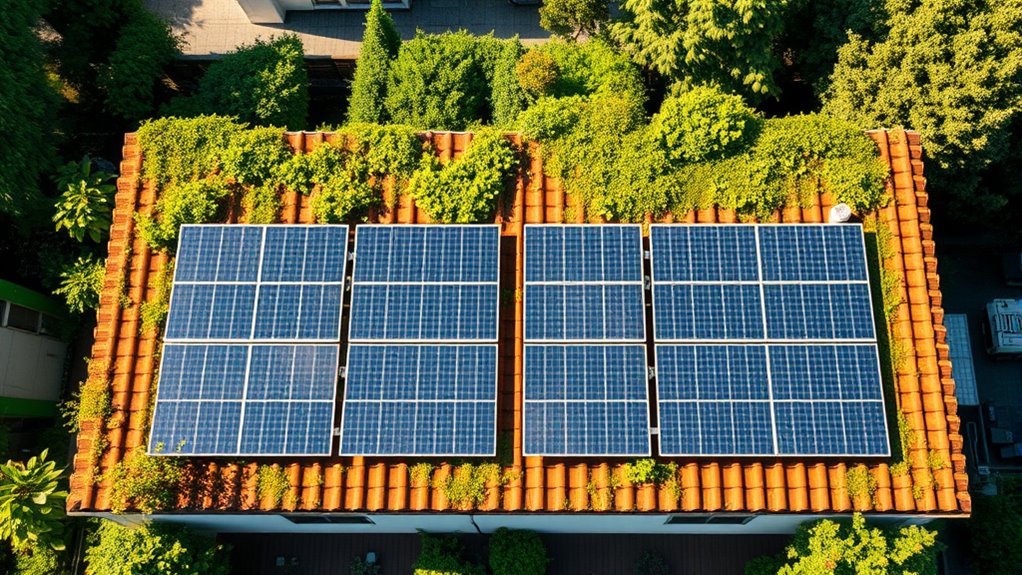
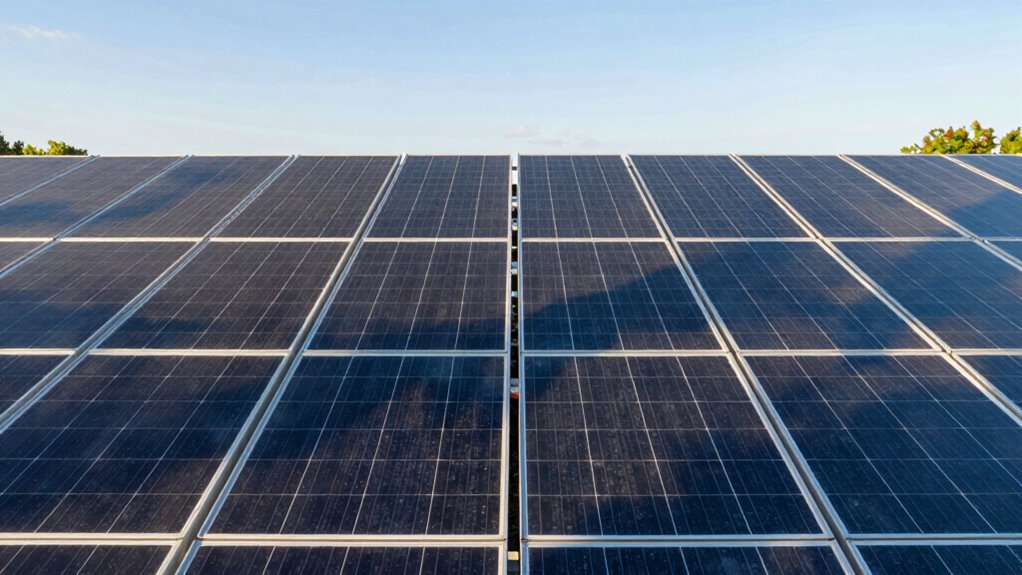
When shading hits your solar panels, it impacts your setup differently depending on the wiring. In a series connection, shading one panel can reduce the output of the entire string. Conversely, in a parallel setup, only the shaded panel’s output drops, leaving the others unaffected. To optimize efficiency, understanding the impact of shading on different configurations is crucial for maximizing your solar power system. Additionally, incorporating innovative European cloud servers can help manage and analyze system performance data to improve overall energy efficiency. Proper system monitoring tools can further enhance your ability to detect and address shading issues promptly.
Series: Shading Impacts Entire String
In a series configuration, shading one panel can considerably reduce the entire string’s output because the current flow is limited by the weakest panel. When a panel is shaded, its power output drops, causing the current in the whole string to decrease. Since current is uniform across series-connected panels, the shaded panel acts like a bottleneck, lowering overall energy production. This effect is especially problematic in environments with inconsistent sunlight or partial shading from nearby objects. You might notice a significant drop in system performance even if only one panel is shaded. Because the entire string’s output depends on each panel’s performance, shading one panel in a series setup can severely compromise your system’s efficiency and energy harvest.
Parallel: Shading Affects Individual Panel
Unlike series configurations, shading in parallel systems primarily affects only the shaded panel rather than the entire array. When one panel is shaded, it drops its output, but the other panels continue producing power. This setup makes parallel arrays more tolerant of partial shading and uneven sunlight. Here’s a simple visualization:
| Panel 1 | Panel 2 | Panel 3 |
|---|---|---|
| Clear | Shaded | Clear |
| Voltage | Current | Power |
| 20V | 5A | 100W |
| Total | ||
| 20V | 15A |
In this example, only the shaded panel reduces overall current, while the others remain unaffected.
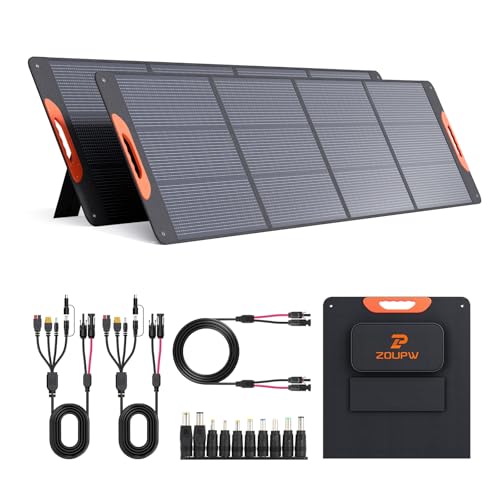
440 Watt Portable Solar Panel with Bypass Diodes,2PCS 220W N-Type 16BB Foldable Solar Charger for Power Station, 25% High Efficiency IP67 Waterproof 4 Kickstands for Camping RV Home Backup
【N-Type 16BB Solar Cells for 25% High Efficiency】ZOUPW 440W solar panel, 2PC 220W adopts advanced N-Type 16BB A+…
As an affiliate, we earn on qualifying purchases.
As an affiliate, we earn on qualifying purchases.
When to Use Series for Maximum Voltage
Using series connections for your solar panels is ideal when you need to achieve higher voltage levels to match your inverter’s requirements or to reduce power losses over long wire runs. By connecting panels in series, you increase the total voltage while keeping the current the same as a single panel. This setup allows your system to operate more efficiently at higher voltages, reducing the current and minimizing resistive losses in wiring. Series is best when your panels face full sun without shading, ensuring maximum voltage output. Make sure all panels have identical current ratings to prevent bottlenecks. Use series wiring when your inverter requires a high voltage input or when you want to optimize energy transfer over extended distances. Well-sourced name coverage ensures accurate information for system design decisions. Additionally, understanding the importance of system configuration can help you maximize your solar energy efficiency and system lifespan. Moreover, recognizing solar panel compatibility can prevent mismatched performances that reduce overall system efficiency. When designing your array, considering voltage matching is crucial to ensure compatibility with your inverter and maximize energy production. Proper system layout can further enhance overall performance and safety of your solar power setup.

Masoll Tire Pressure Monitoring System, RV/Trailler TPMS with Solar Charging & Auto Calibration, M13 LCD Display tpms 4 sensors (0-87PSI)
【Wide Application】The Masoll M13 Tyre Pressure Monitoring System commonly used on the vehicles with 4 tires include but…
As an affiliate, we earn on qualifying purchases.
As an affiliate, we earn on qualifying purchases.
When Parallel Configuration Is Better for Partial Shade
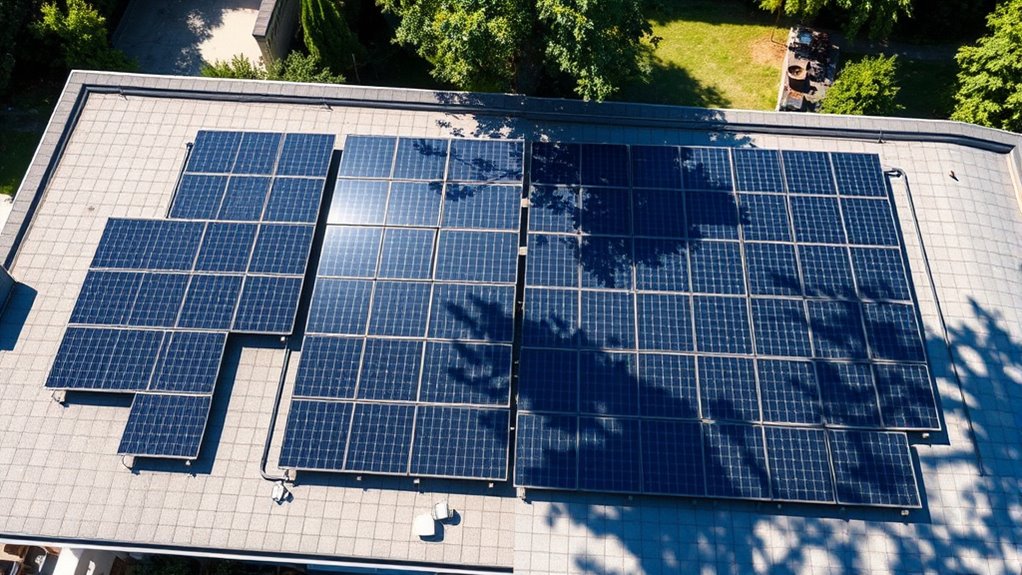
When part of your solar array is shaded, a parallel configuration can limit shading‘s impact on your system. Since shading only affects the shaded panel in a parallel setup, the rest keep producing power, helping you maintain overall output. This makes parallel wiring ideal for areas with variable sunlight or partial shade. Additionally, understanding Free Floating concepts can help optimize your backyard solar setup for maximum efficiency. Incorporating individual panel regulation can further enhance energy production by allowing each panel to operate independently despite shading challenges.
Shading Impact Limitation
Partial shading can substantially reduce the output of a solar array, especially when panels are wired in series. In this situation, shading on one panel blocks current flow, limiting the entire string’s power. With parallel wiring, shading affects only the shaded panel, leaving others unaffected. This limits overall power loss, making parallel setups more resilient in shaded environments. To illustrate, consider the table below:
| Panel Configuration | Effect of Partial Shade | System Resilience |
|---|---|---|
| Series | Major output drop | Low |
| Parallel | Minimal impact | High |
| Series-Parallel | Balanced performance | Moderate |
Choosing parallel wiring helps maintain consistent output in areas with variable sunlight, avoiding significant power drops caused by shading on individual panels. Additionally, understanding solar panel wiring options can help optimize system performance under varying shading conditions.
Maintaining System Output
In shaded areas, maintaining consistent system output becomes easier with a parallel configuration because it isolates the impact of shading on individual panels. When one panel is shaded, it doesn’t drag down the entire system’s performance like in a series setup. Instead, only the shaded panel’s output drops, while the others keep producing power. This keeps your overall system running more reliably, especially in partially shaded environments. With parallel wiring, each panel operates independently, so shading doesn’t substantially reduce total energy. This setup ensures you maximize energy harvest throughout the day, even if some panels are shaded by trees, buildings, or debris. Additionally, understanding system design principles can help optimize your solar setup for variable shading conditions, ensuring consistent energy production. Proper system configuration is crucial for adapting to different shading scenarios and maintaining high efficiency. Adapting your system to shade-tolerant configurations can further enhance performance in variable environments, making your solar investment more resilient and effective. It’s an effective way to keep your system productive and avoid sudden drops in power caused by partial shading.
Combining Series and Parallel for Optimal Performance
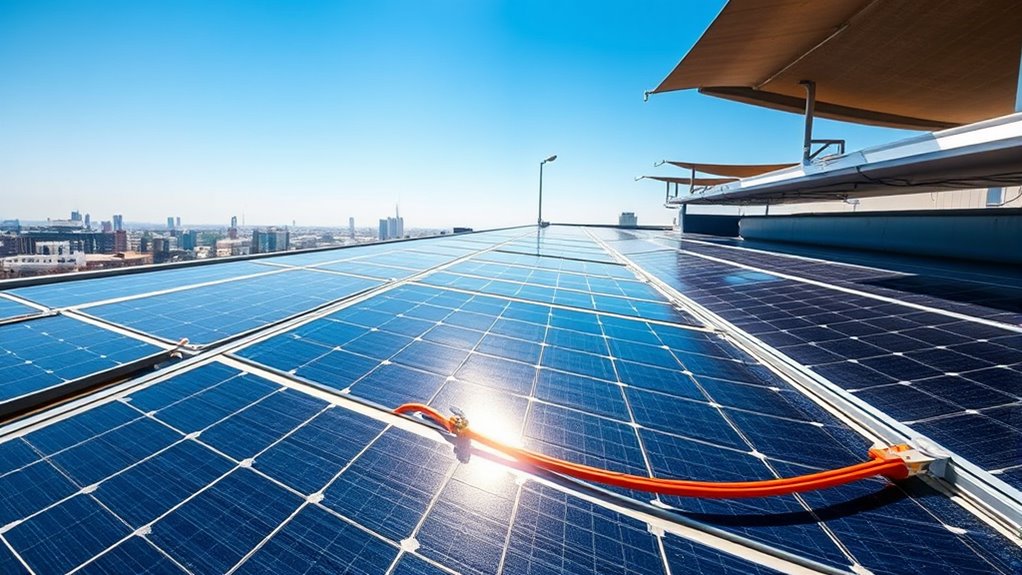
Combining series and parallel configurations allows you to optimize your solar system for both voltage and current needs, especially in complex environments. This hybrid approach balances the high voltage benefits of series wiring with the increased current advantages of parallel wiring. By creating smaller series strings and connecting them in parallel, you can adapt to partial shading or uneven sunlight while maintaining efficient power output. This setup also helps meet specific voltage and current requirements for your inverter or battery system. It’s essential to match panels within each series string and keep the system simple enough for easy maintenance. Understanding solar system configurations is crucial for designing effective setups. Hybrid configurations are ideal if your site has varying shading patterns or if you need to maximize both voltage and current simultaneously, and knowing how to combine wiring methods effectively can greatly enhance system performance. Additionally, a clear understanding of system scalability can help you plan future expansions or modifications more efficiently. Properly designing these configurations also involves considering system safety to prevent overloads and ensure long-term reliability.
Factors Influencing Your Solar Panel Wiring Choice
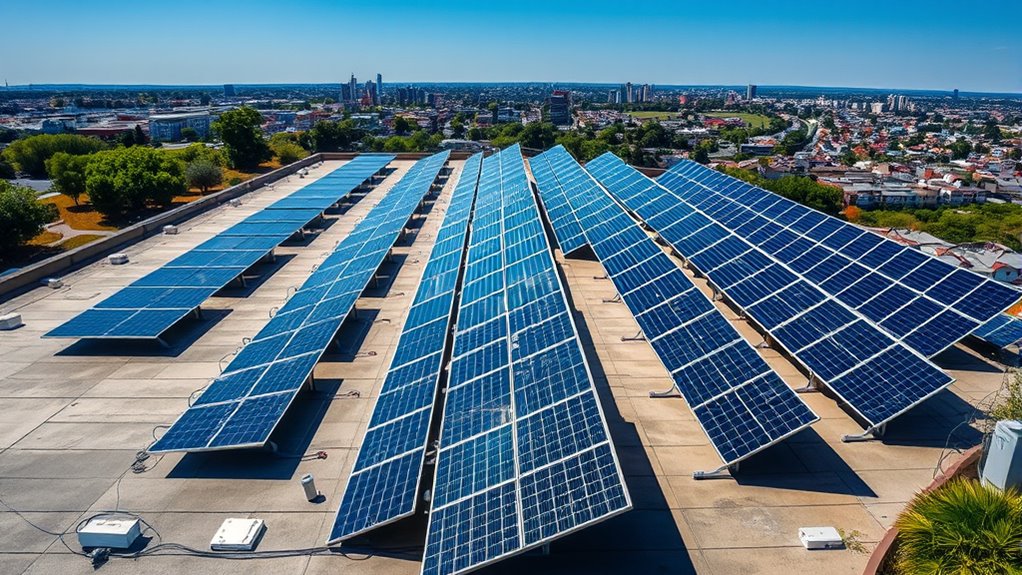
Your choice of solar panel wiring configuration depends on several key factors, including shading conditions, voltage and current requirements, available space, and system components. These factors influence whether you should opt for series, parallel, or a hybrid setup. Consider how shading impacts performance—parallel wiring handles partial shade better, while series wiring suffers more. Think about the voltage and current your inverter or charge controller need, as series increases voltage and parallel boosts current. Space constraints may favor parallel wiring to keep voltage manageable. Additionally, matching panel ratings ensures ideal performance and safety. Wiring configuration also plays a crucial role in system reliability and troubleshooting ease, especially when considering system scalability for future expansion. Understanding solar wiring types helps optimize efficiency and long-term system health. Proper wiring setup is essential for maintaining consistent system performance and avoiding costly issues. Furthermore, selecting the appropriate wiring method can influence overall system efficiency and longevity.
Practical Tips for Shaded and Unshaded Areas

Are you wondering how to get the most out of your solar panels in shaded and unshaded areas? If shading is a concern, opt for a parallel configuration. It ensures that shading on one panel won’t drastically reduce your system’s output, keeping other panels productive. Keep panels clean and free of debris to maximize sunlight exposure. Trim nearby trees or branches that cast shadows during peak hours. Place panels where they receive the most direct sunlight, avoiding shaded spots. Use bypass diodes if available, as they help minimize shading effects. For unshaded areas, a series setup can boost voltage efficiency, but only if shading isn’t an issue. Matching panel ratings and maintaining proper wiring reduces losses and guarantees ideal performance across your entire system. Additionally, understanding solar panel configurations can help you optimize your setup for both shaded and unshaded zones.
Selecting the Best Setup Based on Your Site Conditions
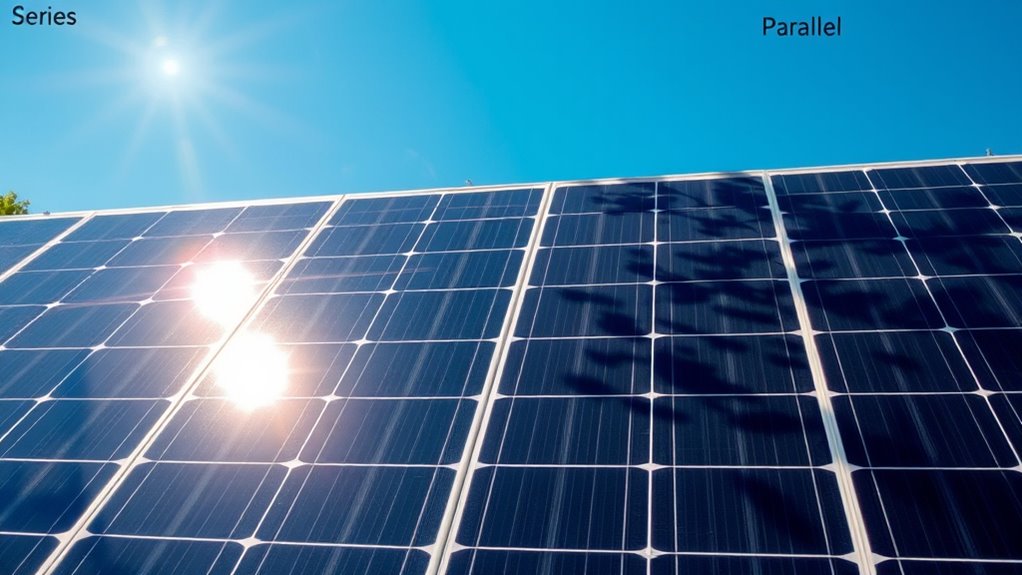
Choosing the right solar panel setup depends on evaluating your site’s unique conditions. If your area receives consistent full sun, a series setup maximizes voltage and efficiency. For shady or variable light conditions, a parallel configuration helps guarantee steady power by isolating shaded panels. Consider these factors:
Choosing the right setup ensures optimal solar performance tailored to your site’s conditions.
- Shading: Use parallel to minimize shading impact on overall output.
- Voltage needs: Series boosts voltage, ideal for inverter requirements.
- Space constraints: Parallel setups can be more flexible in tight spaces.
- System goals: For redundancy and reliability, parallel offers better resilience.
Matching panel ratings and understanding your sunlight patterns guide your choice. Analyzing these conditions assures you pick the best configuration, optimizing performance and longevity for your specific site.
Frequently Asked Questions
How Does Temperature Affect Series vs. Parallel Wiring?
Temperature affects both wiring types by reducing overall efficiency, but it impacts series and parallel setups differently. In a series, higher temperatures can cause voltage drops, lowering system output and risking damage if voltages exceed limits. In parallel, increased temperatures can raise current slightly, but since voltage stays stable, your system remains more resilient. Keep panels cool to maximize performance, especially in series configurations, to maintain ideal energy production.
Can I Combine Series and Parallel Panels in One System?
Yes, you can combine series and parallel panels in one system to optimize performance. About 60% of solar installations use hybrid setups to balance high voltage and current. By connecting series strings in parallel, you get the benefits of both configurations: high voltage for efficiency and redundancy for shading issues. Just make certain all panels within each string are identical, and plan your wiring carefully to match your inverter’s capacity.
What Are the Safety Considerations for High-Voltage Series Setups?
When working with high-voltage series setups, you need to prioritize safety. Always guarantee proper insulation, use appropriately rated fuses and circuit breakers, and avoid touching energized components. Keep wiring neat and secure to prevent shorts. Install panels on sturdy, grounded mounts, and follow electrical codes. Regularly inspect connections for damage or corrosion, and consider professional installation if you’re unsure, to reduce the risk of electric shock or fire.
How Do Inverter Compatibility and Wiring Configurations Interact?
Inverter compatibility and wiring configurations are like peanut butter and jelly—they need to work perfectly together. You must match your panel voltage and current with your inverter’s input specifications; otherwise, you risk damaging your system or losing efficiency. When wiring, confirm your series or parallel setup aligns with the inverter’s requirements. This harmony maximizes power output, keeps your system safe, and ensures your solar energy harvests are nothing short of spectacular.
Is There a Cost Difference Between Series and Parallel Installations?
Yes, there is a cost difference between series and parallel installations. You typically spend less upfront with series setups because fewer components like connectors and combiners are needed. Parallel systems may cost more initially due to additional wiring, connectors, and possibly more complex setup. However, your ongoing maintenance and troubleshooting might be easier and cheaper with parallel configurations, especially in shaded or variable light conditions.
Conclusion
Choosing between series and parallel wiring depends on your shading and energy needs. Remember, a single shaded panel can drop your whole system’s output by up to 50% in a series setup, whereas parallel can isolate the shading impact. By understanding your site and combining configurations wisely, you can boost efficiency and save money. Think of it this way: a well-wired system can generate enough energy to power a small home, even on cloudy days.