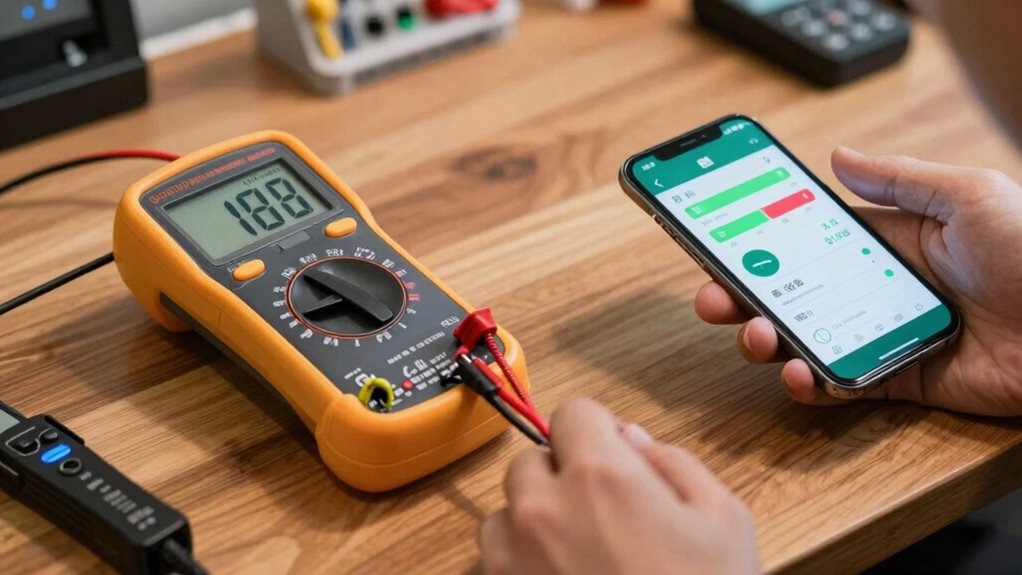

To choose the right battery health testing method, focus on tools that offer thorough, non-invasive diagnostics like measuring voltage, internal resistance, and capacity. Avoid outdated or cheap options that may give false results. Consider the battery’s age, usage history, and whether the tester can detect issues like sulfation or corrosion. Opt for modern, high-quality equipment for accurate insights. Keep exploring to discover how to make confident, informed decisions about your battery’s health.

Get business pricing on garage and car supplies
- Business-only prices and quantity discounts
- Tax-exempt purchasing
- Multiple users, one account, clear invoices
Key Takeaways
- Use advanced, non-invasive diagnostic tools that measure capacity, voltage, and internal resistance for accurate battery health insights.
- Consider the battery’s age, usage history, and number of charge cycles to inform testing choices.
- Opt for professional testing methods, especially for vehicle batteries, to ensure comprehensive and reliable results.
- Avoid outdated or low-quality testers to prevent false readings and misdiagnosis of battery condition.
- Incorporate detailed test results into maintenance planning to prevent premature replacements and unexpected failures.
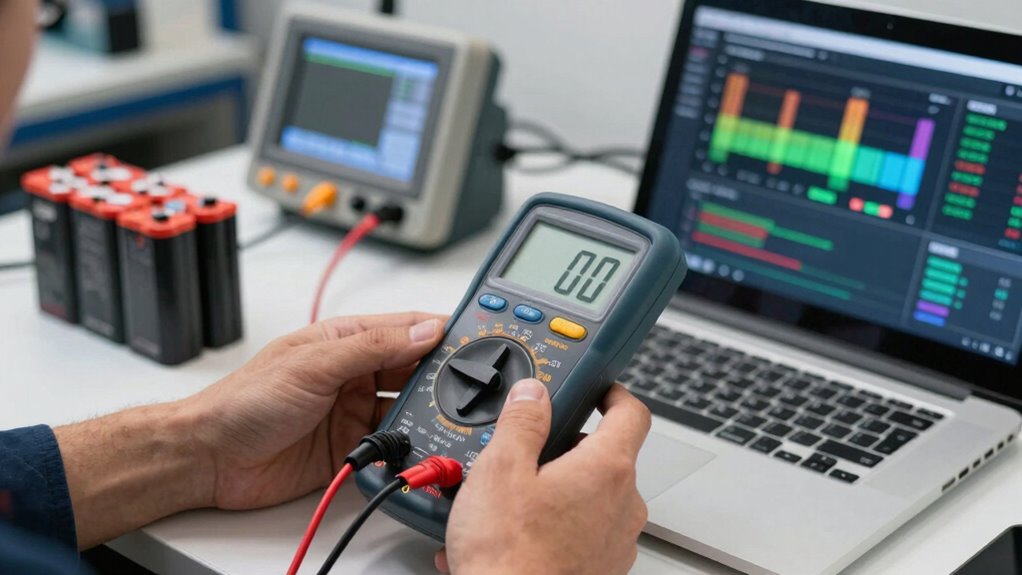
When it comes to maintaining your vehicle or electronic devices, understanding their battery health is essential. A key aspect of this is knowing how long your battery will last—its battery lifespan—and how well it’s performing over time. Without proper testing, you might find yourself guessing when it’s time for a replacement, risking unexpected failures or unnecessary expenses. To avoid this, choosing the right battery health testing method is crucial. You want a test that provides accurate insights into the battery’s current condition, including its capacity and overall performance, so you can make informed decisions.
One of the most important factors to consider is how the battery has been used over time, especially the number of charging cycles it has undergone. Charging cycles—each time the battery is charged from a depleted to a full state—gradually diminish its capacity. The more cycles a battery completes, the closer it gets to the end of its useful life. When selecting a testing method, ensure it can accurately measure the remaining charge capacity and estimate the number of effective charging cycles left. This helps you understand whether the battery can still meet your needs or if it’s nearing the end of its battery lifespan.
Opt for testing procedures that are non-invasive yet comprehensive. Many digital testers or diagnostic tools can quickly evaluate battery health without risking further wear or damage. These tools often analyze voltage levels, internal resistance, and capacity to give you a clear picture of the battery’s current state. If you’re testing a vehicle battery, a professional diagnostic scan can reveal deeper issues, including sulfation or corrosion, which could affect performance beyond just charging cycles. For electronic devices, portable testers that measure capacity and internal resistance are convenient and effective. Additionally, understanding the battery’s overall health can help you determine if a replacement is needed before a complete failure occurs. Properly assessing the usage history of the battery can also provide valuable context for interpreting test results and planning for future maintenance. Moreover, selecting a reliable testing method ensures the accuracy of your assessment, reducing the risk of costly mistakes. Investing in advanced testing tools that consider the battery’s age and condition can further improve the reliability of your results. Furthermore, selecting a testing method that considers the battery’s usage history can provide more comprehensive insights, especially for batteries that have been heavily used or aged. Accuracy is paramount when assessing battery health. Cheap or outdated testing methods might give false readings, leading you to either replace a still-good battery prematurely or overlook a failing one. Investing in reliable, modern testing equipment ensures you get precise data, saving you money and inconvenience in the long run. Remember, the goal is to get a detailed understanding of the battery’s health—how many charging cycles it has left, its overall capacity, and potential issues—so you can plan maintenance or replacements proactively.
As an affiliate, we earn on qualifying purchases.
Frequently Asked Questions
How Often Should I Test My Vehicle’s Battery Health?
You should test your vehicle’s battery health at least twice a year, especially before winter and summer. Regular testing helps monitor the battery’s lifespan and how well it handles charging cycles. If your car shows signs of slow starts or dimming lights, check the battery sooner. Consistent testing guarantees you catch issues early, extend the battery’s life, and avoid unexpected breakdowns caused by declining battery performance.
Can Battery Testing Damage My Vehicle’s Electrical System?
Battery testing doesn’t damage your vehicle’s electrical system or compromise battery safety if done correctly. Modern testing methods are designed to be safe, quick, and accurate, avoiding electrical damage and ensuring reliable results. By choosing professional, reputable testers and following manufacturer guidelines, you minimize risks. Regular, proper testing helps you spot issues early, maintain battery health, and keep your vehicle running smoothly—without worry about electrical damage or safety concerns.
What Signs Indicate My Battery Needs Testing?
If your battery’s lifespan is shortening or you’re experiencing sluggish starts, it’s time for testing. Poor charging habits, like irregular charging or frequent short trips, can strain your battery and cause issues. Watch for dim headlights, slow engine cranking, or warning lights on your dash. These signs indicate your battery might be weak, and testing can confirm if it needs replacement or maintenance to keep your vehicle running smoothly.
Are There Any Warranties Related to Battery Testing Services?
Yes, some battery testing services offer warranty coverage or testing guarantees, giving you peace of mind. These warranties typically cover the accuracy of the test results or potential issues found during testing. Always ask your service provider about their warranty policies and what’s included. This way, you guarantee reliable testing and protect yourself from unforeseen costs, making your battery health assessment more trustworthy and secure.
How Do Temperature Variations Affect Battery Testing Accuracy?
Temperature impact greatly affects testing precision because extreme temperatures can skew results. High heat may cause batteries to appear weaker than they are, while cold conditions might hide underlying issues. To guarantee accurate readings, you should perform tests in a controlled environment or allow your battery to reach room temperature before testing. By managing temperature variations, you improve testing precision and get a true assessment of your battery’s health.
As an affiliate, we earn on qualifying purchases.
Conclusion
Choosing the right battery health test doesn’t have to be complicated. By understanding your needs and comparing testing methods, you can make smarter decisions and avoid costly surprises. Did you know that over 60% of battery failures could be prevented with proper testing? So, take the time to select the right test, maintain your battery regularly, and extend its lifespan. Your device will thank you with better performance and longevity.
portable battery internal resistance meter
As an affiliate, we earn on qualifying purchases.
As an affiliate, we earn on qualifying purchases.
professional vehicle battery diagnostic scanner
As an affiliate, we earn on qualifying purchases.
As an affiliate, we earn on qualifying purchases.
Fall Picks
fall essentials
As an affiliate, we earn on qualifying purchases.