
When your vehicle’s alternator can’t keep up with your auxiliary batteries’ power needs, a DC-DC charger steps in to help. It boosts and regulates the current, providing a stable charge regardless of engine load or voltage fluctuations. This prevents undercharging, overcharging, and battery damage, especially during heavy use or extended trips. If you want to understand how these devices ensure your batteries stay healthy and charged, keep exploring the details ahead.
Key Takeaways
- DC-DC chargers boost limited alternator power to fully charge auxiliary batteries efficiently.
- They regulate voltage to compensate for fluctuations caused by engine speed and load changes.
- DC-DC chargers prevent starter battery drain during high auxiliary power demands.
- They protect batteries from overcharging and deep discharges, extending battery lifespan.
- Ideal for supporting high-demand accessories and deep-cycle batteries in vehicles with limited alternator capacity.

VEVOR 12V 20A DC to DC Battery Charger, 250W, On-Board Battery Charger for Lead-Acid, Lithium, AGM, Gel, and Flooded Batteries, Smart Multi-Stage Charging, for RVs, Commercial Vehicles, Boats, Yachts
Versatile Battery Types: This 12V 20A DC to DC charger is compatible with lead-acid and lithium batteries, and…
As an affiliate, we earn on qualifying purchases.
As an affiliate, we earn on qualifying purchases.
Understanding the Basics of DC-DC Chargers

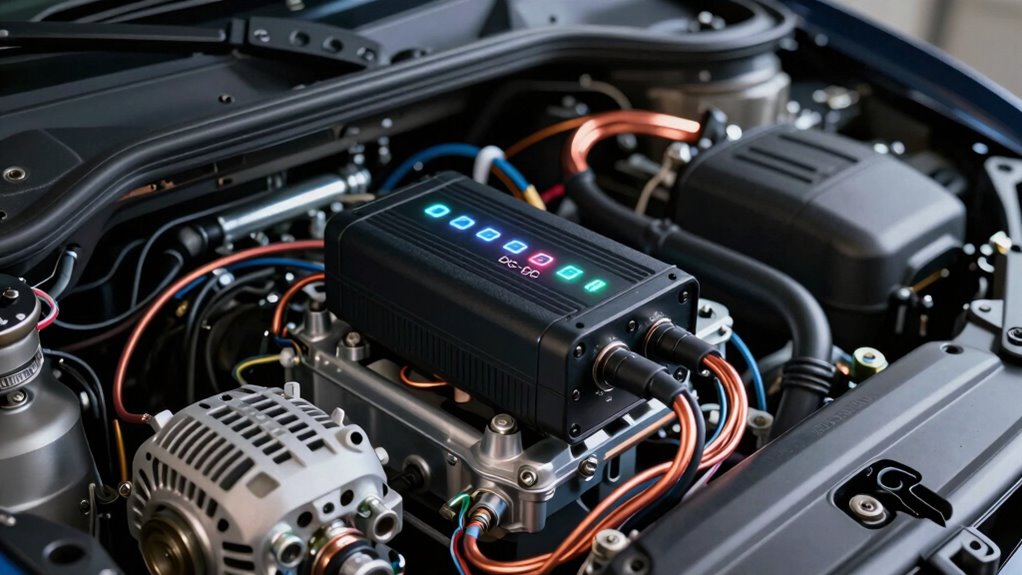
DC-DC chargers are essential devices that convert power from your vehicle’s alternator or starter battery into a stable and efficient charge for your auxiliary battery. They manage voltage differences between batteries, ensuring your secondary battery receives the correct charging voltage regardless of engine load or battery condition. These chargers use multi-stage charging—bulk, absorption, and float—to optimize battery health and longevity. They’re compatible with various 12V battery types, including Lithium, Gel, AGM, and Calcium. The core component, the DC-DC charger unit, controls voltage regulation while protective fuses safeguard the wiring. Power is distributed through positive and negative cables, with an isolator separating your starter and auxiliary batteries. This setup guarantees your auxiliary battery charges efficiently without draining your main starting battery, especially during extended trips or off-grid adventures. Smart appliances and connected systems can further enhance charging efficiency and monitor battery health in real-time, making battery management more straightforward for users. Additionally, proper wiring and installation techniques are critical to ensure safety and optimal performance of your charging system. Implementing proper wiring practices can prevent common issues like voltage drops or electrical faults, thereby prolonging system lifespan. Properly designed systems also contribute to system reliability, especially in demanding environments.
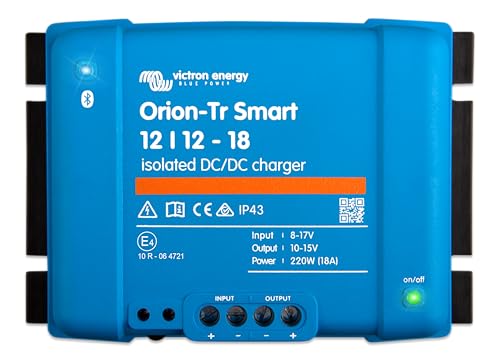
Victron Energy Orion-Tr Smart DC to DC Charger (Bluetooth) – 12/12-Volt 18 amp 220-Watt – Battery Charger for Dual Battery Systems – Isolated
PROFESSIONAL DC TO DC CHARGER: The Orion-Tr Smart DC-DC Charger is a professional charger that uses three stages…
As an affiliate, we earn on qualifying purchases.
As an affiliate, we earn on qualifying purchases.
Why Standard Alternators May Fall Short
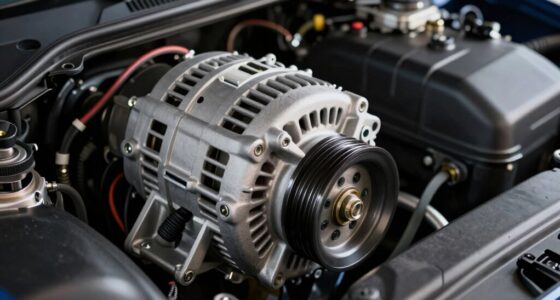
Standard alternators often can’t provide enough power to fully charge your auxiliary batteries, especially under heavy loads. Their voltage output can fluctuate, making it hard to maintain a consistent charge. As a result, relying on a standard alternator alone may leave your batteries undercharged or unevenly charged. Implementing a proper maintenance schedule can help ensure your charging system remains effective and reliable. Additionally, incorporating advanced regulation technology can improve voltage stability and charging efficiency. Selecting a high-quality heat pump can further optimize energy use and maintain consistent performance in diverse weather conditions. Monitoring performance metrics can also help detect issues early and ensure your system functions optimally. Regularly inspecting and upgrading your alternator components can further enhance overall system reliability.
Limited Power Output
While alternators are designed to supply power to the vehicle’s electrical system, they often fall short when it comes to charging auxiliary batteries efficiently. Most standard alternators generate limited current, typically between 50 to 150 amps, which may be insufficient for high-demand auxiliary systems, especially when multiple devices run simultaneously. Their output is optimized for the vehicle’s primary systems, like lighting, ignition, and infotainment, rather than dedicated battery charging. As a result, if you have larger or multiple auxiliary batteries, the alternator alone can struggle to replenish them quickly. This limited power output can lead to prolonged charging times, depleted batteries, or even draining your starter battery when auxiliary loads are high. That’s when a DC-DC charger becomes essential to boost charging capacity. Understanding the limitations of standard alternators helps illustrate why additional charging solutions are often necessary. Moreover, efficient energy transfer is crucial for maintaining optimal battery health and vehicle performance, especially in systems requiring reliable power management. Implementing battery lifecycle management techniques can further enhance overall system efficiency and longevity. Additionally, power management strategies can help optimize overall energy use and prolong battery life in such setups.
Inconsistent Voltage Levels
Because alternators are designed primarily to power your vehicle’s electrical systems, their voltage output can fluctuate markedly under different driving conditions. When you accelerate, the alternator’s voltage rises; when you idle or brake, it can drop. This inconsistency makes it challenging to maintain a stable charge for auxiliary batteries. Standard alternators aren’t built to deliver a steady voltage, especially under high loads or varying engine speeds. These fluctuations can lead to undercharging or overcharging your batteries, reducing their lifespan and performance. Without proper regulation, your auxiliary batteries may not reach full capacity or could suffer damage from inconsistent voltage levels. That’s where a DC-DC charger helps, smoothing out these fluctuations and providing a reliable, optimized charge regardless of how your vehicle’s alternator behaves.

UCkasayfy Dual Battery Isolator Kit 12V 140amp, Voltage Sensitive Relay VSR, Smart Battry Isolator Compatible with UTV Marine car RV Boat Truck Trailer ATV Camper Moto, Not Fit for Lithium Batteries
【Function】——Voltage Sensitive Relay(VSR) cuts in at 13.3v and cuts out at 12.8v to ensure your main battery is…
As an affiliate, we earn on qualifying purchases.
As an affiliate, we earn on qualifying purchases.
How DC-DC Chargers Assist Limited Alternator Output

When your alternator can’t produce enough power, a DC-DC charger steps in to fill the gap. It boosts limited output to fully charge your auxiliary batteries efficiently. Plus, it protects your batteries from overcharging and damage, ensuring they stay healthy longer. Additionally, it can integrate with smart home technology to optimize energy management and monitor system performance.
Boosting Limited Power
DC-DC chargers play a crucial role in boosting limited alternator output, especially with modern smart alternators that produce minimal excess power. When your engine runs, the alternator supplies power, but smart alternators often prioritize vehicle systems, leaving less for your auxiliary batteries. The DC-DC charger steps in to bridge this gap, converting the available power into a stable, high-quality charge. It employs techniques like buck-boost regulation to increase voltage when needed, ensuring your secondary batteries reach full capacity efficiently. This process prevents your starter battery from draining and allows your auxiliary batteries—like lithium or AGM—to charge fully, even under limited power conditions. By boosting the available power, the DC-DC charger ensures your batteries stay healthy and ready for use. Additionally, understanding electrical systems can help you better grasp how these components work together to maintain reliable power supply. Properly integrating these systems is key to maximizing power efficiency and ensuring your setup remains reliable in remote locations. Incorporating power management strategies can further enhance your system’s performance and longevity.
Protecting Battery Health
Limited alternator output can strain your batteries and shorten their lifespan if not managed properly. DC-DC chargers help protect your batteries by controlling and optimizing charging, preventing overcharging and deep discharges. They ensure batteries receive the right voltage and current, which reduces stress on battery cells. Proper management extends battery life and maintains performance. Additionally, these chargers support compatibility with smart home devices for enhanced monitoring and control. They are also designed to work effectively across various battery chemistries, ensuring safe and reliable operation. Incorporating advanced charging technology further enhances system reliability and longevity.
By managing the charging process, DC-DC chargers help prevent damage caused by inconsistent power delivery and fluctuating loads. Here’s how they do it:
| Battery Type | Charging Stage | Protection Feature |
|---|---|---|
| Lithium | Absorption | Prevents overvoltage |
| AGM | Float | Avoids deep discharge |
| Gel | Bulk | Manages temperature |
A smart charging system further optimizes power flow based on real-time data, enhancing overall system efficiency.

3000W Pure Sine Wave Inverter 48V DC to 120V AC–Heavy Duty Power Inverter for Off-Grid Solar System,RV,Washing Machine, Refrigerator, Freezer, TV&Air Conditioner with LED Display and Remote Monitoring
3000W PURE SINE WAVE INVERTER (6000W SURGE) – Clean, Grid-Quality Power for RVs, Off-Grid Homes & Emergency Backup…
As an affiliate, we earn on qualifying purchases.
As an affiliate, we earn on qualifying purchases.
The Role of Multi-Stage Charging in Battery Health

Multi-stage charging plays a crucial role in maintaining your battery’s health by carefully controlling the charging process. It guarantees your battery receives the right amount of power at each stage, preventing damage from overcharging. During the bulk stage, the charger delivers maximum current to quickly fill the battery. Once near full capacity, it shifts to absorption, where the voltage levels out and the current tapers off, allowing the battery to fully absorb the charge safely. Finally, the float stage maintains a low, steady voltage to keep the battery topped off without overcharging. This gradual process reduces stress on the battery, extends its lifespan, and ensures ideal performance. Proper multi-stage charging is essential for preserving your battery’s capacity and longevity over time.
Benefits of DC-DC Chargers Over Traditional Isolators
Traditional isolators have long been used to separate your starter and auxiliary batteries, but they often lack the ability to precisely control charging current and adapt to modern battery technologies. Unlike isolators, DC-DC chargers actively manage the power flow, ensuring your auxiliary battery receives the correct voltage and current for efficient charging. This reduces the risk of overcharging or undercharging, which can shorten battery life. DC-DC chargers also work seamlessly with smart alternators that only produce power when needed, making your charging system more effective. Plus, they incorporate battery management systems that protect against voltage spikes and deep discharges. Overall, DC-DC chargers provide smarter, safer, and more reliable charging compared to traditional isolators, especially in complex or high-demand setups.
Practical Scenarios When Your Alternator Needs Extra Support

Your alternator may need extra support during high-demand scenarios like extended off-road trips, running multiple accessories, or when your auxiliary battery is deeply discharged. When you’re off-grid for hours, your electrical load increases from lights, fridges, and other gear, pushing your alternator to its limits. Running multiple accessories simultaneously can cause voltage drops, reducing charging efficiency. If your auxiliary battery is considerably drained, your alternator alone might struggle to fully recharge it during short drives. In these situations, a DC-DC charger steps in to provide a stable, controlled charge. It boosts limited alternator output, prevents draining your starter battery, and ensures your auxiliary battery reaches full capacity without stressing your main system. This support keeps your setup reliable during demanding conditions.
Choosing the Right DC-DC Charger for Your Setup

Choosing the right DC-DC charger for your setup starts with understanding your specific power needs and system configuration. First, determine your auxiliary battery type—Lithium, Gel, AGM, or Calcium—as different chargers handle these differently. Next, consider your power capacity; if you have high-demand appliances or multiple batteries, opt for a charger with higher wattage and amperage ratings. Think about your vehicle’s alternator output and whether you’ll need a charger that can boost limited power. Also, decide if you want features like multi-stage charging, smart voltage detection, or compatibility with solar inputs. Finally, verify the charger’s size, wiring requirements, and protections match your installation environment. Choosing the right model guarantees efficient charging, battery longevity, and a reliable power system tailored to your needs.
Frequently Asked Questions
How Does a DC-DC Charger Improve Battery Lifespan?
A DC-DC charger improves your battery’s lifespan by preventing overcharging and undercharging, which can damage the battery over time. It manages voltage delivery precisely, ensuring your auxiliary battery receives the right amount of power during each charging stage. This controlled process reduces stress on the battery, minimizes wear, and extends its overall life, especially when dealing with smart alternators or multiple battery types like lithium, Gel, or AGM.
Can DC-DC Chargers Work With All Vehicle Types?
Think of a DC-DC charger as a universal translator for your vehicle’s batteries. Yes, they work with all vehicle types—cars, trucks, RVs, boats—adapting to each system’s voltage and battery type. This device manages power smoothly, like a skilled conductor leading an orchestra. So, regardless of your vehicle, a DC-DC charger guarantees your auxiliary batteries get the right charge, keeping your adventures powered without a hitch.
What Are Signs My Alternator Isn’t Supplying Enough Power?
If your alternator isn’t supplying enough power, you’ll notice your battery draining faster than usual, especially when running accessories. Your vehicle may have dimming headlights, sluggish performance, or warning lights on the dashboard. You might also experience frequent battery recharges, or your auxiliary battery won’t charge properly. These signs indicate your alternator isn’t keeping up, and a DC-DC charger can help by boosting the limited power and protecting your batteries.
Is a DC-DC Charger Necessary for Off-Grid Solar Setups?
If you’re off-grid, a DC-DC charger isn’t just helpful — it’s essential. It converts and manages power from your solar panels and vehicle system, ensuring your auxiliary batteries charge efficiently and safely. Without it, you risk undercharging or damaging your batteries. A DC-DC charger optimizes power transfer, extends battery life, and adapts to varying voltage levels, making your off-grid setup more reliable and effective.
How Do I Choose the Right DC-DC Charger Capacity?
You should choose a DC-DC charger with capacity that matches your auxiliary battery’s needs. Consider your battery type, capacity, and your power consumption to determine the right wattage and amperage. For most setups, a charger with at least 40A and 600W input manages typical loads. If you have high-demand batteries or multiple accessories, go for a higher capacity to make certain of efficient charging without overloading your system.
Conclusion
If you rely on your vehicle’s alternator for charging, know that it can only produce about 70% of the power your batteries need, especially in demanding situations. That’s where a DC-DC charger shines, providing efficient, multi-stage charging to keep your batteries healthy. In fact, studies show that using a DC-DC charger can extend your battery life by up to 50%. Investing in one guarantees reliable power when you need it most.