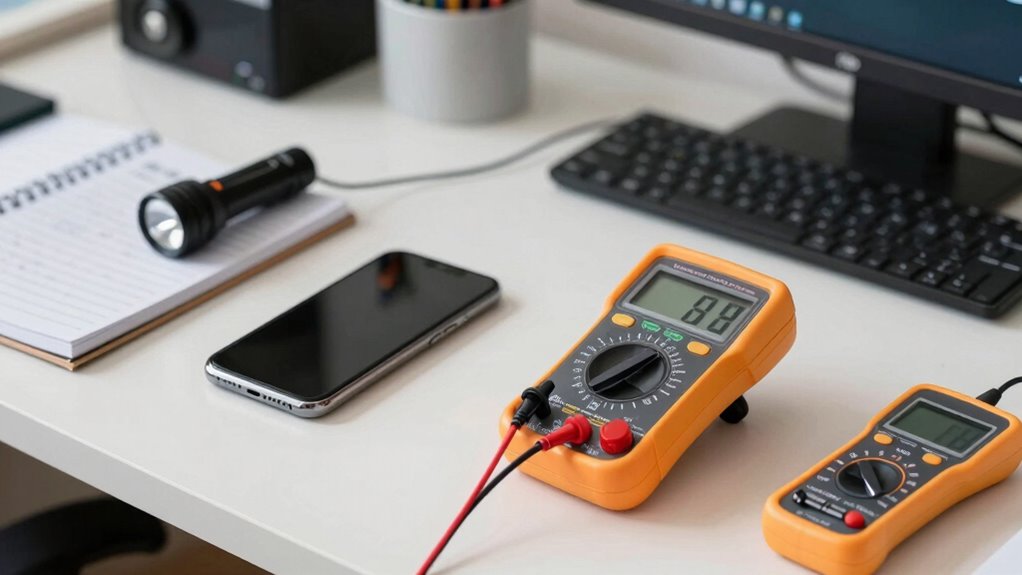

In just five minutes, you can check your battery’s health by inspecting for corrosion or physical damage around the terminals. Use a multimeter to measure voltage; a healthy battery should read around 12.6 volts or higher. Perform a quick load test by turning on headlights and observing if voltage drops sharply. Also, consider your battery’s age and maintenance habits. If you want to guarantee your battery is truly in good shape, keep going — there’s more to discover.

Get business pricing on garage and car supplies
- Business-only prices and quantity discounts
- Tax-exempt purchasing
- Multiple users, one account, clear invoices
Key Takeaways
- Visually inspect for corrosion, cracks, leaks, or swelling on the battery and terminals.
- Measure voltage with a multimeter; healthy batteries read around 12.6V or higher.
- Perform a load test by turning on lights or devices; watch for voltage drops below 12V.
- Check the battery’s age and track performance trends to identify early signs of decline.
- Ensure proper charging habits, avoiding overcharging or deep discharges to prolong lifespan.
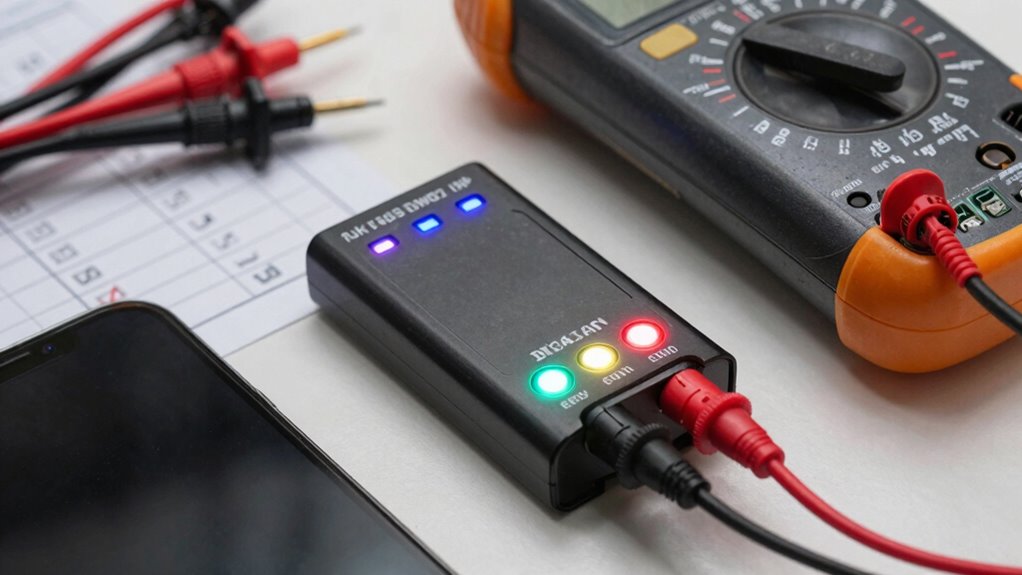
Regularly testing your battery’s health is essential to guarantee it performs reliably and lasts longer. When you keep an eye on your battery’s condition, you can identify issues early, preventing unexpected failures that could leave you stranded. One straightforward way to do this is through a quick, five-minute checklist that helps you gauge your battery’s overall health and ensure it’s operating at peak performance. This routine can also help you understand the importance of battery capacity and how it impacts overall performance, enabling you to interpret your test results more accurately. Start by inspecting the physical condition of your battery. Look for any signs of corrosion around the terminals, such as white or bluish deposits. Corrosion can hinder the flow of electricity, reducing both battery lifespan and charging efficiency. If you notice buildup, clean the terminals carefully with a mixture of baking soda and water, using a wire brush to remove any residue. Also, check for cracks, leaks, or swelling, as these physical damages indicate that the battery might be compromised and need replacement. Proper battery maintenance can help prevent many common issues and extend your battery’s life. Additionally, understanding battery aging can give you insight into when it might be time to replace your battery before failure occurs. Regularly monitoring your battery’s performance can also help you catch early warning signs of decline, allowing for timely intervention to avoid unexpected problems. Next, test the voltage with a multimeter. Set it to measure DC voltage and connect the probes to the battery terminals. A healthy, fully charged battery should read around 12.6 volts or higher. If your voltage is significantly lower—say, below 12.4 volts—it suggests that the battery isn’t holding a full charge, which could be a sign of reduced battery lifespan or diminished charging efficiency. Keep in mind that voltage alone isn’t enough; it should be combined with other tests to get a comprehensive picture. Now, perform a quick load test if you have the equipment. This involves turning on a device like the headlights or interior lights for a few seconds while monitoring the voltage. If the voltage drops sharply or falls below 12 volts, your battery might be weak and in need of replacement. This test helps you understand how well your battery handles real-world demands, directly impacting its lifespan and charging efficiency over time. Additionally, understanding your battery’s age can help you anticipate potential issues before they arise. Finally, review your recent charging habits. Have you been charging your battery fully and regularly? Do you notice longer charging times or frequent recharges? Poor charging habits can degrade your battery faster, shortening its lifespan and reducing overall charging efficiency. Ensuring you’re using the correct charger and avoiding overcharging or deep discharges will keep your battery healthy for longer. With these quick checks, you get a clear snapshot of your battery’s current health. Regularly performing this five-minute routine helps you spot problems early, extend your battery’s lifespan, and maintain optimal charging efficiency, saving you time and money in the long run.
As an affiliate, we earn on qualifying purchases.
Frequently Asked Questions
How Often Should I Perform Battery Health Tests?
You should perform battery health tests every three to six months to guarantee ideal battery maintenance. Regular testing helps track your battery’s performance over charging cycles, revealing signs of wear or potential issues early. If you notice decreased runtime or difficulty charging, consider testing more frequently. Keeping up with these checks helps extend your battery’s lifespan and maintains reliable performance, especially if you rely heavily on your device daily.
Can I Test Battery Health With a Smartphone?
You can’t accurately test battery health solely with a smartphone, but you can perform simple checks like monitoring battery calibration and power-saving features. Calibration involves fully charging and discharging your device to ensure accurate readings, while enabling power-saving modes helps extend battery life. For detailed health analysis, use dedicated apps or visit a technician, as smartphones can’t provide thorough diagnostics. These steps help maintain ideal battery performance over time.
What Signs Indicate a Declining Battery Health?
Your battery’s health is like a garden; it shows signs of neglect over time. When you notice rapid battery drain, longer charging times, or decreased capacity, it signals declining health. Poor charging habits, such as frequent full cycles or overcharging, accelerate this decline. Keep an eye on these signs, and you’ll extend your battery’s lifespan, ensuring your device stays energized and reliable much longer.
Are There Any Safety Precautions for Testing Batteries?
Yes, there are safety precautions you should follow when testing batteries. Always prioritize battery safety by wearing protective gear like gloves and goggles. Make certain you follow proper testing protocols, such as working in a well-ventilated area and avoiding sparks or open flames near batteries. Disconnect power sources properly, and handle batteries gently to prevent leaks or explosions. These steps help keep you safe while accurately evaluating battery health.
How Accurate Is a Quick 5-Minute Battery Test?
Imagine catching a glimpse of a battery’s soul in just five minutes—it’s surprisingly accurate, but not foolproof. The test mostly reflects battery chemistry and recent charge cycles, giving you a quick snapshot of health. However, subtle issues like aging or internal damage may escape detection. So, while it’s a handy tool, don’t rely solely on it for absolute certainty; deeper testing might be necessary for critical applications.
As an affiliate, we earn on qualifying purchases.
Conclusion
By following this quick 5-minute checklist, you can keep your battery in top shape and avoid unexpected failures. Did you know that batteries typically lose about 20% of their capacity within the first year? Regular testing helps catch issues early, saving you money and hassle. Stay proactive, perform these simple steps regularly, and extend your battery’s lifespan—because a healthy battery means reliable performance whenever you need it most.
As an affiliate, we earn on qualifying purchases.
As an affiliate, we earn on qualifying purchases.
Halloween Picks
halloween
As an affiliate, we earn on qualifying purchases.