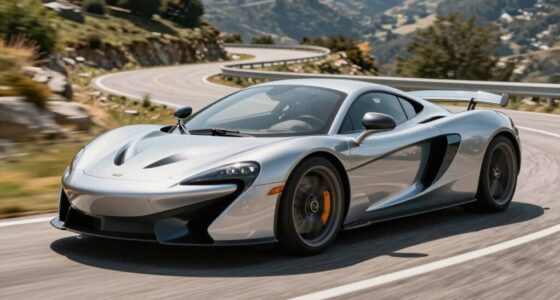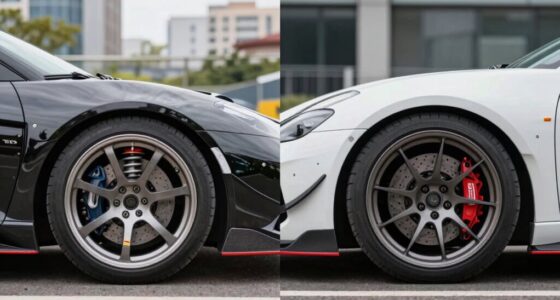
In performance cars, suspension types like multi-link systems and coil springs are key for sharp handling and comfort. Coil springs absorb shocks from uneven surfaces, keeping your ride smooth, while multi-link setups provide precise wheel control and stability during aggressive turns. Together, they guarantee your vehicle responds accurately and maintains grip, especially in tight corners or rough terrain. Want to discover how these components work together to enhance your driving experience? Keep exploring to learn more.
Key Takeaways
- Performance cars often combine coil springs with multi link suspension for optimal handling and ride comfort.
- Multi link systems allow precise wheel control, improving cornering stability and reducing body roll.
- Coil springs absorb shocks and roughness, maintaining a smooth ride and protecting components during aggressive driving.
- The synergy between coil springs and multi link suspension enhances grip, responsiveness, and overall vehicle stability.
- Different suspension setups, like independent multi link, are tailored to maximize performance and driving dynamics.
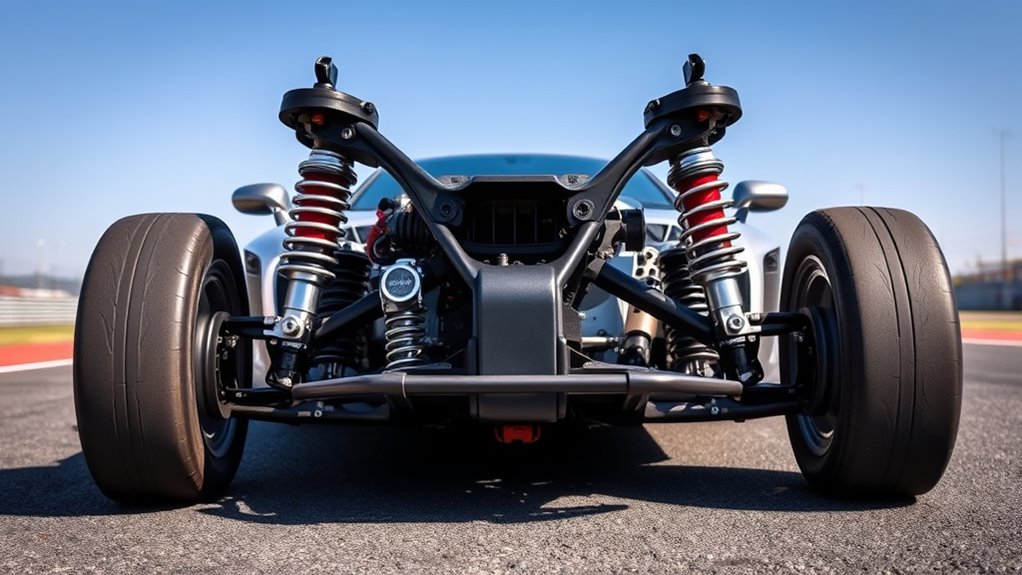
Have you ever wondered how your vehicle maintains a smooth and stable ride over rough terrain? It’s all thanks to the suspension system working behind the scenes. One of the most common components you’ll find in many performance cars is the coil spring, which plays a crucial role in absorbing shocks from uneven surfaces. When you drive over a pothole or a bump, the coil spring compresses and rebounds, cushioning the impact so your ride stays comfortable. But just as important is how the entire suspension system manages wheel movement and stability. That’s where the multi link system comes into play. It’s a sophisticated setup that uses multiple arms or links to connect the wheel hub to the vehicle frame, allowing for precise control of wheel motion.
With a multi link system, your car can better handle cornering and uneven ground because it offers a high degree of flexibility and stability. It also allows for independent wheel movement, which helps improve ride comfort and handling. Compared to simpler setups like a solid axle or a basic MacPherson strut, the multi link design minimizes unwanted wheel movement and maintains ideal tire contact with the road. This means your car responds more accurately to steering inputs, giving you improved handling and confidence when pushing performance limits. The multi link system also helps reduce body roll during turns, which is essential for high-performance driving. It’s engineered to keep the wheels aligned properly, even under aggressive maneuvering, ensuring your tires grip the road and your ride remains predictable. Additionally, understanding suspension system components can help you better appreciate how your vehicle maintains optimal handling.
In a performance car, the combination of coil springs and a multi link system creates an ideal balance of comfort and agility. The coil spring absorbs roughness and absorbs shocks, preventing them from reaching the cabin and keeping the ride smooth. Meanwhile, the multi link setup ensures that the wheels stay aligned and responsive, providing precise steering feedback. This synergy allows you to enjoy spirited driving without sacrificing comfort. You’ll notice that your car feels more planted and controlled, especially when navigating tight corners or uneven tracks. The multi link system’s ability to adjust wheel angles independently enhances grip and stability, making your driving experience more dynamic. So, whether you’re carving curves or tackling rough roads, understanding how these components work together helps you appreciate the engineering that keeps your vehicle performing at its best.

GUTA Trailer Tire Pressure Monitoring System, RV TPMS with 10 Sensors, 6 Alert Modes, Signal Booster, Power Saving Display, Long Sensing Distance, for 3 Trailers (T1/T2/T3), for Camper, Motor Homes
[Real Time Monitoring & High Fuel Economy]: GUTA TPMS has a large screen for displaying up to 10...
As an affiliate, we earn on qualifying purchases.
Frequently Asked Questions
How Do Suspension Types Affect Vehicle Handling?
Suspension types directly impact your vehicle’s handling by controlling how it responds to road conditions. Spring stiffness influences stability and comfort—stiffer springs reduce body roll but may make your ride harsher. Shock absorber damping regulates how quickly your suspension reacts, improving cornering and reducing sway. Together, these factors determine how well your car maintains traction, stability, and comfort during aggressive driving or on uneven surfaces, enhancing overall performance.
Which Suspension Is Best for Off-Road Driving?
You’ll find that an independent suspension system is ideal for off-road driving, especially when tackling rough terrains. It offers better off-road articulation and increased suspension travel, allowing your wheels to stay in contact with uneven surfaces. This setup improves traction and stability, making it easier to navigate challenging trails. By choosing a suspension with ample travel, you’ll enjoy smoother rides over rocks, mud, and uneven ground, enhancing your off-road experience.
Can Suspension Upgrades Improve Fuel Efficiency?
Suspension upgrades can improve your fuel efficiency by reducing drivetrain losses and enhancing aerodynamics. When you invest in suspension improvements, you often achieve better weight distribution and decreased rolling resistance, which helps your vehicle move more smoothly. Keep in mind, though, that not all upgrades will boost fuel economy; focus on lightweight components and optimized designs to get the best results for better fuel economy.
Are Adjustable Suspensions Worth the Investment?
Adjustable suspensions are absolutely worth the investment if you crave customization and control. You can fine-tune spring rates and shock absorbers to suit your driving style, terrain, or track conditions. This flexibility helps enhance handling, improve comfort, and optimize performance. While they might cost more upfront, the ability to adapt your suspension setup makes them a smart, satisfying choice for serious drivers seeking superior stability and spirited driving.
How Do Suspension Types Influence Ride Comfort?
Your suspension type directly impacts ride comfort by affecting tire contact and shock absorption. Soft suspensions provide smoother rides by absorbing bumps better, making drives more comfortable. Stiffer suspensions improve handling but can transmit more road imperfections, reducing comfort. Adjustable suspensions let you customize this balance, optimizing both ride quality and performance. Ultimately, choosing the right suspension depends on your driving style and comfort preferences, ensuring a smoother experience on various terrains.

Tymate TM3 RV Tire Pressure Monitoring System, Tire Pressure Monitor with Solar Charge, TPMS with 4 Sensors(Max to 10) & 6 Alarm Modes, 2024 Updated w/Color LCD Display, 0-87PSI for RV/Trailer/Truck
[Explore Five Alarm Modes and Effortless Setup for Alarm Thresholds]: The Tymate Tire Pressure Monitoring System TM3 features...
As an affiliate, we earn on qualifying purchases.
Conclusion
Understanding suspension types helps you optimize your performance car’s handling and comfort. Did you know that sports cars with independent suspensions can improve cornering grip by up to 30% compared to solid axles? This means better control and a more thrilling drive. By choosing the right suspension, you can reveal your car’s full potential and enjoy every twist and turn on the road. So, make an informed decision and elevate your driving experience today.

YONHAN Battery Charger 20A 12V/24V LiFePO4 Lead Acid Fully Automatic Battery Maintainer, Car Battery Trickle Charger Automotive w/Repair, Winter Mode, for AGM, STD, Gel, Deep Cycle Batteries
[20A Suitable for LiFePO4 Lead-acid Battery Charger] 12V 20 Amp, 24V 10Amp 7-stage quick battery charger, Designed to...
As an affiliate, we earn on qualifying purchases.

OPTIMA® Batteries Digital 400+ 12 Volt Battery Maintainer and Charger for AGM, Lithium, Automotive, Marine and Powersport Batteries
Digital battery type selector: OPTIMA AGM, OPTIMA Li, Auto/Marine, Power Sport Lead Acid batteries
As an affiliate, we earn on qualifying purchases.