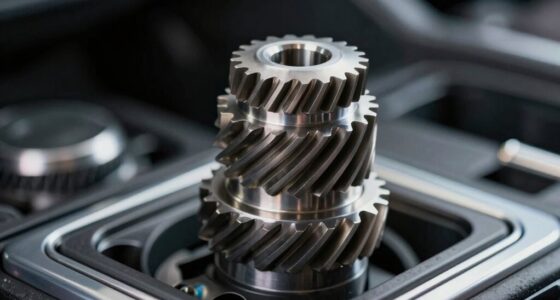
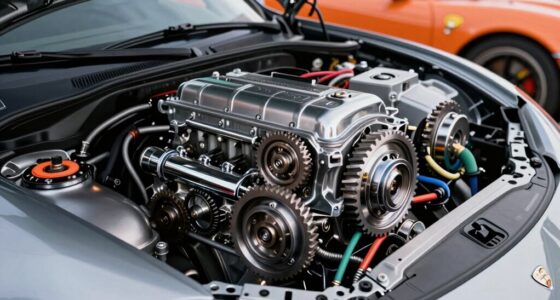
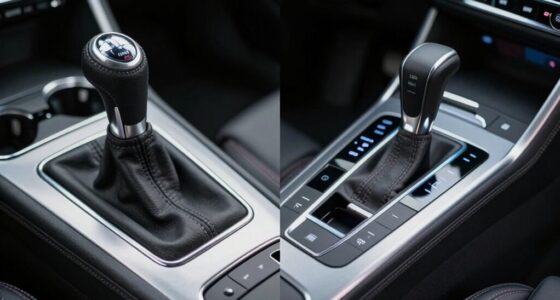
Choosing between manual and automatic in sports cars comes down to how involved you want to be. Manual transmissions give you full control, allowing you to master gear shifts and truly connect with the driving experience. Automatic gearboxes offer convenience and smooth shifts, especially with advanced technology like paddle shifters. If you want to learn more about how each type affects driving style and enjoyment, keep going—there’s plenty of detail to uncover.
Key Takeaways
- Manual transmissions offer more driver engagement, control, and mastery over vehicle dynamics in sports cars.
- Automatic transmissions provide quick, seamless gear shifts, enhancing performance and ease of driving.
- Modern automatics with manual modes and paddle shifters combine convenience with spirited driving capabilities.
- Manual cars typically deliver a more immersive and rewarding connection for enthusiasts.
- The choice depends on preference for involvement versus ease of use and daily driving needs.
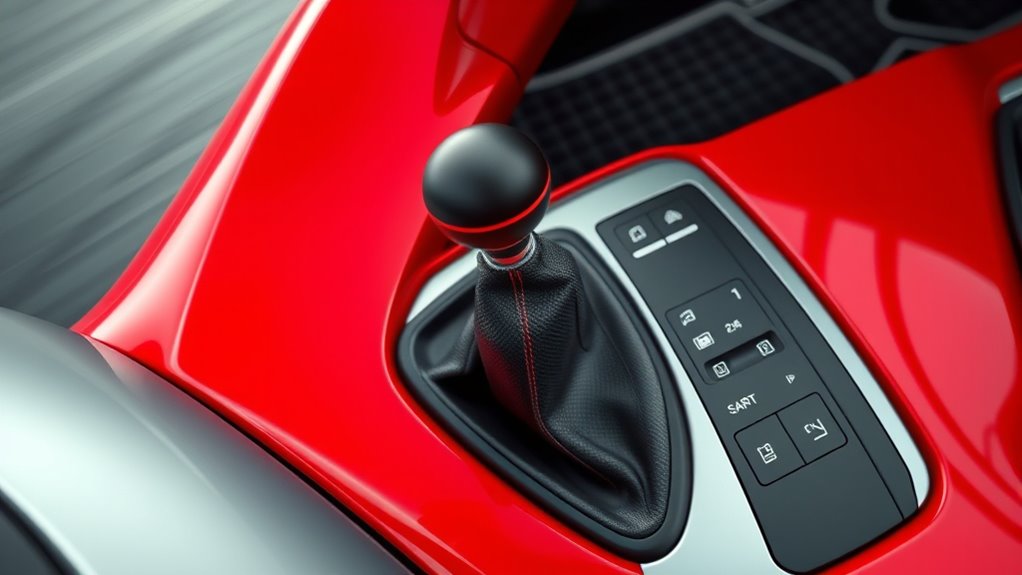
When it comes to sports cars, choosing between a manual and an automatic transmission can considerably impact your driving experience. If you opt for a manual, your involvement behind the wheel becomes more personal and hands-on. Mastering gear shift techniques is essential to maximize performance and maintain fluid acceleration. You’ll find that smooth, precise shifts not only improve your driving but also deepen your connection to the car. Properly timing your gear changes allows you to stay in the power band longer, giving you better control during spirited driving. As you learn to coordinate clutch pedal engagement and gear selection, your driver engagement intensifies. This heightened connection makes every twist and turn feel more rewarding, as you’re actively participating in the car’s dynamics rather than passively letting the vehicle do all the work. Understanding vehicle transmission types can also help you appreciate how different systems influence your driving style. Additionally, transmission technology continues to evolve, offering new features that enhance the driving experience even in automatic models. Modern automatic transmissions now incorporate adaptive shift algorithms that learn your driving habits to optimize gear changes for both efficiency and performance. Some advanced systems also provide manual mode options for drivers seeking more control when desired. It’s also worth noting that clutch control skills can significantly enhance your ability to perform smooth gear transitions in a manual car.
Manual transmissions deepen driver engagement through precise gear shifts and clutch coordination, making every drive more rewarding.
In contrast, automatic transmissions simplify the process, making driving more accessible and less demanding. Modern automatic gearboxes are sophisticated, offering quick, seamless shifts that keep the engine in its ideal range without your intervention. This means you can focus more on the road and your surroundings rather than worrying about clutch pedal timing or gear selection. While automatic transmissions might seem to diminish driver engagement, many high-performance sports cars with advanced automatics still deliver an exhilarating experience, especially with features like manual mode or paddle shifters. These allow you to retain a sense of control, enabling you to execute gear changes quickly and precisely, mimicking some of the engagement found in manuals. However, the tactile feedback and sense of connection are naturally less direct, which can influence how involved you feel during spirited driving.
Your choice between manual and automatic also affects how you approach driving techniques. With a manual, you develop a rhythm that involves anticipating gear shifts and adapting your throttle input accordingly. This skill can be deeply satisfying, giving you a sense of mastery over your vehicle. Conversely, automatic transmissions free you from the chore of shifting, allowing you to concentrate on steering, braking, and enjoying the ride. For daily driving or track days where quick shifts matter, automatics with paddle shifters can offer a compromise—providing near-instantaneous gear changes without sacrificing much driver involvement.
Ultimately, your decision depends on what kind of experience you seek. If you crave full driver engagement and enjoy honing your technique, a manual transmission offers a more immersive, rewarding connection. However, if convenience, ease of use, and modern technology are your priorities, an automatic may suit you better. Both options have their merits, and understanding how gear shift techniques and driver engagement influence your driving style can help you choose the perfect sports car for your needs.

YONHAN Battery Charger 20A 12V/24V LiFePO4 Lead Acid Fully Automatic Battery Maintainer, Car Battery Trickle Charger Automotive w/Repair, Winter Mode, for AGM, STD, Gel, Deep Cycle Batteries
[20A Suitable for LiFePO4 Lead-acid Battery Charger] 12V 20 Amp, 24V 10Amp 7-stage quick battery charger, Designed to...
As an affiliate, we earn on qualifying purchases.
Frequently Asked Questions
Which Transmission Type Offers Better Fuel Efficiency in Sports Cars?
You’ll find that automatic transmissions generally offer better fuel efficiency in sports cars due to advancements like dual-clutch systems and optimized transmission efficiency. These systems adapt quickly to driving conditions, reducing fuel consumption. While manual transmissions can be efficient if driven skillfully, automatics tend to provide more consistent fuel economy, especially with modern technology. So, for better fuel economy, an automatic transmission is typically the smarter choice.
How Does Transmission Choice Impact Driving Experience on Track Days?
You might think a manual transmission with a gear shift and clutch pedal offers more control on track days, but recent studies show that automatics with paddle shifters can deliver faster, more consistent shifts, reducing lap times. This impacts your driving experience by allowing smoother acceleration and deceleration, helping you focus on racing lines. So, your choice influences precision and confidence on the track, whether you prefer the tactile engagement or the efficiency of automated shifting.
Are Manual Transmissions More Reliable Than Automatic in the Long Term?
Manual transmissions tend to be more reliable long-term because they usually have simpler mechanics. Your clutch durability is key; if you drive gently, it can last many years. Gear shift longevity is also typically better, since manual gearboxes experience less wear and tear compared to automatics with complex hydraulic systems. However, proper maintenance and driving habits markedly influence overall reliability, regardless of transmission type.
What Are the Maintenance Differences Between Manual and Automatic Sports Cars?
Think of maintaining your sports car as tending a garden—you’ve got to stay on top of things. For manuals, you’ll need to replace the clutch when it wears out and change transmission fluid regularly. Automatics require less clutch work but need periodic transmission fluid changes to keep everything flowing smoothly. Both need routine inspections, but automatics often involve more complex and costly repairs if issues arise.
Can Automatic Transmissions Be as Engaging as Manuals for Sporty Driving?
Yes, automatic transmissions can be as engaging as manuals for sporty driving. Modern automatics offer paddle shifters, allowing you to control gear shifting and simulate clutch control, giving you a hands-on experience. Some systems even include manual modes that let you decide when to shift, providing a dynamic and interactive feel. This setup keeps you involved in the driving experience without the need for a clutch pedal, making it fun and engaging.

OPTIMA® Batteries Digital 400+ 12 Volt Battery Maintainer and Charger for AGM, Lithium, Automotive, Marine and Powersport Batteries
Digital battery type selector: OPTIMA AGM, OPTIMA Li, Auto/Marine, Power Sport Lead Acid batteries
As an affiliate, we earn on qualifying purchases.
Conclusion
Ultimately, choosing between a manual and an automatic sports car depends on what kind of driving experience you’re after. If you enjoy feeling more connected to the road and the thrill of shifting gears, a manual might be your best bet. But if convenience and smoothness appeal to you, an automatic can still deliver plenty of excitement. Either way, you’ll find a ride that fits your style—think of it as your personal way to enjoy the open road.

JACO Lightning RX4 Tire Deflator with Gauge | Rapid Quick-Connect Off Road 4x4 Air Down Tool
PATENTED AIR DOWN TOOL: Rapidly deflates tires for maximum off road traction by securely removing the tire valve...
As an affiliate, we earn on qualifying purchases.

Staun Tyre Deflators | The Australian Original Tire Deflator | Automatically Airdown Tires to 6-30 PSI
FAST: Accurately air down all four tires from street pressures to trail pressures effortlessly in just a few...
As an affiliate, we earn on qualifying purchases.