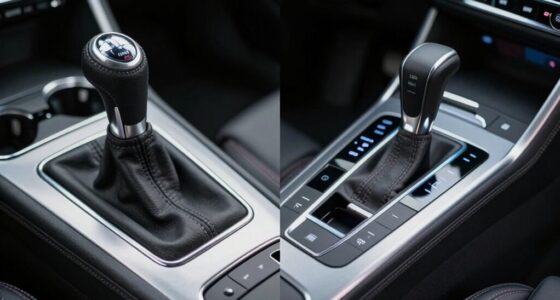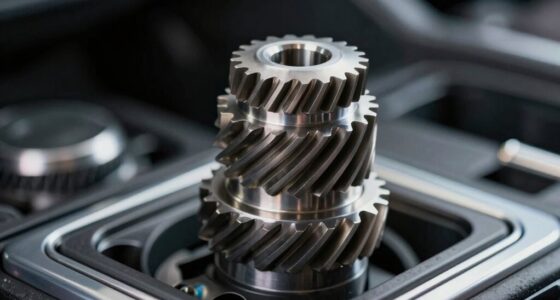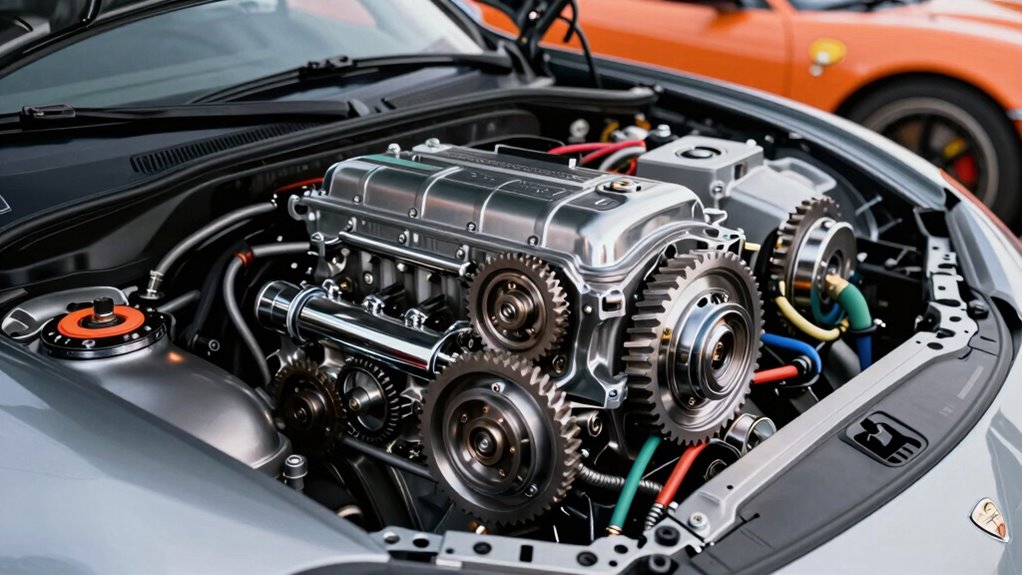

Understanding gear ratios in sports cars helps you grasp how engine power is transferred to the wheels for maximum performance. The gear ratio, calculated by dividing driven gear teeth by driving gear teeth, influences acceleration, top speed, and fuel efficiency. A lower ratio offers quicker acceleration, while a higher ratio favors higher top speeds. Exploring various gear ratios lets you customize your driving style. Continue exploring to uncover how these ratios can elevate your sports car experience.
Key Takeaways
- Gear ratio is the ratio of driven gear teeth to driving gear teeth, affecting engine turns per wheel rotation.
- Lower gear ratios provide quicker acceleration, while higher ratios favor higher top speeds.
- Adjusting gear ratios influences vehicle responsiveness, fuel efficiency, and overall driving dynamics.
- Proper gear ratio selection balances acceleration, top speed, and driving style for optimal performance.
- Advances in automotive engineering continue to evolve gear ratios for improved efficiency and driving thrill.
What Is a Gear Ratio and How Is It Measured?

A gear ratio is the relationship between the number of teeth on the driven gear (the gear connected to the wheels) and the driving gear (the gear connected to the engine). To understand this, you perform a gear ratio calculation by dividing the number of teeth on the driven gear by the number of teeth on the driving gear. The result is expressed in gear ratio units, which indicate how many times the engine must turn to rotate the wheels once. For example, a gear ratio of 4:1 means the engine turns four times for every one turn of the wheels. This measurement helps you grasp how different gear setups influence acceleration and speed. Accurate gear ratio calculation is essential for optimizing a sports car’s performance. Additionally, understanding how gear ratios affect torque and power delivery can also deepen your comprehension of vehicle dynamics. Recognizing the impact on vehicle performance is crucial for tuning and customizing sports cars for specific driving styles. Moreover, precise gear ratios can be tailored to enhance both efficiency and responsiveness based on driving needs. In addition, understanding the relationship between gear ratios and performance metrics allows enthusiasts to make more informed modifications.
The Role of Gear Ratios in Vehicle Performance

Gear ratios play a crucial role in shaping a vehicle’s performance by directly affecting acceleration, top speed, and fuel efficiency. They influence how power is transferred through the drivetrain, adding to drivetrain complexity. A well-chosen gear ratio enhances your vehicle’s responsiveness and efficiency, allowing smoother acceleration or higher top speeds depending on your needs. Understanding gear ratio calculation is essential, as it helps you optimize these settings for your driving style. A low gear ratio provides quick acceleration but limits top speed, while a higher ratio favors speed at the expense of acceleration. Your choice impacts not only performance but also fuel consumption and overall driving experience. By grasping the role of gear ratios, you can better appreciate how they shape your sports car’s capabilities on the road. Additionally, drivetrain complexity can influence maintenance and repair considerations, making it an important aspect of vehicle performance.
How Gear Ratios Affect Acceleration and Top Speed

Your gear ratio directly impacts how quickly your sports car accelerates and how fast it can go. A lower gear ratio delivers more torque for rapid acceleration, while a higher ratio favors achieving top speed. Striking the right balance between speed and torque depends on understanding how power delivery dynamics influence performance. Additionally, understanding net worth of individuals related to sports cars can provide insight into their investment in high-performance vehicles. Recognizing psychological tactics that influence car purchasing decisions can also shed light on how some buyers justify their high expenditure. Proper gear ratio selection can optimize vehicle performance for specific driving preferences, whether it’s racing or cruising, especially when considering performance modifications that tailor the car’s capabilities. Adjusting the gear ratio also plays a critical role in vehicle tuning, which can further enhance performance based on the driver’s goals.
Power Delivery Dynamics
Understanding how gear ratios influence power delivery is essential for grasping a sports car’s performance. Your gear ratio determines how engine power translates into acceleration and top speed, affecting how smoothly and quickly you can reach desired speeds. When shifting gears, a lower ratio provides more torque at the wheels, boosting acceleration, but may limit top speed due to aerodynamic drag at higher velocities. Conversely, higher ratios favor top speed but reduce initial acceleration. Tire grip plays a vital role in translating this power to the road, especially during rapid acceleration. If your tires lose grip, power delivery becomes inefficient, causing slipping or loss of control. Fine-tuning gear ratios allows you to optimize power delivery, balancing acceleration and top speed while considering aerodynamic drag and tire grip. Additionally, understanding the rendering of performance components can help in customizing your vehicle for optimal efficiency and handling. Proper tuning of gear ratios can also mitigate issues like sulfation in the drivetrain, ensuring sustained performance over time. Implementing sustainable maintenance practices can further enhance the longevity and reliability of your sports car’s drivetrain, ensuring consistent performance and Glycolic acid benefits that support the overall health of your vehicle’s systems. Regularly monitoring and adjusting performance tuning settings can prevent drivetrain issues and improve overall driving experience.
Balance of Speed and Torque
Balancing speed and torque is vital when optimizing a sports car’s performance, as gear ratios directly influence how quickly it accelerates and how fast it can ultimately go. A lower gear ratio provides more torque, improving acceleration, but may limit top speed. Conversely, higher ratios favor top speed but reduce initial acceleration. Your braking systems help manage speed, especially when shifting gears or approaching high speeds. Aerodynamic design plays an indispensable role in maintaining stability at top speeds, working alongside gear ratios to maximize performance. By fine-tuning gear ratios, you can find an ideal balance that leverages torque for quick starts while still reaching impressive top speeds. This balance ensures a responsive, high-performance driving experience without sacrificing safety or efficiency. Proper gear selection is crucial for maintaining control and optimizing overall vehicle performance. Additionally, understanding gear ratios can help you make informed modifications that enhance both acceleration and top-end capabilities, especially when considering the performance characteristics of your vehicle. Achieving the right balance also involves considering drivetrain layout, which impacts how power is delivered to the wheels and influences overall handling and responsiveness. Furthermore, utilizing connected technology such as performance monitoring apps can assist in fine-tuning gear ratios for specific driving conditions and preferences.
Types of Gear Ratios Used in Sports Cars
Sports cars utilize a variety of gear ratios to optimize performance and driving experience. You can explore gear ratio customization to fine-tune acceleration, top speed, and fuel efficiency, depending on your driving style. Historically, gear variations have evolved from simple, fixed ratios to more complex setups that allow for better control and responsiveness. Modern sports cars often feature close-ratio transmissions, where gear ratios are spaced closely to maximize power delivery during high-speed driving. Some models also incorporate limited-slip differentials with specialized gear ratios to improve cornering and traction. The gear ratio selection process enables drivers to tailor their vehicle’s performance characteristics to match their preferred driving conditions, whether you seek rapid acceleration or smooth highway cruising. Additionally, the gear ratio impact on engine performance can significantly influence fuel economy and overall driving dynamics. Understanding gear ratio dynamics helps enthusiasts optimize their vehicle setup for different racing or driving scenarios, and familiarity with transmission options can further enhance vehicle customization. The evolution of gear ratios reflects ongoing advancements in automotive engineering aimed at enhancing both efficiency and thrill.
Adjusting Gear Ratios for Different Driving Styles

When adjusting gear ratios, you need to contemplate your driving style to optimize performance or fuel efficiency. Tuning for speed and acceleration often means changing ratios for quicker power delivery, while prioritizing fuel economy may involve different settings. Balancing these trade-offs helps you customize your car’s behavior to match your driving preferences. Understanding gear ratio adjustments can help you make more informed modifications tailored to your specific needs. Additionally, considering how nanotechnology could influence future automotive components may open new avenues for performance enhancement and efficiency. As advancements in material science continue, they could further revolutionize gear design and durability, impacting how gear ratios are optimized.
Tuning for Performance
Have you ever wondered how adjusting gear ratios can dramatically change your car’s performance? Many gear ratio myths circulate, but tuning based on your driving style makes a real difference. For example, aggressive drivers benefit from shorter gear ratios for quick acceleration, while long ratios favor high-speed stability. Understanding the gear ratio history reveals how manufacturers historically optimized gear setups for specific vehicles and purposes. When tuning for performance, you’re fundamentally customizing your transmission to match your driving habits, whether racing, spirited street driving, or daily commuting. Fine-tuning the gear ratio can improve throttle response, acceleration, and overall handling. Just remember, the goal is to align your gear setup with your unique driving style, not to follow generic advice.
Fuel Efficiency Trade-offs
Adjusting gear ratios to enhance fuel efficiency involves balancing engine performance with drivetrain losses, and your driving style plays a crucial role in this. For eco-friendly modifications, selecting gear ratios that favor lower engine RPMs reduces fuel consumption. However, keep in mind the cost considerations, as custom gear changes can be pricey initially. To optimize efficiency, consider these points:
- Use taller gear ratios for highway driving to lower engine load
- Avoid aggressive shifts that increase fuel use
- Combine gear tweaks with other modifications like lightweight components
Your driving habits influence how effective these adjustments are. Smooth acceleration and steady speeds minimize fuel waste. Remember, balancing gear ratios for fuel efficiency may slightly compromise performance but pays off in fuel savings over time.
The Impact of Gear Ratios on Fuel Efficiency
Gear ratios play a crucial role in determining how efficiently a sports car uses fuel. When you optimize gear ratios, you can promote eco-friendly driving by reducing fuel consumption. Higher gear ratios in the transmission allow the engine to operate at lower RPMs during cruising, which conserves fuel. This is especially relevant for hybrid transmissions, where gear ratios are designed to balance performance with efficiency. If your gear ratios are too aggressive, the engine may work harder than necessary, decreasing fuel economy. Conversely, well-matched ratios help you accelerate smoothly while keeping fuel consumption in check. Adjusting gear ratios can lead to significant improvements in efficiency, making your sports car not just powerful but also more environmentally friendly.
Frequently Asked Questions
How Do Aftermarket Modifications Alter Gear Ratios in Sports Cars?
When you make aftermarket modifications, you can change gear ratios to improve your sports car’s performance. Performance upgrades like installing different ring and pinion gears or transmission tuning allow you to customize how your car accelerates and reaches top speed. These modifications alter gear ratios, giving you quicker acceleration or better fuel efficiency, depending on your goals. Just make certain you have professional help to get the best results from your upgrades.
Can Changing Gear Ratios Improve a Car’s Handling Characteristics?
Changing gear ratios can substantially enhance your car’s handling by fine-tuning drivetrain dynamics. Imagine your engine’s power seamlessly flowing through each gear, improving gear efficiency and responsiveness. Shorter gears boost acceleration and agility, making tight turns feel sharper, while longer gears smooth out highway cruising. By customizing gear ratios, you tailor your car’s behavior to suit your driving style, transforming everyday drives into a dynamic, engaging experience.
What Are the Signs of an Incorrect Gear Ratio Setup?
If your car feels sluggish or revs too high at low speeds, you might have gear ratio symptoms indicating an incorrect setup. You could notice poor acceleration, excessive engine noise, or difficulty maintaining speed. These signs suggest your gear ratio isn’t optimized for your driving style. Addressing an incorrect setup improves performance, fuel efficiency, and overall handling, so it’s crucial to get it checked and adjusted if needed.
How Do Gear Ratios Influence a Car’s Track Performance?
Gear ratios directly impact your car’s track performance by optimizing drivetrain dynamics and ensuring maximum tire contact. A well-chosen ratio allows you to accelerate faster out of turns and maintain better control at high speeds. It balances power delivery, reducing wheel spin or sluggishness. When your gear ratios suit the track, your car responds more precisely, enhances grip, and improves overall lap times, giving you a competitive edge.
Are There Digital Tools to Simulate Gear Ratio Changes Before Modification?
Yes, you can definitely plunge into digital details with virtual gear and simulation software. These tools allow you to tweak gear ratios, test performance, and visualize changes without risking real damage. With intuitive interfaces and realistic results, simulation software gives you total control, saving time and toning your tuning skills. So, before modifying your sports car, explore these digital devices to decide the best gear setup confidently and creatively.
Conclusion
Just like Icarus soared too close to the sun, pushing your sports car’s gear ratios can elevate your driving experience—or lead to trouble if you’re not careful. Understanding these ratios lets you access peak performance, whether you crave blistering acceleration or smooth cruising. Mastering gear ratios is your ticket to harnessing the true power beneath the hood. So, embrace the challenge—your perfect driving adventure awaits, just beyond the horizon of your current knowledge.