If your car charger causes radio static or noise, it’s likely due to electromagnetic interference from poor design, shielding, or filtering. Cheaper chargers or those lacking proper electromagnetic compatibility can emit higher signals that disrupt your vehicle’s electronics. Better-built chargers with improved shielding and filtering help reduce this interference, ensuring cleaner radio signals. To learn more about how to minimize EMI and protect your devices, keep exploring the factors that influence charger performance and safety.

Get business pricing on garage and car supplies
- Business-only prices and quantity discounts
- Tax-exempt purchasing
- Multiple users, one account, clear invoices
Key Takeaways
- Poorly shielded or designed chargers emit higher electromagnetic signals, causing radio static and noise.
- Power conversion methods in some chargers generate EMI that interferes with vehicle electronics.
- Cheaper or inferior components lack proper filtering, increasing electromagnetic interference.
- Wireless charging systems are more prone to EMI due to reliance on electromagnetic fields.
- High-quality chargers with better shielding and filtering reduce radio noise and interference.

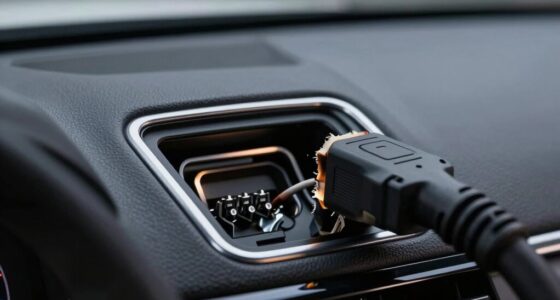
Have you ever noticed your phone or car electronics acting up when you plug in a charger? Sometimes, when you connect your device, you might hear static or notice interference on the radio. This phenomenon is often caused by electromagnetic interference, or EMI, generated by the car charger. Many chargers emit small amounts of electromagnetic signals as they operate, especially if they aren’t well-shielded or designed properly. These signals can interfere with nearby electronic devices, including your car’s radio and other sensitive electronics.
One common culprit behind this interference is the type of power conversion used in some chargers. Cheaper or poorly designed chargers may produce more EMI due to inferior components or lack of proper filtering. As a result, your car’s radio picks up the static or noise, disrupting your listening experience. To make matters worse, some chargers can also impact your battery performance over time. If a charger isn’t designed to minimize EMI, it might cause fluctuations in power delivery, leading to inefficient charging or even long-term battery health issues. Wireless charging, in particular, is more susceptible to EMI because it relies on electromagnetic fields to transfer energy. If the charger isn’t properly shielded, the electromagnetic fields can create noise that leaks into your car’s electronics.
The key to avoiding these issues is choosing high-quality car chargers that prioritize electromagnetic compatibility (EMC). Good chargers are engineered with better shielding and filtering components, which markedly reduce EMI output. When you pick a reliable charger, you not only get a cleaner power supply but also help preserve your device’s battery performance. Reduced electromagnetic noise means your phone charges more efficiently, and your car’s radio remains clear of static. It’s also worth noting that some newer wireless charging systems are designed with better electromagnetic shielding, so they’re less likely to cause radio noise. This means you can enjoy wireless charging without sacrificing audio quality or risking damage to your vehicle’s electronics. Additionally, understanding electromagnetic compatibility (EMC) can help you select chargers that are less likely to cause interference. Being aware of EMC standards can guide you toward safer and more reliable charging options. Properly designed chargers not only improve your overall experience but also contribute to electromagnetic safety by reducing unwanted emissions. Moreover, investing in certified chargers that meet established EMC regulations can significantly reduce the risk of electromagnetic interference. Recognizing the importance of shielding and filtering in charger design can further help you make informed choices for a cleaner, interference-free experience.
high quality car charger with EMI shielding
As an affiliate, we earn on qualifying purchases.
As an affiliate, we earn on qualifying purchases.
Frequently Asked Questions
Can EMI From Car Chargers Affect Other Electronic Devices?
Yes, EMI from car chargers can affect your other electronic devices by causing interference or noise. This happens if the chargers lack proper electromagnetic compatibility, meaning they don’t effectively limit electromagnetic emissions. To reduce this, noise mitigation techniques like ferrite beads or shielding are essential. By choosing chargers with good electromagnetic compatibility and implementing noise mitigation methods, you can safeguard your devices from unwanted radio noise and guarantee smooth operation.
Are There Specific Brands Known for Causing Less Radio Noise?
You might think big brands are the culprits, but surprisingly, reputable brands often prioritize noise reduction techniques, making their chargers less likely to cause radio noise. Some lesser-known brands may cut costs and skip essential EMI shielding, leading to more interference. So, when choosing a charger, look for trusted brands with good reviews for brand reputation and noise reduction tech—your radio will thank you!
How Can I Test My Car Charger for EMI Interference?
To test your car charger for EMI interference, start by connecting it to your vehicle and turning on your radio or communication device. Listen for static or noise, which indicates interference. For thorough EMI testing, use specialized equipment like a spectrum analyzer. If interference occurs, consider interference mitigation techniques, such as using ferrite beads or shielding, or switch to a charger with better EMI compliance to reduce radio noise.
Do All Car Chargers Emit Radio Frequency Interference?
Not all car chargers emit radio frequency interference, but many do due to electromagnetic compatibility issues. You might notice noise when your charger’s electromagnetic emissions clash with your radio’s signals. To tackle this, use interference mitigation strategies like shielding and filtering. By understanding these electromagnetic compatibility concerns, you can choose chargers that minimize noise, ensuring your drives are peaceful and your signals stay clear.
What Safety Standards Regulate EMI EMIssions From Car Chargers?
You should know that safety standards regulate EMI emissions from car chargers through regulations like FCC Part 15 and IC regulations, guaranteeing EMI compliance. These standards are designed to limit radio frequency interference, protecting your vehicle’s electronics and radio signals. Manufacturers must meet these regulatory standards before marketing their chargers. By choosing chargers that comply, you reduce the risk of radio noise and ensure safe, reliable operation of your devices while driving.
As an affiliate, we earn on qualifying purchases.
Conclusion
To summarize, understanding EMI in your car charger helps you avoid unwanted radio noise and guarantees a smoother driving experience. Did you know that nearly 30% of drivers report interference issues with their chargers? By choosing chargers with proper shielding and filtering, you can greatly decrease EMI problems. So, next time you shop for a charger, look beyond just charging speed—prioritize those designed to minimize electromagnetic interference for a clearer, distraction-free journey.
car wireless charger with minimal radio noise
As an affiliate, we earn on qualifying purchases.
As an affiliate, we earn on qualifying purchases.
As an affiliate, we earn on qualifying purchases.
Fall Picks
fall essentials
As an affiliate, we earn on qualifying purchases.