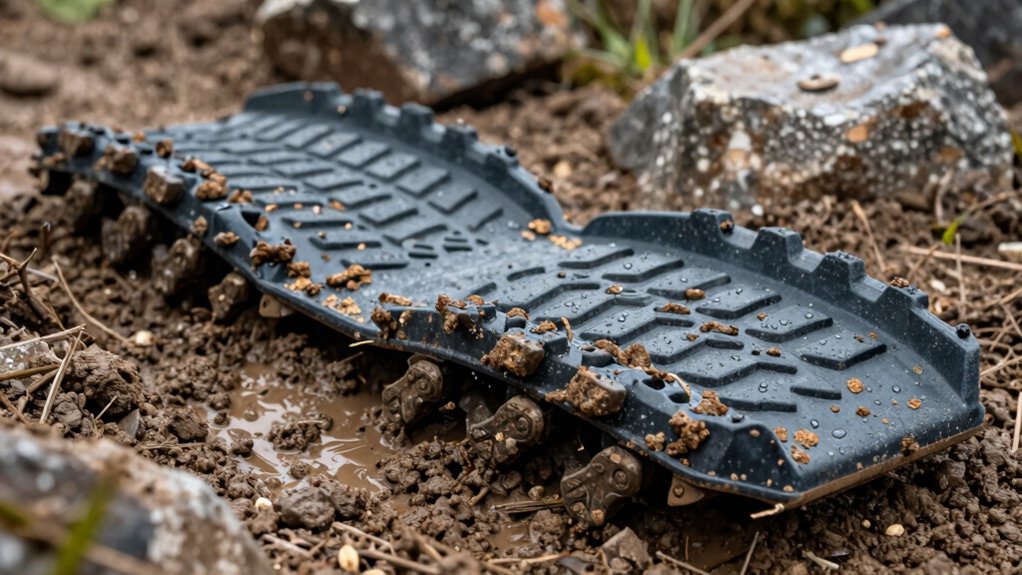

To make traction boards work effectively, you need a disciplined, goal-oriented approach. Place the boards strategically in front of your tires for maximum contact, and then monitor how your tires interact with the terrain. Reposition the boards or add weight if needed, always keeping your recovery goal in mind. Stay patient, adjust as necessary, and focus on steady progress. Keep these techniques in mind, and you’ll release the full potential of your traction boards with each effort.
Key Takeaways
- Proper placement of traction boards in front of tires maximizes contact and friction for effective traction.
- Reposition and adjust boards based on tire interaction to optimize leverage and stability.
- Use measurable progress and goals to guide the recovery effort and avoid unnecessary effort.
- Understand vehicle traction mechanics to apply the correct technique for different terrains.
- Patience and a methodical approach ensure consistent improvement and successful recovery.
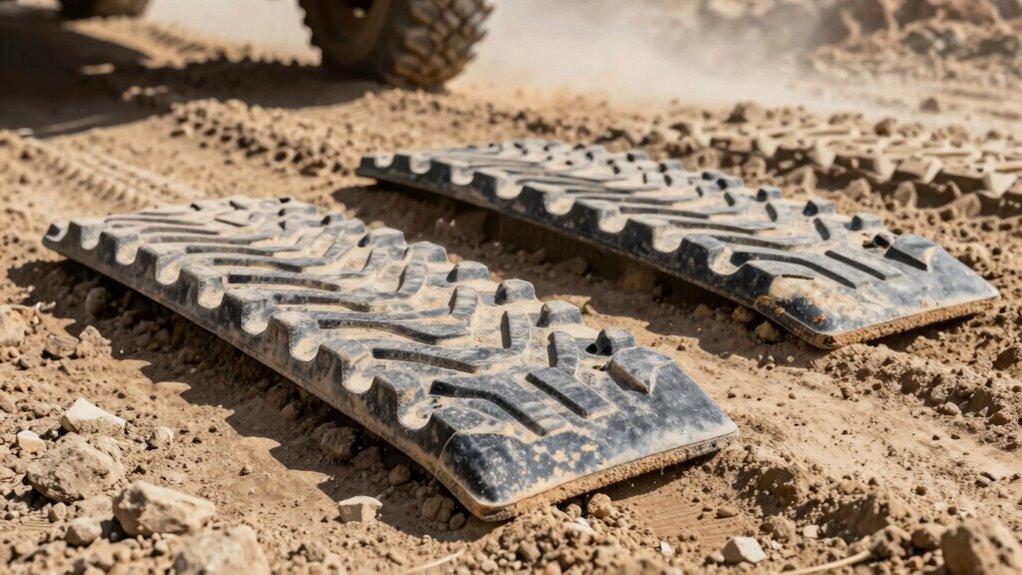
Have you ever been stuck in snow, mud, or sand with your vehicle unable to move? It’s frustrating, and your first instinct might be to panic or try random tricks to get unstuck. But before you do anything, it helps to understand the technique that makes traction boards so effective. These tools aren’t magic; they work because of a clear process—progress tracking and goal setting—that guides you through the recovery. When you’re caught in tough terrain, your goal is simple: regain traction and get moving again. Traction boards give you a tangible way to achieve that goal by providing a stable surface for your tires to grip. To use them properly, you need to set a clear goal for your recovery effort, which is to create enough friction and stability to free your vehicle.
Once you’ve set your goal, the next step is progress tracking. You’ll need to assess your current situation—how deep the mud is, how much snow is around, or how loose the sand feels—and then use the traction boards accordingly. Progress tracking means paying close attention to how your tires are interacting with the surface and whether each attempt is moving you closer to your goal. Instead of blindly shoveling or revving your engine, you use the traction boards as a measurable step forward. You place them strategically in front of your tires, aiming to maximize their contact area and grip. With each small movement, you check whether your tires are gaining traction or if you need to reposition the boards for better leverage. Understanding the importance of vehicle traction can help you better plan your recovery process. Recognizing the role of friction in vehicle recovery can also help you optimize your efforts and avoid unnecessary frustration.
This process of goal setting and progress tracking ensures you’re not wasting effort. You’re consciously working toward your objective, adjusting your approach based on what the situation demands. To improve your chances of success, it’s helpful to understand the underlying mechanics of traction and friction, which are fundamental to overcoming obstacles like mud or snow. If your first placement doesn’t work, you can reposition the boards or add more weight to your vehicle to improve traction. The key is to stay focused on your goal of freeing your vehicle, while continuously monitoring your progress. Over time, this methodical approach prevents you from getting overwhelmed and helps you stay organized in your recovery efforts. Using traction boards effectively isn’t just about having the right tools; it’s about applying a disciplined technique that aligns with your goal of overcoming the obstacle. With patience, focus, and a clear plan, you’ll find that what once seemed impossible becomes manageable, and you’ll be back on your way in no time.

BUNKER INDUST Off-road Traction Boards with Jack Base,Pair Recovery Track 4X4 Jeep Truck Emergency Tire Traction Mat with Bag -Sand, Mud, Snow Tracks Black Traction Pad (Gen 7th)
- Jack Base for Emergency Use: Includes jack base for lifting support
- Highly Flexible Design: Bends up to 120° without breaking
- Heavy-Duty Load Capacity: Supports up to 10 tons
As an affiliate, we earn on qualifying purchases.
As an affiliate, we earn on qualifying purchases.
Frequently Asked Questions
What Materials Are Best for Making Traction Boards?
You should choose durable materials like high-density polyethylene or recycled plastics for making traction boards, as they withstand rough terrain and harsh weather. Eco-friendly options, such as recycled plastics, are a great choice if you want sustainability. Avoid flimsy materials that break easily. By selecting sturdy, eco-conscious materials, your traction boards will last longer, perform better, and support your environmental values during outdoor adventures.
How Do Traction Boards Perform in Different Weather Conditions?
When the weather changes, traction boards show their true colors. You’ll find snow traction improves with textured surfaces designed for icy conditions, while mud performance depends on deep treads that grip loose soil. In rain or snow, they keep you moving, but in heavy mud, expect some slipping. Overall, they adapt well, but understanding their limits helps you avoid getting stuck, especially when the weather throws a wrench in your plans.
Can Traction Boards Damage the Vehicle’s Undercarriage?
Traction boards can potentially damage your vehicle’s undercarriage if not used properly, especially if they’re incompatible with your vehicle’s size and design. To protect your undercarriage, make certain you choose traction boards that offer adequate undercarriage protection and are compatible with your vehicle. Always follow the manufacturer’s instructions, avoid forcing the boards, and position them correctly to minimize the risk of undercarriage damage during use.
Are Traction Boards Suitable for All Types of Tires?
Sure, traction boards are the universal answer for every tire, right? Not quite. You’ll find that tire compatibility varies, and not all boards suit every tire. Off-road suitability depends on your tire’s size and tread. If you’re rolling on tiny city slickers or massive mud monsters, check if your traction boards match up. Otherwise, you might be stuck—literally—wondering why your boards don’t work.
How Long Do Traction Boards Typically Last With Regular Use?
With regular use, traction boards typically last between one to three years, depending on durability testing and material longevity. If you choose boards made from high-quality, durable materials like reinforced plastic or rubber, they’ll stand up better to wear and tear. Proper maintenance, like cleaning and storing them properly, also extends their lifespan. Keep in mind, heavy or rough terrain can shorten their durability, so choose wisely based on your needs.
As an affiliate, we earn on qualifying purchases.
Conclusion
Now that you understand the technique behind traction boards, you’re like a seasoned sailor steering tricky waters. Imagine a stranded vehicle as a boat caught in a storm—traction boards are your trusted anchor, steadying your way out. Just as a compass guides you home, mastering this technique guarantees you’re never truly stuck. With a little practice, you’ll turn challenging terrain into smooth sailing, confident that your traction boards are your secret navigation tool.
As an affiliate, we earn on qualifying purchases.
As an affiliate, we earn on qualifying purchases.