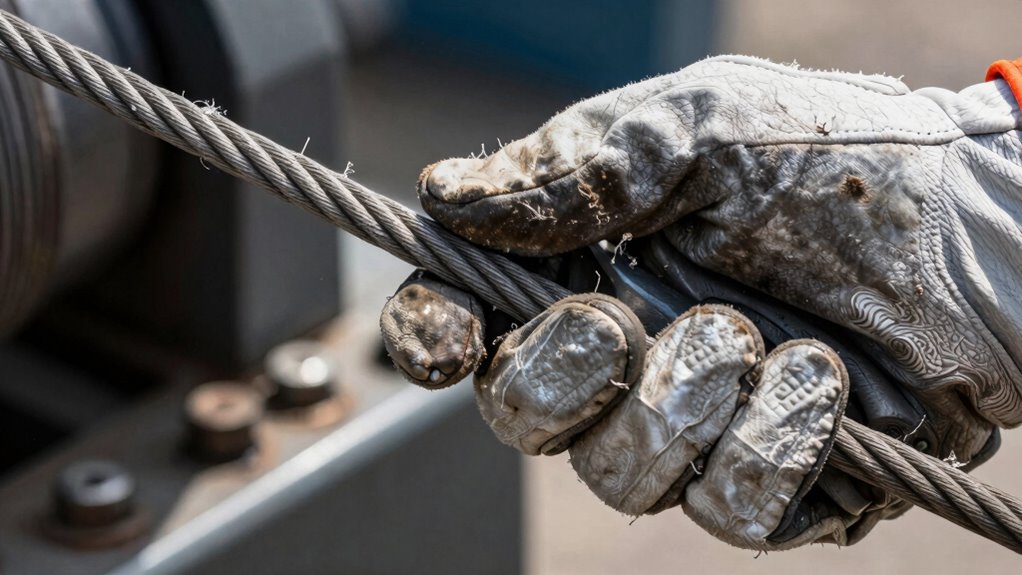
To keep your fingers safe when handling steel winch cables, always wear thick gloves to protect against burrs and sharp strands. Regularly inspect the cable for burrs, fraying, or damage, and smooth or replace damaged sections promptly. Developing a habit of careful inspection, proper storage, and routine maintenance prevents injuries and extends the cable’s life. Keep these habits in mind, and you’ll minimize risks and improve your safety every time you work with the cable.
Key Takeaways
- Always wear thick gloves to protect fingers from sharp burrs and prevent cuts during cable handling.
- Regularly inspect the cable for burrs, corrosion, or frayed strands, and smooth or replace damaged sections promptly.
- Coils and stores the cable properly in a dry, covered area to prevent rust, corrosion, and damage.
- Develop a safety routine that includes checking, cleaning, and storing the cable after each use to prevent accidents.
- Handle the cable with a firm grip and avoid rushing, reducing the risk of slips, snagging, and finger injuries.
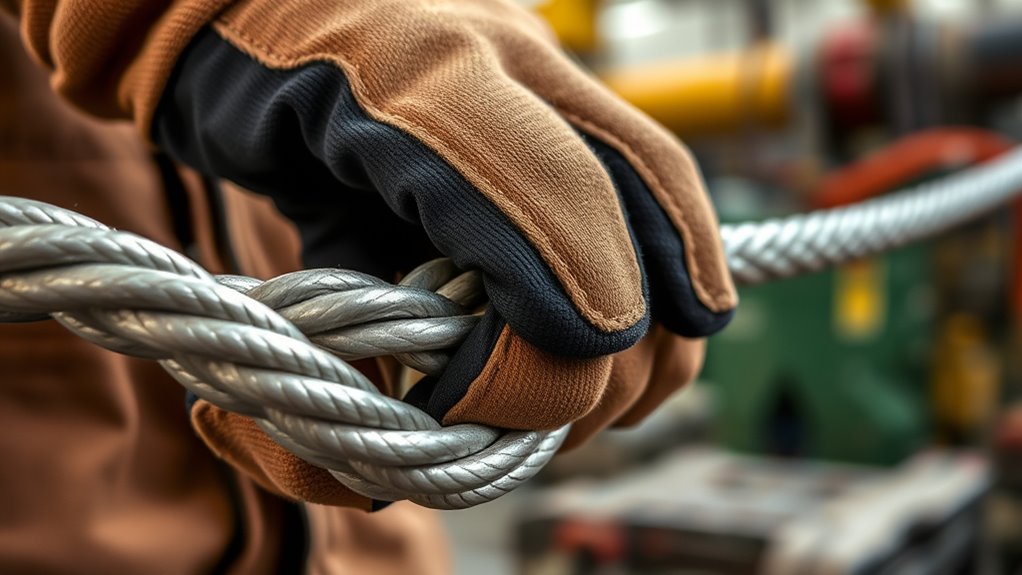
When using a steel winch cable, safety should always be your top priority. Before you even start the job, take a moment to perform a thorough cable inspection. Look for signs of wear, fraying, corrosion, or broken strands. These issues can compromise the cable’s strength and increase the risk of failure during operation. Never ignore small nicks or burrs on the cable surface; they can develop into serious weak points if left unchecked. Regular inspection is essential, especially after heavy use or exposure to harsh elements. By catching problems early, you prevent accidents and extend the life of your cable. Additionally, understanding piercing care and hygiene can remind you to handle equipment carefully to avoid introducing contaminants that could weaken the cable or cause safety hazards.
Proper storage plays an essential role in maintaining the safety and longevity of your steel winch cable. When you’re done with your work, always coil the cable neatly and store it in a dry, covered area away from moisture and corrosive substances. Proper storage keeps the cable free from unnecessary exposure to elements that accelerate rust and corrosion, which can weaken the wire and create dangerous conditions. Avoid leaving the cable lying in a tangled mess or on the ground, where it can become damaged or contaminated. When stored correctly, the cable remains in ideal condition, reducing the risk of sudden failure during future use.
Handling the cable with care also involves wearing the right protective gear. Thick gloves are essential because they protect your fingers from burrs, sharp strands, and potential pinches. Burrs, often overlooked, can cause serious cuts or snag your glove, leading to injury. Always inspect the cable for burrs before handling, and if you notice any, smooth them out carefully or replace the cable if necessary. When you’re operating the winch, maintain a firm grip and stay alert to the cable’s movement to avoid sudden snaps or recoil. Developing a habit of routinely checking the cable’s condition, cleaning it from dirt and debris, and properly storing it after each use creates a consistent safety routine that saves fingers and prevents accidents.
Frequently Asked Questions
How Often Should Steel Winch Cables Be Inspected for Safety?
You should inspect your steel winch cable before each use to guarantee safety. Regular inspections help identify signs of wear, fraying, or damage, which can affect cable longevity. Additionally, perform a thorough inspection weekly if you use the winch frequently. By maintaining a consistent inspection frequency, you reduce the risk of accidents and extend the life of your cable, keeping your operations safe and efficient.
What Are the Best Gloves for Handling Steel Winch Cables?
Like a knight’s armor, the best gloves for handling steel winch cables combine durability and comfort. Opt for gloves made from leather or synthetic materials, as they offer excellent protection against burrs and rough surfaces. Look for gloves with enhanced grip features—like textured palms—to prevent slipping. Prioritize fit and flexibility, so you can maintain precision and control, ensuring safety with every pull and tug.
Can You Repair a Damaged Steel Winch Cable Yourself?
You can attempt to repair a damaged steel winch cable yourself with cable splicing, but it’s risky. Proper splicing technique ensures strength and safety, so follow precise steps. Remember to prevent corrosion during repair by cleaning and applying protective coatings. If you’re unsure or the damage is severe, it’s best to consult a professional. A faulty repair can lead to failure, so prioritize safety over DIY fixes when in doubt.
What Signs Indicate a Winch Cable Needs Replacing?
You’ll know it’s time to replace your winch cable if you notice cable fraying, corrosion signs, or broken strands. Fraying indicates weakening fibers, risking failure, while corrosion weakens the metal, reducing its strength. Also, look for rust or pitting along the cable. If you see any of these signs, don’t delay—substituting the cable promptly ensures safe, reliable operation and prevents accidents during your winching tasks.
Are There Specific Storage Tips for Prolonging Cable Lifespan?
To prolong your cable’s lifespan, store it in a dry, cool place away from direct sunlight. For example, if you keep your winch cable in a damp shed, rust can develop quickly. Always clean the cable thoroughly and apply a protective coating before storage to prevent rust. Proper storage and rust prevention techniques keep the cable’s coating intact, ensuring it stays strong and safe for future use.
Conclusion
By always inspecting your steel winch cable for burrs, wearing sturdy gloves, and developing a consistent safety habit, you substantially reduce the risk of finger injuries. Some say that a simple routine can prevent accidents more effectively than complex safety gear. While no method guarantees absolute safety, embracing these practices creates a safer working environment. Trust in your habits and tools—because staying vigilant keeps your fingers intact and your workday smooth.