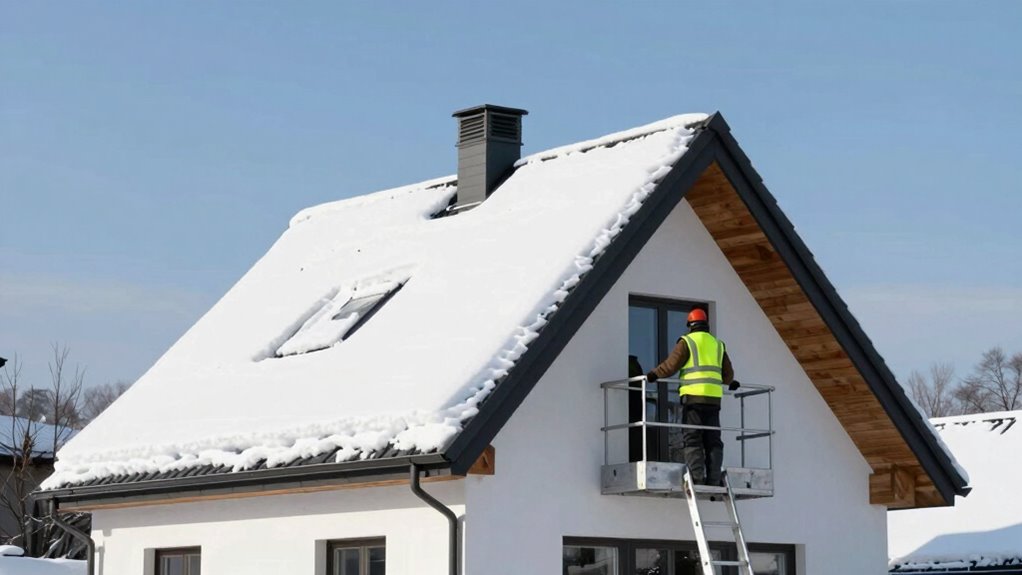

Understanding roof load limits involves knowing the differences between static and dynamic loads. Static loads are constant, like snow or roofing materials, which can build up over time. Dynamic loads are forces that change suddenly, such as wind gusts or falling debris, exerting temporary stress on your roof. Both types are essential for evaluating safety and durability. If you want to learn how these loads impact your roof and what you can do to protect it, keep exploring.
Key Takeaways
- Static loads are constant weights like snow or roofing materials, while dynamic loads are fluctuating forces like wind or debris impact.
- Roof load limits specify maximum static and dynamic forces the structure can safely support.
- Proper design includes safety margins to handle both static and dynamic loads effectively.
- Wind causes unpredictable lateral forces, requiring reinforced roofing for resistance against dynamic loads.
- Regular maintenance and monitoring help prevent overloads and structural failures from static or dynamic forces.
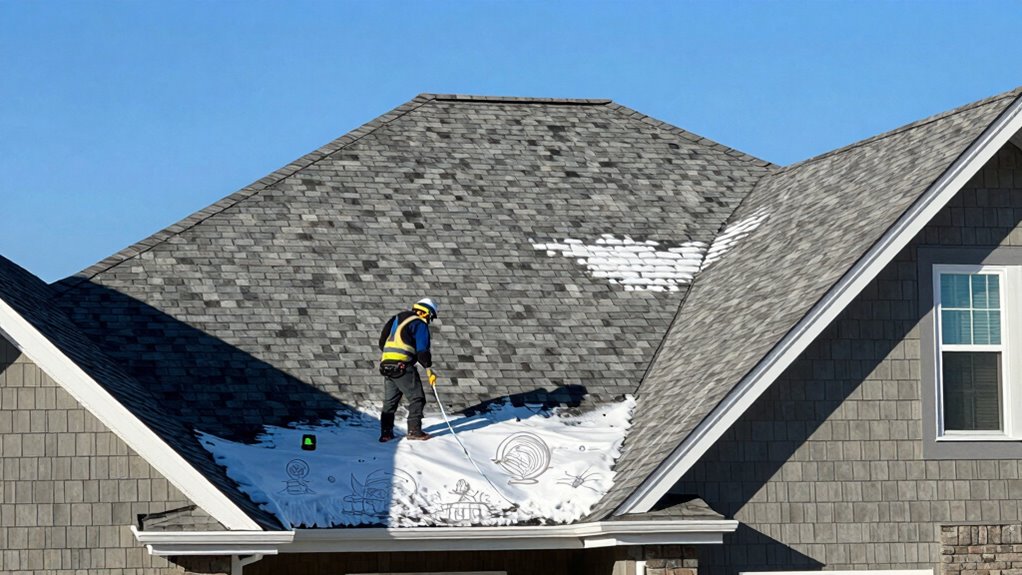
Have you ever wondered how much weight your roof can safely support? Understanding roof load limits is essential for guaranteeing your home’s safety, especially when considering factors like snow accumulation and wind resistance. Static load refers to the constant weight the roof bears over time, such as the weight of roofing materials, accumulated snow, or even a heavy layer of ice. This load remains relatively steady and predictable. On the other hand, dynamic load involves forces that fluctuate or strike suddenly, such as wind gusts or the impact of debris during storms. Both types of loads are critical to evaluate when examining your roof’s capacity.
Understanding static and dynamic loads is key to ensuring your roof’s safety and longevity.
Snow accumulation considerably impacts static load. In winter months or in colder climates, snow can pile up quickly, adding substantial weight to your roof. The more snow that gathers, the greater the static load, which can push your roof closer to its maximum support limit. If the snow remains for an extended period, it can cause stress that might lead to sagging or even structural failure if the load exceeds the roof’s designed capacity. It’s crucial to monitor snowfall and clear snow buildup when possible, especially after heavy storms, to prevent overloads. Additionally, wind resistance plays a crucial role in dynamic loads. During storms, strong gusts can exert lateral forces on your roof, causing it to shift or weaken if it isn’t adequately braced. Wind can also lift loose shingles or roofing materials, creating additional stress and potentially leading to damage or collapse. Understanding roof load limits helps homeowners recognize when their roofs are approaching dangerous levels of stress, especially during extreme weather events. Being aware of static and dynamic loads allows for better preparation and maintenance strategies to protect your home.
Understanding the difference between static and dynamic loads helps you appreciate why your roof needs to be designed with sufficient safety margins. A roof with high wind resistance can withstand gusts without damage, while one that’s not properly reinforced might buckle under the pressure. Similarly, a roof designed to handle significant snow accumulation can support heavier loads without risking structural compromise. Regular inspections and maintenance are indispensable to keep your roof in good condition and guarantee it can handle both static and dynamic loads effectively. Recognizing the importance of load capacity in your roof’s design can help you make informed decisions about upgrades or repairs. Moreover, considering environmental factors in your region can help you better understand the specific loads your roof may be subjected to over time. Additionally, understanding building codes and standards can help ensure your roof is constructed or reinforced to meet safety requirements based on local conditions.
Being aware of your roof’s load limits allows you to take proactive steps, such as removing excess snow or reinforcing vulnerable areas, to safeguard your home from potential damage. Remember, the key is not only understanding the static weight your roof can bear but also how it responds to unpredictable forces like wind. By paying attention to these factors, you can help extend your roof’s lifespan and maintain the safety of your home through all seasons.
As an affiliate, we earn on qualifying purchases.
Frequently Asked Questions
How Are Roof Load Limits Determined for Different Building Types?
You determine roof load limits for different building types by considering material durability and conducting thorough structural analysis. Material durability guarantees the roof can withstand environmental stresses over time, while structural analysis helps identify the maximum static and dynamic loads the structure can safely support. Building codes and engineering standards guide these assessments, ensuring your roof can handle snow, wind, and other loads without failure.
Can Roof Load Limits Change Over Time or With Renovations?
They say “what’s built to last, lasts.” Over time, roof load limits can change due to historical data and material degradation. Renovations or upgrades may also impact these limits, especially if new materials are used or structural reinforcements are added. Regular inspections are essential, as aging materials weaken and may require recalculations to guarantee safety and compliance with updated standards.
What Safety Factors Are Considered in Setting Load Limits?
When setting load limits, safety factors consider material durability and thorough structural analysis. You should know that engineers incorporate these factors to account for unexpected loads, weather conditions, and aging materials. By doing so, they guarantee your roof can handle static and dynamic stresses safely over time. This careful assessment helps prevent structural failures, protecting you and your property from potential hazards caused by exceeding safe load capacities.
How Do Weather Conditions Affect Static and Dynamic Load Calculations?
Like Icarus flying too close to the sun, you must consider how weather impacts roof loads. Wind impact can dramatically increase dynamic forces, stressing the roof beyond static calculations. Snow accumulation adds static weight, but if it slides or melts unevenly, it creates dynamic loads. You need to account for these conditions, understanding that both static and dynamic load calculations must adapt to weather fluctuations for safety and structural integrity.
Are There International Standards for Roof Load Limits?
Yes, there are international standards for roof load limits, primarily set by organizations like the International Building Code (IBC) and Eurocode. These standards consider material durability and load redistribution to guarantee safety under various conditions. They provide guidelines that help you design roofs capable of handling static and dynamic loads, including snow, wind, and maintenance activities, ensuring structural integrity across different climates and building types.
As an affiliate, we earn on qualifying purchases.
Conclusion
Understanding roof load limits isn’t just about numbers; it’s about safety and durability. Static loads give you a clear, steady boundary, like the calm before a storm. Dynamic loads, however, remind you that forces can be unpredictable, like a sudden gust of wind. While static limits set the foundation, dynamic considerations push you to contemplate beyond. Balancing both ensures your roof stands strong, resilient against both calm and chaos.
As an affiliate, we earn on qualifying purchases.
roof reinforcement for wind resistance
As an affiliate, we earn on qualifying purchases.
As an affiliate, we earn on qualifying purchases.