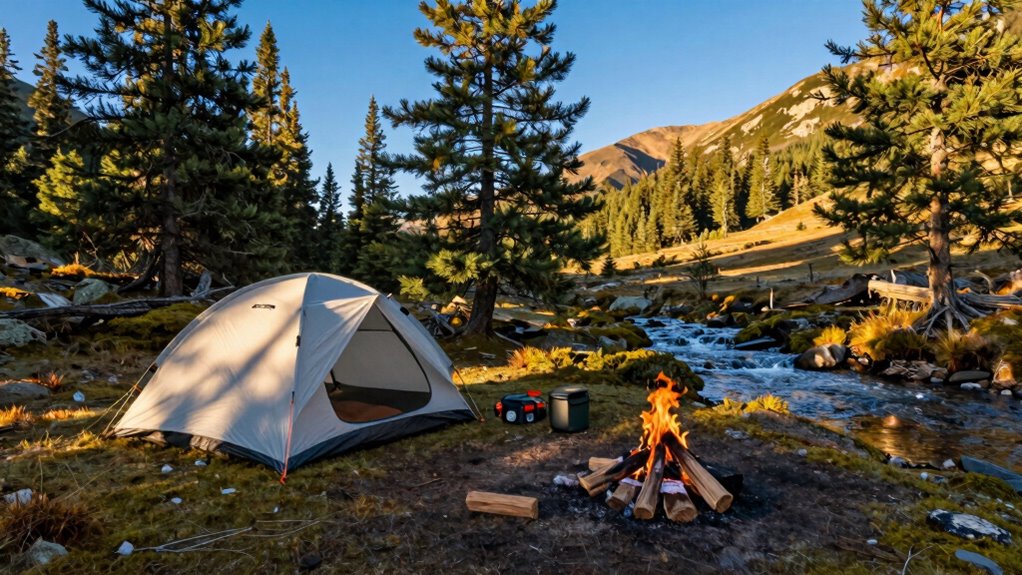

To camp responsibly and avoid trashy damage, always stay on durable surfaces like existing campsites and established paths. Pack out all trash, food scraps, and hygiene products, and use biodegradable soap away from water sources. Keep fires small, use existing fire rings, and make sure fires are fully extinguished. Respect wildlife by storing food securely and keeping a safe distance. Following these simple steps ensures you leave minimal impact and help preserve natural beauty for others. For more tips, keep exploring.
Key Takeaways
- Use designated campsites and durable surfaces to minimize environmental disturbance and erosion.
- Pack out all trash, food scraps, and hygiene products to prevent pollution and wildlife attraction.
- Keep fires small, use existing fire rings, and fully extinguish fires to avoid landscape scars and wildfires.
- Maintain a safe distance from wildlife, store food securely, and avoid feeding animals to protect their natural behaviors.
- Leave natural objects undisturbed and follow Leave No Trace principles to preserve the site’s natural beauty.
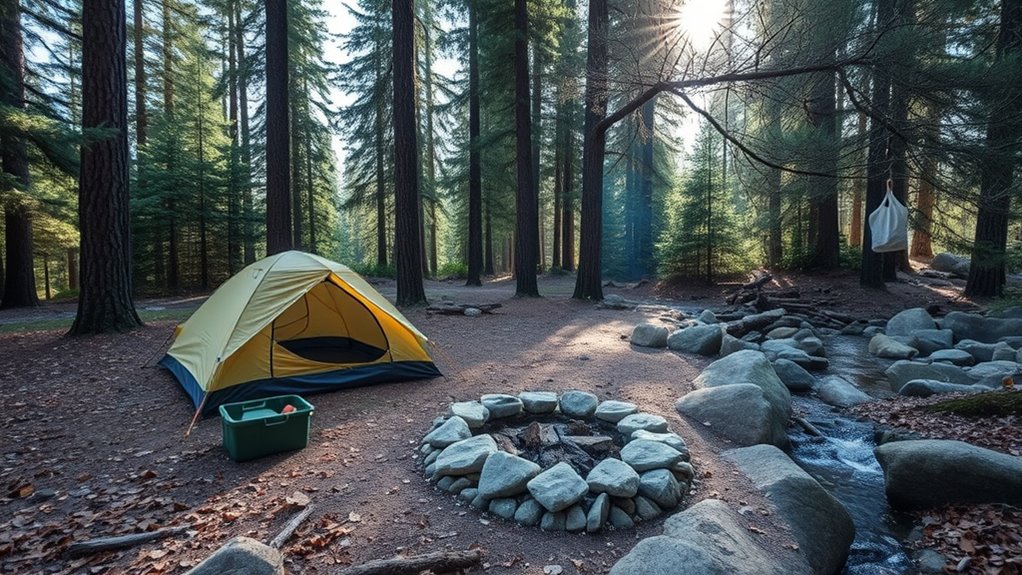
Campsites can offer unforgettable outdoor experiences, but they also leave a tangible mark on the environment. That’s why practicing responsible camping is necessary. By adopting principles like Leave No Trace, you guarantee that your visit doesn’t tarnish the natural beauty that drew you there in the first place. Responsible camping isn’t just about avoiding fines; it’s about respecting the land, wildlife, and fellow campers. When you leave no trace, you minimize your impact, helping to preserve these pristine areas for future generations.
Practicing Leave No Trace protects nature and preserves outdoor beauty for future generations.
The first step in responsible camping is planning ahead. Know the rules of the area you’re visiting and follow all regulations. Stick to designated campsites whenever possible, as they are designed to handle human impact with minimal damage. When setting up your tent, choose durable surfaces like existing campsites or gravel rather than fragile vegetation or soil that can be easily disturbed. This reduces erosion and trampling damage. Be mindful of your campfire choices; use established fire rings, keep fires small, and fully extinguish them before leaving. Fires can scar the landscape and threaten the environment if not properly managed.
Managing waste responsibly is another cornerstone of Leave No Trace. Always pack out everything you bring in, including trash, food scraps, and hygiene products. Use biodegradable soap and wash dishes at least 200 feet away from water sources to prevent contamination. If there are facilities nearby, use them; if not, dig a cathole at least six inches deep and 200 feet from water to dispose of human waste. This prevents pollution and keeps the area clean for others. Avoid removing natural objects like rocks, plants, or wood, as they’re essential to the local ecosystem. Instead, leave everything as you found it, or better yet, leave no trace of your presence.
Wildlife encounters should be respectful and non-intrusive. Store food securely to prevent animals from becoming habituated to human food, which can be dangerous for both wildlife and campers. Keep a safe distance from animals and never feed them. Remember, the goal is to observe wildlife without impacting their natural behaviors.

LZHOME Hexagon LED Garage Light: 25 Pack Updated Bigger Size, 26400LM Super Bright Car Detailing Ceiling LED Shop Light for Warehouse Workshop Gym Basement Car Care Wash Room
💗 【More Brightness】【This product has LZHOME's unique design, appearance and functionality, please check if it is LZHOME brand...
As an affiliate, we earn on qualifying purchases.
Frequently Asked Questions
How Can I Find Eco-Friendly Campsites?
To find eco-friendly campsites, you should look for places that prioritize Leave No Trace principles and sustainable camping practices. Use online resources like Leave No Trace’s website or apps dedicated to eco-friendly camping. Check reviews for hints of responsible management, and choose sites that promote conservation efforts. Supporting parks and campgrounds with eco-certifications also guarantees you’re camping sustainably, helping protect nature for future adventures.
What Gear Minimizes Environmental Impact?
You can minimize environmental impact by choosing gear that aligns with Leave No Trace principles and is biodegradable. Use eco-friendly items like biodegradable soap, reusable utensils, and sustainable tents made from recycled materials. Opt for lightweight gear to reduce your footprint and avoid single-use plastics. This way, you reduce waste and protect nature, making your camping experience more sustainable and enjoyable for everyone.
How Do I Handle Waste Responsibly?
You handle waste responsibly by practicing Leave No Trace principles and effective waste management. Pack out all trash, leftover food, and personal waste, ensuring nothing is left behind. Use designated facilities for waste disposal, and if unavailable, carry waste away in sealed bags. Respect the environment by minimizing waste, reducing litter, and keeping the wilderness pristine for others to enjoy. Your actions protect nature and preserve its beauty.
Are There Specific Rules for Campfire Safety?
You need to prioritize fire safety by following campfire rules carefully. Always keep your fire small and manageable, never leave it unattended, and make certain it’s fully extinguished before leaving. Use designated fire rings or pits, and keep water or a shovel nearby to control sparks. Respect local restrictions and burn bans, and be mindful of weather conditions. By adhering to these fire safety tips, you protect yourself, others, and the environment.
How Can I Teach Others About Campsite Conservation?
Pass on the passion of preservation by practicing powerful phrases about Leave No Trace and wildlife respect. Share stories and demonstrate sustainable steps, like packing out trash and respecting animal habitats. Promote peer participation, encouraging others to adopt these eco-friendly efforts. Personalize your message with positive, persuasive points that inspire action. You become a catalyst for conserving nature, cultivating a community committed to caring for campsites and championing environmental ethics.

ANCEL AD410 Enhanced OBD2 Scanner, Vehicle Code Reader for Check Engine Light, Automotive OBD II Scanner Fault Diagnosis, OBDII Scan Tool for All OBDII Cars 1996+, Black/Yellow
WIDE COMPATIBILITY – Trusted by YouTube Star Scotty Kilmer. The AD410 OBD2 Scanner supports all 16PIN vehicles that...
As an affiliate, we earn on qualifying purchases.
Conclusion
By respecting the land, you’re not just avoiding a messy campsite—you’re protecting a precious piece of nature. Think of it like leaving a trail of breadcrumbs for future adventurers, ensuring they find the same wonder you did. I once saw a pristine spot marred by careless campers, and it reminded me how quickly beauty can fade. When you camp thoughtfully, you become part of the solution, helping preserve these gems for generations to come.

BlueDriver Bluetooth Pro OBDII Scan Tool for iPhone & Android - No Subscription Fee - OBD2 Car Scanner and Code Reader - Diagnose Check Engine, ABS, SRS, Airbag & 7000+ Issues on Vehicles 1996+
[Pro OBD2 Scanner] - BlueDriver is the easiest way to scan and understand your vehicle like a professional...
As an affiliate, we earn on qualifying purchases.

ANCEL AD310 Classic Enhanced Universal OBD II Scanner Car Engine Fault Code Reader CAN Diagnostic Scan Tool, Read and Clear Error Codes for 1996 or Newer OBD2 Protocol Vehicle (Black)
CEL Doctor: The ANCEL AD310 is one of the best-selling OBD II scanners on the market and is...
As an affiliate, we earn on qualifying purchases.