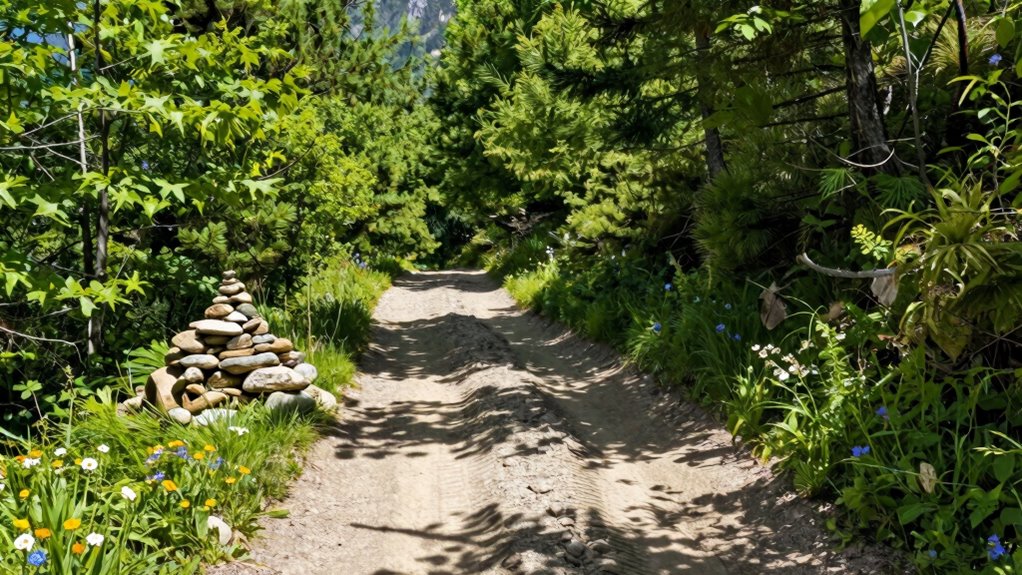

To keep motorized trails open, stay on designated routes, avoid creating new paths, and use GPS to stay on course. When crossing water, choose established fords and drive steadily to prevent erosion. Pack out all trash, including human waste, and stick to designated campsites. Respect natural features, keep fires small and controlled, and share trails courteously. Practicing these habits helps safeguard the environment and ensures trail access for everyone—continue to discover how these simple steps make a difference.
Key Takeaways
- Stay on designated trails and use GPS tools to prevent trail widening and habitat damage.
- Cross water at designated fords, maintain steady speed, and inspect vehicles afterward to protect aquatic environments.
- Minimize off-trail impact by staying on durable surfaces and avoiding trail widening around obstacles.
- Properly dispose of waste and human waste in designated areas, keeping the environment clean and healthy.
- Respect natural features, cultural sites, and trail sharing etiquette to preserve the landscape and ensure ongoing access.

2025 Latest Ozone Generator, High Capacity Ozone Machine Odor Removal Up to 6000 Sq.Ft, for Car/Home/Smoke/Pet Odor, Black
【REMOVES ODORS THAT WON'T WIPE AWAY】Ozone reacts with odors in the air, water, fabrics and walls to remove...
As an affiliate, we earn on qualifying purchases.
Stick to Designated Trails and Routes

Sticking to designated trails and routes is essential for minimizing your impact on the environment. When you stay on established paths, you help prevent erosion that can damage plant roots and destabilize the terrain. It also reduces the disturbance to wildlife habitats, allowing animals to thrive undisturbed. Venturing off-route can create new trails, which scar the landscape and lead to habitat fragmentation. Always follow posted signs and trail markers to stay on track. If you get lost, backtrack rather than forging new paths. By adhering to designated trails, you also support responsible recreation and keep access open for others. Respecting these routes ensures they remain sustainable and enjoyable for future visitors, preserving the natural beauty that makes your outdoor experience meaningful. Utilizing trail maintenance guides can help you identify areas needing care and contribute to preserving trail integrity. Engaging with environmental impact assessments can further inform responsible trail use and conservation efforts. Additionally, practicing Leave No Trace principles encourages a minimal footprint and helps protect delicate ecosystems for generations to come. Being aware of trail design can also help you understand the intended use of different routes and avoid unintended damage. Recognizing the importance of trail sustainability can motivate users to participate in conservation initiatives and advocate for responsible trail management.

Amgwhhoo Ozone Generator Machine200,000mg/h, High Capacity Ozone Odor Eliminator Removal Air Purifier for Home Car Pet & Basement Odor, Suitable for Spaces up to 7,000 Square Feet, Blue
𝗠𝗔𝗞𝗘 𝗦𝗨𝗥𝗘 𝗡𝗢 𝗣𝗘𝗢𝗣𝗟𝗘, 𝗣𝗘𝗧𝗦, 𝗢𝗥 𝗣𝗟𝗔𝗡𝗧𝗦 𝗔𝗥𝗘 𝗔𝗥𝗢𝗨𝗡𝗗 𝗪𝗛𝗘𝗡 𝗜𝗡 𝗨𝗦𝗘. 𝗢𝗭𝗢𝗡𝗘 𝗛𝗔𝗦 𝗔 𝗦𝗧𝗥𝗢𝗡𝗚, 𝗣𝗨𝗡𝗚𝗘𝗡𝗧 𝗢𝗗𝗢𝗥.𝗕𝗲𝗳𝗼𝗿𝗲...
As an affiliate, we earn on qualifying purchases.
Prepare for Water Crossings Responsibly
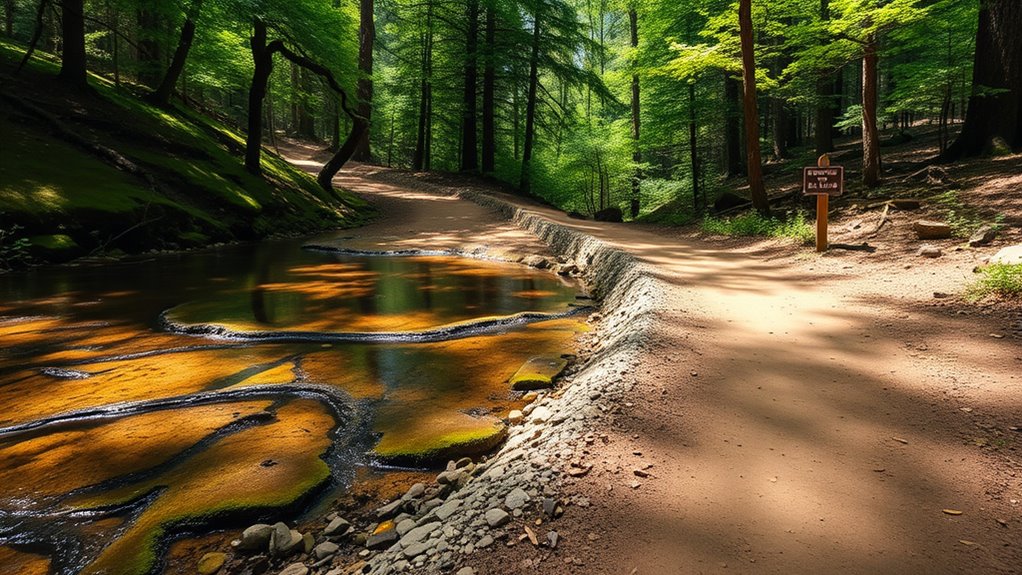
When approaching water crossings, it’s important to plan ahead to mitigate environmental impact and guarantee your safety. Check trail guides or maps for designated fords and water crossing points before you start. Use the same crossing spot each time to prevent widening the trail and damaging the environment. Reduce speed to prevent creating waves that can erode streambeds. Engage low gear and maintain a steady pace, avoiding sudden acceleration or braking. If unsure about the depth or current, consider bypassing the crossing or scouting it first. Keep your vehicle centered in the ford to distribute weight evenly. After crossing, inspect your vehicle for any damage or debris, and avoid churning up the streambed. Proper preparation ensures safe passage and helps protect the environment for others. Incorporate energy-efficient techniques when planning your route to minimize your carbon footprint and support sustainable outdoor recreation. Additionally, using low-impact driving habits can further reduce environmental disturbance during water crossings. Being mindful of supporting conservation efforts can also contribute to maintaining accessible routes for future outdoor enthusiasts.

Ozone Generator 48,000mg, Commercial Ozone Machine Odor Removal, High Capacity O3 Ionizer Air Purifier Deodorizer, Portable Mini for Car, Home, Smoke, Pets, Industrial, for 4000 Square Feet -Black
⚠️𝗢𝗭𝗢𝗡𝗘 𝗛𝗔𝗦 𝗔 𝗦𝗧𝗥𝗢𝗡𝗚, 𝗣𝗨𝗡𝗚𝗘𝗡𝗧 𝗢𝗗𝗢𝗥. ⚠️𝗠𝗔𝗞𝗘 𝗦𝗨𝗥𝗘 𝗡𝗢 𝗣𝗘𝗢𝗣𝗟𝗘, 𝗣𝗘𝗧𝗦, 𝗢𝗥 𝗣𝗟𝗔𝗡𝗧𝗦 𝗔𝗥𝗘 𝗔𝗥𝗢𝗨𝗡𝗗 𝗪𝗛𝗘𝗡 𝗜𝗡 𝗨𝗦𝗘....
As an affiliate, we earn on qualifying purchases.
Minimize Impact When Navigating Off-Trail
Traversing off-trail can cause significant environmental damage if not done carefully. To minimize impact, stay on durable surfaces like rocky or grassy areas instead of soft soil or mud. Avoid widening existing trails by going straight over obstacles rather than around them. When crossing streams, use established fords to prevent erosion and habitat disturbance. Keep your speed steady to reduce soil disturbance and noise that can scare wildlife. Be mindful of fragile vegetation and avoid trampling plants or disturbing wildlife habitats. If you need to change direction, do so gradually, minimizing your footprint. Pack out all trash and leftover materials to prevent future damage. Proper trail etiquette is essential for preserving the environment and ensuring that everyone can enjoy these routes. Additionally, practicing responsible trail use can significantly reduce your impact on delicate ecosystems. Always stay informed about environmental regulations in the area to ensure compliance and protect natural resources. By navigating off-trail responsibly, you help preserve the environment and keep routes open for everyone.

Enerzen Ozone Generator 60,000mg Industrial O3 Air Purifier Deodorizer (60,000mg - Black)
GETS RID OF THE SMELLY BITS YOU CAN'T SCRUB AWAY: Ozone reacts with odors in the air, water,...
As an affiliate, we earn on qualifying purchases.
Use Existing Campsites and Avoid Creating New Ones
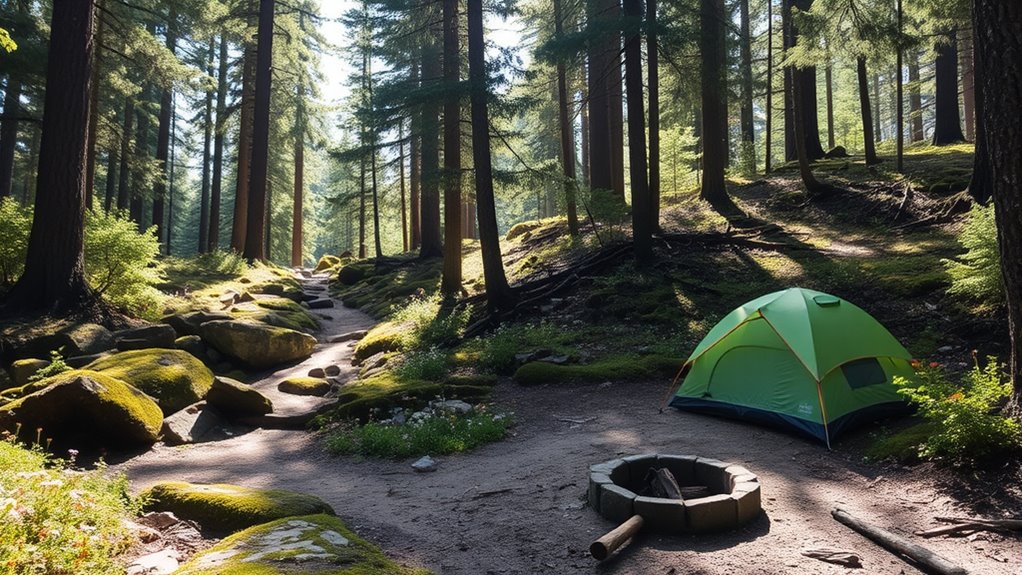
Whenever you camp, look for designated sites to reduce your impact on the environment. Using existing campsites helps prevent the spread of new areas and preserves the natural landscape. Always choose these spots over creating your own to keep wilderness areas pristine for future visitors. Proper site selection is essential for minimizing environmental disturbance and supporting sustainable outdoor recreation. Additionally, practicing leave no trace principles ensures that natural resources remain undisturbed for generations to come. Employing environmental impact assessments can further guide responsible camping choices to protect fragile ecosystems. Incorporating technological solutions like GPS mapping can help identify optimal existing sites and reduce environmental footprint.
Find Designated Sites
Are you aware of how choosing existing campsites can protect the environment? Using designated sites minimizes the impact on surrounding vegetation and soil, preventing unnecessary disturbance. Before your trip, research and plan to locate approved camping areas. When you arrive, set up your camp within the established boundaries to avoid creating new impact zones. This practice aligns with principles of responsible outdoor recreation and environmental preservation. It helps maintain the area’s natural beauty and reduces habitat disruption for wildlife. Avoid the temptation to set up camp just anywhere; instead, use the sites already designed to handle visitors. By sticking to designated sites, you help preserve the landscape for future visitors and ensure your presence doesn’t contribute to erosion or habitat loss. Making this conscious choice keeps our outdoor spaces healthy, accessible, and enjoyable for everyone.
Minimize New Area
By choosing existing campsites instead of creating new ones, you help reduce environmental damage and preserve natural resources. This practice minimizes ground disturbance, prevents vegetation loss, and protects wildlife habitats. When you stick to established sites, you avoid trampling delicate plants and causing soil erosion.
To keep impacts small, remember:
- Use designated campsites whenever possible.
- Camp on durable surfaces like rock, gravel, or compacted soil.
- Pack out everything you bring in, including trash and waste.
Properly Dispose of Waste and Human Waste

You need to pack out all your trash, including toilet paper, to keep the trail clean. Properly disposing of human waste by using catholes or packing it out helps protect water quality and the environment. Staying responsible with waste guarantees everyone can enjoy the area without leaving a lasting impact. Proper waste disposal is an essential part of responsible trail stewardship that preserves the natural beauty for future visitors. Additionally, using environmentally friendly waste management practices minimizes the impact on urban pollutants and contributes to maintaining clean air and water in natural areas. Being mindful of vetted wave and wind conditions can also reduce the likelihood of waste being dispersed by weather, further protecting the environment. Regularly checking and maintaining air purifier systems in nearby facilities can help ensure clean air for all visitors. Proper waste management practices also help prevent contamination of water sources, safeguarding the health of ecosystems and visitors alike.
Pack Out All Trash
Ever wonder how to leave a trail pristine for future visitors? Packing out all trash is essential. You’re responsible for carrying out everything you bring in, from food wrappers to snack bags. This prevents litter from harming wildlife and preserves the trail’s natural beauty. Use sturdy bags to contain your waste and double-check your gear before leaving. Be sure to:
- Collect all trash, including food scraps and packaging
- Pack out used paper towels or tissues
- Remove any leftover food or debris from your campsite
- Remember to follow leave no trace principles to ensure the environment remains untouched for others. Proper disposal of human waste is also crucial; always use designated facilities or follow waste management guidelines when necessary. Incorporating simple systems into your routines can help you stay consistent with these practices.
Proper Human Waste Disposal
Proper disposal of human waste is essential for maintaining a clean and healthy trail environment. You should always dig catholes that are 6-8 inches deep, at least 200 feet from water, campsites, and trails. Cover waste thoroughly to prevent odors and attractants. In heavily used areas, pack out human waste to prevent contamination and protect the environment. Remember to carry out toilet paper and hygiene products, disposing of them properly in trash bags. Avoid leaving waste behind or in visible locations. Use biodegradable waste bags if necessary, especially in sensitive areas. Proper waste disposal minimizes health risks, preserves natural beauty, and keeps trails open for everyone. Always follow local regulations and guidelines to ensure you leave no trace behind.
Respect Natural and Cultural Features
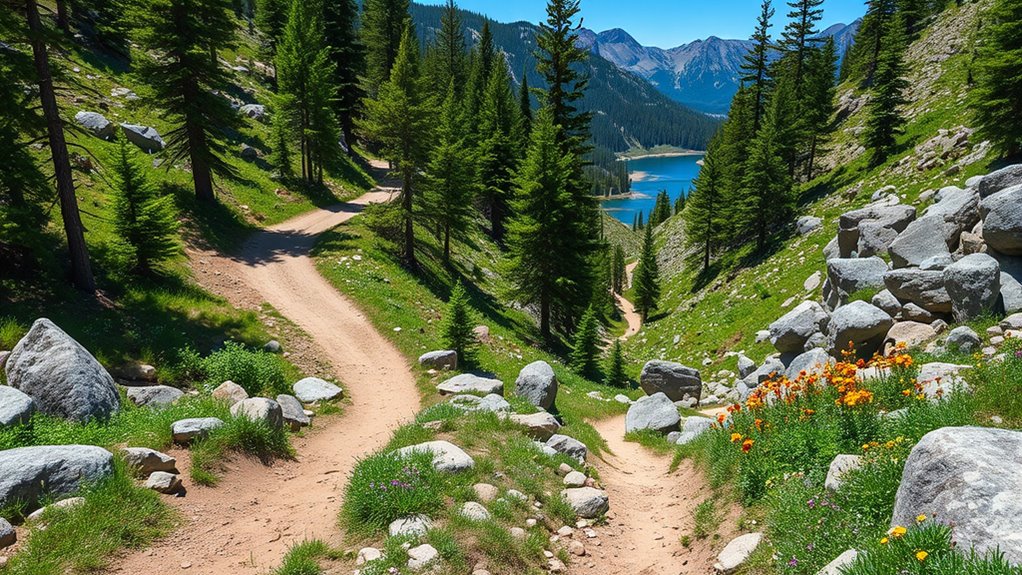
Respecting natural and cultural features means recognizing their importance and ensuring your actions do not damage or disturb them. You should avoid removing rocks, plants, or artifacts, and stay clear of cultural or historical sites. Protecting these features preserves their value for future visitors and respects the traditions of the area.
- Leave rocks, plants, and natural items undisturbed to maintain the landscape’s integrity.
- Respect cultural and historical sites by observing and not touching or modifying them.
- Avoid constructing fire rings, tables, or other structures that could alter or damage the environment.
Practice Safe and Responsible Fire Use
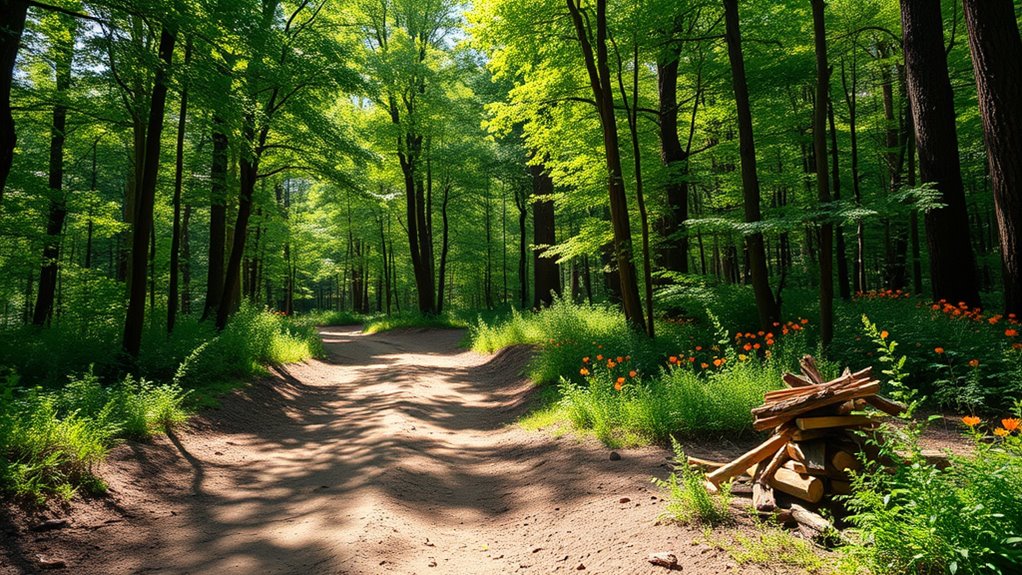
Using fire responsibly is essential to prevent wildfires and protect the environment. Always check local fire restrictions before starting a campfire. Use designated fire rings or established fire pits, and keep fires small. Never leave a fire unattended, and fully extinguish it with water and dirt before leaving. Here’s a visual to guide you:
| Safe Fire Practices | Visual Imagery |
|---|---|
| Use designated fire rings | A ring of stones cradling a gentle flame |
| Keep fires small | A tiny flicker in a controlled space |
| Never leave fires unattended | An empty fire pit after extinguishing |
| Fully extinguish fires | Water dousing smoldering embers |
| Check fire restrictions | Signs indicating fire bans |
Share the Trails Considerately With Others
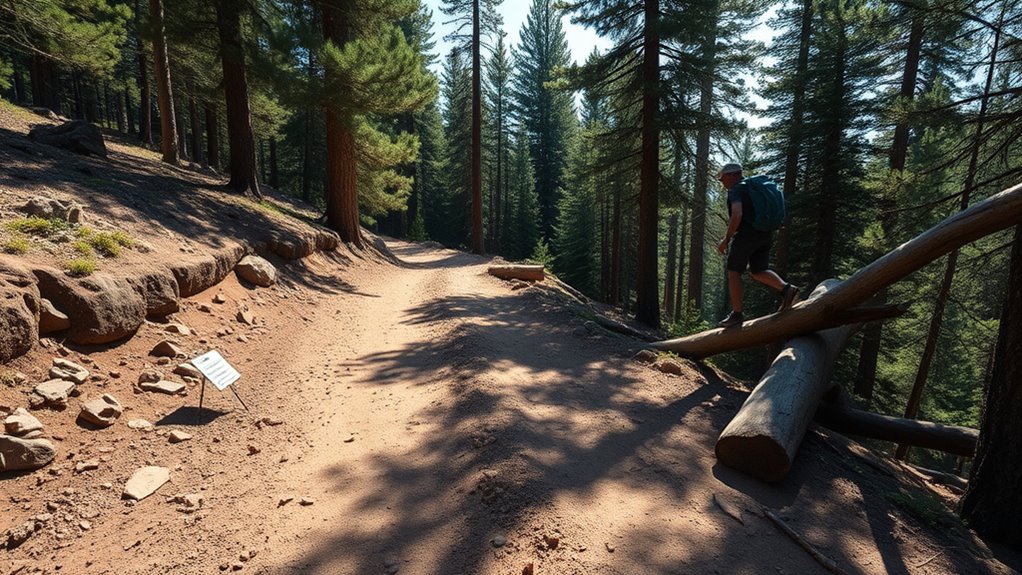
Sharing the trails with others requires awareness and consideration to guarantee everyone can enjoy the outdoors safely and peacefully. Respect others’ space and be mindful of your speed and noise levels to avoid disturbing fellow visitors. Yield the right-of-way to pedestrians, horses, and uphill travelers, and give way to mountain bikers and other motorized users when needed. When approaching others, slow down and communicate your intentions clearly to prevent surprises. Keep campsites and vehicles away from heavily used areas to reduce congestion. Remember, the goal is to coexist harmoniously while protecting the trail’s natural state.
- Keep noise low to let nature’s sounds shine through
- Camp away from popular areas to reduce crowding
- Yield right-of-way to pedestrians and other trail users
Maintain Your Vehicle and Gear to Prevent Damage

Regularly maintaining your vehicle and gear helps prevent breakdowns and environmental damage on motorized trails. Keep your vehicle in good condition by checking tire pressure, fluid levels, and brakes before each trip. A well-maintained machine is less likely to leak fluids or leave ruts that damage the trail. Clean your gear after each use to remove dirt, mud, and non-native plant material that can hitch a ride into pristine areas. Repair any damage promptly to avoid worsening issues that could cause environmental harm or vehicle failure. Use appropriate tires and suspension settings for the terrain to reduce trail impact. Proper maintenance minimizes the risk of accidents, keeps you safer, and ensures you don’t leave a trail of damage behind, helping keep routes open for everyone.
Frequently Asked Questions
How Can I Identify Designated Routes and Campsites?
You can identify designated routes and campsites by looking for signs, maps, or markers from land managers. Check with local agencies or visitor centers for official information. Stick to well-marked paths and established sites to reduce impact. Use GPS or trail apps if available, and always follow signs and guidelines. Staying on these routes helps protect the environment and keeps trails open for everyone to enjoy safely.
What Are Best Practices for Crossing Streams Safely?
Crossing streams safely is essential—it’s easier than dodging a lightning bolt! You should always cross at designated fords to prevent erosion and damage. Check water depth and flow first; if it’s too swift or high, wait or find another crossing. Keep your feet steady, avoid slippery rocks, and move slowly to maintain balance. Remember, a safe crossing keeps the trail open and preserves the environment for everyone.
How Do I Minimize Environmental Damage Off-Trail?
You minimize environmental damage off-trail by sticking to durable surfaces like rocks or compacted soil, avoiding wet or muddy areas, and going over obstacles rather than around them. Keep your group small to reduce impact, and pack out all trash and waste. Be mindful of plants, rocks, and wildlife — don’t disturb or collect them. Stay aware of your surroundings, and always follow local guidelines to protect the environment.
What Waste Disposal Methods Are Environmentally Friendly?
You should pack out all trash, including food wrappers and toilet paper, to keep the environment clean. Use a cathole six to eight inches deep for human waste, at least 200 feet from water, camps, and trails. Minimize waste by planning meals carefully and cleaning gear to prevent spreading non-native species. Avoid burying waste or leaving any debris behind, and always follow local disposal regulations to protect natural areas.
How Can I Tell if a Fire Restriction Is Active?
Did you know over 80% of wildfires are caused by human activity? To tell if a fire restriction is active, check with local land management agencies, visitor centers, or official websites before heading out. Look for posted signs at trailheads and campsites. Many areas also provide real-time updates via mobile apps or social media. Always follow the posted rules to protect the environment and prevent wildfires.
Conclusion
By following these simple habits, you become a guardian of the trails, ensuring they remain open and vibrant for all to enjoy. Think of yourself as a steward tending a delicate garden—each responsible action keeps the beauty alive. When you respect the land and tread lightly, you help preserve this wilderness as a timeless treasure, a place where memories are made and nature’s song continues unbroken. Keep the trails open, and let adventure flourish for generations to come.