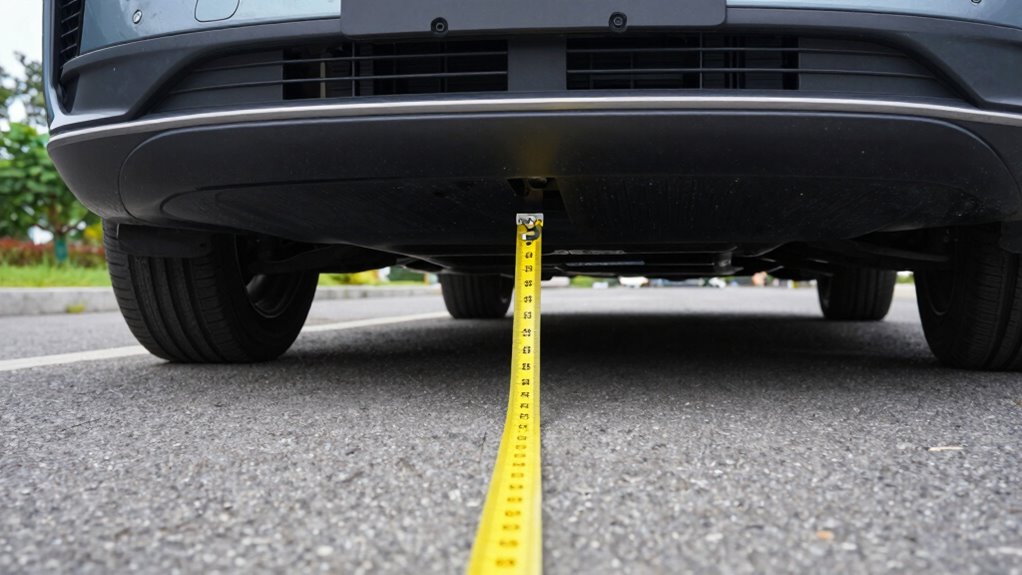

To measure your ground clearance accurately, park your vehicle on a flat, level surface with proper tire pressure and load. Use a tape measure or laser device to find fixed points like the differential or rocker panel, and measure straight down to the ground. Verify your suspension is at normal ride height, and avoid temporary or movable parts. Following these steps helps you get precise results; keep going for more detailed tips to ensure perfect measurements every time.
Key Takeaways
- Ensure the vehicle is on a flat, level surface with properly inflated tires to prevent measurement errors.
- Use a reliable straightedge or laser device to measure from the ground to fixed, permanent points like the differential or rocker panel.
- Mark and consistently use the same measurement points for accurate comparison over time.
- Double-check measurements from multiple angles and methods to confirm accuracy.
- Record conditions such as load, tire pressure, and surface flatness to maintain consistent, precise measurements.
Why Accurate Ground Clearance Matters
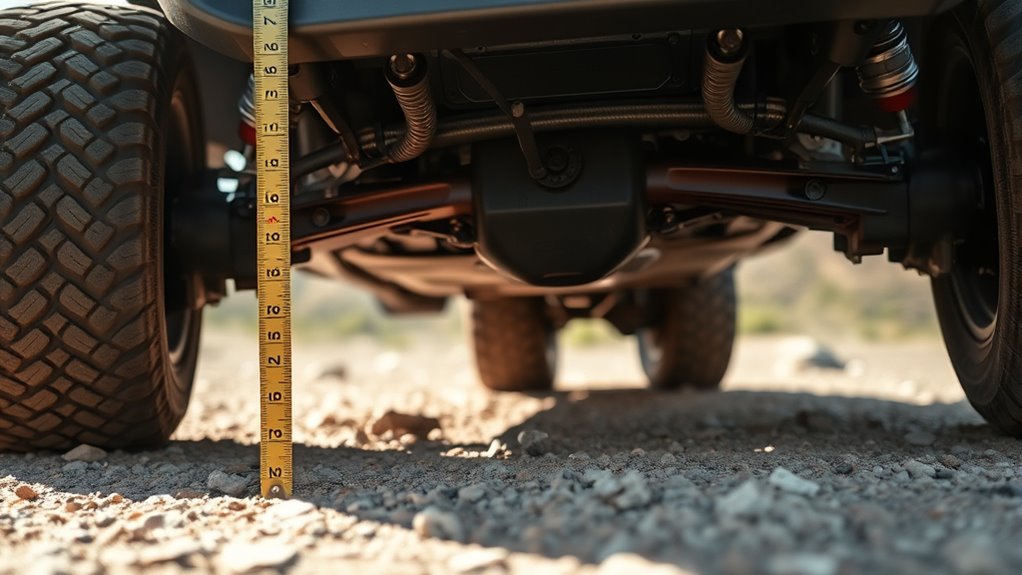
Accurate ground clearance measurement is essential because it directly impacts your vehicle’s off-road ability, handling, and safety. Knowing your clearance helps you avoid obstacles that could cause damage or get you stuck, especially on rough terrain. It also influences your approach, departure, and breakover angles, pivotal for off-road adventures. For daily driving, proper clearance improves stability and prevents scraping on speed bumps or uneven pavement. If you underestimate clearance, you risk damage to the undercarriage, suspension, or drivetrain. Overestimating can lead to poor handling or increased fuel consumption. Accurate measurements guide modifications like lifts or tire changes, ensuring your vehicle performs as intended. Understanding your ground clearance also aids in safe and smart vehicle upgrades, helping you make informed decisions that enhance both safety and performance. Additionally, ground clearance standards vary depending on vehicle type and usage, so knowing the right measurements for your specific needs is crucial. Proper measurement techniques ensure consistency and accuracy, preventing costly mistakes. Using precision tools can further improve measurement accuracy and reliability. Being aware of vehicle specifications allows you to compare your measurements against manufacturer recommendations for optimal results. Ultimately, understanding your ground clearance keeps you safe, confident, and prepared for any road or trail.
Preparing Your Vehicle for Measurement
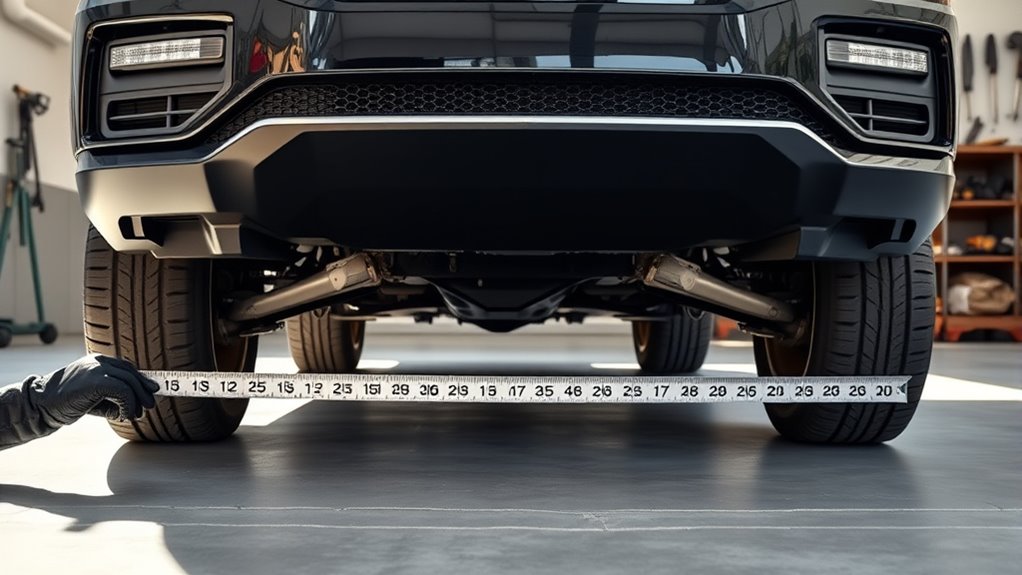
Before measuring your vehicle’s ground clearance, make sure it’s prepared properly to get accurate results. Start by parking on a flat, level surface with the vehicle fully loaded as you normally would. Check that tires are inflated to their recommended pressure, as under- or over-inflation can affect measurements. Remove any temporary or removable items, like mud flaps or cargo, that might alter the height. Inspect suspension components for sagging or damage, and ensure springs and bushings are in good condition. If your vehicle has adjustable suspension, set it to its normal ride height. Confirm that the tires are properly seated and aligned. Doing these steps helps eliminate variables, ensuring your measurement reflects the true ground clearance. Additionally, understanding the European Cloud Servers can help you appreciate the importance of precise measurements in optimizing vehicle performance and safety. Proper measurement techniques are essential for accurate ground clearance assessment, especially when considering modifications or repairs. Being aware of the impact of suspension condition can further improve measurement accuracy and vehicle handling.
Gathering the Right Tools
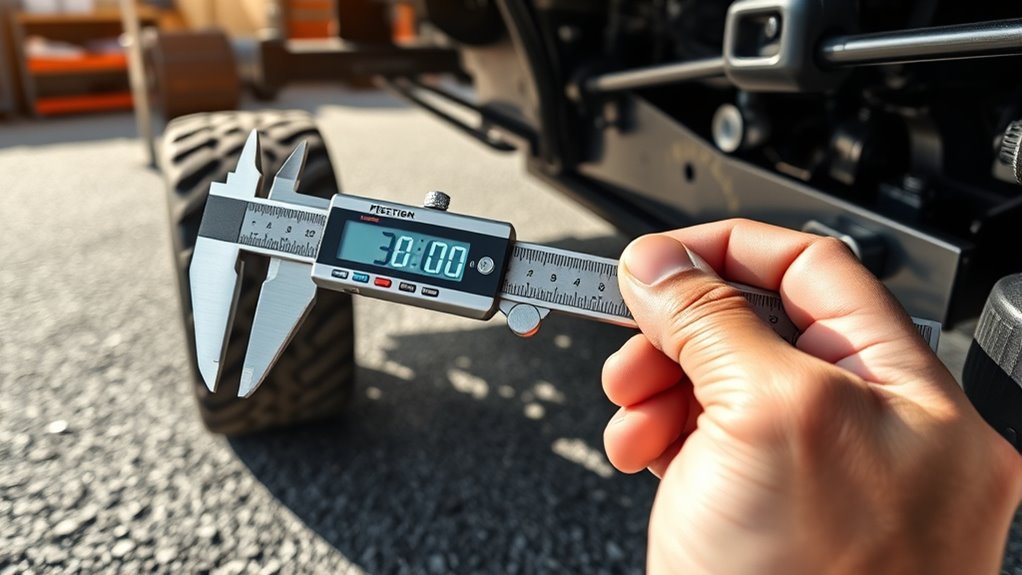
Gathering the right tools guarantees you can measure your vehicle’s ground clearance accurately and efficiently. Having the proper equipment guarantees precise results and avoids guesswork. Start with a tape measure or ruler for basic vertical measurements. A laser device helps achieve millimeter accuracy, especially on flat surfaces. A straightedge and aluminum ramp ruler are handy for DIY checks and ensuring level measurement points. A feeler gauge is useful for verifying skid plate impact clearance, while a protractor ruler can assist in angle-related assessments. Using proper measurement methodology can significantly reduce errors and improve your confidence in the results. Additionally, understanding precise measurement techniques helps you interpret results correctly and ensures consistency across multiple measurements. Employing calibration procedures further enhances the reliability of your measurements. These tools provide the necessary precision and reliability, making your measurement process straightforward. With the right equipment, you’ll avoid common errors and get reliable data, setting the foundation for accurate ground clearance assessment.
Finding the Correct Measurement Points
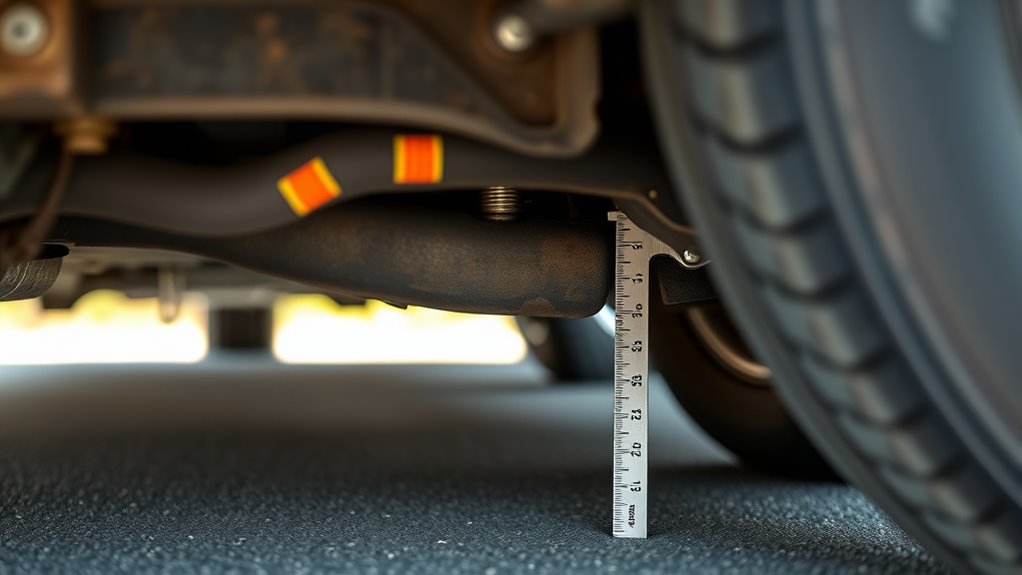
Start by locating fixed points on your vehicle that don’t move or change, like the differential housing or rocker panels. Make sure your vehicle is on a flat, level surface to get an accurate measurement. Confirm contact with the ground at these points to avoid errors caused by uneven terrain or suspension sag. For the best results, consider supporting the vehicle properly to ensure stability during measurement. Using a proper measuring tool can further improve accuracy and consistency. Remember that understanding ground clearance measurement is essential for maintaining vehicle safety and performance.
Identifying Fixed Vehicle Points
Identifying the correct fixed points on your vehicle is essential for accurate ground clearance measurement. You need stable, unchanging reference points that don’t shift with suspension movement or load. Start by locating solid, permanent parts like the differential housing, rocker panels, or the lowest point of the frame. Avoid movable or temporary items such as bumpers, mud flaps, or loose components. Make sure the points you choose are clearly visible and accessible for measurement. Consistency is key—use the same points each time you measure to track changes accurately. Mark these points if needed for future reference. By focusing on fixed, reliable locations, you ensure your measurements truly reflect your vehicle’s ground clearance without errors from shifting parts.
Ensuring Flat Surface Contact
To guarantee accurate ground clearance measurement, you must place your vehicle on a truly flat and level surface. Use a level surface like a garage floor or smooth driveway, avoiding slopes or uneven patches. Ensure the vehicle is unloaded and at normal operating weight to prevent sagging or suspension compression. Check the surface for debris, rocks, or uneven spots that could affect the measurement. Confirm the vehicle’s tires are properly inflated to standard pressure, as under- or over-inflation can alter ground clearance. Use a spirit level or a laser level to verify the surface is flat before proceeding. Proper surface contact ensures your measurements reflect real ground clearance and not distorted by surface imperfections. Additionally, smart surface sensing technology can help verify surface flatness with high accuracy, especially useful in complex or uneven terrains. For precise measurements, consider the measurement points on your vehicle that are designed specifically for ground clearance assessment. Always double-check the surface flatness before measuring to prevent errors caused by surface irregularities.
Step-by-Step Measuring Process
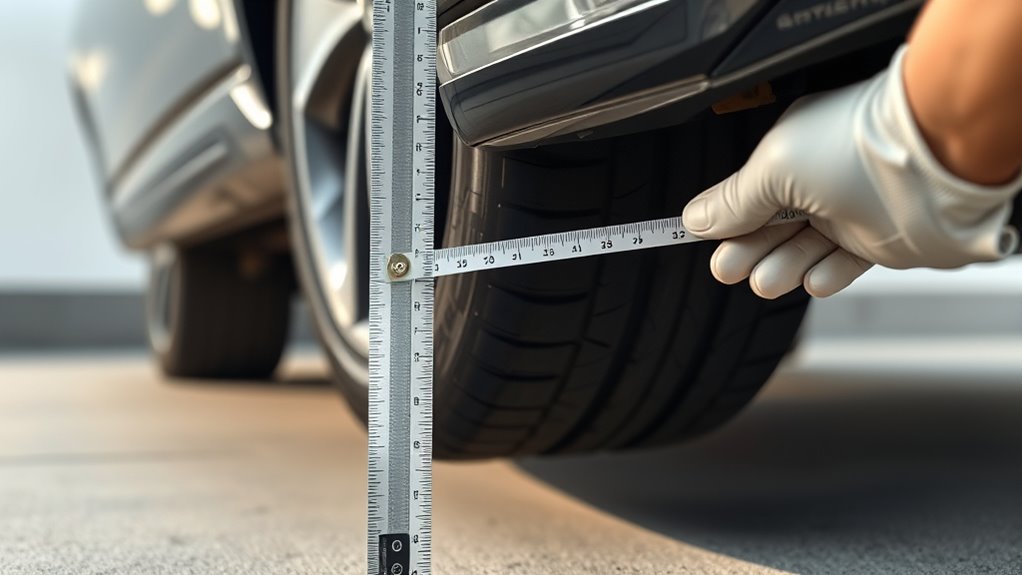
To measure ground clearance accurately, you need to prepare your vehicle properly by guaranteeing it’s on a flat, level surface with a normal load. Use precise tools like a tape measure or laser device to get the most accurate reading. Additionally, consult vehicle specifications to confirm proper measurement procedures and tolerances. Being aware of industry trends can also help you interpret your measurements more effectively. Incorporating measurement best practices from the field ensures consistent and reliable results. Ensuring proper safety precautions during the measuring process is essential to obtain trustworthy data. Utilizing vetted tools can further enhance the accuracy of your measurements.
Prepare the Vehicle Properly
Before measuring ground clearance, make certain your vehicle is properly prepared to get an accurate reading. Start by ensuring the vehicle is on a flat, level surface with the tires properly inflated to normal pressure. Remove any temporary or loose items that could affect the measurement, like floor mats or debris. Check that the suspension isn’t sagging, and verify that the vehicle is unloaded—no passengers or extra gear. Confirm the tires are at standard size and pressure, as larger or underinflated tires can skew results. Lastly, park the vehicle straight and centered to avoid uneven weight distribution. This preparation ensures you’re measuring the true ground clearance, free from variables that could lead to inaccurate readings.
- Ensure tires are at normal pressure and size
- Remove loose or temporary items
- Confirm vehicle is unloaded and on level ground
- Check suspension for sagging or damage
Use Accurate Tools
Using the right tools guarantees your ground clearance measurement is accurate and reliable. A tape measure or ruler works well for most vehicles, providing straightforward vertical measurements. For higher precision, laser distance meters can give millimeter accuracy, especially in engineering contexts. If you’re doing a DIY check, a straightedge combined with an aluminum ramp ruler helps identify the lowest point without guesswork. A feeler gauge can verify skid plate impact clearances, while a protractor ruler assists with angle measurements. Confirm the tools are properly calibrated and suited for the task. Use a sturdy, level surface and keep the vehicle stationary. Avoid measuring moving parts or temporary attachments. Accurate tools minimize errors, giving you confidence in your ground clearance readings.
Record and Verify Data
Accurately recording your measurements guarantees you have reliable data to assess your vehicle’s ground clearance. To do this, note down your measurements carefully, including conditions like load and surface. Use a consistent method each time to guarantee accuracy. Double-check your readings by measuring multiple times and from different angles. Compare your data with manufacturer specs or previous records to verify consistency. Keep detailed notes, including date, tire pressure, and any modifications. This helps identify changes over time and prevents misinterpretation. Remember, precise records help you make informed decisions about modifications or repairs. By systematically recording and verifying each measurement, you ensure your ground clearance data remains trustworthy and useful for future reference.
Adjusting for Load and Tire Size Changes
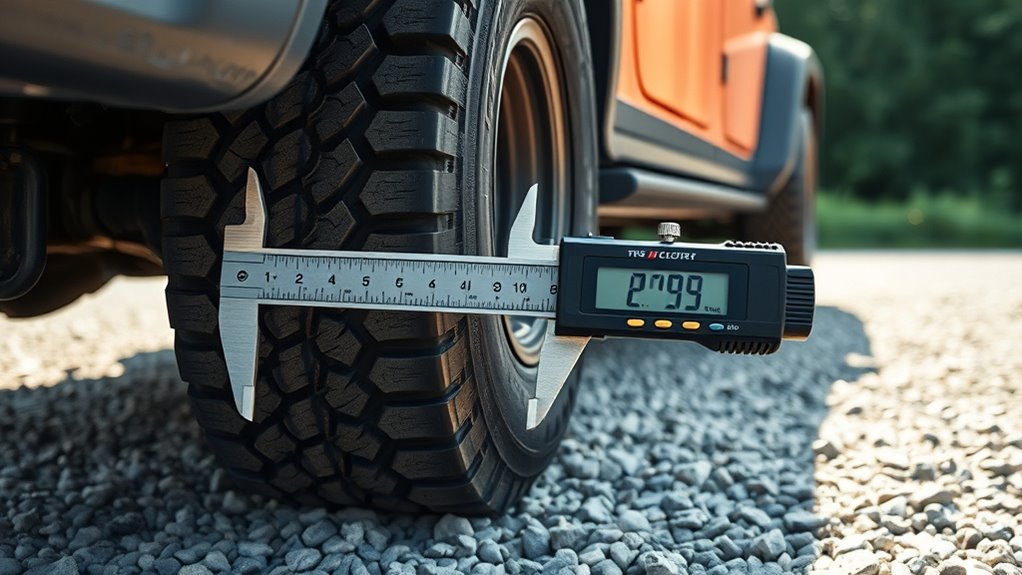
Have you considered how load and tire size can impact your vehicle’s ground clearance? When you add weight, like passengers or cargo, your suspension compresses, lowering the lowest point and reducing clearance. To account for this, measure with your typical load to get an accurate baseline. Tire size also plays a big role; larger tires increase overall diameter, raising your ground clearance by roughly half an inch for every inch of added diameter. If you switch to bigger tires, subtract the extra height from your measurements to find your true clearance. Remember, these adjustments are essential for accurate assessments, especially if you’re planning off-road trips or modifications. Always measure under your usual conditions, and factor in these changes for the most reliable ground clearance readings.
Common Mistakes to Avoid
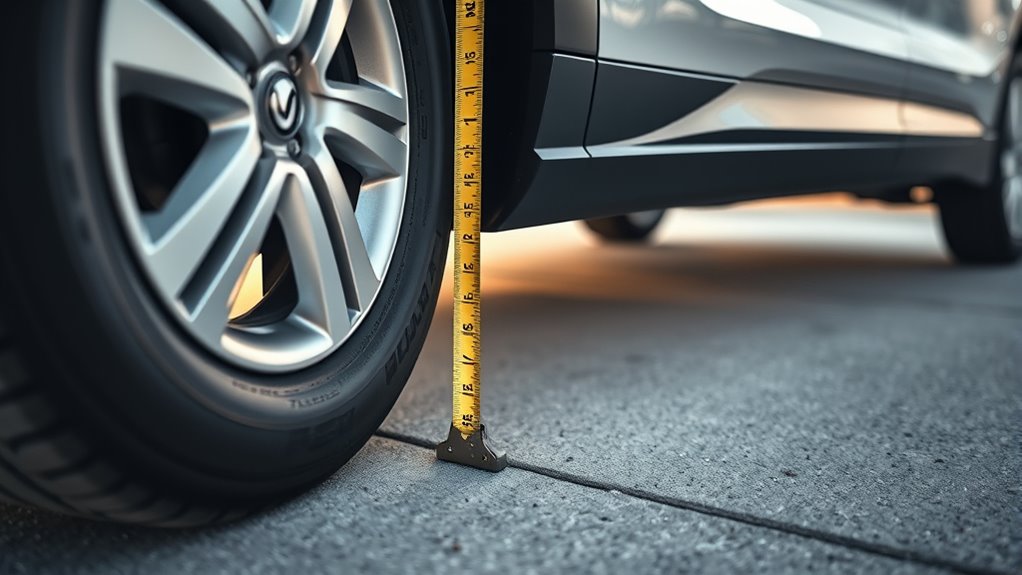
One common mistake is measuring the ground clearance while the vehicle is moving or on uneven surfaces, which can give false readings. To avoid errors, always verify the vehicle is on a flat, level surface with no load or accessories that could alter the measurement. Don’t measure from moving parts like suspension during operation; wait until the vehicle is stationary. Be cautious of temporary items like mud flaps or aftermarket modifications that might skew results. Also, avoid measuring after recent jumps or off-road drives where springs may sag. Confirm that the tires are properly inflated and that the suspension isn’t compressed or sagging. These steps help you get an accurate, reliable measurement every time.
Interpreting and Using Your Ground Clearance Data
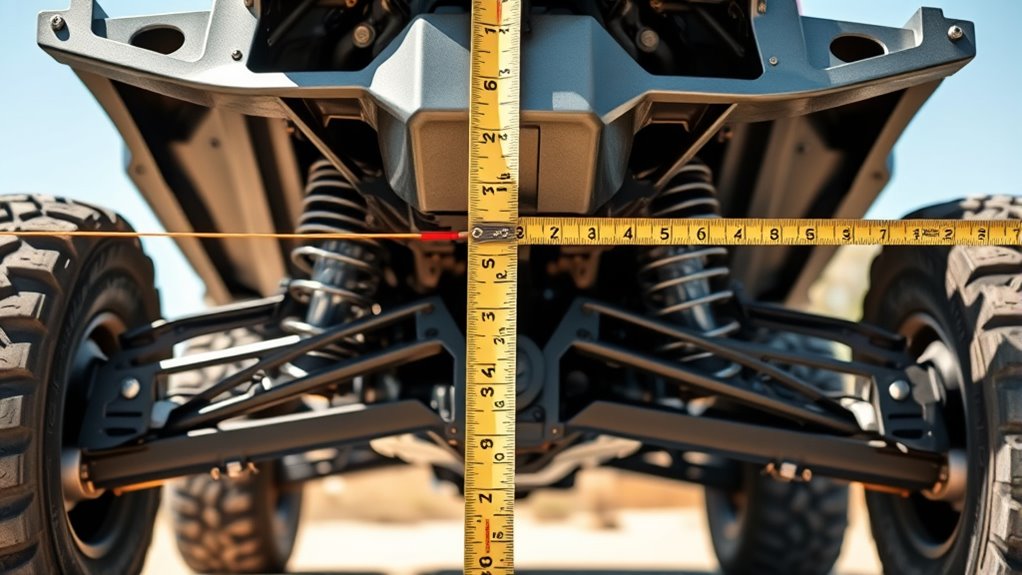
Understanding your ground clearance data is essential for making informed decisions about your vehicle’s capabilities and safety. Once you have accurate measurements, compare them to your vehicle’s typical terrain and intended use. For off-road adventures, higher clearance helps prevent chassis contact with obstacles, improving safety and performance. For daily driving, lower clearance often improves handling and fuel efficiency. Use your data to evaluate approach, departure, and breakover angles; these influence where and how you can drive without damage. Keep in mind, modifications like lift kits or larger tires change your clearance and angles, so reassess after any upgrades. Regularly reviewing your ground clearance helps you avoid obstacles safely and optimize your vehicle’s setup for your specific needs. Proper interpretation guarantees you’re making smart, safe choices on every journey.
Frequently Asked Questions
How Often Should I Remeasure My Ground Clearance?
You should remeasure your ground clearance whenever you make modifications like lift kits or tire changes, or if you notice uneven handling or scraping. Also, check it after off-road trips or heavy loads, as suspension can settle over time. Regularly inspecting every few months helps guarantee your vehicle maintains its peak clearance, preventing damage and improving performance. Staying on top of this keeps your vehicle running smoothly and safely.
Does Aftermarket Suspension Affect Measurement Accuracy?
Did you know that aftermarket suspensions can lower your vehicle by up to 2 inches? They definitely affect measurement accuracy because they change the clearance from the lowest undercarriage point to the ground. You need to remeasure after any suspension modifications to get an accurate reading. Always verify the vehicle is on a flat surface, with the same load, and use a reliable tool to avoid miscalculations.
Can Ground Clearance Vary With Different Terrains?
Yes, ground clearance can vary with different terrains. When you drive over uneven surfaces, rocks, or soft ground, the suspension compresses or shifts, changing the clearance measurement. This fluctuation affects your vehicle’s approach, departure, and breakover angles, especially off-road. To get an accurate reading, measure on a flat, level surface under normal load, and avoid uneven terrains or soft ground that can give misleading results.
What Safety Precautions Are Needed During Measurement?
You should always wear gloves and safety glasses to protect yourself from sharp edges or debris. Make certain the vehicle is on a flat, stable surface and the parking brake is engaged to prevent movement. Avoid measuring near moving parts or hot surfaces, and double-check that the suspension is unloaded for accuracy. Don’t forget to record conditions like load and surface, as they impact your measurement’s safety and precision.
How Does Ground Clearance Impact Off-Road Performance?
Ground clearance greatly impacts your off-road performance by determining your vehicle’s ability to clear obstacles without scraping or getting stuck. Higher clearance allows you to tackle rough terrains, steep inclines, and uneven surfaces more easily. It improves approach, departure, and breakover angles, reducing the risk of damage. Keep in mind, too much clearance can affect stability, so find a balance based on your typical off-road conditions.
Conclusion
By measuring your ground clearance correctly, you guarantee safety, optimize performance, and avoid costly mistakes. Take the time to prepare, gather tools, find the right points, and double-check your results. Keep in mind that accuracy matters whether you’re loading your vehicle or adjusting for tire size. When you prioritize precision, you prevent guesswork, improve reliability, and gain confidence. Because understanding your ground clearance isn’t just about numbers; it’s about knowing your vehicle’s true capabilities and limitations.