
Understanding roof rack weight limits is key to safe travel. Static load is the maximum weight your roof can hold when stationary, usually 3 to 5 times higher than dynamic load. Dynamic load considers forces from acceleration, braking, and rough terrain, lowering safe capacity. Overloading risks damage, instability, or accidents. Knowing these limits and how terrain affects them keeps your gear and vehicle secure. Keep exploring to learn how to manage loads effectively under various conditions.

Get business pricing on garage and car supplies
- Business-only prices and quantity discounts
- Tax-exempt purchasing
- Multiple users, one account, clear invoices
Key Takeaways
- Static load capacity is the maximum weight the roof can support when stationary, usually 3-5 times higher than dynamic limits.
- Dynamic load limits account for forces from acceleration, braking, and terrain, which reduce safe weight support during motion.
- Off-road driving decreases the roof’s load capacity by approximately one-third due to increased vibrations and impact forces.
- Overloading beyond rated limits risks damage to the roof, mounts, and safety failure, especially during high-speed or off-road conditions.
- Proper load management involves calculating weight limits, securing cargo, and applying safety margins to ensure stability and safety.
Understanding Static Load Capacity

Understanding static load capacity is essential because it determines the maximum weight your roof rack can support when your vehicle is stationary. This limit is set by the roof’s structural strength and is usually 3 to 5 times higher than the dynamic load capacity. When your vehicle isn’t moving, no forces from acceleration, braking, or terrain affect the load, so the roof can handle more weight safely. To find this capacity, manufacturers often divide the roof’s strength by a safety factor of 1.5 to 2.5. Remember, the rack’s weight counts toward this limit. Overloading can cause damage to your roof, mounts, or even compromise safety. Always check your vehicle’s specifications and adhere to the static load limits to prevent costly or dangerous failures. Properly understanding load limits is crucial for safe and reliable roof rack use, especially when considering vehicle weight distribution for optimal safety. Additionally, considering material strength can help ensure your rack’s durability under various conditions. Being aware of material fatigue can also assist in maintaining the longevity of your rack over time. Recognizing regulatory standards can ensure compliance and safety compliance across different regions.
The Nature of Dynamic Load Limits

When your vehicle is in motion, G-forces from acceleration, braking, and cornering considerably lower the weight your roof rack can safely support. Terrain and road conditions, like bumps and vibrations, also increase stress on the rack, further reducing its dynamic capacity. Off-road driving reduces these limits even more, so you need to account for these factors to avoid overloading and potential damage. Additionally, European cloud innovation emphasizes the importance of understanding load limits to ensure safety and efficiency in vehicle usage. Properly managing dynamic load is crucial, as it directly impacts the safety of both your vehicle and its cargo during everyday driving and more extreme conditions. Recognizing the importance of insulated jackets for winter can also help you be prepared for sudden weather changes that might affect your vehicle’s performance or your outdoor activities. Being aware of vehicle stability during different driving scenarios helps prevent accidents and ensures your cargo remains secure. Awareness of load distribution across your vehicle’s roof can further improve safety and prevent undue stress on specific points.
Impact of G-forces
G-forces generated during vehicle motion considerably impact the dynamic load limits of your roof rack. These forces result from acceleration, deceleration, cornering, and vibrations, which add stress beyond static weight. When you turn sharply or brake suddenly, the G-forces increase, reducing the effective load capacity. Additionally, factors such as precious metal investment and market trends can influence overall awareness of equipment safety standards. Recognizing the importance of proper load distribution helps you avoid overloads during dynamic driving, ensuring safety and rack integrity. Understanding these impacts helps you avoid overloads during dynamic driving, ensuring safety and rack integrity. Properly securing cargo weight distribution can further mitigate the effects of G-forces during sudden maneuvers and is a key aspect of return policies that many retailers outline for customer satisfaction. Recognizing the dynamic load limits of your roof rack is essential to prevent damage and ensure safety during unpredictable driving conditions.
Terrain and Road Effects
Terrain and road conditions play a significant role in determining the dynamic load limits of your roof rack. Rough, uneven, or bumpy surfaces create more vibrations and jarring motions, increasing the forces exerted on your roof and rack. Potholes, gravel roads, and uneven pavement cause sudden shifts and impacts that can push loads closer to or beyond safe limits. Additionally, steep inclines or declines can influence how your vehicle responds under load, affecting stability and stress on the rack system. When driving over challenging terrain, the dynamic forces multiply, reducing the effective load capacity. As a result, you should always account for these factors by lowering your load or opting for a rack designed to handle more intense conditions. This helps prevent damage and maintains safety during your journey. Proper piercing care and hygiene can also minimize additional hazards when traveling over rough terrain, ensuring your equipment stays in optimal condition. Understanding how terrain impacts load limits can help you make safer decisions and protect your gear. Recognizing the impact of vehicle suspension dynamics is also crucial for maintaining stability under varying terrain conditions, especially when considering how vibration transmission affects your vehicle’s handling. Additionally, being aware of load distribution can further optimize safety and performance during off-road adventures.
Off-road Load Reduction
Off-road conditions markedly impact your roof rack’s dynamic load limits by increasing forces on the system. Bumps, uneven terrain, and sharp turns create additional G-forces, amplifying stress on your rack and its attachments. This means the maximum safe load you can carry drops by roughly one-third compared to on-road conditions. Vibration and jolts cause dynamic loads to spike, risking rack failure or damage if overloaded. To stay safe, reduce your cargo weight before hitting rough terrain, accounting for these extra forces. Always remember, the static load capacity remains unchanged, but dynamic limits are lower off-road. Properly securing your cargo and avoiding overloading helps prevent accidents, damage, and costly repairs. Understanding load limits and ensuring proper weight distribution can also enhance safety. Additionally, being aware of dynamic load factors helps you better prepare for challenging environments. Recognizing off-road load reduction is essential for safe off-road adventures. Adjust your load accordingly, especially when tackling challenging off-road adventures. For added safety, consider the impact of vehicle movement on load capacities, as it further influences dynamic forces during off-road driving.
Comparing Static and Dynamic Loads

Understanding how load variability factors influence your roof rack’s safety is vital. Static loads are higher because they don’t account for motion, while dynamic loads change based on driving conditions. Recognizing these differences helps you avoid overloading and guarantees your vehicle remains stable and secure.
Load Variability Factors
Load variability factors substantially influence the difference between static and dynamic weight limits on roof racks. When your vehicle is moving, forces like acceleration, deceleration, cornering, wind, and rough terrain come into play, reducing the maximum safe load. These dynamic forces can cause the roof rack to experience vibrations and G-forces that weaken its capacity. In contrast, static loads are measured when the vehicle is stationary, with no motion forces acting on the rack, allowing for higher weight limits. For example, a roof rack’s static capacity might be three to five times its dynamic limit. Understanding these factors helps you avoid overloading, which could compromise stability, damage the roof, or cause rack failure during transit. Always consider these load variability factors to ensure safe and effective roof rack use.
Impact on Safety
Overloading your roof rack can considerably compromise safety during travel. Static loads are higher because they account for the roof’s maximum capacity when stationary, but during motion, dynamic loads come into play, reducing overall capacity due to G-forces, wind, and terrain. If you exceed the dynamic weight limit, you risk handling issues like instability, poor braking, and increased rollover chances. Rack failure or roof damage becomes more likely, especially at highway speeds. Overloading also worsens aerodynamics, causing more stress and vibration. Comparing static and dynamic loads highlights the importance of not only respecting weight limits but also understanding how forces change during travel. Prioritizing safety means adhering to dynamic load limits, especially on rough terrain or when driving at high speeds.
How Vehicle Type Influences Load Limits
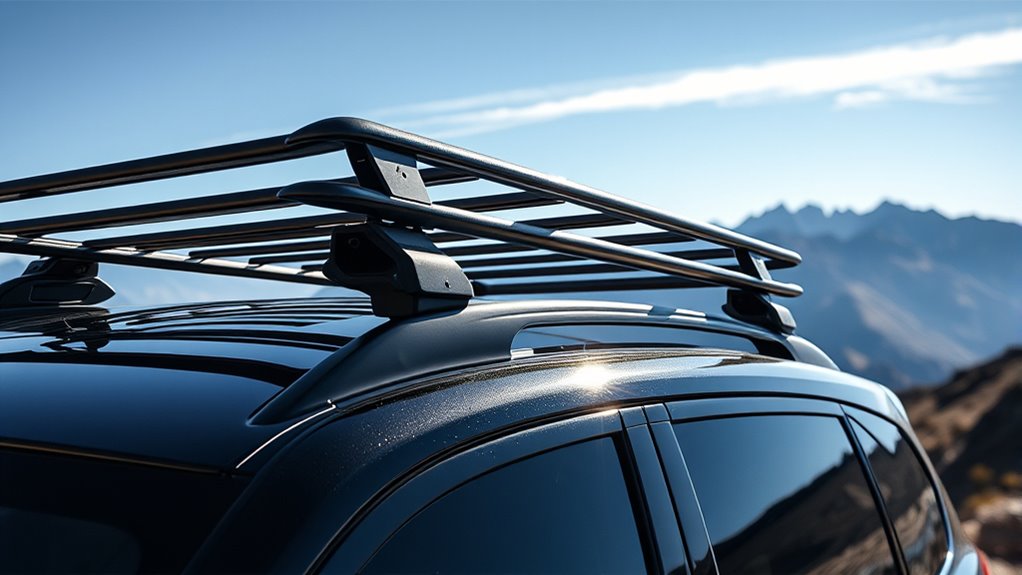
The type of vehicle you choose considerably impacts its rooftop load limits because different models are built with varying structural strengths and design priorities. Sedans and compact cars generally have lighter roofs with lower weight capacities, making them more prone to damage or instability if overloaded. SUVs and crossovers tend to have stronger roofs and higher load limits, thanks to their rugged construction and larger roof structures. Trucks and vans usually feature reinforced roofs designed to handle heavier loads, often supporting more weight safely. Factors like roof reinforcement, frame strength, and intended use influence these limits. Understanding your vehicle’s specific design helps you avoid overloading, ensuring safety and maintaining vehicle integrity when attaching roof racks or carrying heavy cargo.
Calculating Safe Roof Rack Weights

To calculate a safe roof rack weight, start by determining your vehicle’s maximum static load capacity, which is usually specified by the manufacturer. Once you have that number, follow these steps:
- Visualize the total weight your roof can support—imagine a fully loaded backpack, but on your car’s roof.
- Subtract the weight of the roof rack itself, like removing a backpack’s straps, leaving room for cargo.
- Make certain your cargo plus rack weight doesn’t exceed the remaining capacity, keeping safety in check.
For example, if your vehicle’s static limit is 200 kg and the rack weighs 20 kg, you should carry no more than 180 kg of cargo. Always stay within these limits to prevent damage or accidents.
The Significance of Safety Factors

Safety factors play a crucial role in determining the maximum weight your roof rack can support because they provide a buffer to account for uncertainties and variations in material strength and loading conditions. Without them, minor flaws or unexpected forces could cause failure. Typically, engineers use safety factors between 1.5 and 2.5 to ensure reliability under real-world conditions. This means the actual structural capacity is higher than the rated load, offering a margin of safety. For example, if your rack’s static load limit is 300 kg, applying a safety factor helps prevent overloading due to factors like vibration, wind, or manufacturing tolerances. Recognizing these safety margins helps you avoid risks, ensuring your gear stays secure and your vehicle remains stable during travel.
Risks Associated With Overloading

Overloading your roof rack can greatly compromise your vehicle’s stability and handling, increasing the risk of accidents. When you push beyond the recommended weight, you risk:
- Reduced stability: Your vehicle becomes more prone to sway, especially in turns or gusty winds.
- Increased rollover danger: Excess weight shifts your center of gravity, making rollover more likely during sharp maneuvers.
- Structural failure: The rack, mounts, or roof can deform or break at highway speeds, risking loss of cargo and endangering others.
Poor aerodynamics from excess weight also amplifies stress on your roof and mounts. Overloading not only damages your vehicle but also heightens your chances of a serious crash. Stay within limits to maintain safety.
Practical Tips for Safe Roof Rack Usage

Ensuring your roof rack is used safely starts with understanding and respecting its weight limits. Always check your vehicle’s manual and the rack’s specifications before loading. Distribute weight evenly to prevent imbalance and reduce stress on mounts. Remove unnecessary items to stay within weight limits, especially during dynamic conditions like acceleration and braking. Secure cargo tightly to avoid shifting, which can affect handling or cause damage. Keep the load low and centered to maintain stability. Regularly inspect your roof rack and mounts for signs of wear or damage before each trip. Avoid exceeding the maximum weight during rough terrain or high-speed driving. By following these tips, you help guarantee safe, reliable use and prevent accidents or structural failure.
Recognizing Signs of Overload and Damage

Regularly inspecting your roof rack and mounts can help you spot signs of overload or damage before they lead to bigger problems. Look for:
- Cracks, dents, or bends in the rack or mounts, indicating stress or impact damage.
- Rust, corrosion, or worn-out hardware that weakens structural integrity.
- Loosened or misaligned components, suggesting movement or overloading.
If you notice any of these signs, stop using the rack immediately. Overloading can cause frame deformation, mount failure, or even roof damage. Pay special attention to unusual creaking sounds or vibrations while driving, which could signal a compromised connection. Acting promptly can prevent accidents and costly repairs, keeping you safe and your vehicle in top shape.
Frequently Asked Questions
How Do Different Terrains Affect Dynamic Load Limits?
Different terrains can diminish your dynamic load limits because rough, uneven surfaces increase vibrations, acceleration, and braking forces. Off-road conditions, like rocky or muddy paths, can reduce the maximum dynamic load by up to one-third, making your rack more susceptible to failure. Always consider terrain when loading your roof rack to prevent damage, reduce handling issues, and ensure safety during your drive.
Can Roof Rack Weight Limits Vary Between Vehicle Models?
Yes, roof rack weight limits can vary between vehicle models. You need to check your vehicle’s specific manufacturer guidelines because factors like roof strength, design, and mounting points differ. For example, a compact car may have lower limits than an SUV. Always follow your vehicle’s recommended limits to avoid damage, ensure safety, and maintain ideal handling when loading your roof rack.
What Are the Legal Consequences of Overloading Roof Racks?
If you overload your roof rack, you could face legal consequences like fines, citations, or even vehicle inspection failures. Authorities may deem your vehicle unsafe, especially if the overload causes damage or poses a hazard. You might also be held liable if an accident occurs due to overloading, leading to potential lawsuits or insurance claim issues. Always follow weight limits to avoid these risks and stay compliant with the law.
How Often Should Roof Rack Mounting Points Be Inspected?
You should inspect your roof rack mounting points at least once every six months or after long trips and rough terrains. Check for rust, corrosion, loose bolts, or any signs of wear and tear. Regular inspections help guarantee safety and prevent potential failure. If you notice any damage or loose fittings, tighten or replace parts immediately. Consistent maintenance keeps your roof rack secure and your load safe.
Do Roof Rack Weight Limits Change Over Time With Wear and Tear?
They say “a chain is only as strong as its weakest link,” and the same applies to your roof rack. Over time, wear and tear can weaken mounting points and racks, so your weight limits might decrease. Regular inspections help catch issues early, ensuring safety. Don’t ignore signs of damage or corrosion—staying vigilant keeps your gear secure and your journey safe.
Conclusion
Now, picture your vehicle gliding smoothly along the road, roof rack loaded just right—not strained or groaning under pressure. By understanding static and dynamic limits, you keep your gear secure and your journey safe. Overloading is like trying to balance a mountain on a tiny platform—it’s unstable and risky. Stay mindful of your roof rack’s capacity, listen for signs of strain, and enjoy your adventure with peace of mind, knowing your load is safe and sound.
Halloween Picks
halloween
As an affiliate, we earn on qualifying purchases.