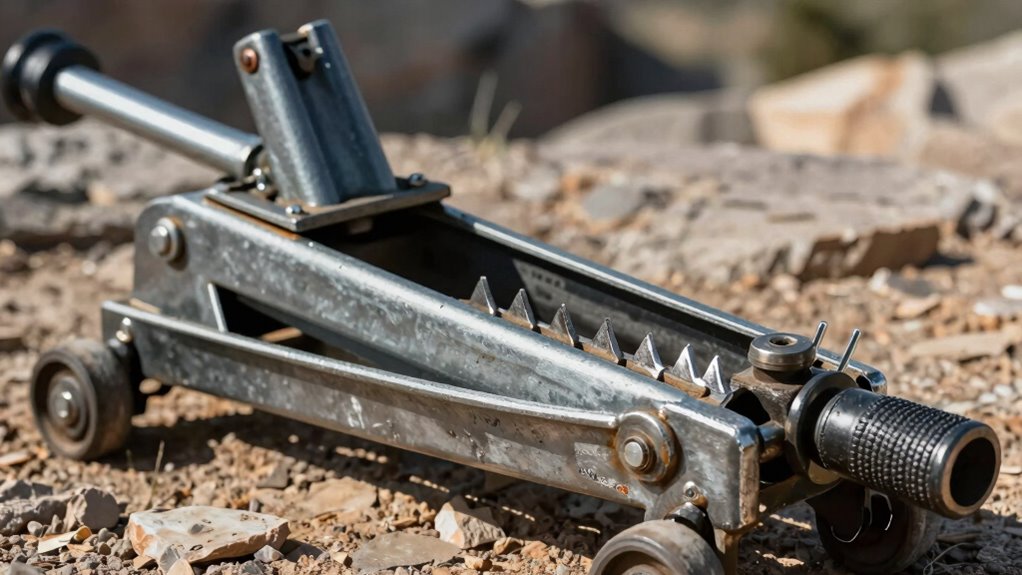

To prevent your hi-lift jack from ‘biting’ or slipping unexpectedly, make sure you position it on stable, level ground and secure it properly under the designated lifting points. Regularly inspect and maintain the jack to guarantee all parts are in good condition. Always lift slowly and evenly, avoiding sudden movements. By following these safety steps, you’ll reduce the risk of accidents and ensure reliable operation—learn more to keep yourself safe every time.
Key Takeaways
- Proper jack positioning on stable, level ground prevents shifting that can cause the jack to ‘bite’.
- Regular inspection and maintenance ensure components function correctly, reducing mechanical failures leading to slipping.
- Securing the load with chocks and correct placement minimizes the risk of sudden shifts during lifting.
- Operating the jack gradually and monitoring stability prevents wobbling or unintended release.
- Avoiding unstable ground and keeping the area clear help maintain control and prevent the jack from ‘biting’.
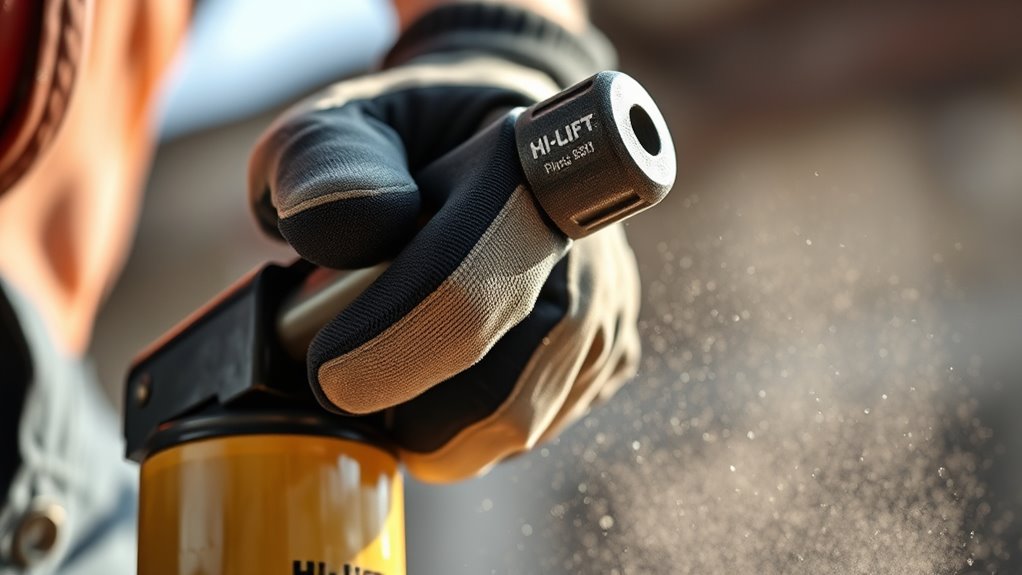
Have you ever wondered how to use a Hi-Lift Jack safely? Proper jack positioning is vital to prevent accidents and guarantee a smooth lifting process. Before you start, always inspect your jack for any signs of damage or wear. Place the jack on a stable, level surface to avoid slipping or tipping. When positioning the jack, make sure the base is flat and firm, and the lifting arm is aligned directly under the load’s designated lifting point. Never position the jack on uneven ground or loose gravel, as this increases the risk of sudden shifts during operation. Keep a clear area around the jack to prevent anyone from accidentally stepping into the danger zone. With your jack properly positioned, you can focus on the mechanics of the lift, but don’t forget that maintenance tips are vital for safety. Regularly check the condition of the lifting chains, clevis pins, and the overall structure. Lubricate moving parts to prevent rust and guarantee smooth operation, and replace any worn or damaged components immediately. Proper maintenance extends the life of your Hi-Lift Jack and reduces the likelihood of mechanical failure during use.
When setting up the jack, guarantee your vehicle or object is securely supported and won’t shift during lifting. Use wheel chocks or blocks if necessary, especially on inclines. Always keep your hands and body clear of the load’s path as you operate the jack, because sudden slips can happen if the jack isn’t positioned correctly or if the load is unbalanced. When raising the load, do so slowly and steadily, constantly checking that the jack remains stable. If at any point the jack begins to wobble or shift, stop immediately and reassess your positioning before continuing. After you’ve finished, carefully lower the load and remove the jack, inspecting it for any signs of damage or wear. Regular maintenance tips include cleaning the jack after use, storing it in a dry environment, and periodically testing its function under controlled conditions. Proper jack positioning and diligent maintenance are the best ways to prevent the “biting” sensation — that sudden, unexpected release or slip — which can cause injuries or damage. Remember, safety is a continuous process, and staying vigilant during each use guarantees you can rely on your Hi-Lift Jack whenever you need it.

TaoTazon Handle Keeper, Rubber Hi Lift Jack Accessories, Rust-Resistant Hi-Lift Jack Handle Keeper, Upgrade Handle Bar Protector for High Lift Jack in Place
【FIRMLY FIXED】:The handle keeper is a must have tool for any Hi-Lift Jack owenr. This hi-lift jack accessories…
As an affiliate, we earn on qualifying purchases.
As an affiliate, we earn on qualifying purchases.
Frequently Asked Questions
What Are Common Signs of a Failing Hi-Lift Jack?
You’ll notice signs of a failing hi-lift jack if it becomes difficult to operate, leaks hydraulic fluid, or shows rust and corrosion. During jack maintenance, check for damaged or worn parts, and always follow safety training guidelines. These issues can compromise safety, so regularly inspecting your jack helps identify problems early, ensuring safe use and preventing accidents. Stay vigilant and maintain your equipment properly.
How Often Should I Inspect My Hi-Lift Jack for Safety?
You should inspect your hi-lift jack regularly, ideally before each use, to catch issues early. Follow a strict maintenance schedule and perform an inspection frequency that’s at least weekly if you use it often. It’s ironic how many neglect this, risking safety. Don’t wait for a failure—by inspecting consistently, you keep the jack safe and reliable, preventing accidents before they happen.
Are There Specific Environments That Increase Hi-Lift Jack Risks?
You should be extra cautious when using a hi-lift jack on unstable terrains or uneven surfaces, as these environments increase the risk of slipping or tipping. Always verify the ground is stable and level before lifting. Avoid using the jack on soft, muddy, or rocky areas, and consider adding stabilizers or cribbing for extra support. Proper setup and awareness of your surroundings help prevent accidents and ensure safe operation.
Can I Modify My Hi-Lift Jack for Safer Use?
Yes, you can modify your hi-lift jack for safer use by adding safety accessories like a jack stand or a universal safety bar. Consider jack modification options that improve stability and reduce risk of slipping or pinching. Always follow manufacturer guidelines and consult a professional if needed, as proper safety accessories can considerably enhance your safety and prevent accidents during lifting tasks.
What Safety Gear Should I Wear When Operating a Hi-Lift Jack?
Imagine you’re a knight facing a dragon—you need the right gear. Always wear gloves protection to prevent pinches or cuts, and eye safety goggles to shield your eyes from debris. Don’t forget sturdy boots and long sleeves for extra safety. These precautions keep you safe while operating a hi-lift jack, so you can work confidently and avoid injury, just like a hero prepared for battle.
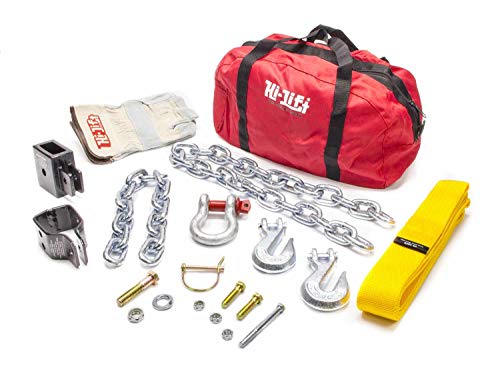
Hi-Lift Jack Off-Road Kit ORK
The Hi-Lift Jack Off-Road Kit contains all the accessories needed for winching with a Hi-Lift jack all in…
As an affiliate, we earn on qualifying purchases.
As an affiliate, we earn on qualifying purchases.
Conclusion
Remember, a Hi-Lift Jack is like a trusted but powerful friend—you must respect its strength. When used carefully, it’s a reliable guardian that can lift you out of tough spots. But if you ignore safety, it’s like releasing a wild beast. Treat it with care, follow the rules, and keep your wits about you. With respect and caution, you’ll keep the dangers at bay and guarantee your journey ahead stays safe and steady.

MaxxHaul Motorcycle Wheel Chock Heavy‑Duty Steel Front Tire Stand Fits 15" to 22" Wheels Self Locking Cradle for Trailers Garages and Shops 1800 lb Capacity Black Powder Coat (70271)
Impressive Weight Capacity: With a robust capacity of 1,800 pounds, this adjustable motorcycle wheel chock stand confidently supports…
As an affiliate, we earn on qualifying purchases.
As an affiliate, we earn on qualifying purchases.

Hi-Lift Jack Fix-it-Kit Repair Kit FK-1
The Hi-Lift Fix-It-Kit contains all the necessary components to rebuild or repair any Hi-Lift jack. Having replaceable wear…
As an affiliate, we earn on qualifying purchases.
As an affiliate, we earn on qualifying purchases.