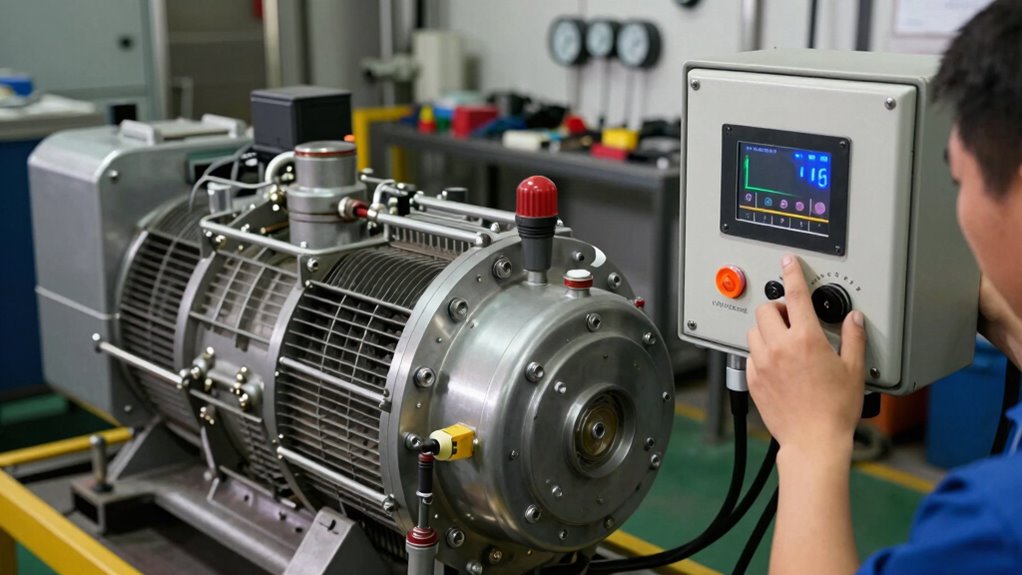

To prevent compressor overheating during long air-ups, managing its duty cycle is key. Avoid running the compressor continuously by setting timers or using sensors to include regular cool-down periods. Guarantee proper airflow around the compressor and cooling parts, and regularly check for fan blade damage or refrigerant leaks that can increase workload. Maintaining a balanced cycle allows the compressor to cool effectively, extending its life. Keep exploring to discover more tips to keep your system running smoothly.
Key Takeaways
- Implement timers or sensors to regulate compressor operation and prevent continuous running during long air-ups.
- Schedule regular cooling periods to allow the compressor to dissipate heat and reduce overheating risk.
- Ensure proper airflow around the compressor and cooling components to facilitate heat dissipation during extended cycles.
- Use cycle management devices to automatically control compressor run times and avoid excessive heat buildup.
- Monitor compressor temperature and cycle duration to adjust operation patterns and prevent overheating during long air-up sessions.
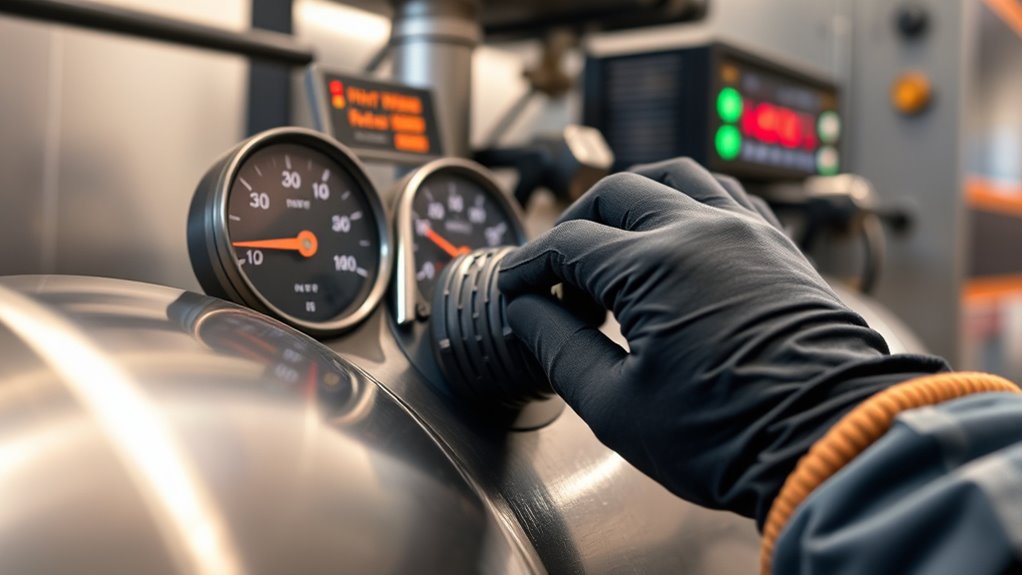
Refrigerant leaks are a primary culprit because they reduce the system’s overall cooling capacity. When refrigerant escapes, the compressor has to work harder to maintain the desired temperature, which increases its internal load and causes it to overheat. Detecting refrigerant leaks early is vital; look for signs like decreased cooling performance, hissing sounds, or oily residues near fittings and coils. Fixing these leaks not only restores proper refrigerant levels but also prevents the compressor from overexerting itself. Recharging the system with the correct refrigerant amount and sealing leaks promptly ensures your compressor operates within safe temperature ranges. Understanding field‑of‑view and imaging‑scale considerations can also help you monitor system performance more effectively during maintenance.
Fan blade issues are another frequent cause of overheating, especially if your system relies on a fan to dissipate heat from the compressor or condenser. Damaged or misaligned fan blades reduce airflow, which hampers heat dissipation. When airflow is compromised, heat accumulates around the compressor, elevating its temperature. Regularly inspect the fan blades for cracks, bends, or debris that might obstruct rotation. Cleaning or replacing damaged blades restores ideal airflow, helping the compressor stay cool during long cycles. Ensuring the fan motor functions properly is equally important; a malfunctioning motor can cause the blades to spin slowly or not at all, drastically reducing cooling efficiency.
Managing the duty cycle effectively is key to preventing overheating during prolonged air-up periods. Avoid subjecting your compressor to continuous operation without breaks. Implementing proper cycle management allows the compressor to cool down periodically, reducing stress and preventing temperature spikes. Adding sensors or timers can help automate this process, ensuring your system runs within safe operational limits. Additionally, maintaining adequate airflow around the compressor and ensuring all cooling components are in good condition supports consistent performance.
compressor duty cycle timer
As an affiliate, we earn on qualifying purchases.
As an affiliate, we earn on qualifying purchases.
Frequently Asked Questions
How Does Ambient Temperature Affect Compressor Overheating?
Ambient temperature greatly influences compressor overheating by affecting temperature regulation. When the surrounding environment is hot, your compressor struggles to dissipate heat effectively, increasing the risk of overheating. Conversely, cooler ambient conditions help regulate the compressor’s temperature more easily. To prevent overheating, consider the ambient influence and guarantee proper ventilation and cooling systems are in place, especially during hot weather or long air-up periods.
What Are Signs of Insufficient Duty Cycle Management?
You’ll notice signs of insufficient duty cycle calibration when your compressor’s temperature rises quickly or runs excessively hot, indicating it’s overworking. You might also hear frequent cycling or see pressure drops, showing the compressor isn’t resting enough. These signs suggest you need to adjust the duty cycle to make certain of proper rest periods, helping keep the compressor temperature in check and prevent overheating. Proper calibration improves efficiency and prolongs your compressor’s life.
Can Software Updates Improve Compressor Cooling Performance?
Yes, software updates can improve your compressor’s cooling performance through software optimization. These updates often include cooling enhancements that better regulate the compressor’s duty cycle, preventing overheating during long air-ups. By optimizing control algorithms, the compressor operates more efficiently, reducing heat buildup. Regularly updating your software guarantees you benefit from the latest cooling improvements, helping your compressor run cooler, longer, and more reliably under demanding conditions.
How Often Should Duty Cycle Settings Be Reviewed?
You should review duty cycle settings at least quarterly, especially during peak operation periods. For example, a manufacturing plant that delayed reviews faced compressor overheating, leading to costly downtime. Regular maintenance schedules and operator training help guarantee settings stay ideal, preventing overheating issues. By staying proactive and evaluating duty cycle performance regularly, you can extend compressor life and avoid unexpected failures.
What Backup Systems Prevent Overheating During Power Failures?
During power failures, backup systems like alternative cooling and backup power prevent your compressor from overheating. You should verify that your backup power supplies, such as generators or uninterruptible power supplies (UPS), kick in immediately to maintain proper cooling. Additionally, installing alternative cooling systems like water-cooled or evaporative coolers can help dissipate heat. Regularly test these backups to guarantee they activate seamlessly when needed, protecting your compressor from damage.
refrigerant leak detection kit
As an affiliate, we earn on qualifying purchases.
As an affiliate, we earn on qualifying purchases.
Conclusion
To keep your compressor running smoothly, managing the duty cycle during long air-ups is key. By adjusting this setting, you can markedly reduce overheating risks. Did you know that improperly managed duty cycles can cause compressor failures within just 1,000 hours? Don’t wait for overheating to strike—take control now. Proper duty cycle management not only extends your compressor’s lifespan but also boosts efficiency, saving you time and money in the long run.
fan blade repair for compressors
As an affiliate, we earn on qualifying purchases.
As an affiliate, we earn on qualifying purchases.
compressor temperature monitor
As an affiliate, we earn on qualifying purchases.
As an affiliate, we earn on qualifying purchases.