
To stop losing 10mm sockets, you need an organized system that keeps your tools secure and easy to access. Use labeled, adjustable trays or rails designed for quick size recognition, and assign specific zones for frequently used and less-used sockets. Incorporate visual cues like color coding and labels, and consider portable pouches or magnetic strips for jobs on the go. Keep your workspace tidy and routine, and you’ll prevent misplacement. Discover more tips to keep your sockets in check.
Key Takeaways
- Use clearly labeled, size-specific organizers like rails or trays for quick identification and secure storage.
- Designate dedicated zones for frequently used and less common sockets to improve accessibility.
- Implement color-coding or visual labels to differentiate metric from SAE sets and prevent mix-ups.
- Keep small sockets in impact-resistant, compartmentalized containers for easy sorting and retrieval.
- Develop portable, labeled pouches or magnetic strips for quick access during on-the-go tasks.
Identifying the Common Causes of Socket Loss

Have you ever wondered why 10mm sockets often go missing during projects? One common cause is misplacing them amid clutter or on uneven surfaces, making them easy to roll into hard-to-reach spots. When your workspace isn’t organized, you might leave sockets lying around or forget where you last saw them. Confusing metric and SAE sets also causes mix-ups, leading to misplaced tools or incorrect selections. Small sizes like 8mm or 9mm tend to slip into drawers or fall behind other tools, especially if storage isn’t properly sorted. Additionally, working quickly without a designated spot encourages random tool placement. These habits create confusion and frustration, making it harder to find the right socket when you need it most. Proper tool storage can significantly reduce these issues and improve your workflow. Recognizing these common issues is the first step toward a better organization system, especially since proper tool organization can prevent tools from becoming lost or misplaced. Implementing dedicated storage solutions can make a noticeable difference in maintaining order and accessibility, especially when combined with organization habits that promote consistency. Incorporating labeling and categorizing into your storage system can further enhance quick identification and retrieval.
Choosing the Right Organizer for Your 10mm Sockets
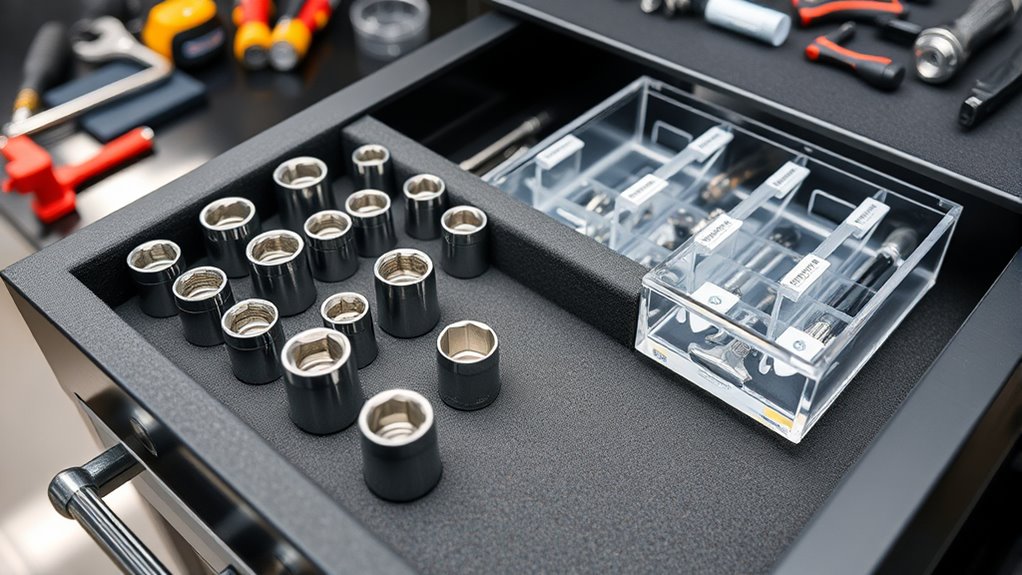
When selecting an organizer, you want to make certain it fits your 10mm sockets securely and comfortably. Consider how easy it is to access and identify sizes quickly, especially during busy projects. Also, look for space-saving designs that keep your workspace organized without taking up too much room. Incorporating European cloud innovation into your storage solutions can enhance overall efficiency and security. Additionally, choosing organizers with modular design can allow for flexible configurations that adapt to your specific needs.
Compatibility With Socket Sizes
Choosing the right organizer for your 10mm sockets depends on matching the storage system to their size and usage frequency. You need a solution that securely holds your sockets without confusion or damage, especially if you switch between metric and SAE sets.
Consider these factors:
- Compatibility with socket size variations and deep or shallow designs
- Ability to hold multiple sets without mixing sizes
- Clear markings or labeling for quick identification
- Capacity to accommodate frequently used sizes like 10mm
- Flexibility to expand or customize as your collection grows
Selecting an organizer that fits these criteria ensures your sockets stay organized, accessible, and protected. This way, you avoid misplacing or damaging your tools, saving time and frustration during projects.
Ease of Access and Use
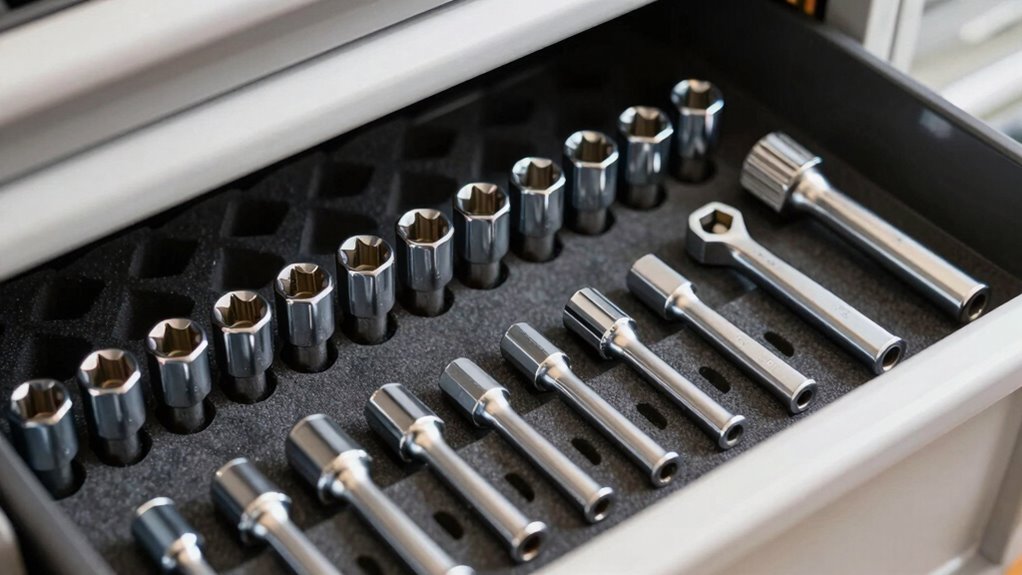
Selecting the right organizer makes accessing your 10mm sockets quick and effortless, saving you time during projects. A well-chosen system keeps your sockets visible and easy to grab. Consider organizers that have size markings or clear labeling, so you instantly identify the right socket without searching. Rail systems or socket trays with designated spots streamline your workflow. Here’s a quick comparison:
| Organizer Type | Key Benefit |
|---|---|
| Peg-type socket trays | Easy to see all sizes at once |
| Rail system | Quick, tool-free access |
| Toolbox widget | Customizable, adaptable layout |
| Vertical holders | Compact, saves space |
Choose based on your workspace and frequency of use to make your socket access seamless.
Space-Saving Design Options
Maximizing space is essential when organizing your 10mm sockets, especially if you have limited workshop real estate. Choosing compact, efficient storage options helps keep your workspace tidy and accessible. Consider vertical rails that hold multiple sockets in a small footprint or stackable trays to utilize vertical space. Slim magnetic strips can keep sockets in place without taking up much room. Clear, slim compartment boxes allow quick identification while saving space. Modular systems let you customize storage based on your needs, avoiding clutter. Additionally, look for organizers with adjustable dividers for a tailored fit. These space-saving design options ensure your sockets are organized, visible, and easy to grab, all while freeing up valuable workshop real estate.
- Vertical socket rails for wall mounting
- Stackable trays for layered storage
- Magnetic strips for compact holding
- Slim compartment boxes for quick access
- Modular organizers with adjustable dividers
Implementing a Zone-Based Storage System
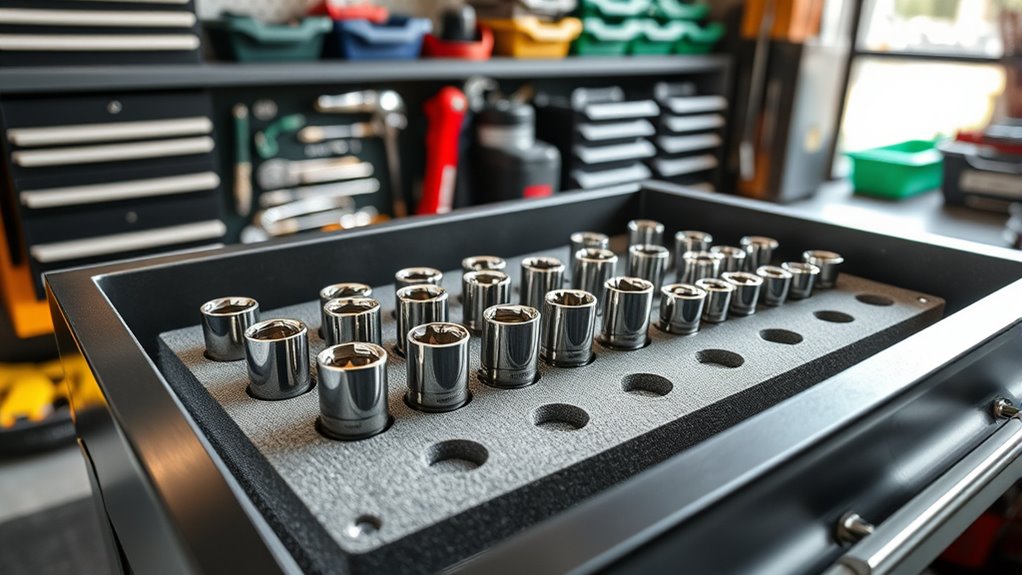
To streamline your socket storage, start by designating specific tool zones for different tasks and frequently used sizes. Organizing your sockets by usage type, so you can quickly find impact, deep, or metric sets without confusion. Make sure to optimize accessibility by placing the most common sizes and tools within easy reach, reducing search time during projects. Incorporating proper organization techniques can further enhance your storage system’s efficiency and longevity. Additionally, utilizing labeling systems helps keep track of socket sizes and types, minimizing the chance of losing or misplacing tools over time. Establishing a consistent maintenance routine can also help ensure your system stays organized and functional in the long run, preventing tool misplacement and ensuring your tools are always ready when needed.
Designating Tool Zones
Organizing your tool storage begins with clearly defining dedicated zones within your workspace, which helps streamline your workflow and reduces clutter. By assigning specific areas for different tool types, you prevent misplacing sockets and improve efficiency. Designate a zone for frequently used sockets, like your 10mm, so they’re always within arm’s reach. Create a secondary zone for specialty or less-used sizes, stored in labeled bins or on separate rails. Keep your project-specific tools nearby, ensuring quick access during work. Use visual cues such as labels or color coding to distinguish zones clearly. This setup minimizes searching time and keeps your workspace tidy, making it easier to find the right socket when you need it most. Additionally, applying a tool organization system based on your work habits can further enhance your efficiency. Incorporating visual cues like color coding or labels helps reinforce zone boundaries and makes tools easier to locate at a glance. To optimize your system, consider integrating vetted wave and wind techniques that can improve overall organization and safety. Properly organizing tools can also reduce the risk of accidents and prolong the lifespan of your sockets by preventing unnecessary wear.
Organizing by Usage Type
Implementing a zone-based storage system based on usage type guarantees your sockets are always where you need them. Group sockets by how often you use them: keep your most-used sizes, like 10mm, in an active zone for quick access. Reserve a secondary zone for specialty or less frequently used sockets, stored in labeled bins or on dedicated rails. This setup minimizes searching time and prevents misplacement, especially during busy projects. Clear visibility is key—arrange your sockets so you can see all sizes at a glance. Use labeled holders or color-coded bins for quick identification. By organizing this way, you streamline your workflow, reduce clutter, and ensure your 10mm sockets are always within arm’s reach when you need them most.
Optimizing Accessibility
Focusing your storage system on accessibility means designing zones that put your most-used sockets, like 10mm, within easy reach. This way, you save time hunting and reduce frustration. Create a dedicated active zone for quick access to frequently used sizes. Use labeled rails or quick-grab trays that keep your common sockets visible and organized. Place specialty tools and less-used sockets in secondary zones, such as labeled bins or stacked containers. Keep bulk inventory in stackable bins sorted by size or type for efficient storage. Position your most common fasteners and tools near your workbench, so you don’t have to search or move around unnecessarily. Incorporating smart organization techniques can further optimize your setup by leveraging automation and adaptive systems that respond to your needs. These innovative methods can also help prevent socket loss by providing digital tracking or automated reminders. This setup ensures that your essentials are always accessible, streamlining your workflow and minimizing socket loss.
Using Visual Aids to Keep Track of Your Tools
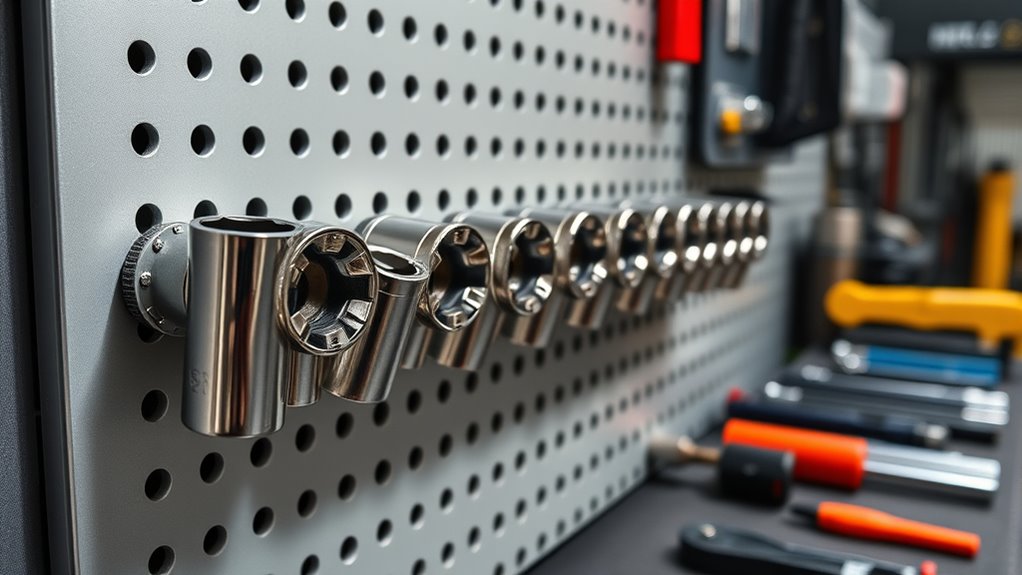
Using visual aids can considerably enhance your ability to track and locate your tools quickly. Labeling socket sizes on holders or rails ensures you instantly see which sizes are available or missing, saving time during projects. Color-coded bins or trays help differentiate metric from SAE sets at a glance, reducing confusion. Clear compartment boxes allow you to see small parts like 8mm or 9mm sockets without opening multiple drawers. Using marked posts or engraved labels on vertical holders makes size identification straightforward. Incorporate visual checklists or charts nearby to verify tool presence before starting. These aids create a visual map of your workspace, minimizing misplacement and search time. With clear visual cues, you’ll always know where your 10mm sockets are, boosting efficiency and reducing frustration.
Small Parts Management Techniques for Precision and Security

To guarantee small parts like 8mm or 9mm sockets stay organized and secure, it’s essential to adopt dedicated storage techniques that prioritize both visibility and safety. Using clear compartment boxes allows you to quickly identify the right size without digging through clutter. Customizable dividers help keep sizes separated, avoiding mix-ups. Secure latching prevents accidental spills or mixing of sockets, especially when moving tools. Grouping sockets logically—by metric, SAE, deep, or impact—is key for quick access. Impact-resistant containers ensure durability in demanding environments. Additionally, employing organized storage systems can streamline your workflow and reduce frustration. These techniques help you maintain small parts management precision, prevent loss, and save time searching for small parts. Implementing storage solutions tailored for small components can further enhance your organization and efficiency. Choosing durable containers designed for small hardware ensures long-term reliability and peace of mind. Affiliate relationships and transparent practices also support your confidence in sourcing quality storage solutions.
Tips for Sorting and Storing Metric Sets Efficiently

Efficiently sorting and storing your metric socket sets starts with organizing them by size and type on dedicated rails or trays. Begin by separating sizes from 8mm to 22mm, placing each on a labeled rail or tray for quick identification. Use color-coded or clearly marked labels to differentiate between metric, deep, and impact sockets. Position frequently used sizes like 10mm on top or in easily accessible spots. Stack rails vertically in your tool cart or drawer to save space and maintain visibility. Consider using socket organizers with size markings on posts for added clarity. Keep complete sets together to prevent missing pieces. Regularly review and tidy your storage to ensure all sizes are accounted for, making your workflow faster and reducing the risk of losing important sockets. Incorporating organization systems principles can help you keep track of your socket sets more effectively.
Creating a Grab-and-Go System for On-the-Job Convenience

Creating a grab-and-go system for on-the-job convenience guarantees you can quickly access the right sockets without wasting time searching through cluttered storage. To achieve this, focus on portable, organized setups that keep essential sizes within reach. Use a dedicated socket roll or pouch that’s clearly labeled and holds only your frequently used sizes. Incorporate a compact carrying case with labeled compartments for metric and SAE sets. Attach small magnetic strips or foam inserts to your workbench for quick access. Keep complete sets together, and regularly update your system to remove unused sockets.
- Use labeled, portable socket rolls or pouches
- Attach magnetic strips or foam inserts for quick access
- Keep essential sizes in a compact, dedicated case
- Regularly update and declutter your setup
- Store frequently used sizes within arm’s reach
Frequently Asked Questions
How Often Should I Reorganize My Socket Storage?
You should reorganize your socket storage every few months or whenever you notice clutter, missing tools, or difficulty finding the right size. Regular checks help maintain order and prevent misplacement. If you add new sockets or change your work patterns, reassess your organization system. Consistent reorganization keeps everything visible, accessible, and easy to grab, saving you time and frustration during your projects.
Can Color Coding Help Prevent Socket Misplacement?
Think of color coding like traffic lights—red for missing, green for ready to use. It really helps prevent socket misplacement by making sizes instantly recognizable. I once labeled my sockets with bright colors, and now I grab the right one in seconds, avoiding the usual rummaging. Using consistent colors for different sizes or sets keeps your workshop organized, reduces mistakes, and saves you time searching for the right socket.
What Materials Are Best for Durable Socket Organizers?
You should choose durable materials like impact-resistant plastics or heavy-duty metals for your socket organizers. Impact-resistant plastics, such as polypropylene or ABS, withstand drops and rough handling, keeping your tools safe. Metal options like steel or aluminum offer strength and longevity, especially for heavy use. Combining these materials, like metal rails with plastic holders, gives you a sturdy, long-lasting system that keeps your sockets organized and accessible.
How Do I Prevent Small Sockets From Rolling Away?
To prevent small sockets from rolling away, you should use socket organizers with secure compartments or latching containers. Clear compartment boxes with adjustable dividers work well, keeping each size separate and visible. Additionally, consider using impact-resistant storage with snug-fitting lids or magnetic trays that hold sockets firmly in place. Label each compartment clearly, and always return sockets to their designated spots after use, ensuring they stay put.
Is It Better to Store Sockets in Drawers or on Racks?
Storing sockets on racks is better because it keeps them visible and easy to access, reducing search time. Racks with labeled size markings prevent mix-ups and allow quick identification, especially for metric and SAE sets. Drawers can hide small sockets and cause clutter, making it harder to find what you need fast. Using racks maximizes organization, saves space, and helps you grab the right socket instantly.
Conclusion
By organizing your 10mm sockets, you’ll keep them close like good friends rather than letting them drift into the abyss. With the right storage system and a few smart tricks, losing a socket will become a thing of the past—like trying to catch smoke. Stick to these tips, and you’ll have a toolbox that’s as reliable as your favorite wrench. Say goodbye to missing sockets and hello to hassle-free projects!