
Stop placing your work lights improperly. Shadows, glare, and poor visibility can cause eye strain and increase the risk of accidents. Avoid positioning lights at awkward angles or too close to work surfaces, which leads to discomfort and inefficiency. Instead, make certain lights are well-placed, evenly distributed, and adjustable as tasks change. If you keep these mistakes in mind, you’ll create a safer, more comfortable workspace that boosts productivity—stay with us to learn how to get it right.

Get business pricing on garage and car supplies
- Business-only prices and quantity discounts
- Tax-exempt purchasing
- Multiple users, one account, clear invoices
Key Takeaways
- Avoid placing lights too high or too low, which creates shadows and reduces visibility.
- Do not position lights directly in your line of sight, causing glare and discomfort.
- Refrain from fixed lighting setups that don’t adapt to changing task locations.
- Don’t ignore the importance of even, diffuse lighting to prevent hazardous shadows.
- Avoid insecure mounting that risks lights shifting or falling, compromising safety.
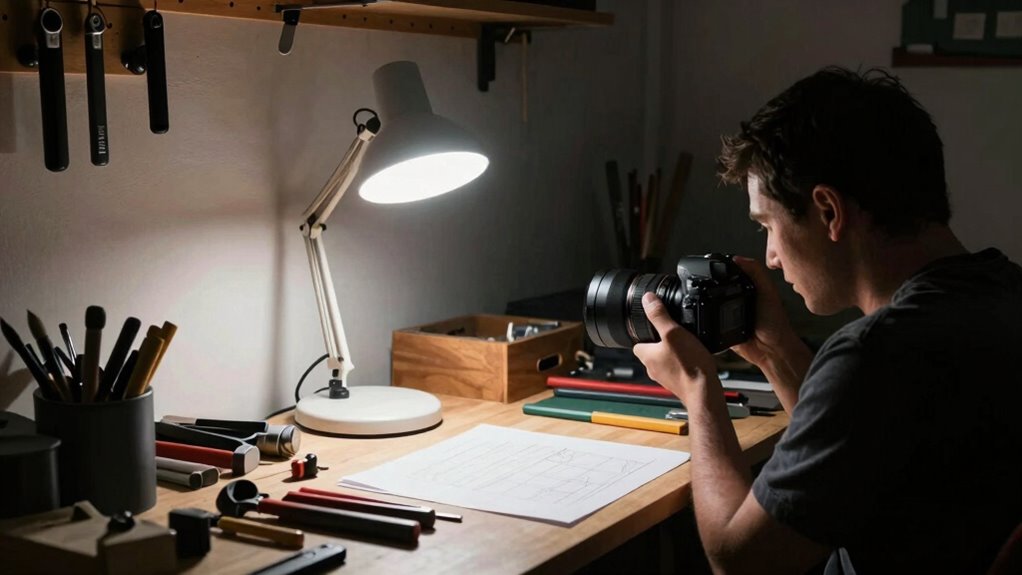
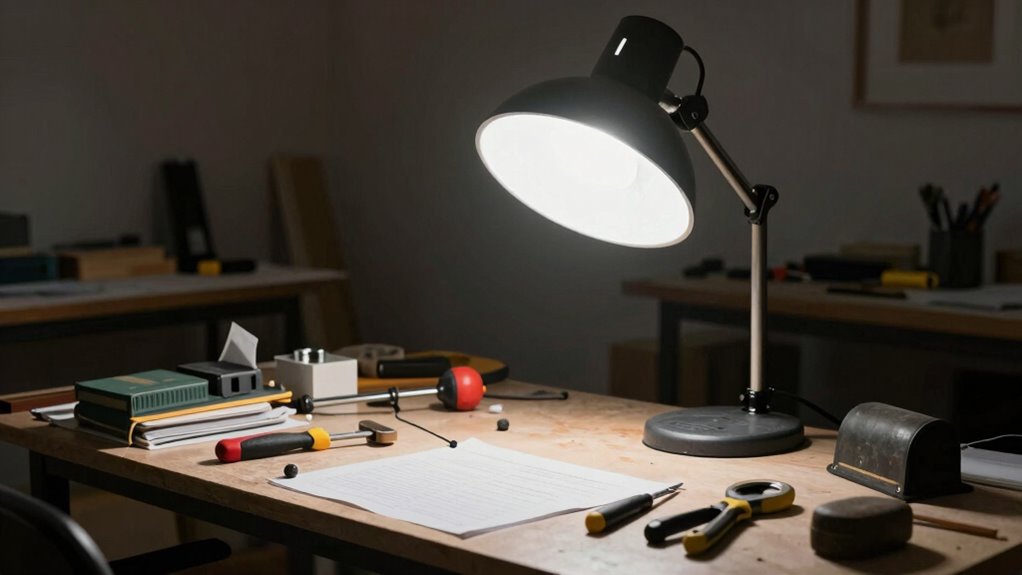
Many workers make the mistake of placing work lights in ineffective positions, which can lead to shadows, poor visibility, and increased fatigue. When lighting isn’t properly positioned, it hampers your ability to see details clearly and can cause eye strain over time. This oversight not only affects your productivity but also increases the risk of accidents. To optimize your work environment, you need to pay attention to tool ergonomics—how your tools and lights are arranged in relation to your body and workspace. Proper tool ergonomics means positioning lights so they don’t force awkward postures or constant adjustments, reducing strain and fatigue. If your work light is placed too high or too low, you might find yourself leaning or stretching unnecessarily, which can cause discomfort and slow down your work. Additionally, lighting placement plays a crucial role in creating an effective and safe workspace. Safety precautions are equally important. Incorrect light placement can create glare or shadows that obscure hazards, increasing the chance of slips, trips, or injuries. Always guarantee your lighting is diffuse and evenly distributed, eliminating harsh shadows that hide dangerous objects or uneven surfaces. You should also be cautious about the electrical safety of your work lights—use grounded outlets and avoid overloading circuits. Securely mounting lights prevents them from falling or shifting unexpectedly, which could cause injuries or damage. Additionally, avoid placing lights where they could accidentally shine into your eyes or into the eyes of others, as glare can impair vision temporarily and lead to mistakes. Another common mistake is neglecting the adjustment of your work light as tasks progress. A fixed light source may work initially but can become ineffective as your position changes. Regularly repositioning or adjusting your lights ensures consistent illumination, helping you maintain clear visibility and reducing eye strain. It’s also important to consider lighting ergonomics to prevent discomfort and enhance efficiency. Proper lighting also involves understanding lighting science, which guides how to choose and position lights for optimal brightness and reduced eye fatigue. Remember, the goal is to create a well-lit environment that promotes both efficiency and safety. This means thinking critically about the placement: aim for lights that illuminate your work surface directly without creating excessive shadows or glare. Proper positioning also considers tool ergonomics—placing lights at a height and angle that minimizes the need for you to bend or stretch excessively.
adjustable work light with diffuser
As an affiliate, we earn on qualifying purchases.
As an affiliate, we earn on qualifying purchases.
Frequently Asked Questions
How Do I Determine the Best Work Light Placement for Different Tasks?
To determine the best work light placement, focus on task-specific lighting by positioning your light source directly where you need visibility. Keep the light at a proper distance to avoid shadows and glare, and adjust angles to reduce shadows cast by tools or hands. Experiment with different placements, ensuring even illumination without overwhelming brightness. Proper work light positioning enhances safety and efficiency, making your tasks clearer and less tiring.
What Types of Work Lights Are Most Effective for Specific Environments?
Think of work lights as your trusty sidekicks, each suited for different environments. For dim, detailed tasks, use LED lights with a cool, bright lighting color—like a spotlight—powered by rechargeable batteries or direct power sources. In dusty or wet areas, rugged floodlights with waterproof features are best. Choosing the right lighting color and power source helps you illuminate your work efficiently, no matter the environment you’re in.
How Can I Prevent Shadows Caused by Improper Light Positioning?
To prevent shadows caused by improper light positioning, you should adjust your work light so it’s evenly distributed across the workspace. Use a light with a neutral light color to reduce glare and improve visibility. Make certain your light has a reliable power source, like a rechargeable battery or stable electrical outlet, to maintain consistent illumination. Position the light at a 45-degree angle to your work surface, minimizing shadows and maximizing clarity.
What Safety Precautions Should I Follow When Adjusting Work Lights?
When adjusting work lights, you should always wear appropriate safety gear like gloves and safety glasses to protect against potential work light hazards. Make certain the lights are securely mounted to prevent falls or electrical shocks. Turn off power before making adjustments, and keep cords clear of walkways to avoid tripping hazards. Regularly inspect your work lights for damage, and follow manufacturer instructions to maintain safety during adjustments.
How Often Should I Reposition Work Lights During a Project?
You should reposition your work lights as often as needed to maintain ideal illumination, typically every few hours or when your work area changes. This guarantees consistent worklight durability and energy efficiency, preventing shadows and reducing strain. Regular adjustments help maximize light coverage, keeping your workspace safe and well-lit. Remember, proper placement minimizes unnecessary energy use and extends the lifespan of your work lights.
As an affiliate, we earn on qualifying purchases.
Conclusion
Remember, a well-placed work light can make all the difference in your project’s success. Avoid the common pitfalls of improper placement, and you’ll illuminate your work with clarity and precision. Think of it as shining a flashlight on hidden cracks—what’s overlooked can turn into a bigger problem later. So, take a moment to position your lights thoughtfully. After all, a little foresight now can save you a lot of trouble down the road.
As an affiliate, we earn on qualifying purchases.
As an affiliate, we earn on qualifying purchases.
Halloween Picks
halloween
As an affiliate, we earn on qualifying purchases.