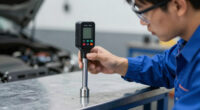
To test if your brake bleeding was successful, press the brake pedal firmly and observe its feel. It should be firm and responsive without sponginess or sinking. Check for air bubbles or dark fluid in the reservoir; clean, clear fluid indicates a good bleed. Also, verify the pedal height remains steady and doesn’t sink after pressure. If you notice issues, it’s worth exploring further steps to confirm your brake system is properly bled.

Get business pricing on garage and car supplies
- Business-only prices and quantity discounts
- Tax-exempt purchasing
- Multiple users, one account, clear invoices
Key Takeaways
- Pump the brake pedal multiple times and observe if it firms up, indicating air removal.
- Check for a consistent, bubble-free flow of brake fluid during bleeding.
- Test brake response by applying steady pressure; a firm pedal signifies successful bleeding.
- Confirm no leaks or soft spots in the brake system after bleeding.
- Perform a road test to ensure braking feels responsive and efficient under real driving conditions.
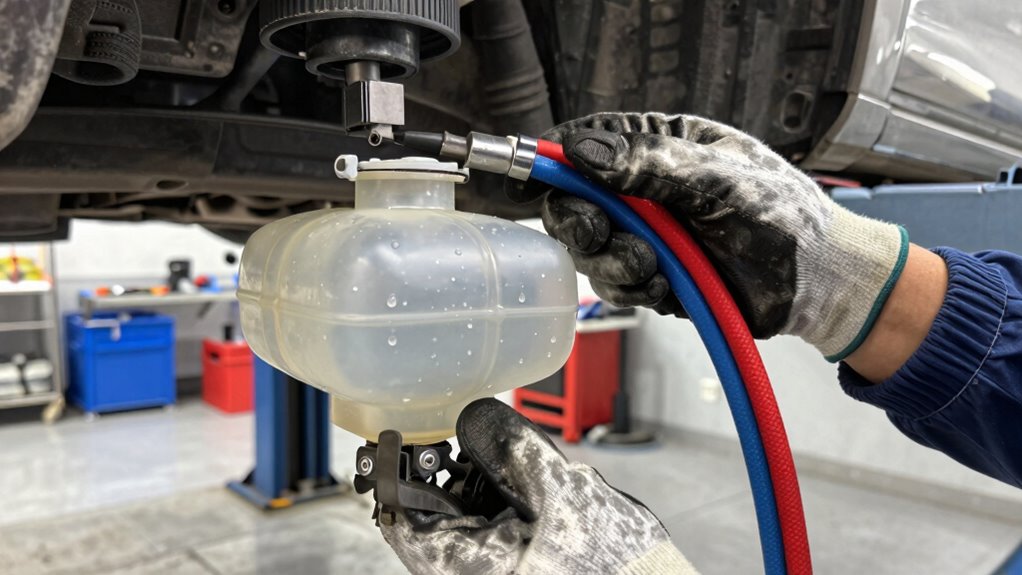
If your brakes feel spongy or less responsive, bleeding the brake system can often restore proper function. This process is essential because air bubbles or contaminants can get trapped in the hydraulic systems, impairing your brake performance. Understanding how hydraulic systems work and the different brake fluid types available can make the bleeding process more effective and straightforward.
Hydraulic systems rely on the transmission of force through brake fluid, which transmits pressure from the brake pedal to the brake calipers or drums. When air enters these systems—often during maintenance or fluid replacement—it compresses more easily than fluid, resulting in a soft or spongy pedal. Bleeding clears out this air, restoring the system’s integrity and ensuring you get a firm brake feel. Additionally, knowing the proper maintenance procedures can prevent air from re-entering the system over time. Regular inspection and maintenance can also help identify leaks or deterioration before they affect braking performance. Being aware of hydraulic system principles can help you troubleshoot issues more effectively.
There are several brake fluid types to consider, each with unique properties. DOT 3, DOT 4, and DOT 5.1 are common in passenger vehicles. DOT 3 and DOT 4 are glycol-based and hygroscopic, meaning they absorb moisture over time, which can lower boiling points and lead to brake fade under heavy use. DOT 5, a silicone-based fluid, doesn’t absorb water but is less compatible with ABS systems and may require different bleeding procedures. Using the correct brake fluid type for your vehicle is crucial, as incompatible fluids can cause damage or reduce braking efficiency. Being aware of compatibility issues can help you avoid costly repairs.
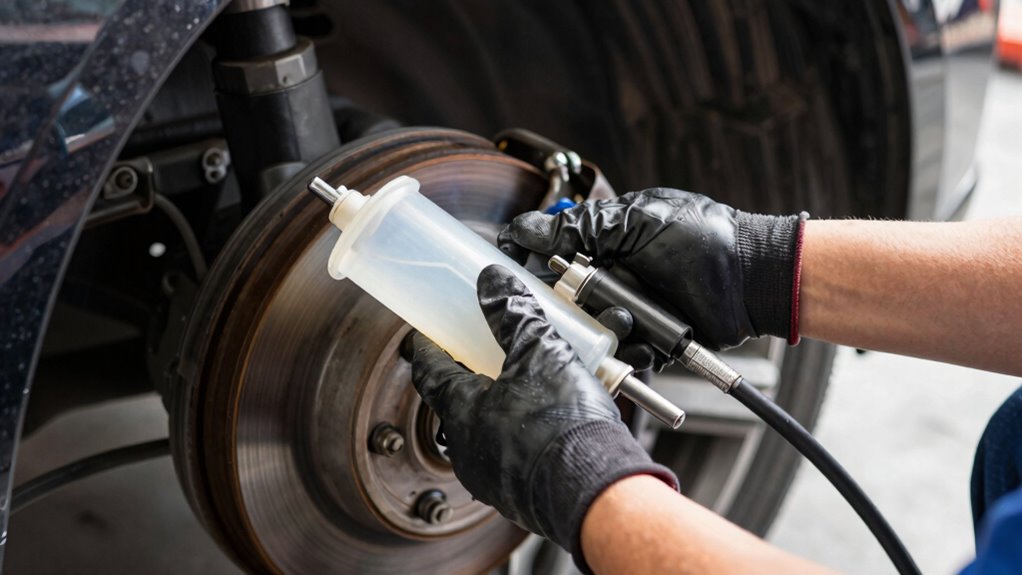
When performing a real-world test for brake bleeding, start with visual inspection. Check the brake fluid reservoir; if the fluid looks dark or contaminated, it’s time to bleed the brakes. Next, pump the brake pedal several times and observe its response. A soft or sinking pedal indicates trapped air that needs bleeding. You’ll then need to locate the bleeder valves on each brake caliper or wheel cylinder. Attach a clear tube to the valve and place the other end in a container to catch expelled fluid.
Begin the bleeding process by having a helper press the brake pedal firmly while you open the bleeder valve. As fluid and air escape, close the valve before your helper releases the pedal. Repeat this process until you see clear, bubble-free fluid flowing out. Keep an eye on the brake fluid level in the reservoir; top it off as needed to prevent introducing more air into the system. When finished, test the brake pedal’s firmness by pressing it a few times, ensuring it feels solid and responsive. Proper bleeding also involves following the specific bleeding sequence recommended by your vehicle manufacturer for optimal results. This sequence ensures that all air is removed from the hydraulic lines in the correct order, which can vary between vehicles.
This hands-on test confirms whether you’ve successfully bled the brakes. If the pedal still feels soft or the response remains sluggish, repeat the process or check for leaks. Proper bleeding restores hydraulic pressure, making your braking system safe and reliable. Remember, using the right brake fluid type and understanding how hydraulic systems work are key to achieving optimal results. Additionally, being aware of the specific brake fluid types suitable for your vehicle can prevent damage and ensure safety.
As an affiliate, we earn on qualifying purchases.
Frequently Asked Questions
How Often Should Brake Bleeding Be Performed?
You should perform brake bleeding every 2 to 3 years, or sooner if you notice brake fluid contamination or increased pedal travel. Regular bleeding helps prevent brake system corrosion and maintains ideal brake performance. Keep an eye out for signs like spongy brakes or leaks, and don’t delay, as contaminated brake fluid can cause corrosion, compromising safety. Frequent maintenance ensures your brake system stays in top shape.
Can Brake Bleeding Be Done Without Special Tools?
You can try brake bleeding without special tools, especially for manual systems, but it’s generally easier with the right equipment. DIY enthusiasts often use simple tools like a clear hose and a container, while professionals prefer specialized brake bleeders. Automatic systems make the process simpler, but manual bleeding is possible if you’re comfortable with the method. For safety and reliability, consider professional help if you’re unsure or dealing with complex brake systems.
What Are Signs of Incomplete Brake Bleeding?
You’ll notice signs of incomplete brake bleeding if you feel a spongy brake pedal or if it sinks closer to the floor when pressed. Air bubbles may be visible in the brake fluid, indicating trapped air, while fluid contamination can cause a dull, discolored appearance. These issues compromise braking performance, so it’s vital to re-bleed the brakes properly to remove air bubbles and guarantee clean, effective brake fluid.
Is It Necessary to Replace Brake Fluid During Bleeding?
You should replace brake fluid during bleeding if it’s contaminated or has absorbed moisture, which can cause brake system corrosion and reduce effectiveness. Fresh brake fluid maintains proper hydraulic pressure and prevents corrosion of components. If your brake fluid appears dark, dirty, or has absorbed moisture, it’s essential to substitute it to guarantee safe braking performance and avoid long-term damage to your brake system.
Can Brake Bleeding Fix Brake Pedal Softening?
Imagine trying to squeeze toothpaste out of a tube; if the tube’s worn, it’s hard to get a good squeeze. Similarly, bleeding brakes can fix pedal softening caused by air or old brake fluid, restoring pedal firmness. Fresh brake fluid improves brake fluid quality, which directly impacts pedal feel. While bleeding helps, if the problem persists, you might need to replace brake components for a long-term fix.
As an affiliate, we earn on qualifying purchases.
Conclusion
Now that you’ve navigated the nuances of brake bleeding, you’re not just a novice—you’re a knowledgeable mechanic in the making. Confidence grows as you grasp the gear, and safety soars as you succeed. Remember, mastering the basics builds a bold, brake-brimming bond with your vehicle. So, step up, stay steady, and let your skills shine through every stop and start. Your dedication delivers dependable, danger-free driving—drive with determination!
As an affiliate, we earn on qualifying purchases.
As an affiliate, we earn on qualifying purchases.
Halloween Picks
halloween
As an affiliate, we earn on qualifying purchases.