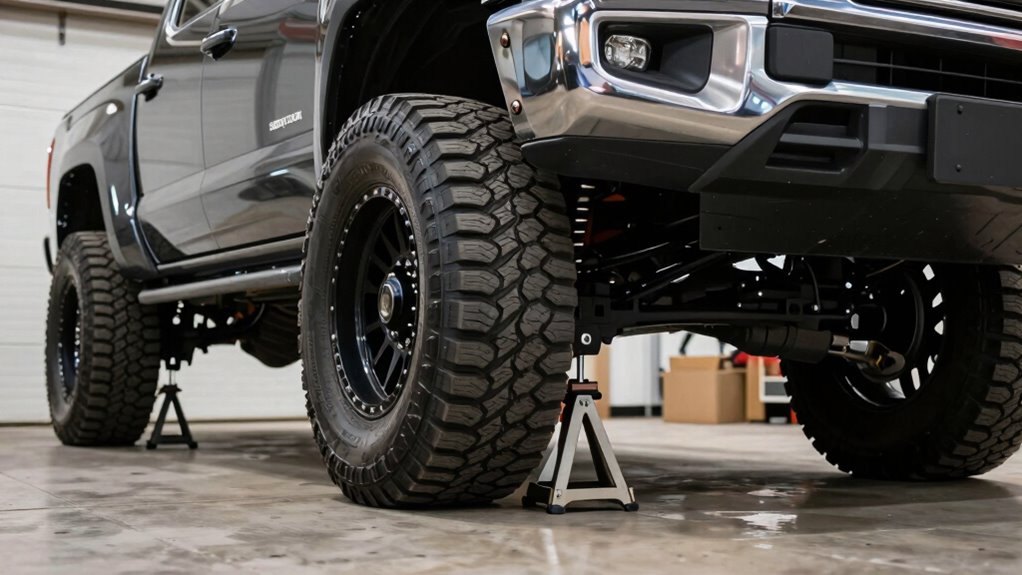

To prevent tip-overs when using jack stands on lifted trucks, always guarantee the ground is solid and level. Use stands rated for the truck’s weight and position them under manufacturer-recommended lift points. Double-check the stability by gently shaking the stands before working underneath. Never rely solely on the hydraulic jack, and ensure the vehicle is fully supported before any work. Want to discover more tips for safe lifting? Keep exploring for expert advice.
Key Takeaways
- Use stands with a weight capacity exceeding the truck’s weight and appropriate height for lifted vehicles.
- Position stands on solid, level ground and avoid soft or uneven surfaces to prevent tipping.
- Support the vehicle at manufacturer-recommended lift points for balanced weight distribution.
- Confirm stands are securely in place by gently shaking before working underneath.
- Never rely solely on a hydraulic jack; always transfer the load to properly rated and stable jack stands.

Lifted trucks are popular for their bold looks and off-road capabilities, but working safely underneath them requires proper support. When you’re dealing with such high vehicles, using jack stands correctly is essential to prevent accidents and injuries. Knowing the right safety protocols and lifting techniques can make all the difference in ensuring stability and safety during maintenance or repairs.
First, you need to choose the appropriate jack stands for your lifted truck. Not all stands are created equal, especially when supporting high-clearance vehicles. Look for stands that have a weight capacity well above your truck’s weight and a height range that accommodates the lift. Once you’ve selected the proper stands, position them on solid, level ground. Uneven or soft surfaces increase the risk of slipping or tipping over, so always double-check the ground stability before proceeding.
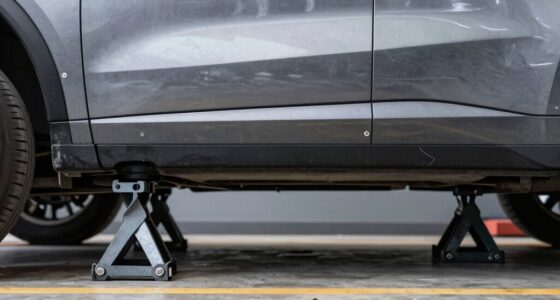
When lifting the truck, follow proper lifting techniques. Start by engaging the parking brake and placing wheel chocks behind the wheels that remain on the ground to prevent any movement. Use a hydraulic jack to lift the truck to the desired height, ensuring it’s stable and balanced before placing the jack stands. The key safety protocol is to never rely solely on the hydraulic jack to support the vehicle—always transfer the load onto the stands. Position the stands under the manufacturer-recommended lift points, which are usually reinforced areas designed to handle the weight safely.
As you lower the truck onto the stands, do so slowly and carefully. Make sure the weight is evenly distributed on the stands, and double-check their stability before crawling underneath. Always remember the safety protocols: never work under a vehicle supported only by a jack, and never exceed the rated capacity of your jack stands. It’s also wise to give the stands a gentle shake once the truck is lowered onto them, confirming they’re securely in place and won’t shift during your work.
Using these safety protocols and lifting techniques not only protects you but also ensures that the truck remains stable throughout your maintenance tasks. Proper support reduces the risk of tip-overs or sudden collapses that can cause serious injuries. Investing time in correct procedures might seem tedious, but it’s a critical step in working safely on lifted trucks. Properly supporting a vehicle involves understanding appropriate lifting points, which are typically reinforced areas designed for safe support. With the right mindset and careful attention to detail, you’ll keep yourself safe while maintaining or repairing your impressive lifted vehicle.
Frequently Asked Questions
Are All Jack Stands Suitable for Lifted Trucks?
Not all jack stands are suitable for lifted trucks. You need stands made from durable materials like steel to support heavy loads and guarantee safety. Check their lift height compatibility to match your truck’s height; many standard stands won’t reach or support the lifted position properly. Always select stands designed for high clearance vehicles, and verify their weight capacity to prevent accidents or tip-overs while working on lifted trucks.
How Often Should I Inspect My Jack Stands?
You should inspect your jack stands before each use to guarantee safety. Check their weight capacity and make sure they haven’t been compromised. Also, verify that they meet the lift height limitations for your lifted truck. Look for cracks, rust, or bent components that could weaken the stand. Regular inspections help prevent accidents, especially with higher lift heights and heavy loads, keeping you safe during maintenance.
Can I Use One Jack Stand for Multiple Lifts?
You shouldn’t use one jack stand for multiple lifts. Imagine the weight shifting unexpectedly—your safety hinges on the jack stand capacity matching the load. Each lift demands a different approach; using a single stand risks instability. Always select a jack stand rated for the weight you’re lifting, and stick to proper lifting techniques. This guarantees stability, prevents tip-overs, and keeps you safe during every job.
What Safety Gear Is Recommended When Working Under Lifted Trucks?
When working under lifted trucks, you should wear protective gloves to prevent cuts and burns, and eye protection to shield against debris and fluids. Always guarantee your gloves fit well and are suitable for the task. Use safety goggles or glasses to keep your eyes safe from flying particles. These safety gear pieces help minimize injury risks and keep you protected while performing maintenance or repairs under the vehicle.
Do Different Truck Models Require Specific Jack Stand Types?
You might think any jack stand will do, but different truck models do require specific types. Heavier trucks need sturdy stands made from high-quality materials like steel to support their weight safely. Lighter models may use lighter stands, but always check your truck’s weight and match it with the stand’s capacity. Using the right jack stand guarantees stability, preventing accidents and keeping you safe while working under your lifted truck.
Conclusion
So, as you emphasize proper jack stand placement, it’s almost as if the universe conspires to keep your lifted truck steady. When you double-check your stability tricks, you might find that everything aligns just right—like a coincidence, but really, it’s your careful planning paying off. By respecting these safety tips, you’re not just preventing tip-overs; you’re subtly ensuring that, against all odds, your truck stays secure. Sometimes, safety measures seem almost too perfect to ignore.