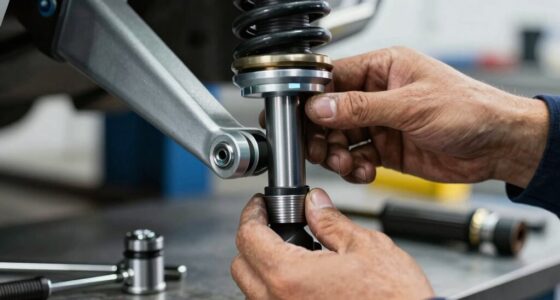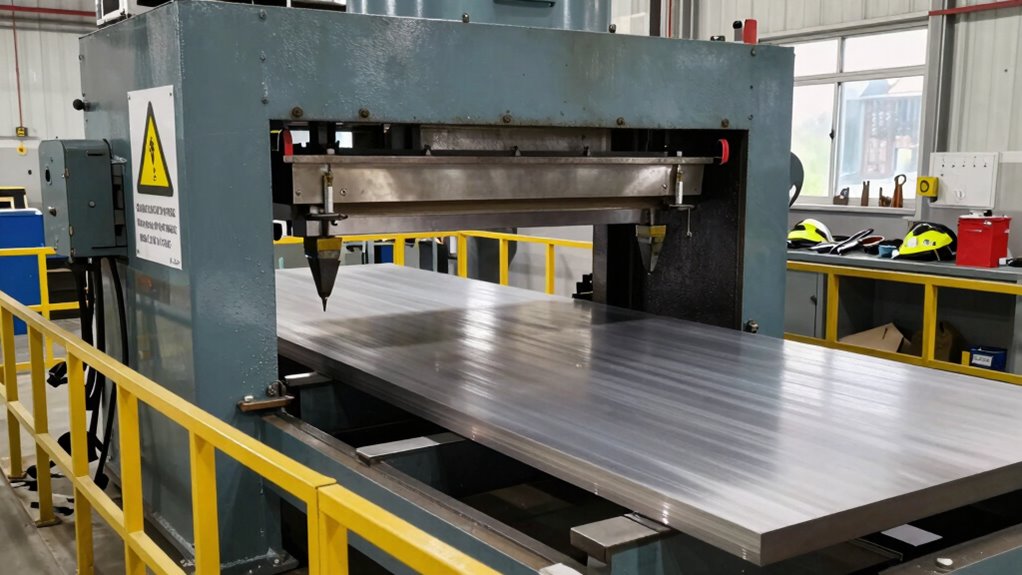

To prevent flying parts during hydraulic press operations, ensure you properly set up and securely clamp the workpiece before applying pressure. Verify all components are aligned and that safety devices are in place and functional. Inspect for loose tools or hazards, and keep your work area organized. Properly securing the workpiece minimizes risks of ejection and injury. Mastering these setup steps is vital—continue to learn more about safety protocols to keep your workspace safe.
Key Takeaways
- Properly securing and clamping the workpiece prevents parts from flying out during compression.
- Conduct thorough pre-press inspections to ensure all components are correctly aligned and stable.
- Use appropriate fixtures and safety devices to hold the workpiece firmly in place.
- Verify safety features like emergency stops and guards are functional before starting operation.
- Maintain a clean, organized work area to minimize hazards and facilitate safe setup procedures.

Have you ever wondered what it takes to operate a hydraulic press safely? The key lies in understanding the importance of proper setup and the vital safety measures that prevent accidents. Before you even turn on the machine, extensive hydraulic press training is essential. This training arms you with the knowledge of how the press works, what hazards to watch for, and the correct procedures to follow. It’s not just about knowing how to operate the controls; it’s about understanding safety protocols that keep you protected.
Using the right safety equipment is non-negotiable. Wearing personal protective gear like safety glasses, gloves, and steel-toed boots helps shield you from flying debris or accidental contact with moving parts. But safety equipment alone isn’t enough. Proper setup involves more than just personal gear—it’s about preparing the machine itself. Ensuring the workpiece is correctly positioned and securely clamped is fundamental. This step might seem simple, but neglecting it can lead to parts flying out during compression, which could cause injury or damage.
Proper setup and secure clamping prevent flying parts and ensure safe hydraulic press operation.
The setup rule that prevents flying parts is straightforward but vital: always verify the workpiece is firmly secured before applying hydraulic pressure. If the workpiece isn’t properly clamped or aligned, the force exerted by the press can cause it to eject unexpectedly. This is why thorough hydraulic press training emphasizes the importance of inspection and proper fixture setup. You need to double-check that everything is tight and stable, and that no loose items are in the vicinity. This pre-press check minimizes the risk of parts becoming projectiles.
Additionally, understanding the thermal behavior of the press and workpieces can help prevent deformation or unexpected failures during operation. In addition, always test the safety mechanisms before starting the main operation. Many hydraulic presses are equipped with emergency stop buttons, safety guards, and pressure relief valves. Familiarize yourself with these features during your training session, and ensure they’re functioning correctly. Proper setup also means keeping the work area clean and free of unnecessary tools or clutter that could interfere with operation or safety.

RUGCEL WINCH 12000lb Waterproof Electric Truck Winch 12V Steel Rope Winch with Roller Fairlead, Wired Handle and 2 Infrared Remote,for Truck and Wrangler in Car Lift
【STURDY & DURABLE MATERIAL】- Waterproof IP67 rating,this electric truck winches enhanced in almost every area for increasing its...
As an affiliate, we earn on qualifying purchases.
Frequently Asked Questions
What Are Common Signs of Hydraulic Press Malfunction?
You’ll notice common signs of hydraulic press malfunction when the hydraulic pressure fluctuates unexpectedly or drops below normal levels. Safety sensors might trigger alarms or stop operations if they detect irregularities. Additionally, unusual noises, slow or jerky movements, or leaks around hydraulic lines indicate potential issues. These signs suggest you should inspect the hydraulic pressure system and safety sensors promptly to prevent further damage or accidents.
How Often Should Hydraulic Press Safety Inspections Be Performed?
You should perform hydraulic press safety inspections at least monthly to catch issues early. Think of inspection frequency like regular health check-ups—keeping everything in top shape prevents accidents. Incorporate maintenance scheduling into your routine, ensuring inspections are consistent and thorough. By doing so, you minimize risks, extend equipment life, and keep safety a priority, much like tending to your own well-being. Regular checks are your best defense against unexpected malfunctions.
What PPE Is Recommended When Operating a Hydraulic Press?
When operating a hydraulic press, you should wear personal protective equipment like safety glasses or goggles to shield your eyes, gloves to protect your hands, and steel-toed boots to safeguard your feet. Wearing the right protective gear diminishes injury risks from flying debris, hot surfaces, or accidental contact. Always verify your protective gear fits properly and is in good condition, so you stay safe while handling the press.
How to Properly Train New Operators on Hydraulic Press Safety?
You should start by clearly demonstrating operator communication and safety signage to your new operators. Make sure they understand all safety procedures and the importance of following them precisely. Use hands-on training, real-world scenarios, and encourage questions. Reinforce safety rules regularly, and verify their understanding through assessments. This approach guarantees they recognize hazards, follow protocols, and operate the hydraulic press safely, preventing accidents and promoting a safety-conscious workplace.
What Emergency Procedures Should Be in Place for Hydraulic Press Accidents?
In an emergency, you should have a clear response plan, including shutting off the hydraulic press immediately and alerting emergency services. Guarantee first aid kits are accessible, and you or your team are trained in basic first aid for injuries. Quickly assess the situation, provide necessary first aid, and document the incident. Regular drills help everyone stay prepared, minimizing injury severity and ensuring swift, effective emergency response.

XYCLE 12000lbs Electric Winch 12V IP68waterproof Off-Road Vehicle Rescue winchs with2wireless Remote Controls and1/2"Synthetic Rope Suitable for Towing SUVs,Loggers,Trucks,Trailers,Jeeps,4WD(Black)
【 New design and precision manufacturing process 】 XYCLE's unique appearance design provides IP68 waterproof, dustproof, and moisture-proof...
As an affiliate, we earn on qualifying purchases.
Conclusion
By always following the setup rule, you’re anchoring safety like a lighthouse guiding ships through treacherous waters. Remember, a simple check can prevent parts from flying like reckless stars across the sky. Stay vigilant, respect the equipment, and don’t cut corners. Your careful preparation is the shield that keeps accidents at bay, ensuring your workspace remains a safe harbor amid the storm of heavy machinery. Safety isn’t just a rule—it’s the heartbeat of every operation.

WARN VR EVO 12-S Electric 12V Winch – 12,000 lb Pull Capacity, Synthetic Rope, IP68 Waterproof, High-Performance Off-Road Recovery Winch for Trucks, Jeeps, and SUVs
12,000 lb Pulling Capacity: Built for full-size trucks, SUVs, and Jeeps, providing reliable pulling strength for tough off-road...
As an affiliate, we earn on qualifying purchases.

BELTTT 2000W Pure Sine Wave Inverter, Inverter 12V DC to 120V AC for Solar, RV, Truck, Outdoor, Power Inverter with Dual AC and 20A Socket, 5V 2.1A USB, Surge 4000W, Hardwire Port, Remote Controller
【POWERFUL DC to AC CONVERTER】: This solar inverter delivers 2000W of continuous battery DC 12V to AC 110V...
As an affiliate, we earn on qualifying purchases.