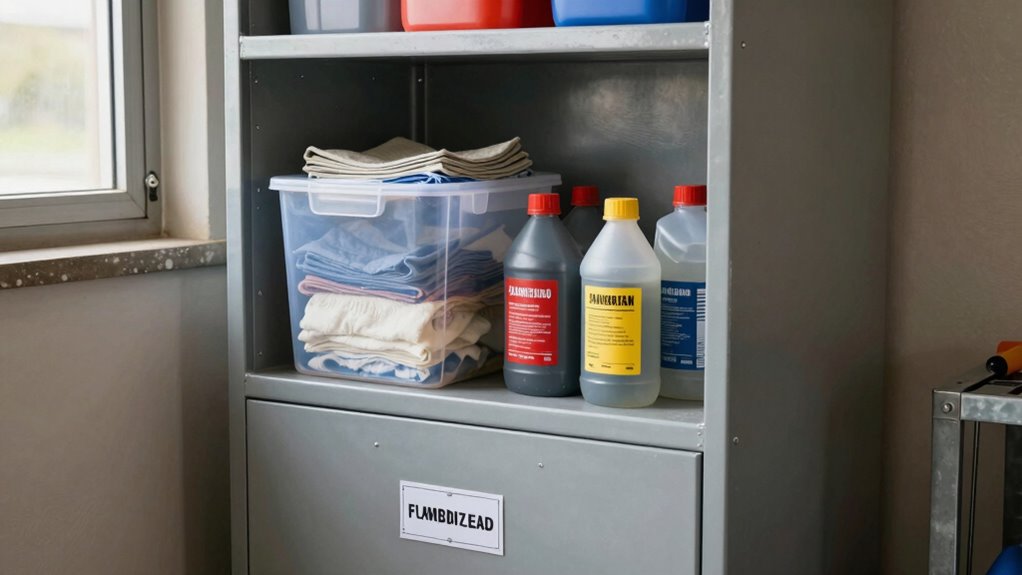

To keep your garage safe, store oily rags in airtight, metal containers away from heat and ignition sources. Fuel should be kept in approved safety cans outside, on ventilated shelves, and away from appliances. Solvents require tightly sealed, clearly labeled containers stored in well-ventilated, locked cabinets. Proper container choice and secure storage locations help prevent fires. Stay aware of best practices—continuing this guide will help you protect your home and loved ones even better.
Key Takeaways
- Store oily rags in airtight, metal safety cans outside or in locked, ventilated outdoor sheds.
- Keep gasoline in approved safety containers, stored outdoors away from heat and ignition sources.
- Place solvents in clearly labeled, tightly sealed safety cans on elevated, ventilated shelves away from heat.
- Use non-combustible, secure shelves to store flammable materials, keeping them away from water heaters and pilot lights.
- Regularly inspect storage areas, eliminate clutter, and ensure fire alarms are functioning for added safety.
Proper Storage of Oily Rags

To prevent spontaneous combustion and reduce fire hazards, you should store oily rags in airtight containers. This keeps the rags from coming into contact with oxygen, which can ignite the oil through oxidation. Make sure the containers are metal or approved safety cans with tight-fitting lids to prevent vapor buildup. Never leave oily rags lying around or near heat sources, appliances, or pilot lights. After use, allow the rags to fully dry outside before storing, or dispose of them properly if they’re heavily saturated. Keep these containers in a secure, locked location away from children and heat sources. Regularly check for leaks or damage to the containers, and always follow local regulations for disposal. Proper storage minimizes the risk of spontaneous fires caused by oily rags. Additionally, understanding fire safety regulations can help ensure you are following best practices for hazardous material storage. When storing oily rags, consider fire-resistant containers that provide an extra layer of protection against ignition. Using proper storage techniques that incorporate hazardous material safety guidelines can further enhance safety and prevent accidental fires. Being aware of cultural beliefs surrounding astrology and beauty can also influence how you approach safety practices, as perceptions of risk vary across different communities.
Safe Handling and Storage of Gasoline
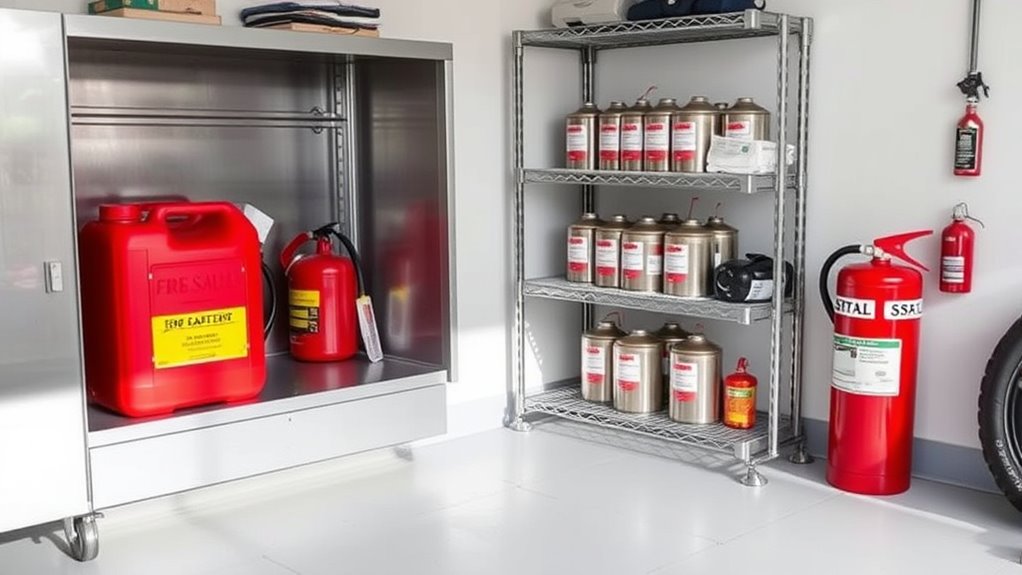
Proper handling and storage of gasoline are key to preventing fires and health hazards in your garage. Always use approved safety containers specifically designed for fuel; never use plastic bottles or jars. Keep gasoline away from heat sources, sparks, and open flames. Store it in well-ventilated outdoor sheds or locked boxes, never inside your home or garage. Maintain at least a three-foot clearance from water heaters, boilers, or any ignition sources. When handling gasoline, avoid spilling and clean up any leaks immediately. Always keep containers tightly sealed after use to prevent vapors from escaping. Proper storage and cautious handling are essential to keeping your garage safe and fire-free. Understanding safe storage practices is crucial for preventing accidents and ensuring overall safety. Additionally, gasoline vapor dispersion can occur if vapors are not properly contained, increasing the risk of ignition. Ensuring correct ventilation techniques can significantly reduce vapor buildup and enhance safety. Proper storage location and regular inspection of containers can further reduce the risk of leaks and spills. Implementing safety guidelines for handling flammable liquids is essential for a secure environment.
Best Practices for Storing Solvents
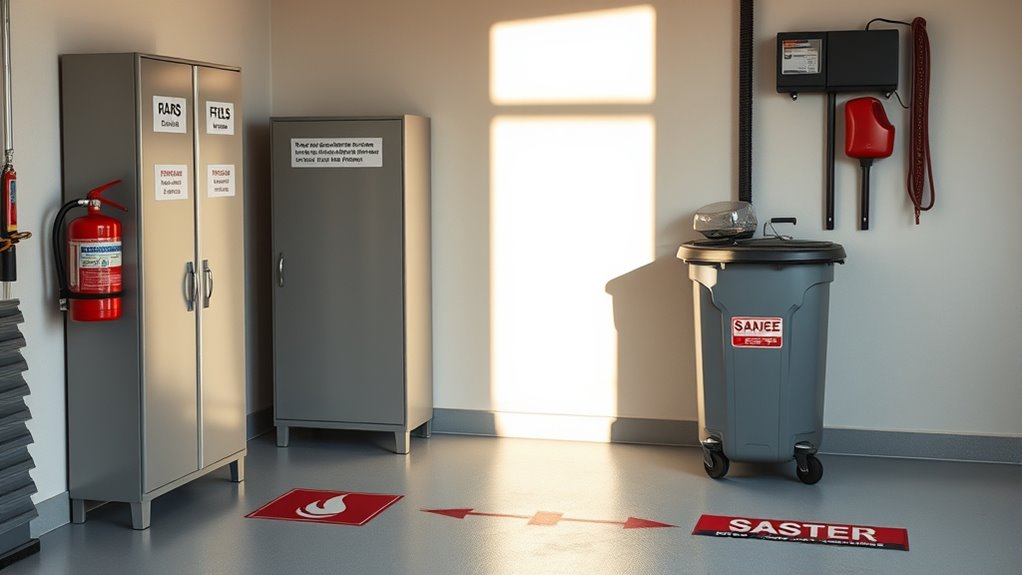
Storing solvents safely requires careful attention to container selection and placement. You should always use durable, clearly labeled containers with tight seals to prevent vapor leaks. Keep solvents in their original containers if possible, or transfer them to approved safety cans. Store them in well-ventilated outdoor sheds or away from direct sunlight, heat sources, and appliances. Avoid plastic bottles—metal or approved safety cans are best. Position the containers on elevated shelves, away from ignition sources like pilot lights or electrical outlets. Always keep solvents separated from other flammable materials, and ensure containers are tightly closed after each use. Regularly inspect for leaks or damage, and maintain a clear, clutter-free storage area to minimize fire risks. Proper ventilation can help reduce vapor buildup and improve safety. Additionally, understanding the importance of fire-resistant storage can further enhance safety measures and prevent accidents. Being aware of regulatory guidelines ensures compliance and enhances overall safety practices. Implementing fire safety standards in your storage area can provide an added layer of protection against potential hazards.
Choosing Appropriate Containers for Flammable Liquids
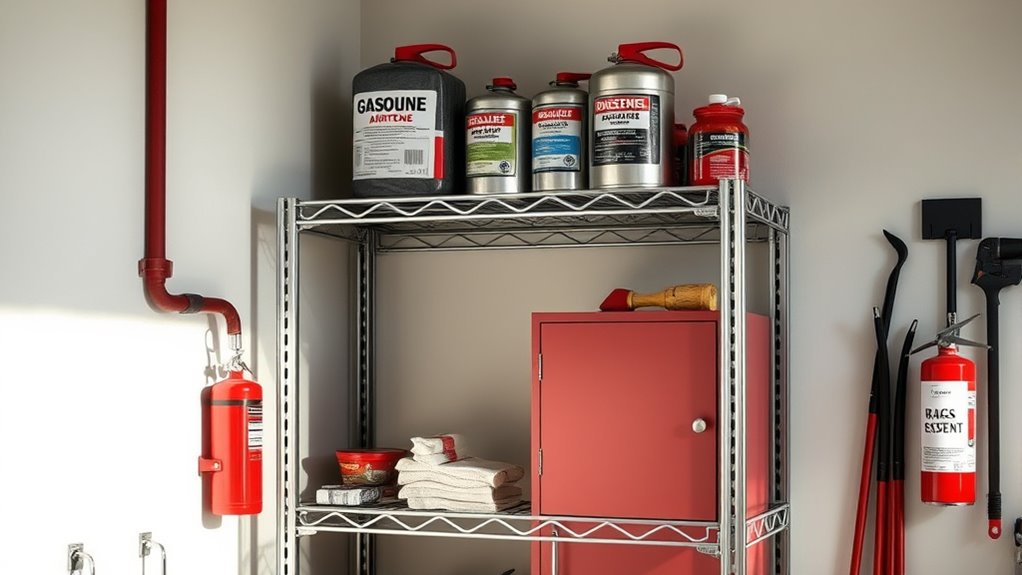
Choosing the right containers for flammable liquids is essential to prevent leaks, spills, and fires. Always use metal or approved safety cans designed specifically for flammable liquids. These containers are built to be airtight, preventing vapor leaks that could ignite. Make certain the containers are tightly sealed after each use to avoid accidental spills. Avoid plastic bottles or jars, which are more prone to leaks and may not withstand the chemicals inside. Use color-coded or clearly labeled containers to identify contents easily, reducing the risk of mishandling. Store these containers in locked cabinets or secure locations, out of children’s reach. Proper containers help contain vapors and reduce the chance of accidental ignition, ensuring your garage remains a safe environment. Proper storage practices are crucial for minimizing fire hazards associated with flammable liquids. Additionally, utilizing flammable liquid safety measures such as proper ventilation and fire extinguishers can further enhance safety in your garage. Incorporating fire-resistant storage adds an extra layer of protection against potential accidents. Regularly inspecting your containers for signs of deterioration or leaks is also an important fire safety practice to prevent unforeseen hazards. Implementing ventilation strategies can further reduce vapor buildup and improve overall safety.
Ideal Locations for Storing Combustible Materials
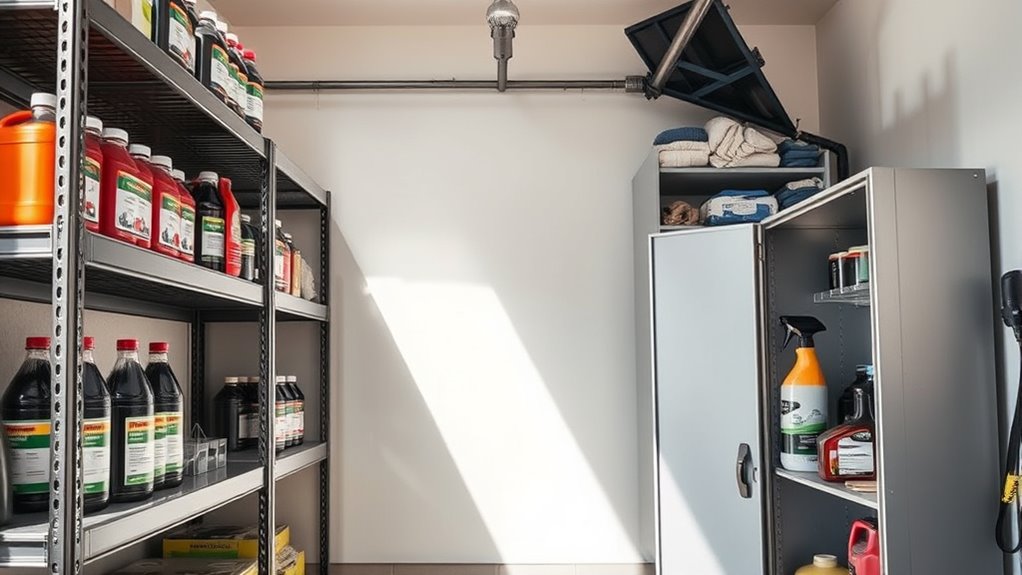
You should consider storing combustible materials outdoors in a shed away from your home to reduce fire risk. If you keep them inside, place them on sturdy shelves away from appliances, water heaters, and pilot lights. Proper location is key to preventing accidents and ensuring safety in your garage. Additionally, home safety & accessibility guidelines recommend regular inspection and secure storage of hazardous materials to minimize fire hazards. Incorporating fire safety protocols can further enhance your protection by ensuring proper handling and storage practices. Being aware of Gold IRA Markets can also help you make informed investment decisions regarding your safety equipment and resources. Ensuring your garage storage complies with safety standards is essential for effective fire prevention.
Outdoor Storage Options
To minimize fire risks, outdoor storage for combustible materials should be carefully selected and maintained. Choosing the right location helps prevent accidents and limits fire spread. Consider these options:
- Store flammable liquids in a secure, ventilated shed away from your home. Ensure the shed is lockable and made of fire-resistant materials.
- Keep gasoline and kerosene containers on concrete pads, away from direct sunlight. Maintain at least a three-foot clearance from water heaters or heat sources.
- Use a dedicated outdoor storage box or cabinet for oily rags, ensuring it’s airtight and placed away from ignition sources. Regularly inspect and keep it locked.
Indoor Safe Shelving
Indoor safe shelving is essential for minimizing fire risks by keeping combustible materials organized and away from ignition sources. Choose shelves made of non-combustible materials like metal, and position them away from heat-producing appliances such as water heaters or furnaces. Place rags, fuels, and solvents on higher shelves to prevent accidental contact or spillage. Ensure shelving units are sturdy and securely anchored to avoid tipping. Keep containers tightly closed and clearly labeled for easy identification. Maintain a three-foot clearance around ignition sources and avoid clutter that could block access or trap heat. Use ventilated storage options or enclosed cabinets with locking doors, especially for hazardous materials. Proper shelving helps reduce fire hazards and keeps your garage safer.
Preventative Measures and Safety Devices in the Garage
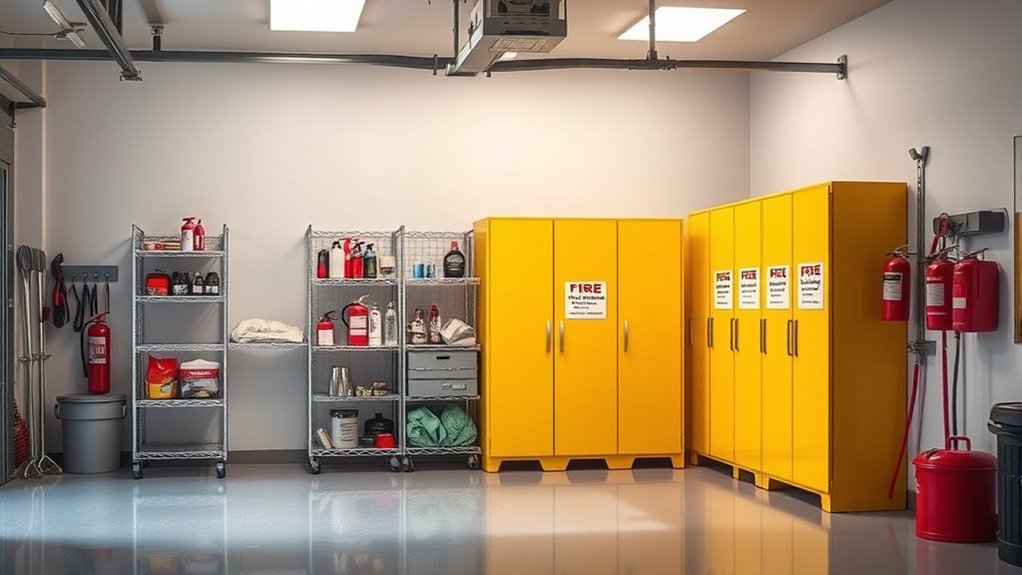
To keep your garage safe, you should install fire alarms on the ceiling and test them regularly. Using proper storage containers for flammable materials minimizes the risk of leaks and spills. Make sure your fire exits are clear and easily accessible so you can get out quickly if needed.
Install Fire Alarms
Have you installed fire alarms in your garage yet? If not, it’s a critical step to protect your home and belongings. Fire alarms detect smoke early, giving you essential time to respond. Consider these key points:
- Install heat alarms on the garage ceiling, especially near storage areas with flammable materials.
- Test alarms monthly to confirm they’re working properly and replace batteries annually.
- Connect multiple alarms with a hardwired system for simultaneous alerts throughout your home.
Proper installation and maintenance are indispensable. Choose alarms rated for garages, which are designed to withstand humidity and dust. Regular testing and timely replacements keep your system dependable. A well-placed fire alarm can save lives and minimize damage during a fire.
Use Proper Storage Containers
Using proper storage containers is essential to keep your garage safe from fire hazards. You should always use metal or approved safety cans for flammable liquids like gasoline, solvents, and paints. These containers prevent vapor leaks and are designed to handle pressure. Label or color-code each container for easy identification and avoid plastic bottles, which can crack or leak. Keep containers tightly sealed and stored in ventilated areas away from heat sources. To prevent accidental spills or fires, store hazardous materials in locked cabinets out of children’s reach. Proper containers reduce the risk of spontaneous combustion and contain vapors.
| Material | Usage | Storage Location |
|---|---|---|
| Metal cans | Flammable liquids | Ventilated, locked cabinets |
| Approved safety cans | Gasoline, kerosene | Outside shed or locked box |
| Tightly sealed | Solvents, paints | Shelves away from heat |
Maintain Clear Fire Exits
Keeping fire exits clear is essential for safe garage operation. You need unobstructed pathways so you can evacuate quickly during an emergency. Regularly check that doors, hallways, and access points are free of clutter, tools, or stored items.
- Keep pathways unobstructed at all times, removing boxes, equipment, or debris.
- Ensure doors open easily without obstructions, and that they’re well-maintained.
- Install and maintain lighting over exits, so they’re visible even in low light conditions.
Tips for Maintaining a Fire-Resistant Garage Environment
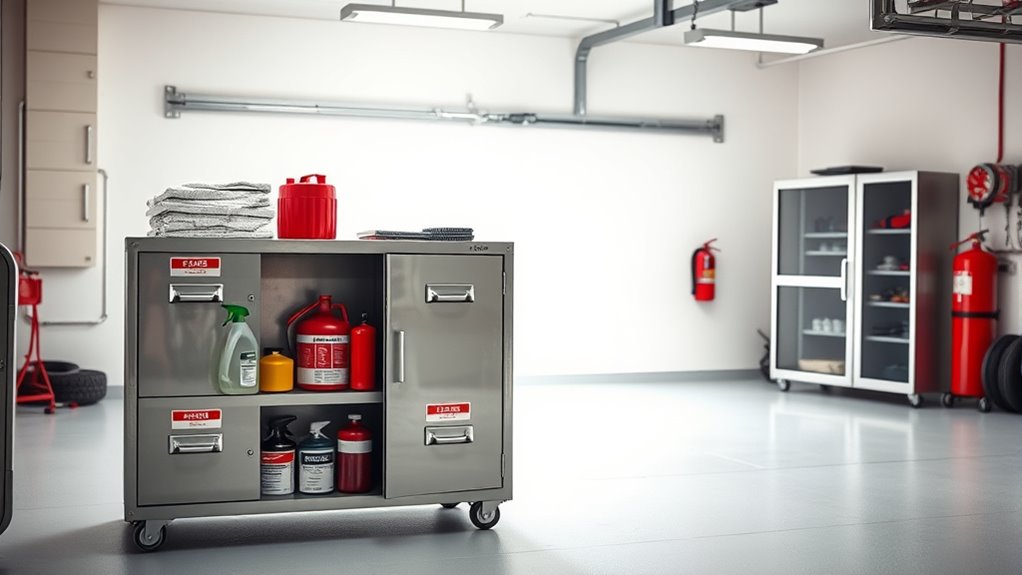
To maintain a fire-resistant garage environment, you should regularly inspect and organize your space to eliminate clutter and potential fuel sources. Keep flammable materials, such as rags, fuels, and solvents, properly stored in approved containers and away from heat sources. Store gasoline and kerosene outside or in locked cabinets, and never keep propane tanks inside. Use metal or safety cans for flammable liquids, ensuring they’re tightly sealed and labeled clearly. Keep hazardous materials on shelves away from appliances, water heaters, and pilot lights, maintaining at least a three-foot clearance from ignition sources. Install and test heat alarms regularly, and avoid overloading electrical outlets. Proper organization and vigilant storage reduce fire risks and help you respond quickly if a fire occurs.
Frequently Asked Questions
What Are the Signs of Spontaneous Combustion in Oily Rags?
You should watch for signs of spontaneous combustion in oily rags, like a sudden, unusual heat or warmth in the container. If the rags feel hot or emit a faint smell of burning, stop handling them immediately. Sometimes, you might notice smoke or a small flame starting. Always store oily rags in airtight containers and dispose of them properly to prevent this danger. Stay vigilant to keep your garage safe.
How Often Should I Inspect My Garage for Fire Hazards?
You should inspect your garage weekly for fire hazards, just like a homeowner who found oily rags stored near a heater, leading to a dangerous fire. Regular checks help you spot clutter, improperly stored fuels, or faulty wiring early. Look for signs of leaks, damaged containers, or heat sources too close to flammables. Staying vigilant minimizes risks, keeping your family safe from preventable fires.
Can I Store Flammable Liquids in the House?
You shouldn’t store flammable liquids in your house. Keep gasoline, solvents, and other hazardous materials outside in approved safety containers and in well-ventilated, secure sheds or outdoor storage areas. Storing these indoors increases the risk of fire from vapors, sparks, or accidental spills. Always follow safety guidelines to prevent accidents, and keep flammable liquids away from heat sources, appliances, and living spaces.
What Are the Legal Requirements for Flammable Storage in My Area?
Are you aware of your local laws for storing flammable materials? Typically, you need to keep fuels, solvents, and oily rags in approved, tightly sealed containers outside your home, preferably in a ventilated shed or locked cabinet. Many areas require a specific distance from heat sources and proper labeling. Check your local fire code or contact your fire department to guarantee compliance and avoid penalties.
How Should I Dispose of Old or Contaminated Flammable Materials?
You should dispose of old or contaminated flammable materials by taking them to a hazardous waste facility. Never pour them down the drain, into the trash, or leave them in open containers. Make certain they are stored in approved, sealed metal containers until you can drop them off. Follow local regulations for hazardous waste disposal to stay safe and prevent environmental contamination.
Conclusion
Did you know that nearly 70% of garage fires start due to improper storage of flammable materials? By following these safety tips—like storing oily rags in airtight containers, keeping fuel away from heat sources, and using proper storage cabinets—you can markedly reduce your risk. Taking these precautions helps create a safer garage environment for you and your family. Stay vigilant, store safely, and prevent fires before they start.