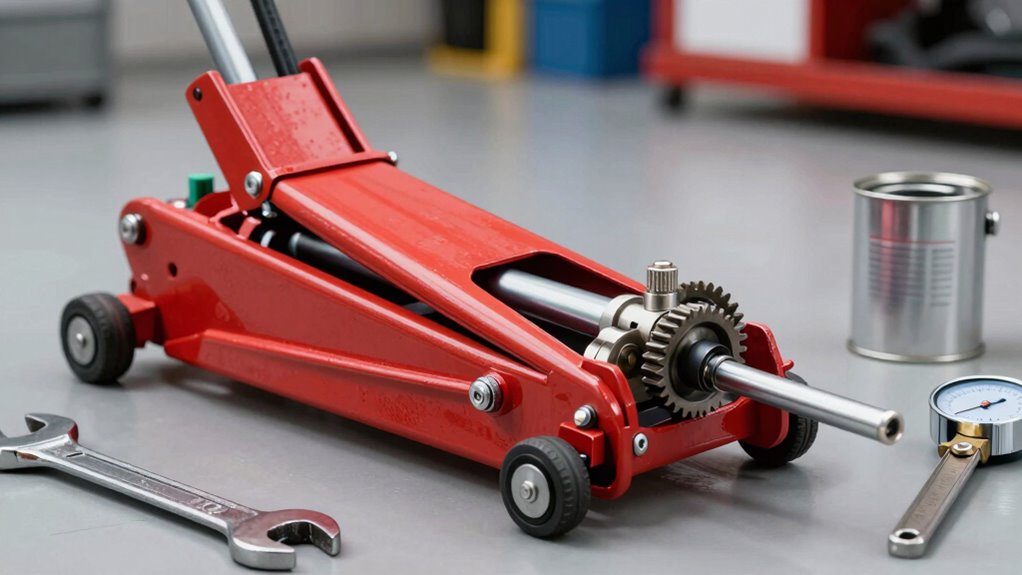

To keep your floor jack in top shape, regularly check and bleed trapped air by loosening the bleed screw and pumping until fluid runs steadily. Refill or replace hydraulic fluid as needed, ensuring it’s clean and at the right level. Inspect hoses, seals, and moving parts for wear, and lubricate regularly. Store it properly in a dry place and perform routine checks on fluid and components. For detailed tips, you’ll find guidance that helps you trust your lift every time.
Key Takeaways
- Regularly inspect and replace hydraulic fluid to prevent contamination and ensure smooth operation.
- Properly bleed air from the hydraulic system by loosening the bleed screw and pumping until fluid flows bubble-free.
- Store the jack on a level surface, lower the hydraulic system, and cover it to prevent corrosion and damage.
- Check for leaks, worn seals, and damaged hoses during routine inspections and address issues promptly.
- Seek professional assistance for internal damage, persistent leaks, or abnormal operation to ensure safety and longevity.
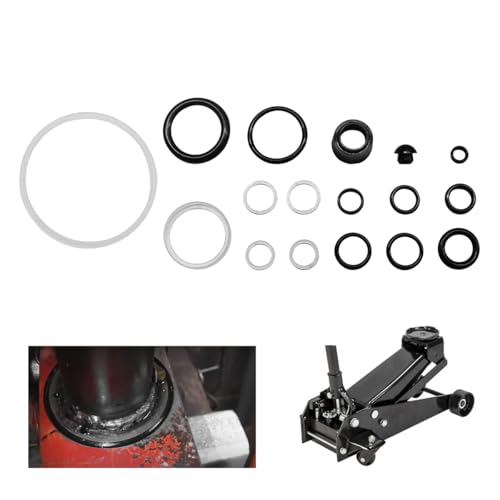
FSTURIOS 17PCS Floor Jack Seal Kit, 3 Ton Horizontal Hydraulic Jack O-Ring Seal with Oil Filler Plug, Complete Repair Set Rubber Sealing Rings Replacement Parts for Floor Jacks
Complete Kit: The kit provides 17 parts, including a safety valve seal ring, an oil plug, a 16-pump…
As an affiliate, we earn on qualifying purchases.
As an affiliate, we earn on qualifying purchases.
Understanding the Bleeding Process to Remove Air Bubbles
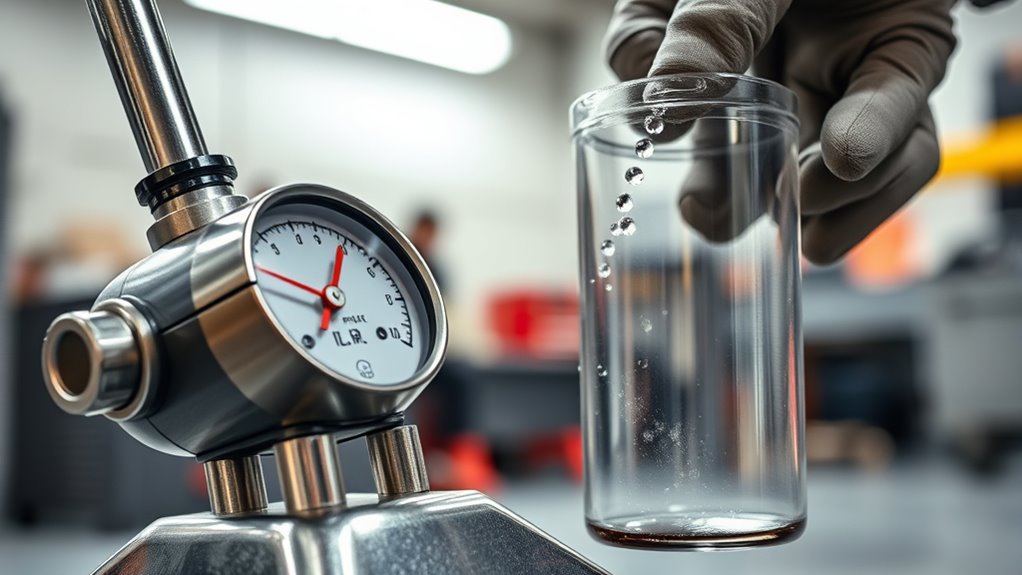
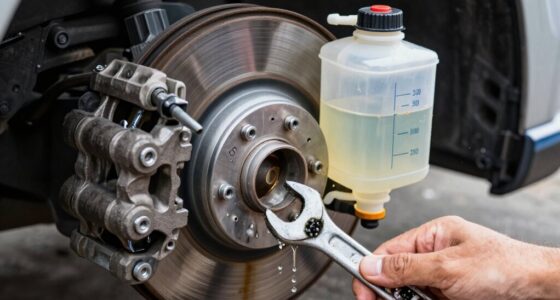
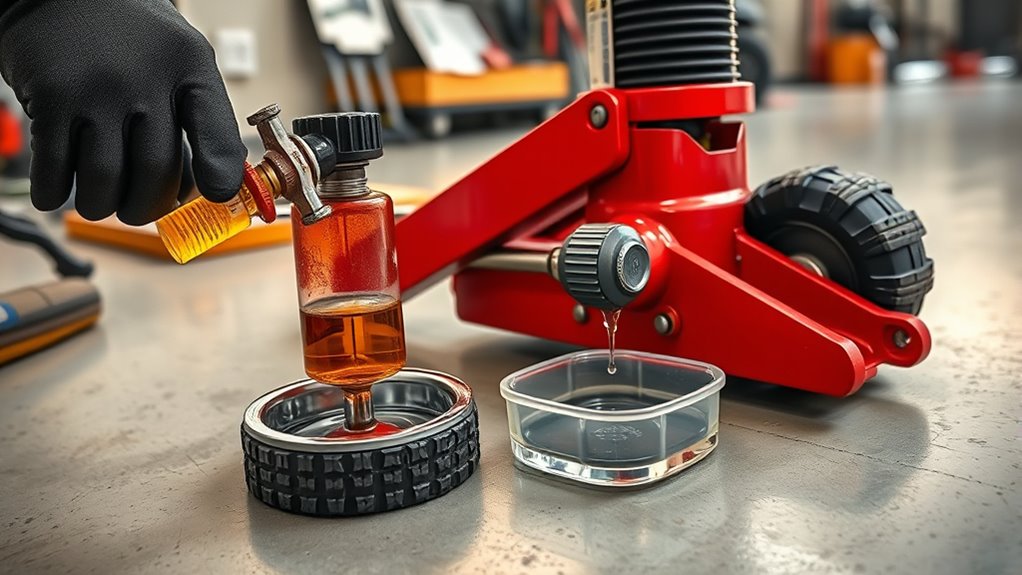
Understanding the bleeding process to remove air bubbles is essential for maintaining your floor jack’s hydraulic performance. Air trapped in the system can cause spongy operation, delayed lifting, or failure to hold a load. To start, loosen the bleed screw slightly to release trapped air. Pump the handle rapidly with the release valve open until hydraulic fluid flows steadily and bubble-free. Once you see a consistent stream of fluid, tighten the bleed screw immediately to seal the system. Collect the expelled fluid to inspect for contamination or persistent bubbles. If air bubbles continue to appear, repeat the process until the fluid runs clear and steady. Proper bleeding ensures your jack operates smoothly, providing reliable lifting power whenever you need it. Regular maintenance checks help prevent issues caused by air and keep your lift functioning effectively, especially by monitoring for hydraulic fluid quality, which is crucial for optimal performance. Additionally, understanding the bleeding process can extend the lifespan of your jack by ensuring the hydraulic system remains free of air pockets. Maintaining clean and properly calibrated hydraulic components further enhances the effectiveness of the bleeding process and overall system reliability. Regularly inspecting and replacing contaminated fluid can also prevent system corrosion and prolong your jack’s service life.

Okiyakusama Hydraulic Vertical Jack Oil Pump Car Repair Tools,Air Bleed Screw Automotive Sturdy Sealing Set Metal Easy to Install, Length 55mm
【Convenient and Efficient】Hydraulic Vertical Cylinder Piston Plunger is suitable for maintaining your jack performance. Is your ideal choice.
As an affiliate, we earn on qualifying purchases.
As an affiliate, we earn on qualifying purchases.
Proper Techniques for Hydraulic Fluid Refill and Replacement

To guarantee your floor jack maintains peak hydraulic performance, proper hydraulic fluid refill and replacement are essential. First, ensure the jack is on a level surface and the release valve is closed. Remove the fill plug or cap, then check the fluid level—add manufacturer-recommended AW32 hydraulic fluid until it reaches the designated mark. If the fluid appears contaminated or dark, drain the old fluid through the drain plug, then refill with fresh fluid. Always use the correct type to prevent damage. After refilling, operate the jack through its full range of motion to circulate the new fluid. Check for leaks or irregularities, and tighten the fill plug securely. Regularly inspect fluid levels and quality during routine maintenance to keep your jack functioning reliably. Proper maintenance helps prevent fluid contamination, which can lead to hydraulic failure. Understanding hydraulic system basics can help you troubleshoot issues effectively. Additionally, consulting the manufacturer’s guidelines can ensure you’re following the proper procedures for your specific jack model. Maintaining the correct fluid level is crucial for optimal performance and safety. Regularly checking for wear and tear on seals and components can also extend the lifespan of your jack.

2-Ton (4400 lbs) Hydraulic Low Profile Trolley Garage Service/Floor Jack with Blow Mold Carrying Storage Case and Universal Tire Tool Kit with Lug Wrench for Home and Workshop Vehicle Maintenance
Heavy-Duty 2-Ton Capacity: This Floor Jack Kit, with its 4,400 lbs lifting capacity, is perfect for lifting cars,…
As an affiliate, we earn on qualifying purchases.
As an affiliate, we earn on qualifying purchases.
Conducting Regular Inspections for Safety and Performance
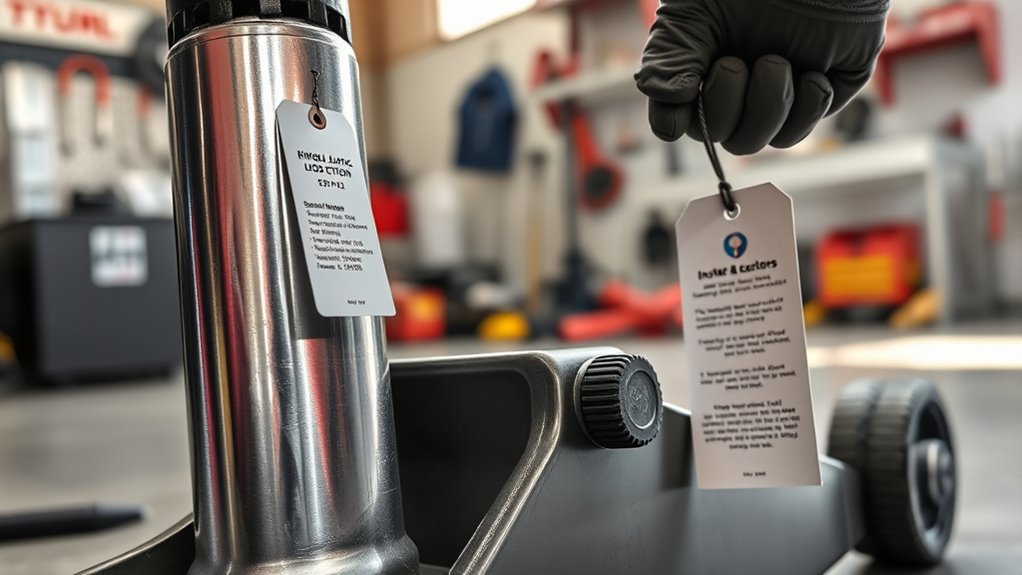
Regular inspections are essential to guarantee your floor jack operates safely and efficiently. You should check for damage, leaks, or wear on hoses, seals, and moving parts. Verify fluid levels and ensure there are no air bubbles or contamination. Inspect wheels, casters, and the release valve for proper function. Also, examine pivot joints and hydraulic hoses for cracks or looseness. Daily visual checks help catch issues early, while monthly thorough reviews ensure long-term performance. Use the table below to guide your inspections:
| Component | What to Look For | Action Needed |
|---|---|---|
| Hydraulic Hoses | Cracks, leaks, looseness | Replace or tighten as needed |
| Seals & O-rings | Wear, cracks, fluid leaks | Replace if damaged |
| Wheels & Casters | Debris, smooth rotation, cracks | Clean or replace if broken |
| Release Valve | Proper operation, leaks | Repair or replace |
| Overall Frame | Rust, dents, stability | Clean, tighten, or repair |
Ensuring all parts are properly maintained can prevent costly repairs and extend the lifespan of your equipment. Proper maintenance also helps prevent unexpected failures, ensuring your safety during use. Additionally, understanding hydraulic systems enhances your ability to troubleshoot and perform effective repairs. Building familiarity with hydraulic principles can further improve your maintenance effectiveness. Regular training on system operation can also lead to better handling and safer use of the equipment.
FSTURIOS 17PCS Floor Jack Seal Kit, 3 Ton Horizontal Hydraulic Jack O-Ring Seal with Oil Filler Plug, Complete Repair Set Rubber Sealing Rings Replacement Parts for Floor Jacks
Complete Kit: The kit provides 17 parts, including a safety valve seal ring, an oil plug, a 16-pump…
As an affiliate, we earn on qualifying purchases.
As an affiliate, we earn on qualifying purchases.
Effective Lubrication Practices for Longevity and Smooth Operation

Choosing the right lubricant is key to keeping your floor jack operating smoothly and lasting longer. You should follow a regular lubrication schedule and target all moving parts, like pivots and joints. Properly maintained lubrication reduces wear and helps your jack perform reliably every time.
Proper Lubricant Selection
Selecting the right lubricant is essential for ensuring your floor jack operates smoothly and lasts longer. You want a high-quality, manufacturer-recommended lubricant suited for hydraulic systems and moving parts. Use grease or oil specifically designed for heavy machinery, like lithium-based grease or AW32 hydraulic fluid. These products resist moisture, prevent corrosion, and reduce wear. Avoid generic or low-grade lubricants that may break down quickly or cause gumming. For pivots, joints, and moving components, apply a grease that stays in place and provides long-lasting protection. When lubricating wheels, casters, or handles, choose a lubricant that ensures smooth movement without attracting dirt. Proper selection of lubricant minimizes friction, prevents rust, and keeps your floor jack functioning reliably for years. Additionally, selecting appropriate lubricants can significantly extend the lifespan of your equipment by preventing premature wear and corrosion. Regularly checking and maintaining proper lubrication practices helps prevent equipment failure, ensuring consistent performance and safety. Using the correct lubricant also helps maintain optimal hydraulic pressure, which is vital for safe and effective operation. Understanding the types of lubricants suitable for different parts of the floor jack can further enhance maintenance effectiveness.
Regular Lubrication Schedule
Maintaining a consistent lubrication schedule keeps your floor jack operating smoothly and extends its lifespan. Regular lubrication reduces friction, prevents wear, and guarantees moving parts function properly. To keep your jack in top shape, focus on key components.
- Grease hinge pins, U-joints, and release valves monthly.
- Apply high-quality lubricant to the pump assembly and pivot joints regularly.
- Lubricate wheels, axles, and casters to maintain easy maneuverability.
- Use grease fittings where applicable, cleaning excess after application.
- Check and re-lubricate seals and O-rings to prevent drying and cracking.
Sticking to this schedule minimizes rust and corrosion, keeps parts moving freely, and reduces unexpected failures. Make lubrication a routine part of your maintenance to assure your floor jack remains reliable and smooth-operating over time.
Targeted Moving Parts
Proper lubrication of targeted moving parts is essential for ensuring your floor jack operates smoothly and lasts longer. Focus on lubricating pivots, joints, and pump components regularly. Apply high-quality grease to hinge pins, U-joints, and valve stems to prevent wear and reduce friction. Lubricate wheels, axles, and casters to maintain easy maneuverability and prevent sticking. Use grease fittings where available and wipe away excess to avoid dirt accumulation. Pay special attention to the ram assembly and release valve, ensuring they move freely without resistance. Regular lubrication minimizes metal-on-metal contact, decreases the risk of parts seizing, and keeps the jack operating smoothly under load. Incorporate these practices into your routine to extend your jack’s lifespan and maintain reliable performance. Free Floating
Cleaning and Maintaining Exterior Components
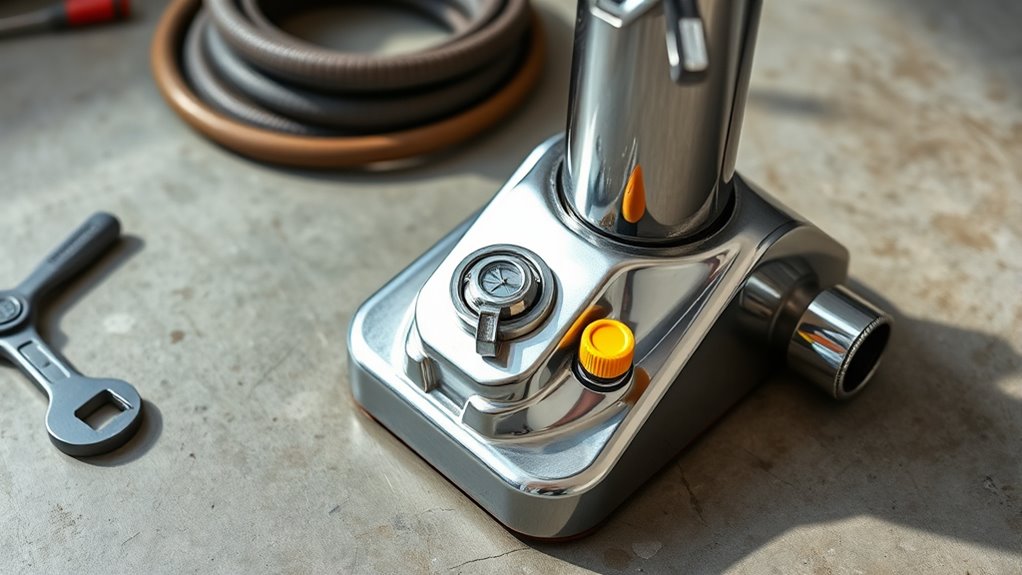
Regularly cleaning the exterior components of your floor jack helps prevent dirt, grease, and debris from affecting its performance. Keeping surfaces clean guarantees smooth operation and extends the tool’s lifespan. Use a damp cloth to wipe down the body and handle, removing accumulated grime. For stubborn dirt, apply a mild cleaner or degreaser, then wipe clean. Use a soft brush or compressed air to clean crevices, joints, and release valves. Check wheels and casters for debris like stones or metal shavings, removing them promptly. Keep the oil fill plug, bleed valve, and air vents free from dust and dirt. Periodically spray WD-40 on pivot points for smooth movement. Regular cleaning maintains functionality and prevents corrosion, ensuring your floor jack stays reliable for years to come. Additionally, inspecting and maintaining the hydraulic system periodically helps prevent leaks and maintains proper pressure, ensuring optimal performance. Be sure to check for corrosion prevention techniques that can further extend your jack’s lifespan. Incorporating proper lubrication routines can also help reduce wear on moving parts and enhance overall durability, especially when combined with regular visual inspections to catch early signs of damage.
Establishing Service Intervals for Optimal Functionality
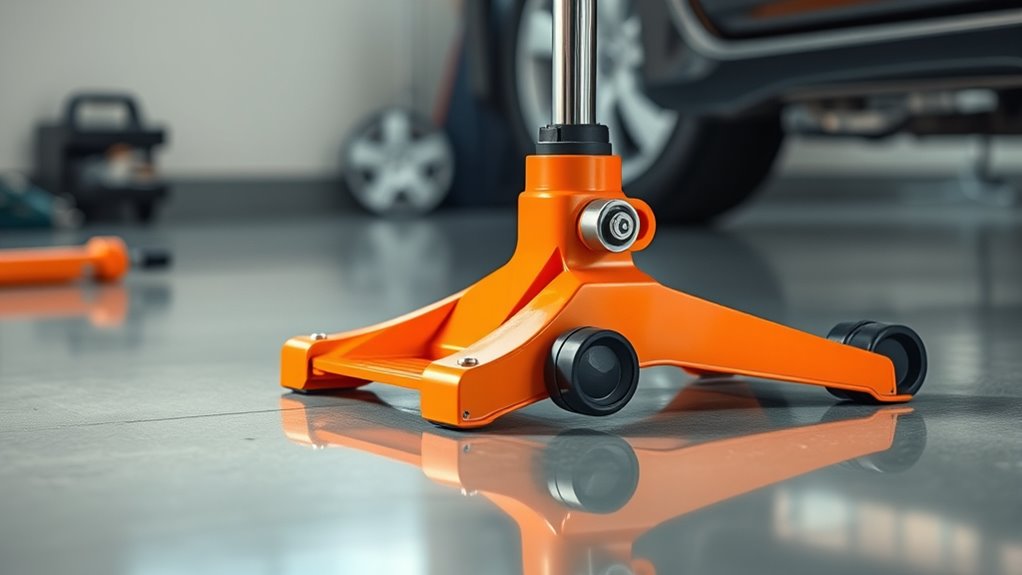
Setting a regular maintenance schedule helps keep your floor jack in top shape and prevents unexpected failures. Follow inspection guidelines based on how often you use the jack to catch issues early. Proper storage in a dry, level space also prolongs its lifespan and ensures reliable performance.
Regular Maintenance Schedule
Establishing an effective maintenance schedule for your floor jack guarantees it stays in top condition and performs reliably when needed. Regular upkeep prevents unexpected failures and extends its lifespan. You should perform basic tasks at set intervals to keep everything functioning smoothly.
- Check hydraulic fluid levels and refill with manufacturer-approved fluid.
- Inspect hoses, seals, and moving parts for wear, leaks, or damage.
- Lubricate pivot points, joints, and wheels monthly to ensure smooth operation.
- Clean exterior surfaces and remove debris from wheels and axles.
- Test the release valve and hydraulic system for proper pressure and responsiveness.
Inspection Frequency Guidelines
How often should you inspect your floor jack to guarantee it functions properly? You should perform daily visual checks if you use it frequently, looking for leaks, damage, or wear on hoses, seals, and moving parts. For regular users, a more thorough inspection is recommended every month, including checking fluid levels, air bubbles, and hydraulic integrity. At minimum, schedule a detailed examination every 6 to 12 months, especially if your jack sees heavy use. During these intervals, verify the condition of wheels, handles, release valves, and pivot joints, and perform necessary lubrication or repairs. If you notice any issues between scheduled inspections, address them immediately. Consistent inspections help prevent failures, extend your jack’s lifespan, and ensure safe, reliable operation.
Proper Storage Practices
Proper storage practices help maintain your floor jack’s performance and extend its lifespan. Store it in a dry, clean area, away from moisture and corrosive elements, to prevent rust and fluid degradation. Always keep it on a level surface during storage to avoid pressure buildup or leaks. Before storing, ensure the hydraulic system is fully lowered, and the fluid is at the correct level to prevent seal drying. Cover the jack with a protective cover or tarp to shield it from dust and debris. Regularly inspect stored equipment for signs of corrosion or leaks, and perform routine maintenance as needed to keep everything in good working order.
- Store in a dry, covered area
- Keep on a level surface
- Lower the hydraulic system before storage
- Cover to prevent dust accumulation
- Inspect periodically for corrosion
Safe Storage and Handling to Prevent Damage and Corrosion
To prevent damage and corrosion, you should store your floor jack in a dry, covered area away from moisture, dirt, and extreme temperatures. Make certain it sits on a flat, stable surface to avoid unnecessary strain on components. Before storing, wipe off any dirt, grease, or fluid spills to prevent buildup that can lead to corrosion. Keep the hydraulic system clean and dry; avoid leaving fluid residues exposed to air. Cover the jack with a breathable tarp or cloth to shield it from dust and moisture while allowing air circulation. Regularly inspect storage conditions, especially after heavy use or exposure to harsh elements. Proper handling includes lifting the jack carefully, avoiding dropping it, and not forcing components. This approach prolongs your jack’s lifespan and maintains its safe, reliable operation.
Troubleshooting Common Issues With Floor Jacks
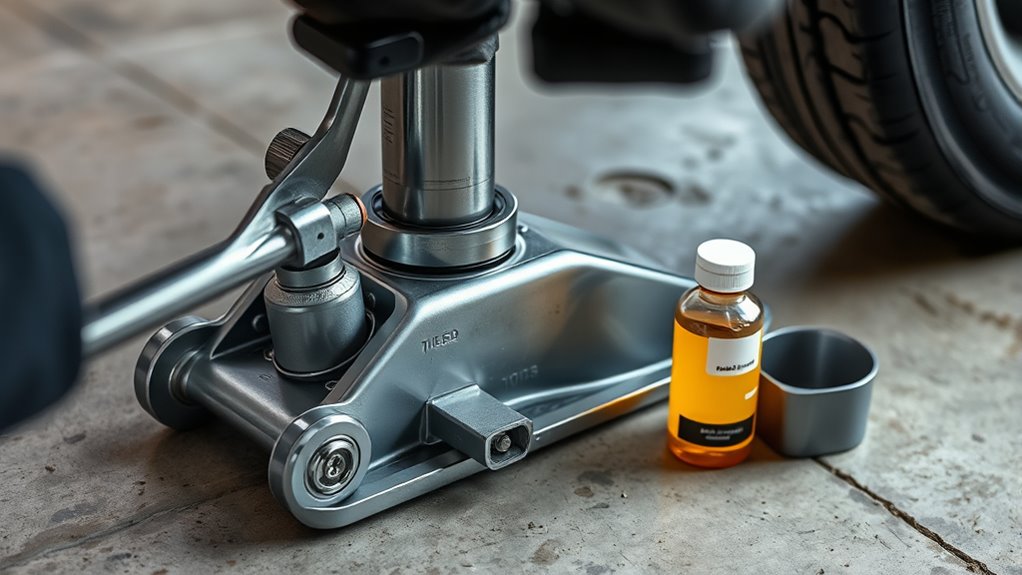
Many common issues with floor jacks stem from hydraulic leaks, air trapped in the system, or worn components, which can cause uneven lifting or failure to hold a load. To troubleshoot, start by inspecting for fluid leaks around seals, hoses, and the cylinder. If the jack doesn’t lift smoothly, check for trapped air by bleeding the system. Worn or damaged seals might need replacement; look for signs of fluid seepage. If the handle feels loose or the jack slips under load, verify that all fittings are tight and components are in good condition. Also, ensure the hydraulic fluid is at the proper level and free of contamination. Regularly maintaining and inspecting your jack helps prevent issues and prolongs its lifespan.
- Check for leaks and damaged seals
- Bleed trapped air regularly
- Tighten loose fittings and bolts
- Inspect hydraulic fluid levels and quality
- Replace worn components promptly
When to Seek Professional Assistance for Your Lift
While regular maintenance can resolve many issues, certain situations require professional assistance to guarantee safety and proper operation. If your floor jack is leaking hydraulic fluid despite tightening fittings, or if you notice persistent air bubbles after bleeding, consult an expert. Unusual noises, difficulty lifting loads, or uneven operation also indicate a problem beyond routine troubleshooting. Cracks, corrosion, or damage to hoses, seals, or structural components should never be ignored. If you experience fluid contamination or suspect internal damage, avoid attempting repairs yourself. Additionally, if your jack fails a load test or functions unpredictably, professional inspection is essential. Trusting trained technicians ensures your lift remains safe, reliable, and compliant with safety standards. When in doubt, seek expert help to prevent accidents and prolong your equipment’s lifespan.
Frequently Asked Questions
How Can I Tell if My Hydraulic System Has Air Trapped Inside?
You can tell if your hydraulic system has trapped air by observing the lifting process. If the jack rises unevenly, slowly, or makes gurgling noises, air might be inside. Also, if fluid leaks or bubbles appear when you pump, trapped air could be present. To fix this, loosen the bleed screw, pump rapidly until steady fluid flows, then tighten the screw and check if the lift operates smoothly without noise.
What Signs Indicate Hydraulic Fluid Contamination or Low Levels?
You’ll notice hydraulic fluid contamination if it appears cloudy, dark, or has particles and debris. Bubbles or foamy fluid during operation also indicate issues. Low fluid levels cause the jack to lift less or not at all, and you might hear unusual noises or experience sluggish movement. Regularly check the fluid level and condition, topping up with manufacturer-approved fluid to guarantee peak performance and prevent damage.
How Often Should I Replace Seals and O-Rings During Maintenance?
You should replace seals and o-rings during maintenance whenever you notice signs of wear, cracking, or leaks. Ideally, inspect them during your regular service intervals, which are every 6-12 months depending on usage. If you detect any damage or fluid seepage, replace them immediately to prevent further issues. Regular inspections help catch problems early, ensuring your hydraulic jack stays reliable and safe to use over time.
What Are the Best Lubricants for Different Moving Parts of a Floor Jack?
You should use high-quality lubricants designed for each moving part of your floor jack. For pivots, joints, and pump assemblies, apply a good-grade grease or lithium-based lubricant. For wheels, axles, and casters, use a light machine oil or silicone spray to guarantee smooth movement. Regularly lubricate these parts monthly, and always clean excess lubricant to prevent dirt buildup, keeping your jack operating efficiently and prolonging its lifespan.
When Is It Necessary to Perform a Full Load Test on My Lift?
You should perform a full load test on your lift at least once a year or after any major repair or maintenance. This test guarantees the jack can safely handle its rated weight. Before testing, inspect for leaks, worn parts, and proper fluid levels. Always perform the test on a level surface, follow safety guidelines, and observe the jack’s performance to confirm its reliability and safety.
Conclusion
Think of your floor jack as a trusty steed—regular care keeps it riding smoothly. By bleeding out air bubbles, maintaining fluids, and performing inspections, you’re ensuring it’s always ready for the next adventure. When you treat your jack like a loyal companion, it’ll serve you well, lifting you up when you need it most. Keep up with maintenance, and your lift will be a steadfast partner on every journey.