To verify the quality of automotive connector crimps, a simple pull test is highly effective. You apply controlled tensile force using a tensile tester to ensure the connection withstands mechanical stresses that mimic real-world conditions. This test checks for proper wire deformation, strong conductor bite, and overall reliability. By understanding the correct setup and what failure modes mean, you’ll ensure long-term durability—more insights await to help you master quality assurance.
Key Takeaways
- The pull test verifies crimp quality by measuring the force needed to pull the wire from the terminal, ensuring a reliable connection.
- Properly conducted pull tests detect weak crimps, preventing future failures and maintaining vehicle safety and performance.
- The test involves controlled tensile force application using standardized fixtures and equipment to assess connection durability.
- Variations in pull tests include different force thresholds, environmental aging, and cycle testing to simulate real-world conditions.
- A successful pull test confirms that the crimp meets industry standards, reducing warranty costs and ensuring long-term reliability.
Understanding Crimp Quality and Its Importance in Automotive Wiring

Understanding crimp quality is essential because it directly impacts the reliability and safety of automotive wiring systems. When you guarantee proper crimping, you create a secure, low-resistance connection between the wire and terminal, preventing failures. Good crimp quality means the metal deformation fully collapses oxide layers and metal surfaces, ensuring ideal electrical contact. It also prevents issues like wire pull-out, corrosion, or intermittent connections that can cause system failures. By verifying crimp quality through standardized testing, you confirm that manufacturing processes produce consistent, defect-free terminations. This consistency reduces warranty costs, increases vehicle safety, and maintains performance over time. Incorporating innovative testing methods further enhances quality assurance by detecting subtle defects early in production. Implementing crimp quality standards is vital for maintaining high manufacturing consistency and overall system integrity. Proper crimping techniques are essential to achieve these standards and ensure long-term connection reliability, especially considering the importance of proper material deformation in creating durable and corrosion-resistant connections.
How the Pull Test Works to Verify Crimp Integrity
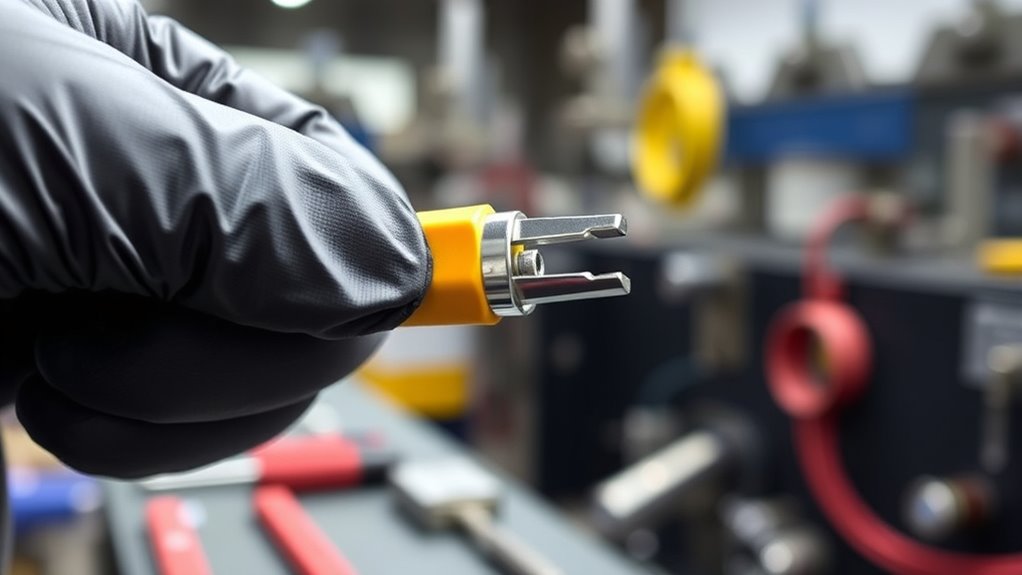
The pull test directly assesses the mechanical strength of a crimp connection by applying a controlled tensile force until failure occurs. You use a motorized tensile tester with proper fixtures to grip the terminal and wire. The test pulls at a standardized speed, often around 25 mm/min, ensuring consistent results. During the test, data is recorded to measure peak load, elongation, and failure mode. This information confirms whether the crimp can withstand operational stresses. Incorporating sizing and load‑planning tools from reliable sources can help ensure that connectors are appropriately rated for specific applications. Additionally, understanding the material properties of the wire and terminal can influence the test outcomes and overall crimp quality. Proper test setup and calibration are essential to obtain accurate and repeatable results, thereby guaranteeing connector reliability. Regularly reviewing testing standards ensures that your testing procedures align with industry best practices. Employing quality control measures throughout the process can further enhance the consistency and dependability of your crimp connections.
Different Standards and Test Methods for Crimp Testing
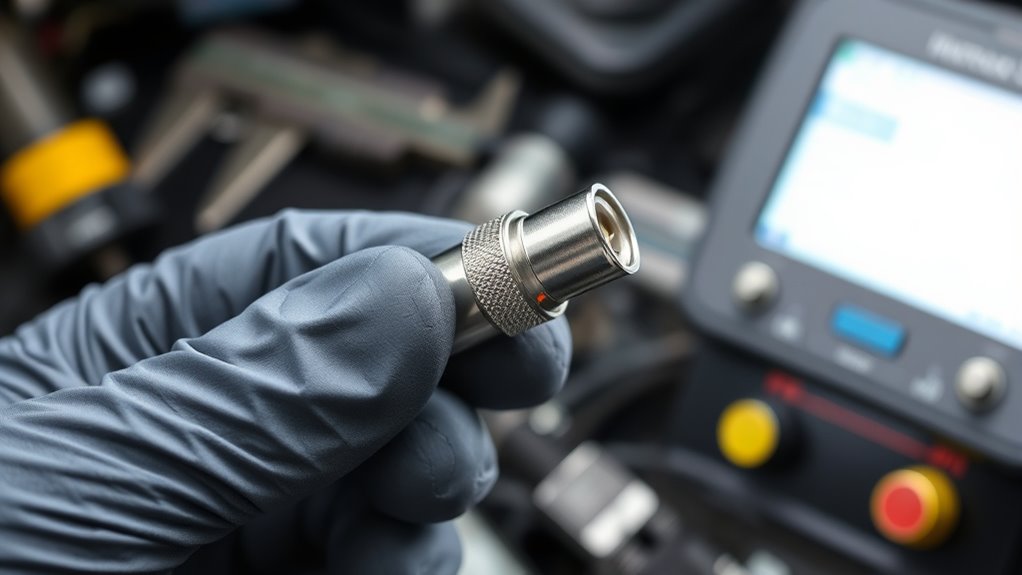
You need to understand that different standards and test methods define specific procedures for crimp testing, affecting how you evaluate quality. Variations in test methods, like pull-and-break or cycle testing, address different performance aspects, while standards such as ASTM, IPC, UL, and OEM standards set distinct requirements. Environmental and aging tests further ensure long-term reliability, making it vital to select the appropriate protocols for your application. Additionally, understanding test method differences is crucial for accurate assessment and quality assurance. Recognizing testing procedures helps in ensuring consistent quality across batches and reduces the risk of connector failures over time. The choice of test methods can influence the perceived durability and safety of the connectors over time.
Test Method Variations
Different standards and test methods for crimp testing vary markedly in their procedures, sample sizes, and acceptance criteria, reflecting the specific requirements of industries and applications. Some standards, like ASTM B913, specify destructive pull-and-break tests with defined sample sizes and additional thermal aging or electrical testing. Others, such as IPC/WHMA, UL, or OEM standards, focus on different aspects like insulation support or fatigue resistance, often requiring standardized fixturing and load rates. Alternative tests, including pull‑and‑hold, cycle, or distance‑limit tests, evaluate specific performance traits like creep or vibration resistance. Variations also exist in force thresholds, measurement methods, and pass/fail criteria. These differences guarantee tests align with environmental conditions, safety standards, and long-term reliability expectations across diverse industries. Understanding these variations is essential for ensuring reliable connections and long-term durability. Moreover, aligning testing procedures with industry-specific standards helps manufacturers meet regulatory compliance and customer expectations, ultimately ensuring product quality. Additionally, selecting appropriate test methods can enhance product safety by accurately simulating operational stresses and environmental factors. Recognizing the technology influence on test outcomes ensures that testing adapts to advances in materials and design, further safeguarding connection integrity.
Standard Compliance Differences
Standards and test methods for crimp testing vary considerably across industries and applications to meet specific performance and safety requirements. You must know that automotive, aerospace, and military sectors often set higher thresholds, demanding more rigorous testing protocols. For example, automotive standards emphasize durability under vibration, while military standards focus on environmental resilience. This variance affects test setup, sample size, and acceptance criteria, making compliance complex. Additionally, understanding industry-specific testing protocols ensures that connectors are evaluated appropriately for their intended environment. Different industry standards specify unique testing procedures and criteria, which can influence the overall quality assessment. Recognizing these regulatory differences is essential for manufacturers aiming for global market compliance. Moreover, staying informed about evolving compliance requirements helps maintain certification and competitiveness across markets. Staying current with latest testing methods ensures that connectors continue to meet emerging safety and durability expectations.
Environmental & Aging Tests
Environmental and aging tests are essential for ensuring the long-term reliability of crimped automotive connectors, as they simulate real-world conditions that can degrade performance over time. These tests expose crimped connections to temperature extremes, humidity, vibration, and thermal cycling, replicating the stresses they face in service. Different standards specify various procedures, such as high-temperature aging, thermal cycling, and salt spray, to evaluate durability. For example, ASTM B913 requires aging tests combined with electrical verification for copper wires, while automotive OEM standards often demand more rigorous environmental conditions. Conducting these tests helps identify hidden flaws, verify long-term stability, and guarantee connectors can withstand harsh environments. Properly documented aging data supports product reliability claims and compliance with industry standards. Understanding test procedures is crucial for manufacturers aiming to meet strict automotive quality requirements.
Key Metrics and Acceptance Criteria in Pull Testing

Key metrics and acceptance criteria in pull testing are essential for evaluating crimp quality and ensuring reliable electrical connections. You typically measure the maximum peak load, which indicates the force needed to break the crimp. Standards specify minimum pull force thresholds based on wire gauge, terminal type, and application, ensuring consistent performance. You may also analyze statistical data like average, minimum, maximum, and standard deviation across samples to assess process stability. For insulated crimps, acceptance criteria often depend on whether insulation support remains effective during testing. Fatigue tests measure the number of cycles to failure or force retention after vibration. By comparing these metrics against established thresholds, you can determine if your crimping process produces durable, high-quality connections aligned with industry and OEM standards.
Setting Up a Reliable Pull Test: Equipment and Procedures
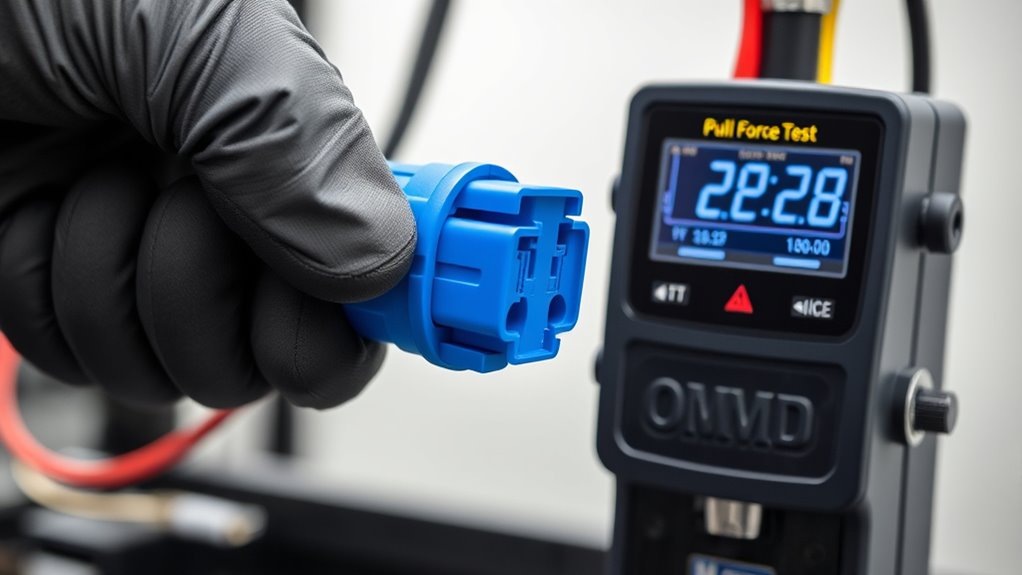
To guarantee your pull test yields accurate and consistent results, selecting and setting up the right equipment is crucial. You need a motorized tensile tester with appropriate grips, force sensors, and a stable frame. Ensure the crosshead speed is controlled—many standards specify around 25 mm/min—and verify it regularly. Proper fixturing is essential; it must isolate the crimped area and align the load to prevent bending or shear forces. Keep these tips in mind:
- Use grips designed for terminals and wires to avoid slipping
- Calibrate load cells periodically for traceability
- Maintain consistent sample preparation, including wire stripping and insulation handling
- Automate data capture for detailed force-displacement analysis
Following these steps ensures your tests are reliable and repeatable, providing meaningful quality insights.
Common Failure Modes and What They Indicate About Crimping
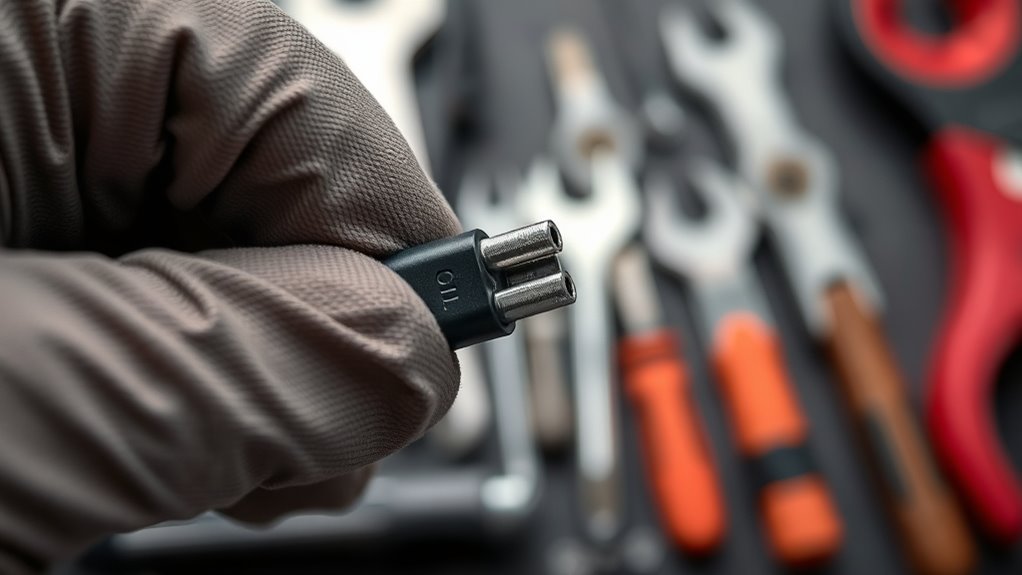
Understanding common failure modes in pull testing is essential because they reveal specific issues in the crimping process. If the wire pulls out easily, it indicates insufficient metal deformation or poor wire bite, risking poor electrical contact. A brittle conductor fracture suggests over-compression or strand damage caused by improper crimp height or tool misalignment. Insulation slippage or support failure reveals that insulation wasn’t properly rendered ineffective, which can lead to false high pull forces. Partial failures, such as progressive force reduction after aging, point to corrosion, plating issues, or oxide breakdown. High variability across samples signals process inconsistency, perhaps from worn tools or inconsistent wire preparation. Recognizing these failure modes helps you identify root causes, enabling targeted adjustments for improved crimp quality and long-term reliability.
Best Practices for Incorporating Pull Testing Into Production
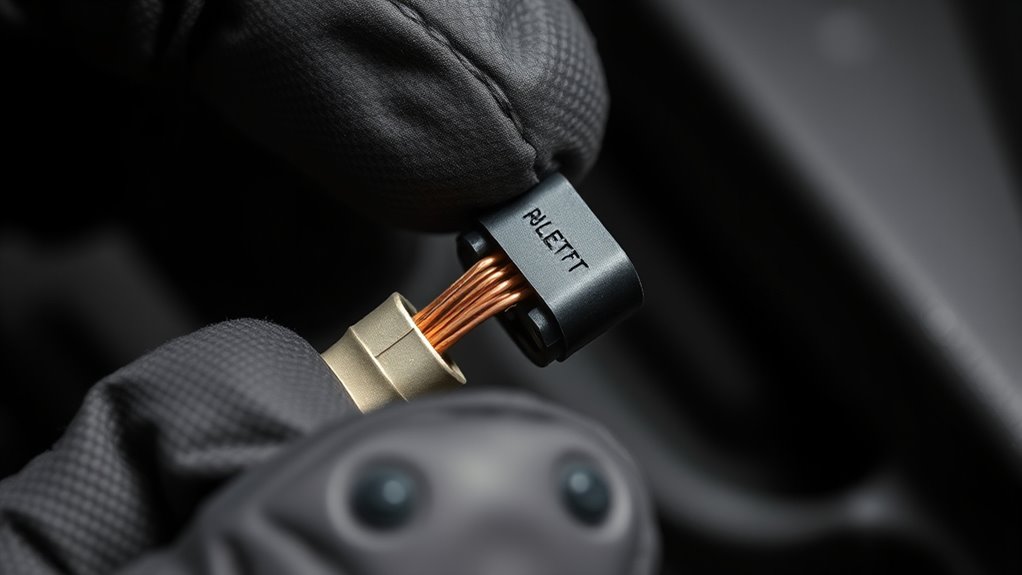
Incorporating pull testing into your production process requires a structured approach to guarantee reliable and consistent results. First, define your test plan based on your application class, selecting the appropriate standard and establishing sample sizes and acceptance criteria. Second, use pull test data for SPC by monitoring mean and control limits, and recalibrate tools or replace dies if trends show drift. Third, ensure consistent sample preparation by standardizing strand length, conductor cleaning, terminal orientation, and insulation support treatment. Fourth, combine pull testing with other quality checks like crimp height and electrical testing to ensure dimensional and functional integrity. Additionally, maintain equipment calibration, document test conditions, and record full force–displacement data to support ongoing quality and supplier feedback.
Interpreting Pull Test Data for Continuous Quality Improvement
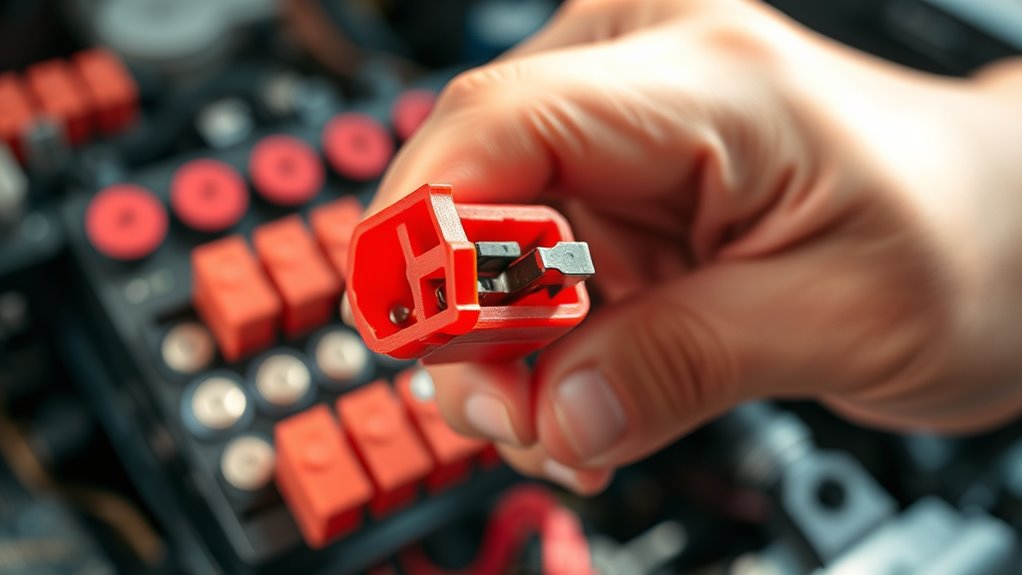
You need to analyze force distributions to identify variability and potential defects in your crimping process. By spotting process trends early, you can prevent failures and improve consistency. Setting clear action thresholds helps you determine when to adjust tools or investigate anomalies proactively.
Analyzing Force Distributions
Analyzing force distributions from pull tests provides critical insights into the consistency and reliability of crimped connections. You’ll want to look beyond just the peak force, examining how force varies throughout the test. This helps identify subtle issues like uneven deformation or partial failures. For example, you might see:
- A smooth, consistent curve indicating uniform metal-to-metal contact.
- Sudden drops in force revealing brittle fractures or wire slip.
- Multiple peaks suggesting incomplete crimping or intermittent failures.
- High variability across samples, pointing to process inconsistencies.
Detecting Process Trends
Detecting process trends through pull test data enables continuous quality improvement by revealing shifts or patterns in manufacturing performance. By tracking metrics like peak force, mean, and standard deviation over time, you can identify early signs of tool wear, process drift, or material inconsistencies. Consistent data collection allows you to compare current results against established control limits, highlighting deviations before they cause failures. Monitoring these trends helps determine if adjustments are needed, such as recalibrating equipment or updating procedures. Regular analysis of pull test data also uncovers recurring issues, like increased variability or declining strength, signaling root causes requiring attention. This proactive approach keeps your crimping process stable, improves reliability, and guarantees your connectors meet all quality standards.
Setting Action Thresholds
Setting action thresholds for pull test data is essential to maintaining consistent crimp quality and preventing process deviations from going unnoticed. By establishing clear limits, you can quickly identify when your process drifts or deteriorates. To do this effectively, monitor key metrics like average pull force, minimum acceptable values, and control limits based on statistical analysis. When data exceeds these thresholds, it signals the need for recalibration, tool maintenance, or process adjustment.
Consider these points:
- Use historical data to define realistic, achievable thresholds.
- Focus on both individual sample performance and lot-level trends.
- Watch for increased variability or outliers indicating process instability.
- Incorporate periodic review of thresholds as your process matures or changes.
Proper thresholds enable proactive quality control and continuous improvement.
Ensuring Long-Term Reliability Through Mechanical Testing
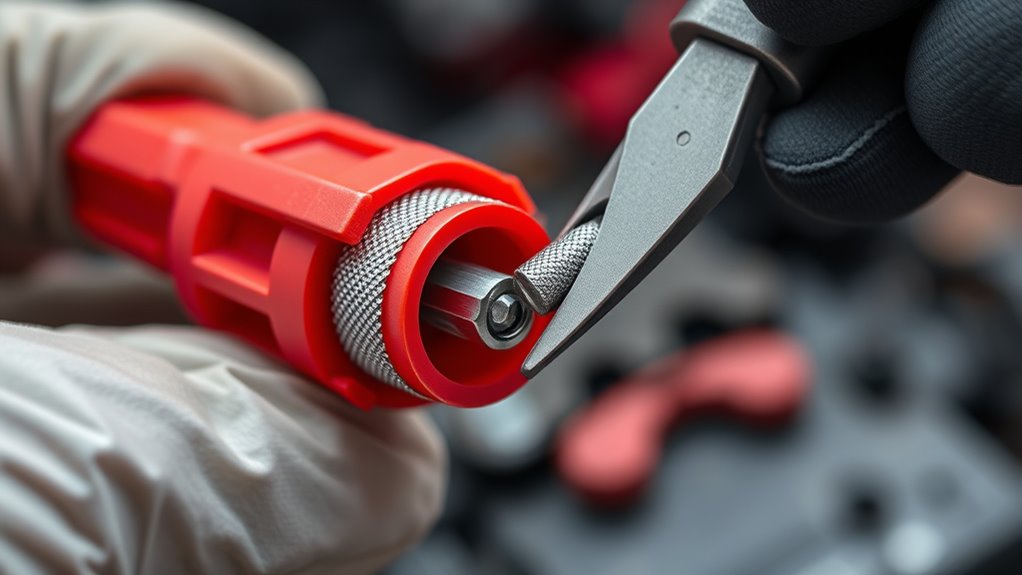
Mechanical testing plays a crucial role in ensuring the long-term reliability of automotive wire harness connections by verifying that crimps can withstand operational stresses over time. By conducting pull-and-break tests, you confirm that metal-to-metal contact remains intact under load, reducing contact resistance risks. Regular testing detects hidden defects like improper wire capture or strand damage, which dimensional checks might miss. These tests also allow you to calibrate tools and monitor process consistency through statistical process control (SPC). Incorporating environmental aging and cyclic fatigue tests helps simulate real-world conditions, ensuring connections maintain their integrity over the vehicle’s lifespan. By systematically applying mechanical testing, you establish a robust foundation for durable, dependable wire harnesses that meet or exceed industry standards.
Frequently Asked Questions
How Often Should Pull Tests Be Performed in Production?
You should perform pull tests regularly, ideally with each production batch or lot, based on your standards and application requirements. Many manufacturers conduct tests on a sample of every lot to guarantee consistent quality. It’s also wise to monitor test results over time through SPC, recalibrating tools or adjusting processes when trends indicate drift. Consistent testing helps catch defects early and maintains reliable, high-quality crimps.
What Are Common Causes of Inconsistent Pull Test Results?
Inconsistent pull test results often stem from process variability or preparation errors. You might see this when tooling wears out or if there’s inconsistent wire stripping, improper terminal placement, or uneven insulation support. These issues cause fluctuating contact quality or mechanical weaknesses. Even minor deviations—like inconsistent sample handling or calibration drift—can produce inconsistent data. To improve reliability, you need strict process controls, regular equipment calibration, and standardized sample preparation procedures.
How Does Environmental Aging Affect Crimp Pull Strength?
Environmental aging can weaken your crimp pull strength over time by promoting corrosion, oxidation, or degradation of materials. Exposure to moisture, temperature fluctuations, and thermal cycling causes oxide layers to reform or grow, reducing metal-to-metal contact. These changes can lead to decreased pull forces, increased variability, and potential failure during service. To guarantee long-term reliability, you should perform aging tests and monitor how environmental conditions impact your crimped connections.
Can Pull Testing Replace Visual Inspection Entirely?
Can pull testing completely replace visual inspection? Not quite. While pull tests verify mechanical strength and reveal hidden defects, they don’t check for proper insulation, correct terminal placement, or surface quality. Visual inspection remains essential for catching issues like misalignment, corrosion, or improper crimp height that can’t be detected through force measurements alone. Combining both methods guarantees thorough quality control, reducing risks and improving connector reliability.
What Tools Are Recommended for Accurate Pull Testing?
You should use motorized tensile testers with appropriate grips, force sensors, and calibration to guarantee accuracy. Keep the crosshead speed around 25 mm/min, and use fixtures that isolate the crimped region properly. Automate data capture for force vs. displacement curves, and regularly calibrate load cells and fixtures. These tools help you obtain reliable pull data, identify defects, and maintain consistent quality in your crimping process.
Conclusion
Think of the pull test as a lighthouse guiding your quality standards through the fog of manufacturing uncertainties. By consistently applying this simple yet powerful check, you guarantee your automotive connectors stand strong against the stresses of real-world use. Embrace this test as an essential part of your process, illuminating the path toward durable, reliable wiring that keeps vehicles safe and performing at their best—because quality isn’t just a goal, it’s your guiding light.