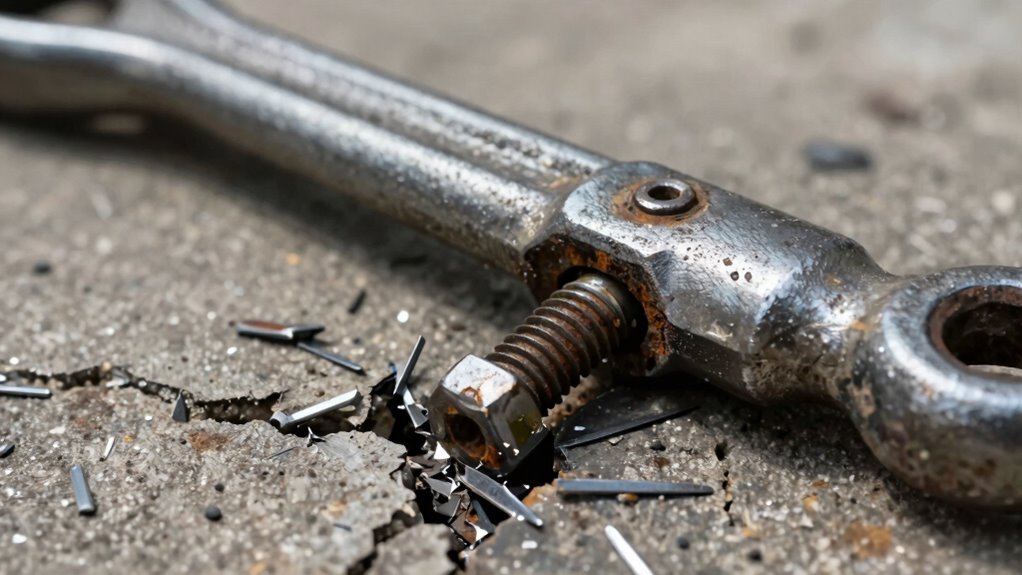
Using a cheater bar to gain extra leverage can dramatically increase your risk of breaking bolts or injuring yourself. Overextending with too much force might snap fasteners, causing flying debris or damage. Applying excessive leverage can also lead to slips, loss of control, or even broken bones if the tool suddenly fails. To stay safe, learn the proper limits and techniques. If you want to avoid accidents and better understand how to use leverage safely, keep exploring these important tips.
Key Takeaways
- Excessive leverage from a cheater bar can strip or break bolts, leading to costly repairs or project delays.
- Overuse increases the risk of sudden tool failure, which can cause injuries from flying debris or tool recoil.
- Applying too much force may cause the fastener to snap or shear, damaging equipment and posing safety hazards.
- Improper handling or compromised tools can lead to loss of control, risking falls or injuries during heavy-duty work.
- Relying heavily on a cheater bar without proper technique can result in muscle strains, fractures, or other physical injuries.
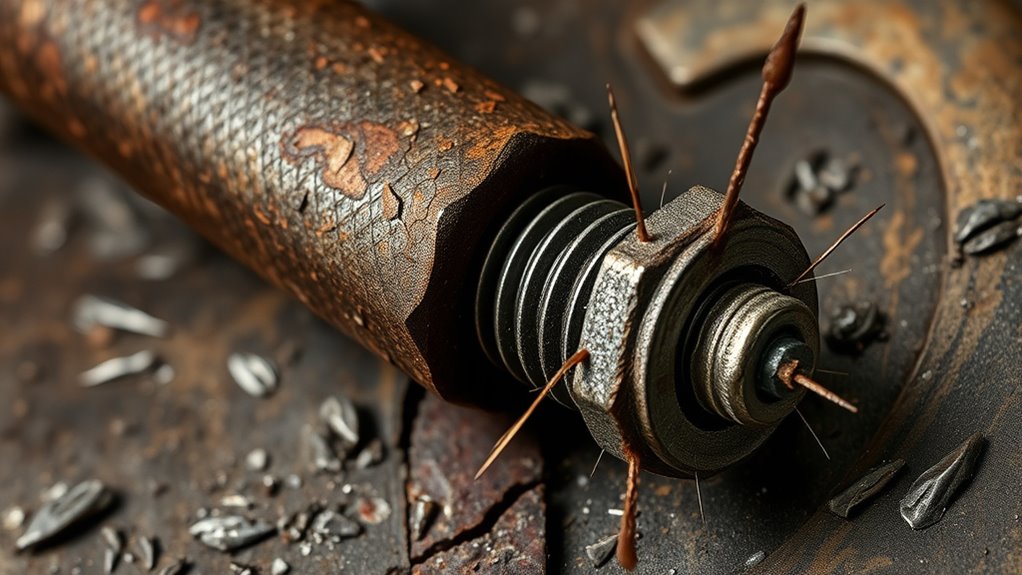
Using a cheater bar might seem like a quick fix for stubborn bolts or tight fittings, but it can be dangerous if you’re not careful. When you rely on extra leverage to loosen or tighten fasteners, you’re increasing the risk of accidents and injuries. It’s vital to prioritize safety precautions and understand proper tool use to avoid mishaps. A cheater bar is fundamentally a pipe or tube slipped over a wrench or breaker bar to extend leverage, but this added length amplifies the force you exert. Without proper technique, you could easily slip, lose control, or apply excessive torque that damages the fastener, the tool, or worse, your body.
One of the most important safety precautions is to always assess the situation before applying brute force. Confirm that the fastener is properly aligned and that you have a firm grip on the tool. Using the correct size and type of wrench or breaker bar is vital; mismatched or worn tools can break under pressure, potentially causing injury or damage. When using a cheater bar, make sure it’s securely fitted and free of defects or cracks. Never use a pipe that’s too thin or compromised, as it could snap unexpectedly when under stress. Wearing safety glasses is a smart move to protect your eyes from flying debris or sudden tool failure.
Proper tool use also involves understanding your limits. If a bolt refuses to budge after applying steady, controlled force, reconsider your approach rather than resorting to excessive force. Applying too much leverage can cause fasteners to shear off, or even strip the threads, leading to more costly repairs. Keep in mind that the added leverage means more torque, which can easily exceed the fastener’s design limits. Always work in a stable, balanced stance to avoid slipping or losing control, especially when applying significant force.
Additionally, be aware of your surroundings. Keep the area clear of bystanders, and ensure that no one is in the path of potential tool failure. Be cautious about overextending your reach with a cheater bar, as losing balance can result in falls or other injuries. If you feel resistance, stop and evaluate the situation rather than forcing the issue. Using proper tool technique, combined with safety precautions, helps prevent accidents and preserves your safety. Remember, more leverage isn’t worth risking injury or damaging your tools. Practicing proper tool use is the best way to avoid the dangers that come with relying on a cheater bar. Incorporating safety awareness into your process ensures you stay protected during tough jobs.
Frequently Asked Questions
How Can I Tell if a Bolt Is Too Tight?
You can tell if a bolt is too tight by checking for visible signs like stripped threads or deformed heads through a visual inspection. Use torque indicators to measure the applied force—if it exceeds the manufacturer’s recommended torque, the bolt is too tight. Over-tightening can cause damage, so always compare your torque readings to specifications and look for any signs of stress or damage on the bolt.
Are There Safer Alternatives to Using a Cheater Bar?
Yes, there are safer alternatives to using a cheater bar. You can try using alternative tools like a pipe wrench or adjustable wrench for extra leverage. However, the most precise and safe method is employing a torque wrench, which allows you to apply the correct amount of torque without risking damage or injury. Always guarantee you’re using the right tool for the job to prevent over-tightening or breaking bolts.
What Protective Gear Should I Wear When Loosening Bolts?
You should wear personal protective equipment like safety glasses to shield your eyes from debris and gloves to protect your hands when loosening bolts. Always practice proper tool handling to prevent slips or accidents. Consider wearing sturdy footwear to safeguard your feet from falling tools or broken bolts. Staying alert and using the right gear guarantees you stay safe while applying force, reducing the risk of injury during bolt removal.
How Do I Prevent Over-Tightening in Future Projects?
To prevent over-tightening, you need to follow the torque specifications and use proper technique. Think of it as not pushing your luck; stick within the recommended limits to avoid damage. Always use a torque wrench for accuracy, and tighten bolts gradually, checking as you go. This way, you’ll guarantee each bolt is secure without risking breakage or stripping, keeping your project safe and sound.
Can Using a Cheater Bar Cause Damage to Tools?
Using a cheater bar can cause tool damage if misused. Applying excessive force may bend or break your tools, especially if they’re not rated for high leverage. Always verify you’re using the right size and type of tool for the job. Improper cheater bar misuse can lead to tool damage, reducing their lifespan and risking injury. Use caution, and avoid overextending your tools beyond their designed capacity.
Conclusion
Using a cheater bar might seem like a quick fix, but it’s like playing with fire—you risk breaking bolts and even injuring yourself. More leverage isn’t always better; it can turn a simple job into a dangerous gamble. Stay safe by using proper tools and techniques. Remember, a cautious approach is your best shield—don’t let a moment of impatience turn into a lifetime of regret. Safety should always be your guiding star.