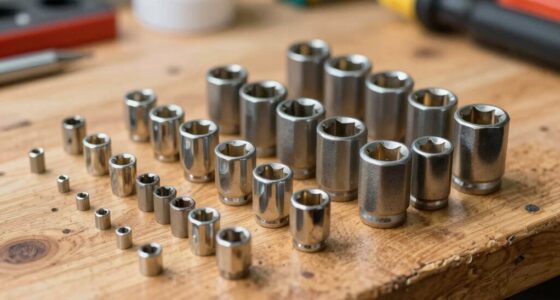
If you want to prevent rounding bolts, a 6-point socket is your best choice because it grips the bolt’s flat sides, distributing torque evenly and minimizing damage. In contrast, a 12-point socket contacts corners, which can cause rounding on worn or damaged fasteners. For heavy-duty use, stick with 6-point sockets, but if you need quick access in tight spaces or work with rounded bolts, 12-point sockets can be more effective. Keep exploring to learn more about their differences.
Key Takeaways
- *6-point sockets* distribute torque on flat sides, minimizing bolt rounding during heavy-duty or high-torque tasks.
- *12-point sockets* contact corners, increasing risk of rounding, especially on worn or rounded fasteners.
- Thick walls of *6-point sockets* protect fragile or damaged fasteners from deformation.
- *12-point sockets* allow quicker engagement in tight spaces but may cause rounding on compromised fasteners.
- Use *6-point sockets* for heavy-duty fastening to prevent rounding; choose *12-point sockets* for speed and versatility on less worn fasteners.

CASOMAN 3/8" Drive Impact Socket Set, 49 Piece Standard SAE and Metric Sizes (5/16-Inch to 3/4-Inch and 8-22 mm), 6 Point, Cr-V Steel Socket Set
Made from drop forged and heat treated chrome vanadium steel (50BV30) with a corrosion-resistant black phosphate finish, providing…
As an affiliate, we earn on qualifying purchases.
As an affiliate, we earn on qualifying purchases.
Understanding the Basic Design Differences
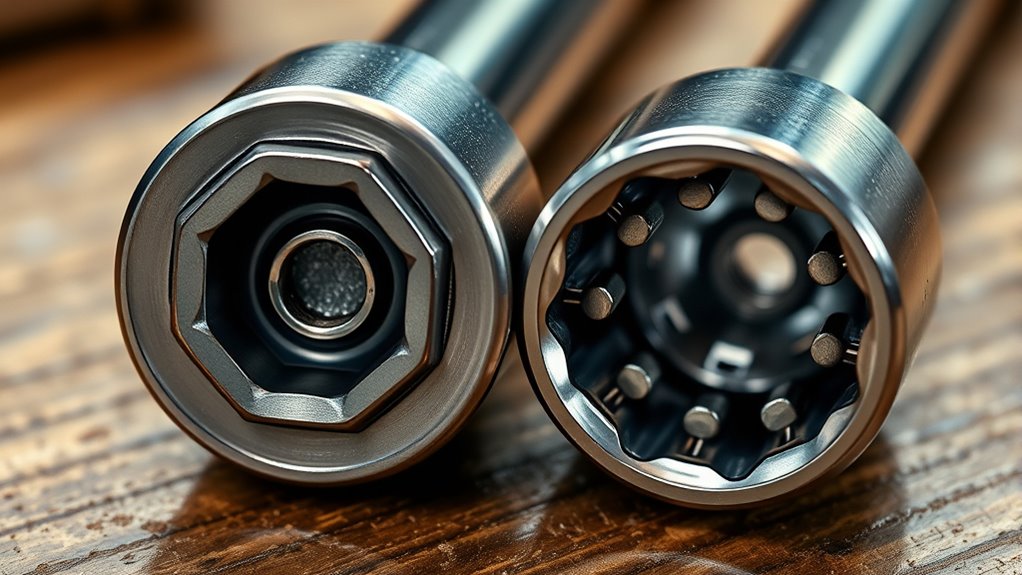
Understanding the basic design differences between 6-point and 12-point sockets is essential for choosing the right tool for your task. A 6-point socket features six internal corners that match the flats of a hex fastener, providing a snug grip on standard bolts. It contacts the fastener sides directly, distributing torque evenly and reducing the risk of rounding. These sockets have thicker side walls because they require fewer cuts, making them more durable under high stress. In contrast, 12-point sockets have twelve contact points arranged in a double-hex pattern, allowing engagement at 30-degree increments. They can fit both 6- and 12-point fasteners but contact primarily at the corners, which can increase the chance of rounding under heavy torque. The contact points in 12-point sockets offer greater versatility but may compromise grip strength in demanding applications. Additionally, the design versatility of 12-point sockets makes them suitable for a wider range of fasteners, especially in tight spaces. Furthermore, the choice between these sockets can influence the precision of torque application, which is especially important when working with delicate fasteners or components. Understanding these differences helps you select the right socket for your specific application. Furthermore, selecting the appropriate socket type can extend the longevity of your tools by reducing wear and tear during demanding tasks.

LLNDEI 3/8 inch Drive 12 Point Socket Set 71 Piece,SAE(5/16-3/4in) and Metric(8-22mm),Deep & Shallow,CR-V.With Drill Socket Adapter & Extension Bar 3/8 in,Hex Key Set 12Pt Can Also be Used on 6pt
COMPREHENSIVE SET: LLNDEI 12 point socket set includes: 25x Metric socket set (Shallow & Deep): 8mm,9mm,10mm,11mm,12mm,13mm,14mm,15mm,16mm,17mm,18mm,19mm,21mm(no deep),22mm; 16x…
As an affiliate, we earn on qualifying purchases.
As an affiliate, we earn on qualifying purchases.
How Each Socket Type Engages Fastener Corners and Sides
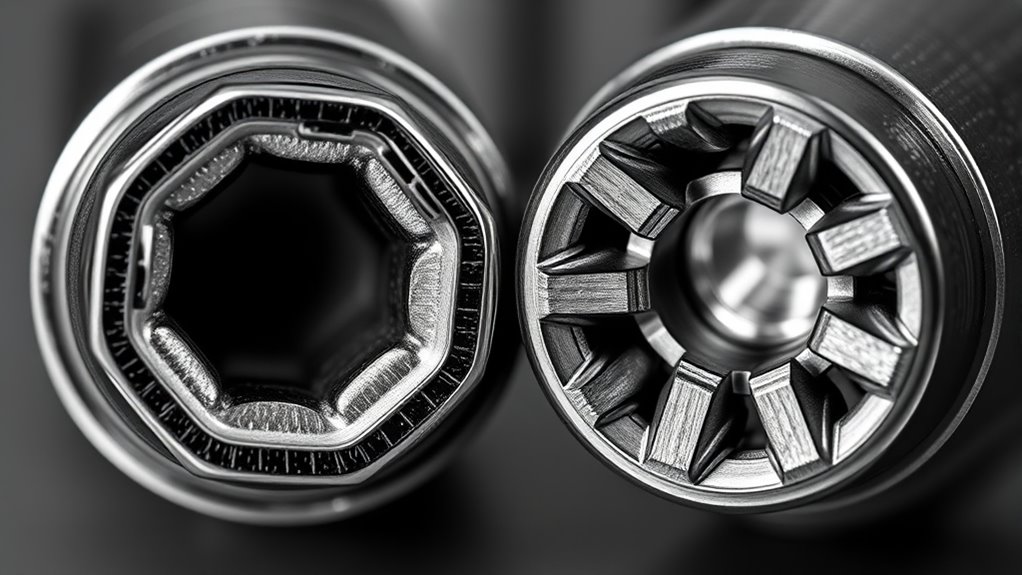
6-point sockets engage fasteners primarily on the flat sides, ensuring a secure grip that distributes torque evenly and minimizes the risk of rounding. You’ll notice they contact the fastener’s hex flats directly, providing a stable connection that handles high torque without slipping. Because they match the flat surfaces precisely, they reduce wear and damage to the fastener edges. In contrast, 12-point sockets contact both the corners and sides, allowing for quicker engagement in tight spaces but increasing the chance of rounding, especially on worn fasteners. They primarily grip the corners, which are more fragile and prone to deformation under heavy force. This difference in engagement points influences how well each socket preserves fastener integrity and handles torque, making 6-point sockets ideal for heavy-duty and high-torque applications.

WORKPRO 14-Piece 1/2" Drive Deep Impact Socket Set, 6-Point Impact Deep Socket Set with Heavy Duty Storage Case for Automotive and Mechanical Repairs, 10mm-27mm, Cr-V Steel, Metric
Deep Impact Socket Set: The package includes 14PC 1/2" Deep Impact Socket Set, Metric: 10mm, 11mm, 12mm, 13mm,…
As an affiliate, we earn on qualifying purchases.
As an affiliate, we earn on qualifying purchases.
Torque Capacity and Strength: Which Socket Performs Better
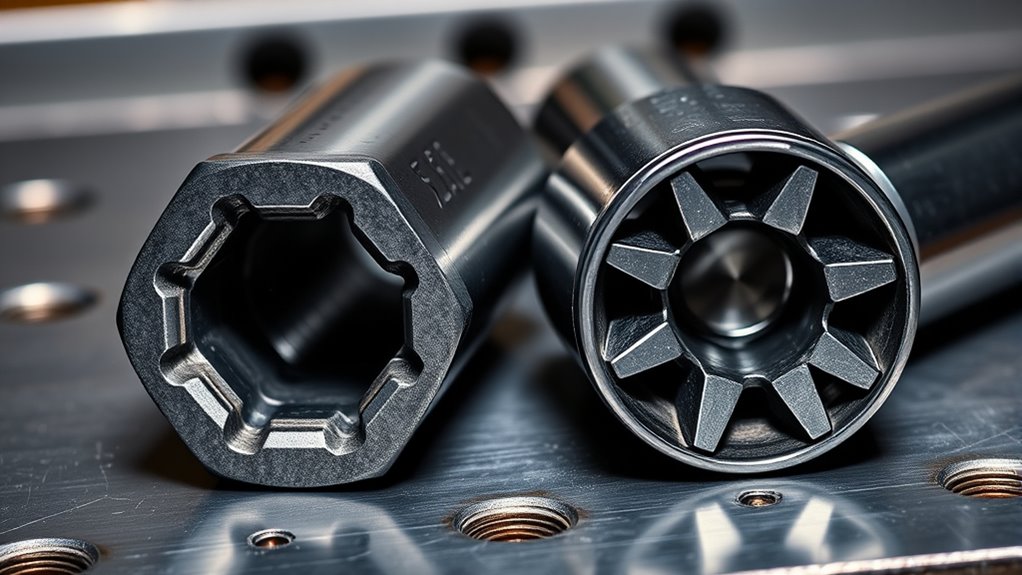
When it comes to torque capacity and strength, the design differences between 6-point and 12-point sockets substantially impact their performance under heavy force. The 6-point socket, with its six flat sides, provides maximum contact with the fastener, distributing force evenly and reducing the risk of slipping or rounding. Conversely, the 12-point socket engages corners, which diminishes its grip strength, especially under high torque. This makes the 6-point more suitable for demanding applications, like impact work or stubborn fasteners.
| Feature | 6-Point Socket | 12-Point Socket |
|---|---|---|
| Contact Points | 6 flats | 12 corners |
| Torque Transfer | Superior, even distribution | Lower, corner-based contact |
| Strength under Load | Higher, more durable | Lower, prone to failure |
| Suitable for Heavy Use | Yes | No |
| Application Focus | Heavy-duty, impact scenarios | Light-duty, quick access |
LLNDEI 3/8 inch Drive 12 Point Socket Set 71 Piece,SAE(5/16-3/4in) and Metric(8-22mm),Deep & Shallow,CR-V.With Drill Socket Adapter & Extension Bar 3/8 in,Hex Key Set 12Pt Can Also be Used on 6pt
COMPREHENSIVE SET: LLNDEI 12 point socket set includes: 25x Metric socket set (Shallow & Deep): 8mm,9mm,10mm,11mm,12mm,13mm,14mm,15mm,16mm,17mm,18mm,19mm,21mm(no deep),22mm; 16x…
As an affiliate, we earn on qualifying purchases.
As an affiliate, we earn on qualifying purchases.
The Impact on Bolt Rounding and Fastener Damage
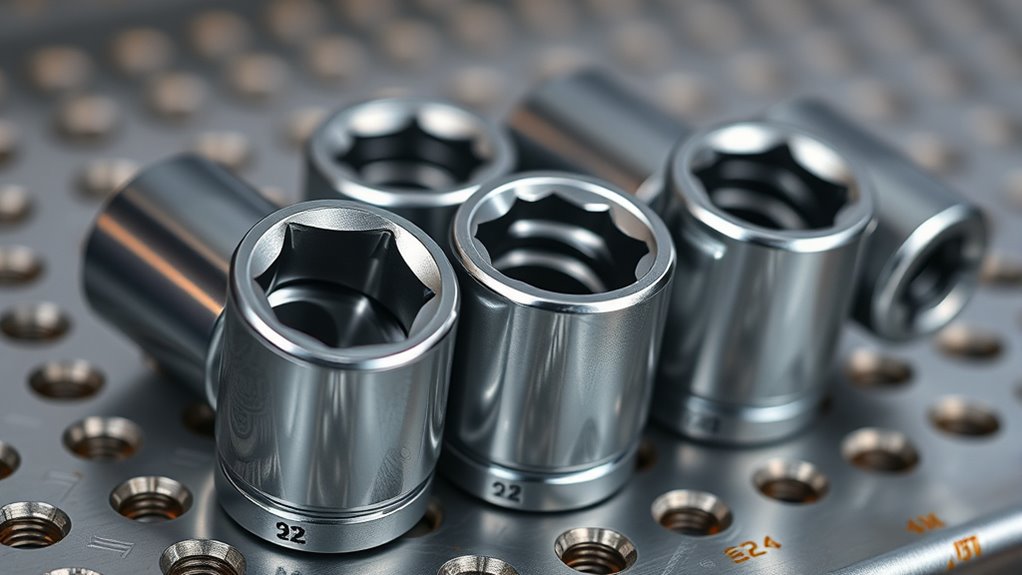
Using the right socket can considerably reduce bolt rounding and fastener damage. 6-point sockets engage flat sides, distributing torque evenly and minimizing risks. In contrast, 12-point sockets contact corners, increasing the chance of rounding, especially on worn fasteners. Incorporating visual and auditory cues can improve your understanding of proper socket use, ensuring more effective and damage-free fastener engagement. Additionally, understanding the socket sizes and their compatibility with various fasteners can further prevent damage during maintenance.
Flat Side Engagement
Flat side engagement plays a crucial role in preventing bolt rounding and reducing fastener damage. When you use a 6-point socket, it contacts the flat sides of a hex fastener, distributing torque evenly across a larger surface area. This minimizes the risk of deforming or rounding the bolt edges, especially under high torque or repeated use. By engaging the sides rather than the corners, you avoid putting excessive stress on delicate edges, which can wear down or chip over time. This flat contact also helps prevent slipping and ensures you apply force directly where it’s needed. As a result, your fasteners stay intact longer, and your work maintains precision without damaging the bolt heads. Flat side engagement offers a more reliable grip, especially on worn or partially rounded fasteners. Proper tool fit enhances overall efficiency and reduces the likelihood of fastener damage during maintenance.
Corner Rounding Risk
Corner rounding occurs when excessive force or repeated use causes the sharp edges at the corners of fasteners to wear down or chip, especially with sockets that engage primarily on these points. This damage makes future removal harder and weakens the fastener. The risk is higher with 12-point sockets, which contact fastener corners directly, increasing the chance of rounding. In contrast, 6-point sockets engage the flat sides, reducing this risk considerably. Here’s a visual to clarify:
| Socket Type | Corner Contact | Fastener Damage | Suitable For |
|---|---|---|---|
| 6-Point | No | Minimal | Heavy-duty, worn fasteners |
| 12-Point | Yes | Higher | Quick access, light use |
| Impact | No | Low | High torque, durable fasteners |
Additionally, understanding corner contact helps in selecting the right socket to prevent damage and ensure the longevity of fasteners. Proper socket size selection further minimizes the risk of rounding and enhances tool efficiency. Using electric tools like impact wrenches can also help apply controlled torque, reducing the likelihood of fastener damage. Moreover, choosing high-quality sockets made from durable materials can significantly decrease the chances of rounding and increase overall tool longevity. Being aware of proper torque application techniques is also crucial for maintaining fastener integrity over time.
Optimal Applications for 6-Point Sockets
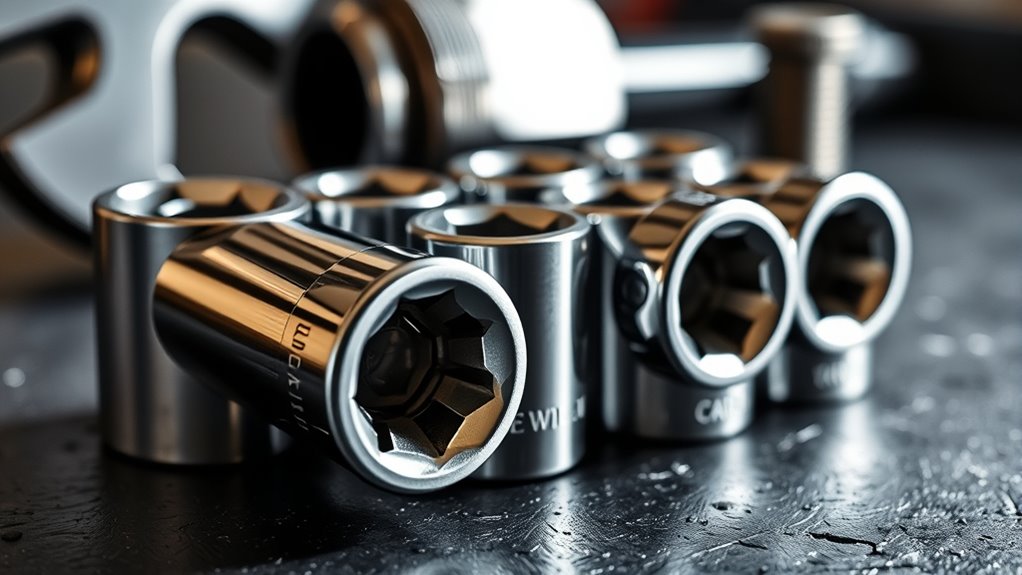
If you’re working with high-torque fastenings, 6-point sockets are your best choice because they offer superior torque efficiency. They’re built for heavy-duty applications, providing the strength needed for demanding tasks. Plus, their design helps reduce damage to fasteners, making them ideal for repeated use in tough environments. Additionally, the wrench compatibility of 6-point sockets ensures better grip and easier handling during installation or removal. Choosing the right socket type also depends on understanding fastener types, ensuring a secure fit and preventing damage during use.
High Torque Efficiency
6-point sockets deliver high torque efficiency when working with heavy-duty fasteners, making them ideal for demanding applications. Their design guarantees maximum contact with the flat sides of hex fasteners, enabling you to transfer more force without slipping. The thicker side walls provide increased strength and durability, allowing you to apply higher torque levels safely. Unlike 12-point sockets, which engage corners and distribute force less evenly, 6-point sockets focus on the sides, reducing the risk of rounding or damaging fasteners under heavy loads. This makes them especially effective when tightening or loosening stubborn bolts that require maximum force. Whether you’re using impact wrenches or power tools, 6-point sockets help you achieve a tight, secure fit while minimizing fastener damage, ensuring reliable and efficient fastening in high-torque situations.
Heavy-Duty Fastening
For heavy-duty fastening tasks, choosing the right socket can make all the difference. 6-point sockets excel in high-torque environments by providing maximum contact with the flat sides of fasteners, ensuring a secure grip that reduces slipping and fastener damage. Their robust design features thicker side walls and fewer cuts, which allows for better strength and durability under intense force. You’ll find these sockets ideal for tightening large bolts and nuts in manufacturing, machinery assembly, and maintenance work. They handle impact wrenches and power tools effectively, delivering reliable performance in demanding situations. By engaging the flat sides firmly, 6-point sockets minimize the risk of rounding or slipping, making them your go-to choice when working with heavy fasteners that require maximum torque and security. Additionally, the design features of 6-point sockets contribute to their superior grip, especially when used with impact tools.
Reduced Fastener Damage
When working with delicate or worn fasteners, choosing the right socket is crucial to prevent damage. 6-point sockets excel in these situations because their design engages the flat sides of fasteners, distributing force evenly and reducing the risk of rounding or deforming the edges. Their thicker side walls and precise fit mean less pressure on fragile corners, minimizing the chance of further damage. This makes them ideal for fasteners that are stripped, rusted, or already compromised. By gripping the flats rather than the corners, 6-point sockets help preserve the integrity of the fastener, especially during repeated use or heavy torque. Use them when you need to avoid damaging compromised fasteners or when working with sensitive components that require careful handling.
When to Choose 12-Point Sockets for Your Work
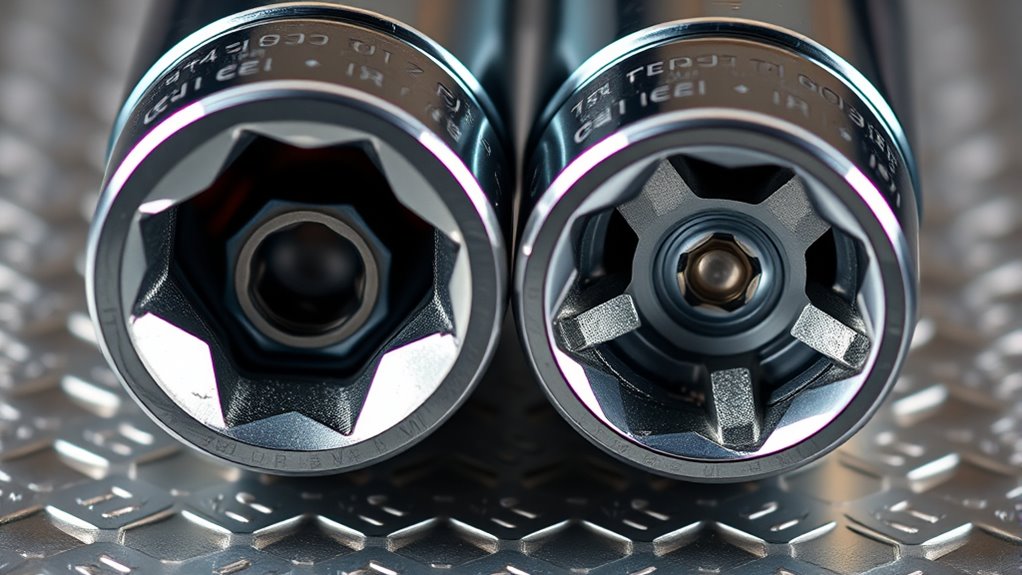
If you frequently work in tight spaces or need quick access to fasteners, 12-point sockets can be an excellent choice. They allow engagement at 30-degree increments, which means you can turn fasteners with less rotation, saving time in confined areas. This makes them ideal for automotive repairs, aerospace work, or situations where space is limited. Additionally, 12-point sockets fit both 6-point and 12-point fasteners, offering versatility when dealing with different types of bolts. They are especially useful when working with fasteners that are worn or damaged, as the corner contact can help grip and turn them if the edges are rounded. Remember, while they offer speed and flexibility, they’re best suited for lighter tasks and hand tools rather than heavy-duty impact use. Versatility in fastener types allows 12-point sockets to be a practical choice for various applications.
Selecting the Right Socket for Heavy-Duty and Fine-Tuned Tasks
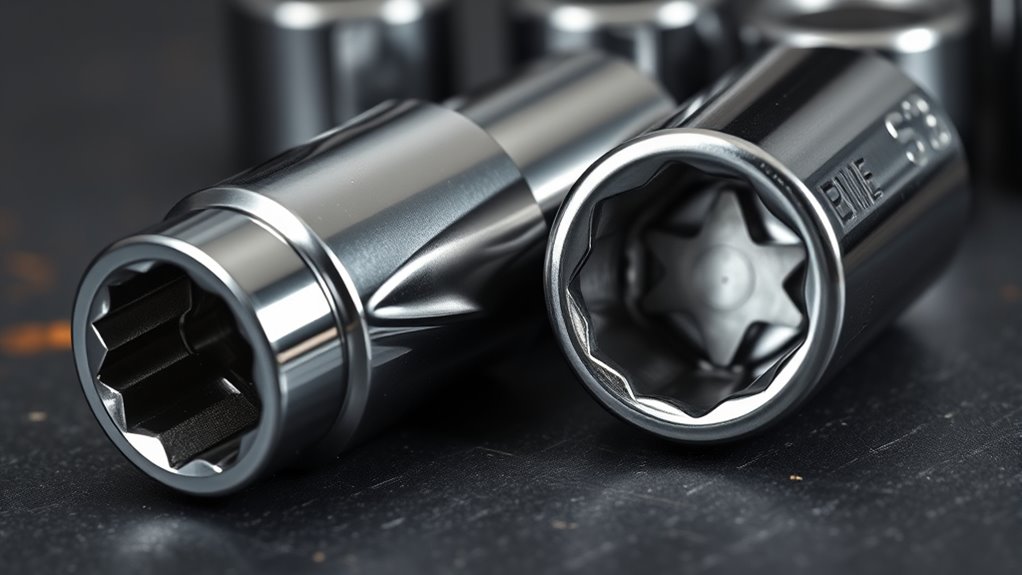
Choosing the right socket depends on the specific demands of your task. For heavy-duty applications, a 6-point socket is ideal because it offers superior torque transfer and reduces the risk of bolt rounding. Its thick walls and precise engagement on hex fasteners ensure durability under high force. Conversely, for fine-tuned tasks requiring access in tight spaces, a 12-point socket provides quicker engagement and accommodates both 6- and 12-point fasteners. It’s best used with hand tools where precision guarantees maximum torque. Additionally, understanding the ethnicity of the user can influence the choice of tools and approach for specialized work. Consider these factors:
Select the appropriate socket type based on torque needs and space limitations for optimal performance.
- Torque requirements: Use 6-point for high-torque, heavy-duty tasks.
- Fastener condition: Opt for 6-point on worn or damaged bolts.
- Space constraints: Choose 12-point for tight or inaccessible spots.
- Tool compatibility: Use impact-rated sockets for power tools and 12-point for delicate work.
Frequently Asked Questions
Are 6-Point Sockets Compatible With All Standard Fasteners?
Yes, 6-point sockets are compatible with all standard hex fasteners. They fit snugly onto the flat sides of hex bolts and nuts, providing a secure grip that minimizes rounding or slipping. You’ll find them ideal for high-torque applications, especially when using impact wrenches or power tools. Just guarantee the socket size matches the fastener size, and you’ll have a reliable tool that works effectively on most standard fasteners.
Can 12-Point Sockets Be Used With Impact Wrenches Safely?
You can’t safely use 12-point sockets with impact wrenches. While they’re great for quick access and tight spaces, impact wrenches generate heavy force that can crack or deform the thinner walls of 12-point sockets. Unlike 6-point sockets, which are designed for high torque and durability, 12-point ones are better suited for hand tools. Using them with impact wrenches risks damage to both the socket and fastener.
Which Socket Type Is Better for Damaged or Worn Fasteners?
You should use a 6-point socket for damaged or worn fasteners because it grips the flats more securely, reducing the risk of rounding. Its design distributes torque evenly, making it gentler on compromised fasteners. A 12-point socket, while versatile, primarily contacts corners and can slip more easily on worn fasteners, increasing the chance of damage. Stick with a 6-point for better grip and protection on compromised fasteners.
Do 12-Point Sockets Provide More Grip on Fasteners Than 6-Point?
No, 12-point sockets don’t provide more grip on fasteners than 6-point ones. They mainly engage at corners, which means they contact fewer sides and distribute less force. This can lead to slippage or rounding, especially under high torque. In contrast, 6-point sockets grip the flat sides of fasteners more securely, offering better torque transfer and reducing the risk of rounding, especially on damaged or worn fasteners.
How Does Socket Size Affect Precision and Damage Prevention?
Socket size is like a glove—if it’s too big or small, it won’t grip properly. When you use the right size, you get precise engagement, reducing the risk of rounding or damaging the fastener. A properly fitting socket distributes force evenly, preventing cracks or deformation. Always choose the right size for your fastener to make sure of maximum precision, durability, and damage prevention during your work.
Conclusion
Choosing between 6-point and 12-point sockets depends on your task. While 6-point sockets excel at preventing bolt rounding and handling high torque, 12-point sockets offer quick access to fasteners in tight spots. Trusting the theory that each socket type has its perfect application helps you work smarter, not harder. Ultimately, understanding their differences guarantees you select the right tool, making your projects smoother and more efficient every time.