
TL;DR

Get business pricing on garage and car supplies
- Business-only prices and quantity discounts
- Tax-exempt purchasing
- Multiple users, one account, clear invoices
BYD is rapidly building its ultra-fast flash charging network, significantly accelerating deployment to support its growing electric vehicle lineup. This development reflects a strategic push to improve EV charging infrastructure, though specific deployment details remain unconfirmed.
BYD, a leading Chinese electric vehicle manufacturer, is aggressively expanding its ultra-fast flash charging network, aiming to support its growing EV fleet and meet rising consumer demand for rapid charging options. While specific deployment figures are not yet publicly confirmed, industry sources indicate that the company is rapidly increasing its charging infrastructure footprint, signaling a strategic focus on fast-charging technology to boost EV adoption.
Recent industry signals and observed infrastructure deployment suggest that BYD is building its ultra-fast flash charging network at a high pace. The company has reportedly installed numerous new charging stations across key markets in China and is reportedly planning international expansion as well. The company has reportedly installed numerous new charging stations across key markets in China and is reportedly planning international expansion as well. These stations are characterized by charging speeds exceeding 300 kW, enabling EVs to recharge in minutes rather than hours, a critical factor for consumer convenience and commercial fleet operations.
Official statements from BYD or detailed deployment data have not yet been released, making it difficult to quantify the exact scale of the expansion. However, industry analysts note that the pace of infrastructure rollout appears to be significantly faster than previous years, indicating a strategic push to position BYD as a leader in ultra-fast charging technology. This move aligns with broader industry trends emphasizing fast-charging networks as vital to mainstream EV adoption.
Implications of BYD’s Rapid Charging Network Expansion
This rapid expansion is significant because it could dramatically improve the usability and appeal of electric vehicles by reducing charging times, addressing one of the main barriers to EV adoption. For consumers and fleet operators, access to widespread, ultra-fast charging stations could make EVs more practical for daily use and long-distance travel. Additionally, BYD’s aggressive push may pressure competitors to accelerate their own infrastructure investments, potentially reshaping the EV charging landscape in key markets.
Furthermore, this development underscores how automakers are increasingly integrating infrastructure development into their broader EV growth strategies, aiming to create a seamless ecosystem that supports vehicle sales and usage. The pace of deployment also signals that BYD is betting heavily on the future of ultra-fast charging as a core component of its market leadership.
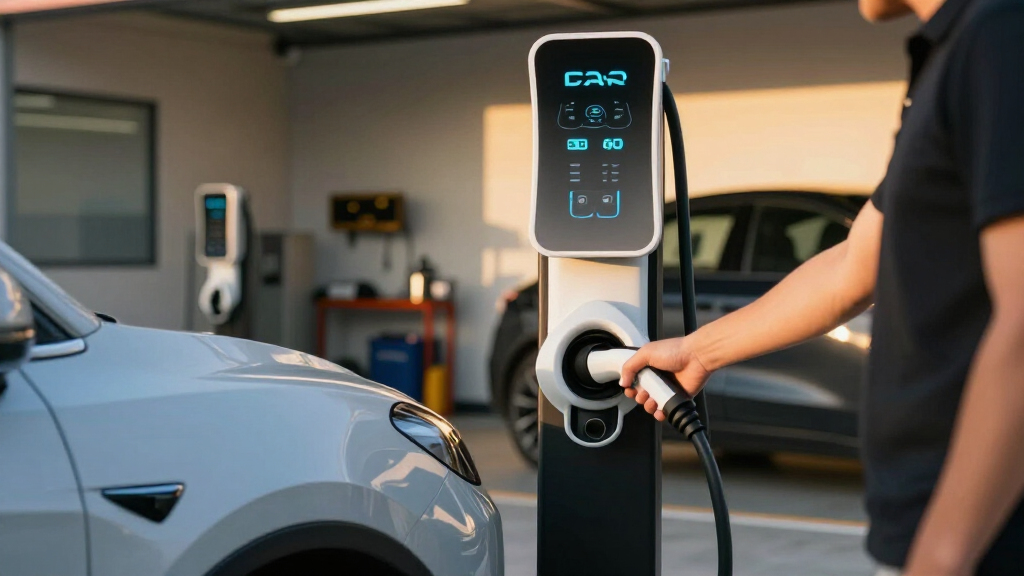
ultra-fast EV charging station 300kW
As an affiliate, we earn on qualifying purchases.
As an affiliate, we earn on qualifying purchases.
BYD’s Charging Infrastructure: Past and Present
BYD has historically been a major player in electric mobility, with a broad portfolio of EVs and batteries. Over recent years, the company has invested heavily in charging infrastructure, primarily focusing on standard fast chargers. The current trend toward ultra-fast charging reflects a strategic shift to meet the demands of high-performance EVs and commercial applications.
Industry interest in ultra-fast charging has surged as automakers and governments push for EV adoption to meet climate goals. While many companies have announced plans for extensive charging networks, actual deployment has often lagged behind initial promises. In this context, BYD’s apparent acceleration in building its ultra-fast network is noteworthy, though specific figures and timelines remain unconfirmed.
It is not yet clear whether BYD’s rapid infrastructure rollout is part of a broader corporate strategy or a response to competitive pressures. Industry observers note that the company’s focus on high-speed charging aligns with its ambitions to dominate both passenger and commercial EV markets.
As an affiliate, we earn on qualifying purchases.
Unconfirmed Details About Deployment Scale
While signs point to rapid infrastructure growth, specific details such as the number of new stations, geographic scope, and deployment timeline remain unconfirmed. Industry sources rely on observations and indirect signals, so precise figures are not yet available. It is also unclear whether the expansion will be primarily domestically in China or include international markets in the near term.
Further, the exact technological specifications and standards of the stations—such as charging speeds and compatibility—are still under discussion, with no official technical disclosures yet made by BYD.
As an affiliate, we earn on qualifying purchases.
Expected Developments in BYD’s Charging Strategy
In the coming months, industry watchers expect BYD to provide more detailed updates on the scale and scope of its ultra-fast charging network expansion. Potential announcements may include new station locations, technical specifications, and international rollout plans. Additionally, as the infrastructure develops, it could influence EV adoption rates and competitive dynamics in key markets.
Observers also anticipate that other automakers and infrastructure providers will respond to BYD’s aggressive push, potentially leading to a more rapid overall expansion of ultra-fast charging networks globally.
As an affiliate, we earn on qualifying purchases.
Key Questions
How fast are BYD’s ultra-fast chargers?
Industry reports suggest that BYD’s ultra-fast chargers exceed 300 kW, capable of recharging EVs in minutes, though specific technical details have not been officially confirmed.
Where are BYD’s new charging stations being installed?
Most observed deployments are in China, with some indications of international expansion, but exact locations and plans remain undisclosed.
How does this expansion compare to competitors?
While many automakers are investing in fast-charging infrastructure, BYD’s apparent rapid deployment is notable and could give it a competitive advantage in terms of network coverage and user convenience.
Will this impact EV prices or availability?
Enhanced infrastructure can make EVs more practical and appealing, potentially supporting higher sales volumes, but direct impacts on prices are uncertain at this stage.
When will BYD fully disclose its deployment plans?
There is no official timeline for detailed disclosures; industry analysts expect more information in the upcoming quarters as infrastructure development progresses.
Source: rss
Halloween Picks
halloween
As an affiliate, we earn on qualifying purchases.