
TL;DR

Get garage and car supplies delivered free — and shop member deals
- Fast, free delivery on millions of items
- Access to Prime Big Deal Days deals on October 6–7
- Prime Video, Amazon Music and more included
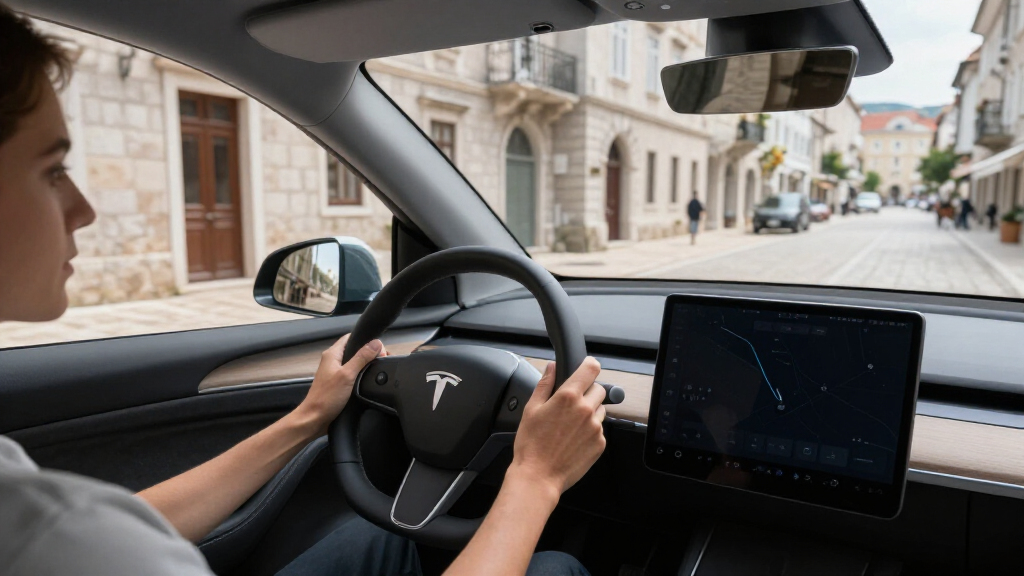
Croatia has launched Europe’s first fully driverless robotaxi service, operating without human safety drivers. The development marks a significant step in autonomous vehicle deployment across Europe, though some details remain unconfirmed.
Croatia has launched Europe’s first fully driverless robotaxi service, with vehicles operating without human safety drivers in select areas, according to local transportation authorities. This milestone underscores a significant advancement in autonomous mobility within Europe, potentially transforming urban and suburban transit options.
The robotaxi fleet, operated by a local mobility company in partnership with international autonomous vehicle technology providers, began offering rides to the public in the city of Zagreb earlier this month. The service utilizes Level 4 autonomous vehicles, which can operate independently without human intervention under specific conditions, marking a first for Europe.
According to the company involved, the deployment covers a designated route within the city, equipped with advanced sensors, cameras, and AI systems to navigate urban environments safely. The vehicles are monitored remotely by a team of operators who can intervene if necessary, though no safety drivers are physically present in the vehicles during operation.
Authorities in Croatia have approved this pilot as part of broader efforts to modernize urban transport and reduce emissions, with plans to evaluate the service’s safety, efficiency, and public acceptance over the coming months. The service is currently limited to specific hours and zones but aims to expand based on initial results.
Implications of Europe’s First Fully Driverless Robotaxi
This development signifies a major step forward for autonomous vehicle technology in Europe, showcasing the potential for driverless taxis to reshape urban mobility. It could lead to increased competition in the transportation sector, influence regulatory frameworks, and accelerate adoption of autonomous vehicles across other European cities. For consumers, it offers a glimpse into a future with safer, more efficient, and potentially more accessible public transit options. However, it also raises questions about safety, regulation, and public acceptance that remain to be fully addressed.Level 4 autonomous vehicle sensors
As an affiliate, we earn on qualifying purchases.
As an affiliate, we earn on qualifying purchases.
Background on Autonomous Vehicle Deployment in Europe
While autonomous vehicles have been tested extensively in North America and Asia, their deployment in Europe has faced regulatory, technical, and societal hurdles. Prior to this, several pilot projects and limited deployments have occurred, mostly involving partially autonomous vehicles with safety drivers onboard. The move to fully driverless operations marks a significant shift, driven by advances in AI, sensor technology, and regulatory support in certain countries.
European countries have been cautious, emphasizing safety and legal frameworks, but recent developments suggest a growing openness to fully autonomous services. Croatia’s recent launch is viewed as a potential model for other European cities considering similar initiatives, though widespread adoption remains several years away due to regulatory and public trust hurdles.
As an affiliate, we earn on qualifying purchases.
Unconfirmed Aspects of the Driverless Service
It is not yet clear how regulatory authorities will adapt laws to fully accommodate driverless taxis across broader regions in Europe. Details about the long-term safety, insurance, and liability frameworks are still being developed. Additionally, public acceptance and user experience feedback are still emerging, and the extent of the service’s scalability remains uncertain.
Furthermore, while the vehicles operate without safety drivers, the remote monitoring team’s role and the protocols for intervention are not fully disclosed, raising questions about operational safety and contingency procedures.
autonomous vehicle safety monitoring system
As an affiliate, we earn on qualifying purchases.
As an affiliate, we earn on qualifying purchases.
Next Steps for Autonomous Taxi Deployment in Europe
The service is expected to continue operating as a pilot, with authorities and the operating company collecting data on safety, traffic integration, and user feedback. If successful, plans may include expanding the service area, increasing fleet size, and integrating autonomous taxis into the city’s broader transportation network.
Regulatory discussions are likely to intensify, focusing on establishing legal frameworks for fully driverless vehicles across Europe. Public engagement and education efforts are also expected to increase to build trust and acceptance of this new mobility option.
As an affiliate, we earn on qualifying purchases.
Key Questions
What makes this robotaxi service in Croatia different from previous autonomous vehicle tests?
This is the first fully driverless service operating without any safety drivers onboard, marking a significant milestone in autonomous mobility in Europe.
Are these vehicles available for anyone to ride now?
Yes, the service is currently open to the public within designated zones and hours as part of a pilot program.
What safety measures are in place for these driverless taxis?
The vehicles are equipped with advanced sensors and AI systems to navigate safely, and remote operators can intervene if necessary. Details about specific safety protocols are still emerging.
Will this service expand to other cities in Europe?
Potentially, depending on the success of the pilot, regulatory approval, and public acceptance, expansion plans may be considered in the future.
What are the main challenges facing fully driverless taxis in Europe?
Challenges include establishing comprehensive legal and safety regulations, gaining public trust, ensuring operational safety, and integrating autonomous vehicles into existing traffic systems.
Source: rss
Halloween Picks
halloween
As an affiliate, we earn on qualifying purchases.