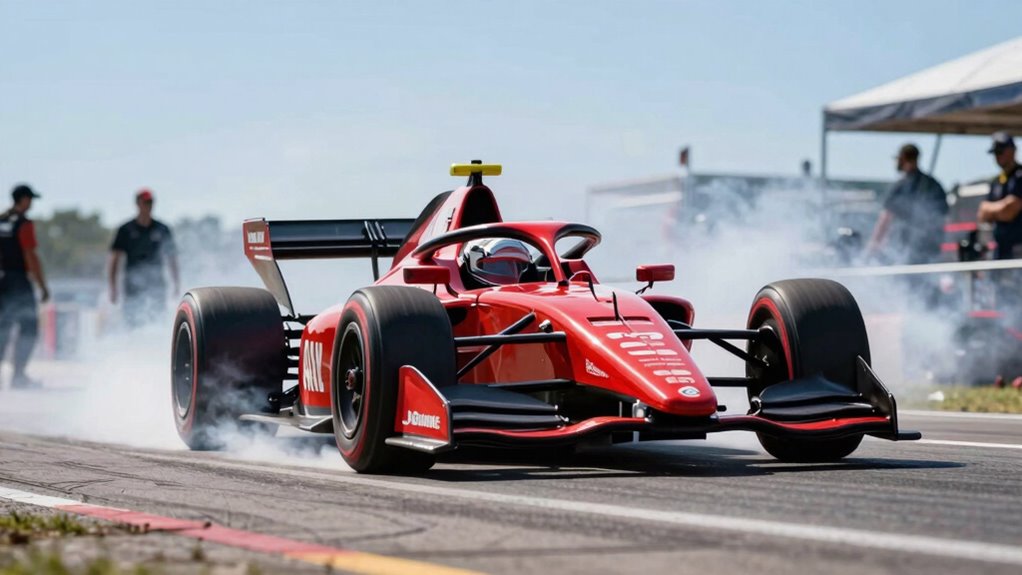

To achieve fast starts, you need to focus on precise timing, efficient vehicle staging, and advanced ignition technology. Carefully coordinate each stage drop to reduce weight and boost acceleration, while sensors and computer systems synchronize engine ignition for maximum thrust. Monitoring real-time data helps guarantee everything happens at the perfect moment. Mastering these techniques leads to quick, reliable launches—stay with us, and you’ll discover how to optimize every step for even faster results.

Get business pricing on garage and car supplies
- Business-only prices and quantity discounts
- Tax-exempt purchasing
- Multiple users, one account, clear invoices
Key Takeaways
- Precise timing of ignition and staging ensures maximum thrust and efficiency during launch.
- Coordinated vehicle staging reduces weight and accelerates the vehicle effectively.
- Advanced monitoring systems synchronize engine ignition with stage separation in real time.
- Real-time data analysis allows instant adjustments to optimize launch conditions.
- Rigorous testing and meticulous planning are essential for flawless execution and rapid starts.

Have you ever wondered what it takes to successfully launch a rocket or product? The secret lies in precise timing and carefully coordinated steps that push your project from start to finish with maximum efficiency. When it comes to launching a rocket, understanding vehicle staging and ignition timing is essential for a smooth, rapid ascent. Vehicle staging involves dividing the rocket into sections that drop away at specific points during flight, reducing weight and increasing speed. This process requires meticulous planning, so each stage ignites at exactly the right moment to capitalize on the remaining fuel and momentum. If you get the staging wrong, the entire launch could lose efficiency, or worse, fail prematurely. That’s why engineers spend so much time calculating the *release* points to shed stages, *guaranteeing* each segment ignites only when it’s most advantageous.
Ignition timing, on the other hand, is all about when you send the spark to ignite your engines. Too early, and you risk unstable combustion or waste energy; too late, and your acceleration might be delayed, costing precious seconds. You need to synchronize ignition precisely with vehicle staging, so each stage fires at the *most effective* moment to maximize thrust and minimize wasted fuel. This coordination requires an intricate understanding of the rocket’s dynamics, the fuel flow, and the environmental conditions. Advanced computer systems and sensors monitor all these variables in real-time, allowing you to make adjustments instantly. Effective ignition timing not only boosts your launch’s speed but also enhances safety and reliability, preventing mishaps caused by misfires or delayed ignition. Additionally, modern launch systems utilize energy-efficient technology] to optimize the entire process, reducing environmental impact.
Achieving quick starts isn’t just about raw power; it’s about the orchestration of every element involved in the launch. You must *guarantee* that vehicle staging occurs seamlessly, with each segment dropping away at exactly the right moment so the remaining structure can accelerate unimpeded. Meanwhile, ignition timing must be perfectly synchronized with these staging events, so your engines fire at just the right times. When both are executed flawlessly, you get a rapid, efficient launch that minimizes fuel consumption and maximizes performance. This level of precision isn’t accidental; it’s the result of rigorous testing, detailed calculations, and real-time adjustments. Whether in rocketry or high-speed manufacturing processes, mastering vehicle staging and ignition timing *open* the potential for faster, cleaner starts, giving you the edge needed to succeed in competitive and demanding environments.
Frequently Asked Questions
How Do Weather Conditions Affect Launch Techniques?
Weather conditions considerably impact your launch techniques. Wind resistance can slow you down or make your start unstable, so you need to adjust your approach accordingly. Temperature effects also matter; colder air increases air density, providing more lift but also more drag, which can hinder your acceleration. By understanding these factors, you can modify your launch to optimize performance and safety, ensuring a faster, more controlled start regardless of the weather.
What Are the Safety Precautions During a Launch?
Stay secure by following strict safety standards during launches. Secure the launch site with thorough security checks, restricting access to authorized personnel only. Prepare for potential problems with exhaustive emergency response planning, including clear evacuation routes and communication protocols. Always wear proper protective gear, double-check equipment, and stay alert for hazards. These precautions keep you safe, safeguard sensitive equipment, and ensure swift, safe responses to unexpected situations.
Which Equipment Is Essential for a Successful Launch?
You need essential equipment like a well-prepared launch pad setup, which guarantees stability and safety during the launch. Proper fueling procedures are also critical; they guarantee the correct fuel levels and reduce risks. Additionally, you’ll want reliable ignition systems, communication tools, and monitoring devices to track the launch process. Making sure all equipment is checked and functioning properly increases your chances of a successful, safe launch.
How Do Different Vehicle Types Impact Launch Strategies?
Varying vehicle types demand distinct launch strategies. Heavier vehicles require careful consideration of vehicle weight and enhanced traction control to prevent slipping. Sports cars, with lighter weight and powerful engines, focus on maximizing grip and throttle precision. Trucks or SUVs, often heavier, might need more traction control and gradual acceleration. Tailoring your approach ensures ideal starts, whether you’re handling high-powered sports cars or hefty haulers, maximizing performance every time.
What Are Common Mistakes to Avoid During Launch Preparation?
You should avoid skipping your pre-launch checklist, as missing key safety and technical steps can cause delays or accidents. Make certain clear crew communication; misunderstandings can lead to errors during setup. Double-check all systems, fuel levels, and safety protocols before starting. Stay focused, stay organized, and confirm everyone knows their roles. These precautions help ensure a smooth, efficient launch, minimizing risks and maximizing performance.
Conclusion
Now that you’ve learned these launch techniques, you’re ready to ignite your start like a rocket blasting through the atmosphere. Remember, every successful launch begins with a confident push and the right strategy. Think of yourself as a pilot steering through the clouds—trust your preparation and stay focused. Once you take off, the sky’s the limit. Embrace the power within you and watch your goals soar beyond the horizon.
Halloween Picks
halloween
As an affiliate, we earn on qualifying purchases.