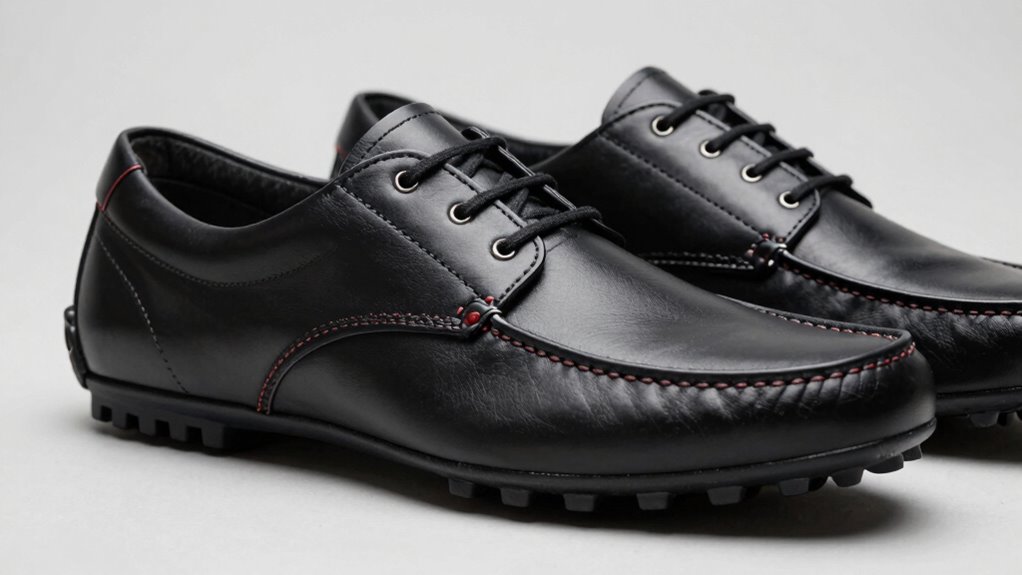

Performance driving shoes are designed to boost your pedal control, responsiveness, and safety. They feature materials like leather, suede, or synthetic fabrics for durability, grip, and flexibility. A proper fit is vital for comfort and precise footwork, with thin, flexible soles that improve pedal feedback. Low-profile designs and specialized grip features help you stay connected to the pedals. Keep exploring to discover how choosing the right shoes can greatly enhance your driving performance.
Key Takeaways
- Material choice affects grip, durability, breathability, and comfort, with options like leather, suede, and synthetics tailored to driving needs.
- Proper sizing ensures a snug fit, maximizing pedal control and comfort without pinching, often requiring try-ons with driving socks.
- Thin, flexible soles improve pedal feedback and responsiveness, while bulky soles can hinder fine pedal modulation.
- Design features like low-profile shape and heel contact support natural foot positioning and effective leverage during driving.
- Selecting high-quality, well-fitting shoes enhances driving precision, safety, and overall vehicle control.

When it comes to performance driving, your footwear can make a significant difference in how you control your vehicle. The right pair of driving shoes ensures better pedal feel, improved feedback, and enhanced precision, all essential for high-performance driving. One of the first things to consider is the material of your driving shoes. Driving shoe materials matter because they directly affect grip, durability, and comfort. Leather is a popular choice because it offers durability and a good grip, but some drivers prefer suede or synthetic materials for their lightweight nature and added flexibility. Synthetic options can also provide better breathability, keeping your feet cooler during long sessions. Whatever material you pick, make sure it’s thin enough to give you a close pedal feel, yet sturdy enough to withstand the wear and tear of aggressive driving. Choosing shoes with the right sole thickness and material can help maximize control and responsiveness.
Another crucial aspect is shoe sizing tips. Proper fit is fundamental to maximizing control and comfort. Too tight, and your feet will feel cramped, reducing blood flow and causing fatigue; too loose, and your foot may slide around, decreasing your ability to modulate pedals precisely. When trying on driving shoes, always aim for a snug fit without pinching or causing discomfort. Because sizes can vary across brands, it’s wise to try on shoes with the type of socks you’ll wear during driving. Keep in mind that a half-size up or down may be necessary depending on the shoe’s design and fit. Remember, the goal is to have a shoe that fits like a second skin—firm but not constricting. Also, consider the shoe’s sole thickness and flexibility. A thin, flexible sole offers better pedal feedback, enabling you to sense subtle changes in brake pressure or throttle response. Avoid bulky shoes or those with overly stiff soles, as they can hinder your ability to modulate control smoothly. Additionally, selecting shoes with appropriate sole materials can further enhance grip and pedal communication. It’s also helpful to look for shoes with non-slip soles to ensure safety and stability during spirited driving. In addition to fit and material, look for shoes with a low-profile design that allows your foot to sit naturally on the pedal. The right sizing ensures your heel remains in contact with the floor or pedal, giving you more leverage and control. Additionally, some performance driving shoes incorporate specialized grip features that can further enhance pedal feel and control. When choosing performance driving shoes, take your time to try different styles and brands, always prioritizing fit and material quality. This investment in the right footwear can dramatically improve your driving experience, letting you respond quickly and accurately on the track or spirited backroads. Remember, your shoes are an extension of your control—selecting the proper size and material isn’t just about comfort; it’s about enhancing your driving performance. Using performance-oriented features in your footwear selection can further optimize your control and feedback while driving.

OJPO Driving Shoes for Men Casual Slip Ons Mens Fashion Shoes Comfort Handmade Chukka Dress Casual Shoes size9.5(Wide)-10 Grey
Driving Shoes for Men:The shape of shoes is simple,the shoelaces are not closed,and the hand-sewn is not easy…
As an affiliate, we earn on qualifying purchases.
As an affiliate, we earn on qualifying purchases.
Frequently Asked Questions
How Do I Break in New Performance Driving Shoes?
To break in new performance driving shoes, start by wearing them around the house for short periods. Focus on improving shoe flexibility by gently bending and flexing the shoes daily. make sure heel comfort by padding any tight spots with socks or inserts. Gradually increase wear time, and avoid rushing the process. This helps the shoes mold to your feet, providing better comfort and control during driving.
Are Performance Driving Shoes Suitable for Everyday Use?
You might find performance driving shoes suitable for everyday use, especially if you value a comfort fit that keeps you comfortable all day. Coincidentally, many styles options are available, blending sporty design with casual appeal. While designed for racing, their snug fit and good grip make them practical for daily errands. Just guarantee they match your style and provide enough support, so you enjoy both comfort and fashion every day.
What Is the Best Material for Driving Shoes?
You should choose leather for driving shoes because it offers excellent material durability and breathability features, ensuring comfort during long drives. Leather molds to your foot, providing a snug fit that enhances control. Look for shoes with perforations or mesh panels to improve breathability further. Avoid synthetic materials, as they often lack the durability and ventilation needed for extended use. Leather combines comfort, durability, and breathability, making it the best choice for driving shoes.
How Do I Clean and Maintain Driving Shoes?
To clean and maintain your driving shoes, follow simple shoe cleaning tips like removing dirt with a soft brush and wiping surfaces with a damp cloth. Regular maintenance routines include applying a protective conditioner suited for the material and storing shoes in a cool, dry place. Avoid harsh chemicals, and let your shoes air dry naturally. These steps keep your shoes in top condition and extend their lifespan.
Can I Wear Driving Shoes With Orthotic Inserts?
Yes, you can wear driving shoes with orthotic inserts as long as they are orthotic compatible. Look for shoes with a removable insole or enough space to accommodate your orthotics comfortably. This setup enhances your comfort and provides better support during driving. Make sure the shoes maintain proper fit and stability, so your foot stays secure and responsive, ultimately improving your driving experience and comfort.

Men's Genuine Leather Loafer Shoes Slip On Soft Walking Shoes Perforated Driving Shoes,Holing Dark Brown,40EU=8 M US
Breathable Upper: This slip on loafers, made of breathable and supple leather, soft to your skin, ventilation holes…
As an affiliate, we earn on qualifying purchases.
As an affiliate, we earn on qualifying purchases.
Conclusion
Just like a skilled pilot relies on their cockpit controls, your choice of performance driving shoes can elevate your control and confidence behind the wheel. Remember, the right footwear isn’t just about comfort—it’s about releasing your full potential on the track. As the saying goes, “It’s not just about the destination, but the journey.” With the proper shoes, you’ll navigate every turn with precision, turning every drive into a masterful performance.

XKOWUO Mens Loafers Slip on Boat Shoes Non Slip Walking Sports Fashion Driving Casual Office Shoes Gym Lightweight Comfortable Sneakers Brown 12
Simple and Timeless Design:A sleek silhouette with classic loafer elements that pairs well with both casual and semi-formal…
As an affiliate, we earn on qualifying purchases.
As an affiliate, we earn on qualifying purchases.

alcubieree Mens Leather Casual Shoes Comfortable Fashion Sneakers Loafers Lightweight Dress Walking Driving Shoes for Men(Size 7.5-13) Yellow
【UPPER & EXQUISITE WORKMANSHIP】- Our upgraded casual shoes are made of genuine leather on all surfaces for sturdy…
As an affiliate, we earn on qualifying purchases.
As an affiliate, we earn on qualifying purchases.