
At high speeds, effective brake heat dissipation relies on optimizing airflow through aerodynamic design features like vents and ducts. Using materials with high thermal conductivity helps transfer heat away quickly, reducing overheating risks. Combining these strategies guarantees your brakes stay cool and responsive during intense driving. If you want to learn how aerodynamic factors and material choices work together to improve cooling, there’s more to discover that can help you stay safe and confident behind the wheel.
Key Takeaways
- Increased airflow at high speeds enhances natural cooling of brake components.
- Aerodynamic features like vents and ducting direct airflow for efficient heat dissipation.
- High-conductivity materials transfer heat rapidly away from friction surfaces.
- Combining aerodynamic design with advanced materials prevents brake overheating and fade.
- Proper heat management maintains braking performance and safety during high-speed driving.
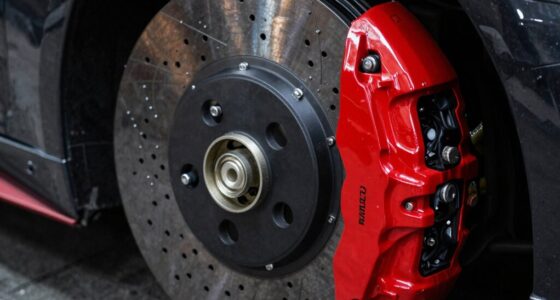
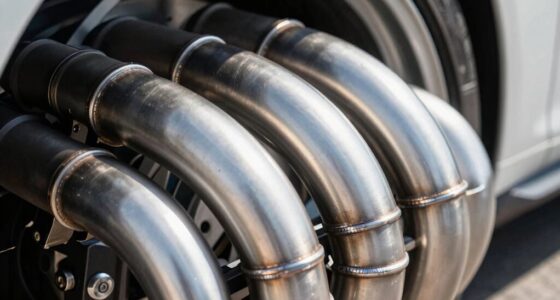
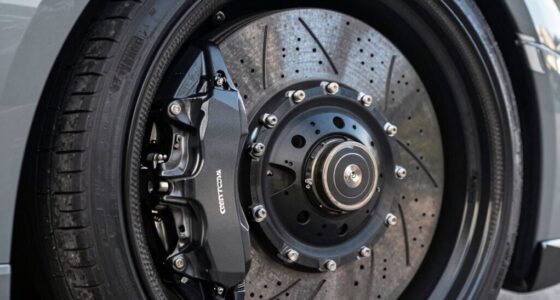
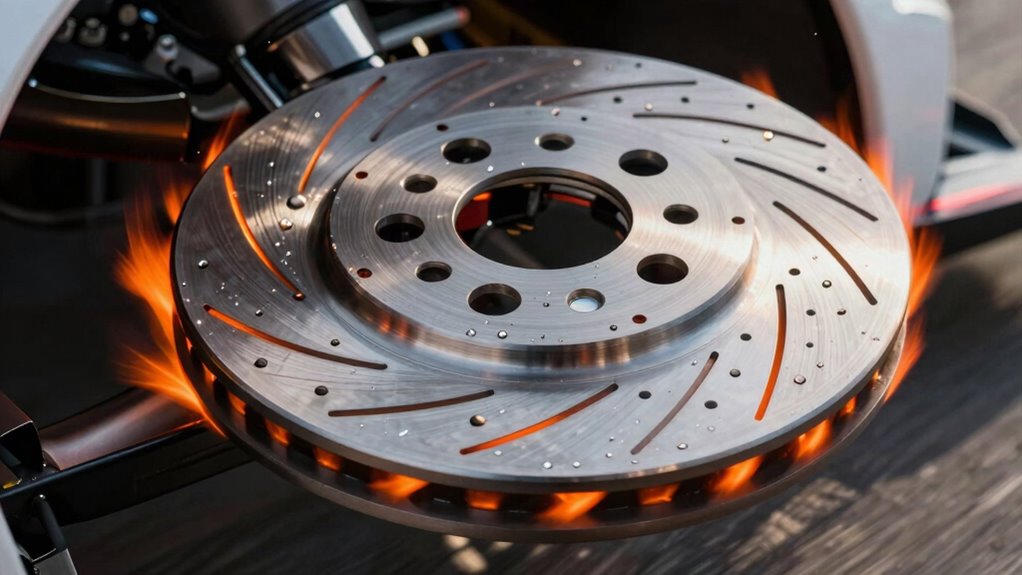
When brakes are applied, they generate a significant amount of heat that must be efficiently dissipated to prevent overheating and maintain safe braking performance. At high speeds, this challenge becomes even more critical because the heat produced is more intense and occurs over shorter timeframes. To manage this, modern brake systems rely heavily on concepts like aerodynamic cooling and material conductivity. Aerodynamic cooling involves designing brake components and surrounding structures to optimize airflow, which helps carry away excess heat quickly. When your vehicle reaches high speeds, the airflow naturally accelerates around the brakes, creating a cooling effect that reduces the temperature buildup. Properly engineered vents, fins, and ducting channels allow this airflow to be directed precisely where it’s needed, enhancing heat dissipation without adding unnecessary weight or complexity. Additionally, heat transfer efficiency can be improved through the use of advanced coatings and surface treatments that reflect or absorb heat as needed. Incorporating thermal management technologies can further enhance the effectiveness of these cooling strategies, especially during extended high-speed driving or racing conditions. Using advanced brake materials** can also contribute to better heat dissipation and overall braking performance. Material conductivity plays an equally crucial role in brake heat management. You want brake components made from materials that conduct heat efficiently, enabling rapid transfer of heat away from the friction surfaces. High-conductivity materials, like certain composites or metals, absorb and disperse heat more quickly than less conductive options. This means your brake system can shed heat faster, reducing the risk of thermal degradation, warping, or brake fade during prolonged or aggressive use. For example, brake rotors made from cast iron or advanced composites with high thermal conductivity can handle high temperatures better and maintain consistent performance. The choice of materials directly influences how well your brakes respond under high-speed conditions, ensuring safety and reliability. Combining aerodynamic cooling strategies with the use of high-conductivity materials creates a synergistic effect that enhances heat dissipation. As your vehicle speeds up, the increased airflow cools the brake components more effectively, while the materials rapidly transfer heat away from critical areas. This dual approach minimizes the risk of overheating, which could otherwise compromise braking efficiency or lead to component failure. It’s crucial to understand that both factors are interconnected: optimizing airflow alone won’t suffice if the materials can’t conduct heat away efficiently, and vice versa. That’s why brake system design incorporates both aerodynamic features and carefully selected materials to keep temperatures in check. In high-speed situations, neglecting these principles can lead to serious safety issues**, including brake fade or failure. By paying attention to aerodynamic cooling and material conductivity, you ensure your brakes stay cooler longer, providing consistent, reliable stopping power even during demanding conditions. Whether you’re racing or just driving at highway speeds, understanding how heat dissipation works at this level helps you make smarter choices about your brake system, ultimately keeping you safer on the road.

ACDelco Gold 18A2464 (19203456) Black Hat Front Disc Brake Rotor
Some ACDelco Gold parts may have formerly appeared as ACDelco Professional
As an affiliate, we earn on qualifying purchases.
As an affiliate, we earn on qualifying purchases.
Frequently Asked Questions
How Does Ambient Temperature Affect Brake Heat Dissipation?
Ambient temperature directly impacts your brake efficiency by influencing how quickly heat dissipates. When the air is warmer, your brakes struggle to cool down, leading to reduced performance and increased wear. Conversely, cooler ambient temperatures help your brakes shed heat more effectively, maintaining peak efficiency. So, on hot days, you might notice your brakes become less responsive, highlighting the importance of proper cooling and maintenance in varying environmental conditions.
What Materials Are Best for High-Speed Brake Systems?
You should choose materials with excellent heat resistance and durability for high-speed brake systems. Material selection is vital; composites like carbon-ceramic brake pads excel because they combine lightweight properties with high thermal stability. These materials withstand intense heat without fading, unlike traditional metals. By focusing on brake pad composition, you guarantee your braking system remains reliable, even under extreme conditions, providing safety and performance when you need it most.
Can Brake Cooling Systems Be Automated for Optimal Performance?
Yes, brake cooling systems can be automated for ideal performance. By integrating brake system automation, you can guarantee real-time adjustments to cooling mechanisms based on speed, temperature, and braking intensity. This enhances cooling system refinement, preventing overheating and maintaining consistent brake performance. Automated systems monitor conditions constantly, allowing for proactive adjustments that improve safety and efficiency without requiring manual intervention.
How Do Brake Pad Wear Rates Influence Heat Dissipation?
Did you know brake pad wear rates can increase heat buildup by up to 30%? As you brake, worn brake pads with altered composition and rough rotor surface finish create more friction, generating extra heat. This impacts heat dissipation, making it harder for your brakes to stay cool. To optimize performance, regularly check pad wear and guarantee proper rotor surface finish, preventing overheating and maintaining effective braking.
What Role Does Vehicle Aerodynamics Play in Cooling Brakes at High Speeds?
You can improve brake cooling at high speeds through aerodynamic efficiency and airflow optimization. When your vehicle’s design enhances airflow around the brakes, it helps carry away heat more effectively. Features like vented wheel designs, air dams, and aerodynamic fairings direct cool air toward brake components and promote better heat dissipation. This reduces the risk of brake fade and maintains braking performance during high-speed driving.

AutoShack Front Vented Brake Rotors + Ceramic Pads + Calipers 8-PC Brake Kit Replacement for 2007-2017 Jeep Wrangler 2018 Jeep Wrangler JK 11.89" (302 mm)
Enhanced Braking Performance: These Front Vented brake rotors improve heat dissipation, reduce fade, and maintain clean friction surfaces….
As an affiliate, we earn on qualifying purchases.
As an affiliate, we earn on qualifying purchases.
Conclusion
Understanding brake heat dissipation at high speeds is like riding a finely tuned engine—every component working in harmony to prevent overheating. You must guarantee proper ventilation and cooling systems are in place, or else the heat can build up faster than you can brake, risking brake failure. Think of it as a delicate dance between speed and safety, where proper heat management keeps you steady on the road. Stay vigilant, and your brakes will serve you reliably through every high-speed challenge.

Frienda 6 Pcs Thermal Pad 100 x 100 mm, 0.5 mm, 1 mm, 1.5 mm, 2 mm, 2.5 mm, 3 mm Heat Resistant Conductive Silicone Thermal Pads Conductivity 6.0 W/M for Laptop Heatsink CPU GPU LED Cooler(Blue)
Appropriate Size: thermal pads are about 100 x 100 mm, with a thickness of 0.5 mm, 1 mm,…
As an affiliate, we earn on qualifying purchases.
As an affiliate, we earn on qualifying purchases.

Motorcycle Air Ducts Brake Cooling Mounting Kit Fits for Yamaha YZF R1 2020-2024 Carbon Fiber Brake Caliper Air Cooling Guard Cover
✔Fits for Yamaha YZF R1 2020-2024
As an affiliate, we earn on qualifying purchases.
As an affiliate, we earn on qualifying purchases.