
To prevent fires, leaks, and mystery smells, store your garage chemicals properly by using clearly labeled, leak-proof containers and keeping incompatible substances apart. Install spill trays or secondary containment to catch leaks and immediately clean up spills with spill kits. Make certain good ventilation and avoid storing chemicals near heat sources or open flames. Continuously inspect containers for damage and follow safety signage. Keep these tips in mind to protect your home and environment—more detailed strategies await if you keep going.
Open a free Amazon Business account
Business pricing, bulk buying and tax-exempt orders.
As an affiliate, we earn on qualifying purchases.
Key Takeaways
- Store chemicals in designated, clearly labeled, and compatible containers to prevent reactions and leaks.
- Use spill trays or secondary containment bins to catch leaks and prevent environmental contamination.
- Keep chemicals away from heat sources and open flames to reduce fire risk.
- Ensure proper ventilation and regular inspection of storage areas for leaks or container deterioration.
- Implement safety signage and educate all users on proper handling and emergency procedures.
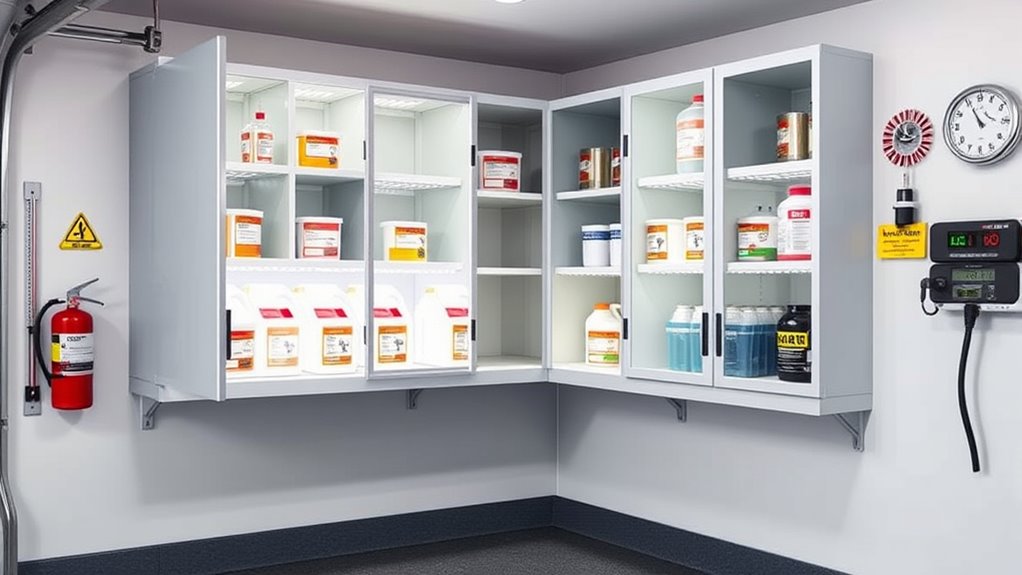
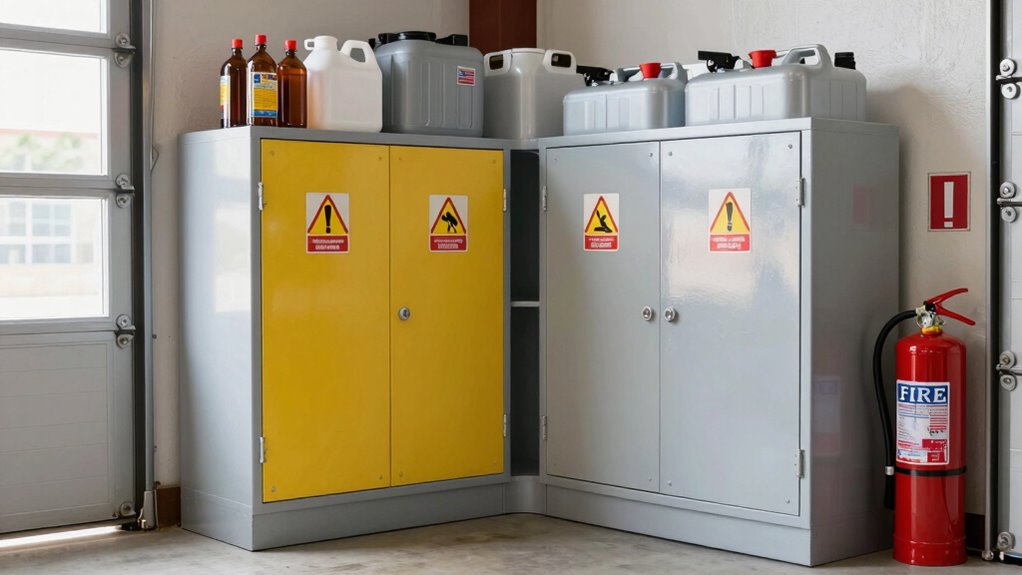
Storing chemicals properly in your garage is crucial for safety and preventing accidents. One of the most effective ways to do this is by using clear safety signage to warn anyone about the presence of hazardous substances. Proper signage not only helps you remember which chemicals need special handling but also alerts visitors or family members to exercise caution. When chemicals are stored haphazardly, it’s easy for spills or leaks to occur, leading to potential fires or health hazards. Installing visible safety signs near chemical storage areas reminds everyone to follow safety protocols, such as wearing protective gear or avoiding open flames nearby.
Proper safety signage in your garage warns of hazards and prevents accidents.
Spill containment is another critical aspect of safe chemical storage. You should always have spill containment measures in place, like spill trays or secondary containment bins, to catch any leaks before they spread. This prevents chemicals from seeping into the floor and causing damage or creating slip hazards. Keeping chemicals in leak-proof containers and placing them on raised shelves or pallets helps ensure that accidental spills are confined and easier to clean up. When spills occur, prompt action is necessary to prevent dangerous reactions, especially if the chemicals are flammable or corrosive. Having spill kits nearby, equipped with absorbent materials and neutralizers, makes cleanup quicker and safer.
In addition to safety signage and spill containment, it’s essential to organize your chemicals systematically. Store chemicals based on their compatibility—separating acids from bases and flammable substances from oxidizers—so that accidental mixing doesn’t happen. Use clearly labeled containers and avoid storing chemicals in old or unmarked bottles. Proper organization minimizes the risk of accidents and makes it easier to find what you need quickly, reducing the chance of mishandling. Furthermore, understanding water safety principles can help prevent chemical hazards associated with leaks or spills reaching water sources or causing environmental damage.
Ventilation also plays a key role in safe storage. Keep your garage well-ventilated to prevent the buildup of toxic fumes, especially if you’re working with volatile chemicals. Make sure doors and windows are open when handling chemicals, and consider installing exhaust fans if needed. Regularly inspect your storage area for signs of leaks or deterioration, and replace any damaged containers immediately. Always read the labels and safety data sheets for each chemical, understanding their specific storage requirements.

PIG Containment Tray – Rim to Rim Dimensions 52.25" L x 28.25" W x 5" H – Interior Bottom Dimensions 48" L x 24" W – 23.93 gal. Sump Capacity – PAK919
- Material: Thick-wall, chemical-resistant polyethylene
- Design: Ribs add strength and elevate items
- Use Case: Ideal for temporary storage of leaking containers
As an affiliate, we earn on qualifying purchases.
As an affiliate, we earn on qualifying purchases.
Frequently Asked Questions
How Often Should Chemical Storage Areas Be Inspected?
You should inspect your chemical storage area at least once a month. During inspections, check for proper storage unit labeling, guaranteeing labels are clear and accurate. Look for signs of leaks or spills and verify spill containment measures are intact. Regular inspections help catch potential hazards early, preventing fires or leaks, and keep your garage safe. Consistent checks also ensure chemicals are stored correctly and compliance standards are met.
What Are the Signs of Chemical Leaks or Spills?
A chemical leak is like a silent alarm you can’t ignore. Watch for leak warning signs such as unusual chemical odors, which may smell sharp or pungent, and visible signs like damp spots, stains, or puddles. If you notice a chemical odor detection or find leaks, take immediate action. Regular inspections help catch these signs early, preventing hazards. Trust your senses—your nose and eyes are your best tools for leak detection.
Are There Specific Ventilation Requirements for Chemical Storage?
Yes, there are specific ventilation standards you should follow for chemical storage. You need to guarantee proper airflow requirements to prevent dangerous buildup of fumes. Install exhaust fans or vents that promote continuous airflow, and keep windows or vents open when possible. Adequate ventilation reduces the risk of fire, leaks, and odors, helping you maintain a safe environment in your garage. Always check local regulations for precise airflow requirements.
How Should Expired Chemicals Be Disposed of Safely?
Think of expired chemicals as ticking time bombs—you wouldn’t leave one unattended. To guarantee safe chemical waste disposal, never pour them down drains or onto the ground. Instead, consult local hazardous waste programs for proper expired chemical management. Contact your municipality or a licensed waste disposal service to handle these safely. Proper disposal prevents environmental harm and keeps your garage safe, just like defusing a bomb before it goes off.
Can I Store Chemicals Outside My Garage?
You can store chemicals outside your garage, but you need to consider outdoor storage and weather exposure carefully. Make certain they’re kept in a secure, weather-resistant container to prevent leaks, spills, or deterioration. Choose a cool, shaded spot away from direct sunlight and moisture. Regularly check on the storage area to detect any signs of leaks or damage. Proper outdoor storage helps protect your home and environment from potential hazards.

SmartSign – U9-1214-NA_7x10 "Danger – Chemical Storage Area, Authorized Personnel Only" Sign | 7" x 10" Aluminum Black/Red on White
- Material: Heavy-duty 40 mil aluminum
- Durability: Resists rust, lasts up to 7 years
- Design: Rounded, burr-free corners for safety
As an affiliate, we earn on qualifying purchases.
As an affiliate, we earn on qualifying purchases.
Conclusion
By following these garage chemical storage rules, you’re better equipped to prevent fires, leaks, and mystery smells. Keep chemicals organized, properly labeled, and stored away from heat sources to avoid potential hazards. Remember, a stitch in time saves nine—taking early precautions can save you from bigger problems down the road. Stay vigilant and proactive to ensure your garage remains a safe space for everyone. After all, an ounce of prevention is worth a pound of cure.

FastRack 5 Gallon Hedpak with Cap (Pack of 2) | BPA-free, Food-Grade, and Leak-Proof | White Water Container | Ideal for brewing, fermentation, or storage
- Package Includes: 2-pack 5-Gallon Hedpack with caps
- Material: Food-grade, BPA-free plastic
- Leak-Proof Design: Threaded cap for secure seal
As an affiliate, we earn on qualifying purchases.
As an affiliate, we earn on qualifying purchases.

iLIVING 12" Wall Mounted Shutter Exhaust Fan, Automatic Shutter, with Thermostat and Variable Speed controller, 0.6A, 960 CFM, 1400 SQF Coverage Area Silver (ILG8SF12V-ST)
- High CFM Air Flow: 960 CFM for large spaces
- Automatic Shutter System: Weather-resistant shutter for protection
- Variable Speed Control: Adjust airflow with precision
As an affiliate, we earn on qualifying purchases.
As an affiliate, we earn on qualifying purchases.
Pool season Picks
robotic pool cleaners
As an affiliate, we earn on qualifying purchases.