
If your LED work light flickers, electrical causes like voltage fluctuations, loose wiring, or unstable power supply might be the culprit. Check for poor connections, damaged wires, and guarantee proper grounding. Using surge protectors or voltage regulators can help stabilize power as well. Fixing these issues often requires tightening connections or replacing faulty wiring. For more detailed steps and safety tips, continue exploring how you can resolve your flickering issue effectively.

Get business pricing on garage and car supplies
- Business-only prices and quantity discounts
- Tax-exempt purchasing
- Multiple users, one account, clear invoices
Key Takeaways
- Power fluctuations, such as voltage drops or surges, often cause LED work light flickering.
- Loose wiring connections or damaged cables can lead to inconsistent electrical flow and flicker.
- Improper grounding or outdated circuits may disrupt stable power supply to the LED light.
- Installing voltage regulators or surge protectors can help stabilize power and reduce flickering.
- Regular inspection and tightening of wiring connections, or consulting a licensed electrician, can prevent electrical issues causing flicker.
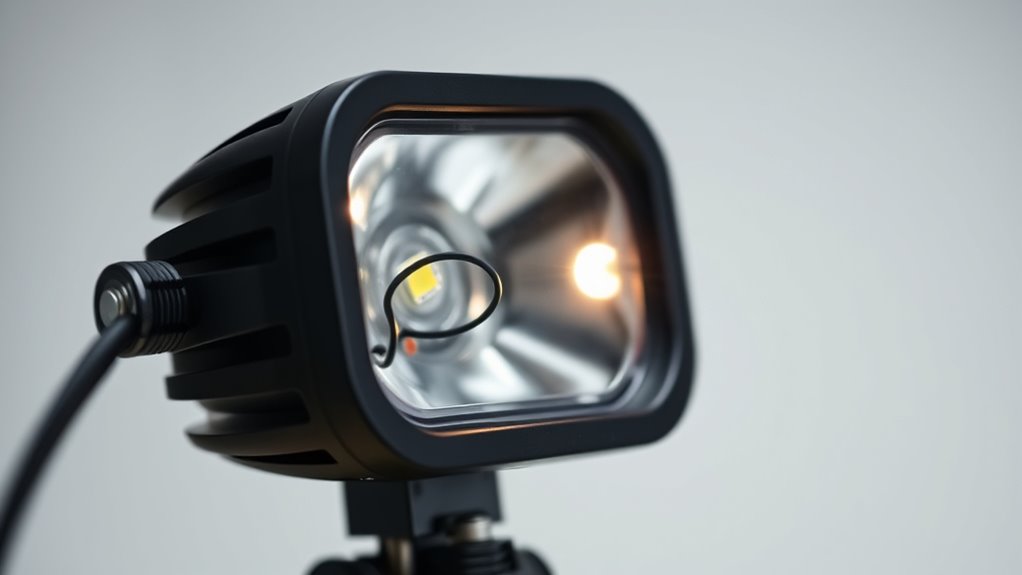
If you’ve noticed your LED work light flickering, you’re not alone. Flickering can be annoying and sometimes concerning, especially if you’re relying on your light for work or safety. One common cause behind flickering is power fluctuation. Power fluctuation happens when the electrical supply isn’t stable, causing inconsistent voltage levels that make the LED flicker. This often occurs if there’s an issue with the circuit or the power source, such as a nearby heavy appliance cycling on and off or an unstable electrical grid. Power fluctuation isn’t always your fault; it can be a problem with your home’s electrical system or the power supply from the utility company. When voltage drops or surges happen, LEDs, which are sensitive to voltage variations, respond by flickering. This is because LEDs require a consistent voltage to operate steadily, and any deviation affects their brightness and stability.
Wiring issues are another frequent cause of flickering in LED work lights. If your wiring isn’t properly installed or has become damaged over time, it can create intermittent connections that lead to flickering. Loose connections, frayed wires, or corroded terminals can all interrupt the steady flow of electricity, causing the LED to turn on and off rapidly. Sometimes, improperly grounded wiring or outdated circuits can also contribute to flickering. If you suspect wiring issues, it’s vital to inspect the connections and wiring pathways carefully. Turn off the power before examining the wiring to avoid electric shock. Look for loose screws, disconnected wires, or signs of corrosion. If you’re not comfortable doing this yourself, it’s best to call a professional electrician. They can identify and fix wiring problems, ensuring your LED work light receives stable power. Additionally, understanding electrical systems can help you better diagnose and prevent flickering issues in the future.
Addressing flickering caused by power fluctuation might involve installing a voltage regulator or surge protector to stabilize voltage levels. These devices help smooth out fluctuations and prevent the LEDs from flickering due to inconsistent power. If wiring issues are the cause, fixing or replacing faulty wiring and ensuring proper grounding can resolve the problem. Sometimes, a simple tightening of connections or replacing damaged wires makes a significant difference. Remember, safety comes first—if you’re unsure about handling electrical components, hire a licensed electrician. By addressing power fluctuation and wiring issues, you can restore your LED work light’s steady illumination and prevent future flickering. Taking these steps not only improves the light’s performance but also guarantees your safety during work tasks.
As an affiliate, we earn on qualifying purchases.
Frequently Asked Questions
Can Flickering LED Work Lights Cause Eye Strain?
Yes, flickering LED work lights can cause eye strain and vision fatigue. When your eyes constantly try to adjust to the flickering light, it strains your eye muscles, leading to discomfort and fatigue. Over time, this can also cause headaches or worsen existing eye issues. To prevent this, make certain your LED lights are flicker-free or use steady, high-quality lighting to protect your eyes during extended work sessions.
Are There Specific Brands That Are Less Prone to Flickering?
Certain brands are less prone to flickering because of their higher reliability and quality control. You should look for well-known brands with strong reputations for product reliability, like DEWALT or Milwaukee. These brands often offer better product warranties, giving you peace of mind if flickering issues occur. Investing in reputable brands guarantees you get durable, flicker-free LED work lights that last longer and perform consistently.
How Long Do LED Drivers Typically Last Before Causing Flicker?
Think of your LED driver as the heart of your work light’s longevity. Typically, LED drivers last around 50,000 hours, providing years of reliable service. However, their durability depends on quality and usage. When the driver begins to fail, flickering may occur, signaling it’s time for a replacement. Properly maintained, a high-quality driver guarantees your LED’s lifespan remains uninterrupted and flicker-free for the long haul.
Is Flickering More Common in Outdoor or Indoor LED Work Lights?
You’ll find flickering is more common in outdoor environments due to exposure to moisture, temperature fluctuations, and power surges. Indoor settings usually offer more stable electrical conditions, reducing flicker. When using LED work lights outdoors, verify they’re rated for outdoor use and protected from the elements. Proper wiring, quality drivers, and stable power supplies help minimize flickering in both outdoor and indoor environments, keeping your work consistent and safe.
Can Flickering Indicate a Safety Hazard or Electrical Fault?
Flickering can signal electrical faults or safety risks. Imagine your LED work light as a heartbeat—if it races or stutters, it’s a warning sign. Flickering may indicate loose wiring, voltage fluctuations, or faulty connections, all of which pose safety hazards. Ignoring these signs risks electrical faults leading to shocks or fires. Always inspect and address flickering promptly to guarantee safe, reliable lighting on your worksite.
voltage regulator for LED lights
As an affiliate, we earn on qualifying purchases.
As an affiliate, we earn on qualifying purchases.
Conclusion
So, if your LED work light starts flickering, don’t just shrug it off—fight back! With the right fixes, you can banish that pesky flicker forever, turning your work site into a flicker-free zone of brilliance. Imagine a world where your light shines steady as the sun, never wavering, never annoying. Take action now, fix those electrical issues, and let your work light glow with unstoppable, relentless consistency—because you deserve nothing less!
As an affiliate, we earn on qualifying purchases.
As an affiliate, we earn on qualifying purchases.
Halloween Picks
halloween
As an affiliate, we earn on qualifying purchases.