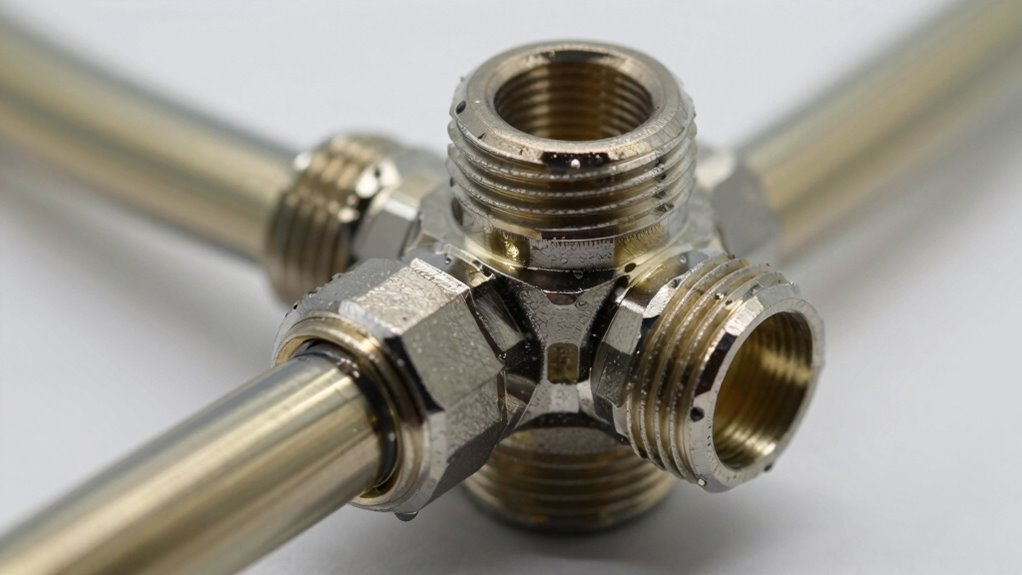

Quick-connect air fittings are designed to lock onto tubing securely, creating a reliable, leak-free seal. To guarantee proper seating, push the fitting firmly until it clicks, confirming it’s fully inserted. If the connection leaks, double-check that it’s properly seated and that the O-rings are intact and clean. Over-tightening can cause damage, so tighten only as needed. For more detailed tips on preventing leaks and maintaining your fittings, keep exploring these essential installation techniques.
Open a free Amazon Business account
Business pricing, bulk buying and tax-exempt orders.
As an affiliate, we earn on qualifying purchases.
Key Takeaways
- Proper seating of the fitting ensures a secure seal and prevents leaks during operation.
- Correctly cutting and fully inserting tubing is essential for reliable connection and sealing.
- Inspect and clean fittings before installation to avoid debris causing leaks or improper seating.
- Over-tightening can deform fittings and cause leaks; tighten only as needed to maintain seal integrity.
- Regularly check fittings for wear, damage, or debris to maintain proper seal performance and prevent leaks.

Are you tired of wasting time on complicated air fitting installations? Quick-connect air fittings are designed to simplify the process, but even the best systems can run into issues if not installed correctly. To guarantee a secure seal and prevent leaks, it’s essential to follow proper installation tips and understand common troubleshooting methods. First, always check that the fittings are compatible with your tubing and air source. Using the wrong size or type can lead to poor connections and leaks down the line. Before connecting, inspect the fittings for any damage or debris. Dirt, dust, or burrs can interfere with the seal, so clean the fittings thoroughly. When connecting the fittings, push firmly but smoothly until you hear or feel a click indicating it’s properly seated. Avoid forcing the connection, as excessive pressure can damage the internal components and compromise the seal. If you find that the fitting isn’t locking in securely, double-check that the tubing is cut squarely and inserted fully into the fitting. Sometimes, uneven cuts or incomplete insertions cause leaks or disconnections. Once connected, gently tug on the tubing to ensure it’s securely held in place. A loose connection is a common troubleshooting issue and can often be remedied by reseating the tube or replacing worn-out O-rings inside the fitting. When installing multiple fittings, keep track of their orientation and ensure they are all properly seated to prevent leaks under pressure. If you notice air escaping or decreased system pressure, re-examine each connection for proper seating and sealing. Tighten fittings only as much as necessary; over-tightening can damage threads or deform the fitting, leading to leaks. Remember, many leaks are caused by improper seating or damaged seals, so replacing worn O-rings or seals can save time and money. Regularly inspect your fittings for signs of wear, cracking, or debris buildup. Maintaining a clean, dry environment helps prevent common troubleshooting issues. Proper installation also relies on understanding sound vibrations and their impact on health, as they can influence cellular regeneration and overall system performance. If leaks persist despite correct installation, test the fittings under pressure to identify the source. Sometimes, fittings may be faulty or damaged, requiring replacement. To conclude, proper installation tips involve clean, compatible fittings, careful insertion, and gentle tightening. Being attentive to these details minimizes common troubleshooting problems like leaks and disconnections, ensuring your quick-connect air fittings operate reliably and efficiently. With a little care and attention, you can streamline your setup process and enjoy a leak-free, hassle-free pneumatic system.

USANOOKS Microfiber Cleaning Cloth Grey - 12 Pcs (12.5"x12.5") - High Performance - 1200 Washes, Ultra Absorbent Microfiber Towel Weave Grime & Liquid for Streak-Free Mirror Shine - Car Washing Cloth
- High Absorbency Grip Root Weave: Locks in 8-10x weight in liquids
- Lint-Free and Scratch-Resistant: Ensures streak-free, mirror shine
- Durable for 1200+ Washes: Long-lasting reusable microfiber cloths
As an affiliate, we earn on qualifying purchases.
Frequently Asked Questions
Can Quick-Connect Fittings Be Used With Liquids?
Quick-connect fittings are primarily designed for gases like air, so they’re not ideal for liquids. You should check the liquid compatibility because material limitations can cause leaks or damage if the fitting isn’t suited for certain liquids. Using them with liquids can result in improper sealing, leaks, or even failure of the fitting. Always verify the manufacturer’s specifications to guarantee the fittings are appropriate for your specific liquid application.
What Materials Are Common for Quick-Connect Fittings?
Imagine your fittings as guardians of your system’s integrity. Common materials like brass, stainless steel, and plastic form these guardians, each chosen for their material compatibility and corrosion resistance. Brass offers durability, while stainless steel excels in harsh environments. Plastic fittings, lightweight and resistant to corrosion, suit less demanding applications. You select the material based on your needs to make certain a reliable, leak-free connection that withstands the test of time.
How Do I Identify Compatible Quick-Connect Fittings?
To identify compatible quick-connect fittings, you should check fitting compatibility by matching the type, such as push-to-connect or bayonet. Focus on size matching, ensuring the fitting’s diameter matches your hose or pipe to prevent leaks. Look for manufacturer markings or specifications on both fittings. If unsure, bring your fittings to a hardware store or consult the manufacturer’s guidelines to verify compatibility and guarantee a proper, leak-free connection.
Are Quick-Connect Fittings Reusable After Disconnection?
Yes, quick-connect fittings are generally reusable after disconnection if they remain in good condition. When you perform disconnection procedures, guarantee the fitting’s seal is intact and free from damage. Properly inspecting the fitting after each use helps extend its lifespan. If you notice cracks or leaks, replace the fitting. Reusing fittings saves money and time, but always verify their integrity to prevent air leaks or connection issues.
What Tools Are Needed for Installing Quick-Connect Fittings?
Think of installing quick-connect fittings like assembling a puzzle—you’ll need the right tools to guarantee a perfect fit. Typically, you’ll require installation tools such as a wrench or pliers to loosen or tighten fittings. Before starting, do compatibility checks to confirm the fittings match your tubing or pipe size. Having these tools ready helps you install the fittings securely, preventing leaks and ensuring ideal performance.

HOMEXCEL Microfiber Cleaning Cloth 12 Pack, 12.5 x 12.5 inch Microfiber Towels for Cars, Ultra Absorbent Washing Cloth, Lint Free Streak Free Cleaning Rags for Car, Kitchen, and Window (Grey)
- High Water Absorption: Outstanding absorption for dirt and liquids
- Scratch-Free Cleaning: Soft fabric gently wipes without scratching
- Fast Drying: Rapidly absorbs water for quick drying
As an affiliate, we earn on qualifying purchases.
Conclusion
By understanding how quick-connect air fittings work, including proper sealing and seating, you can prevent leaks and make sure reliable connections. For example, if you notice air escaping from your fitting, checking the seal and ensuring the fitting is fully seated can save you time and avoid costly repairs. Remember, taking a moment to verify these details guarantees your tools stay airtight and perform at their best, keeping your projects running smoothly.

Amazon Basics Microfiber Car Drying Towels, Highly Absorbent, Lint Free, Scratch Free, Ultra-Soft, Car Detailing, Buffing and Polishing, 16" x 16", Yellow, 12-Pack
- Product Quantity: 12-pack of towels
- Size: 16 x 16 inches
- Material: Microfiber for drying and polishing
As an affiliate, we earn on qualifying purchases.

ULEEKA Car Backseat Organizer with 10" Table Holder, 9 Storage Pockets Seat Back Protectors Kick Mats for Kids Toddlers, Travel Accessories, 2 Pack (Black)
- Large Organizer Size: 24 x 16 inches for ample storage
- Adjustable Fit: Extra-long straps with quick-release buckles
- Multiple Storage Pockets: Front pockets for drinks, umbrellas, and toys
As an affiliate, we earn on qualifying purchases.
Flea & tick season Picks
flea and tick prevention
As an affiliate, we earn on qualifying purchases.