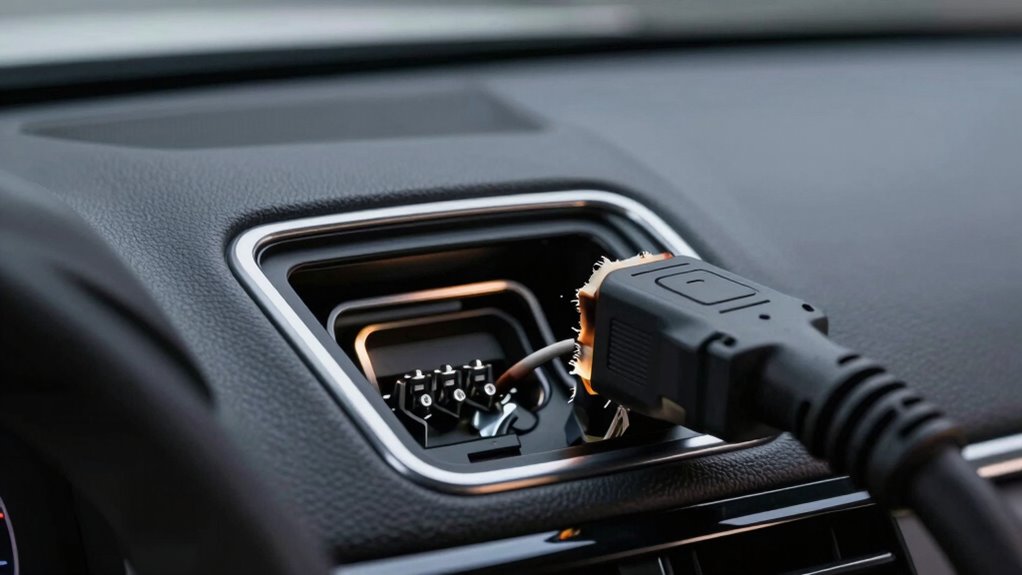

You should never leave cheap or non-reputable OBD2 devices plugged into your vehicle, especially if they lack proper security features. These devices can be vulnerable to hacking, risking unauthorized access to your car’s systems. Extended connection also increases safety risks and potential vehicle damage. Always unplug diagnostic tools after use and choose secure, trusted devices with regular firmware updates. To learn more about keeping your vehicle safe, keep going to discover essential tips.

Get business pricing on garage and car supplies
- Business-only prices and quantity discounts
- Tax-exempt purchasing
- Multiple users, one account, clear invoices
Key Takeaways
- Avoid leaving non-reputable or insecure OBD2 devices plugged in for extended periods to prevent hacking risks.
- Disconnect diagnostic tools immediately after completing vehicle diagnostics to reduce security vulnerabilities.
- Do not leave third-party or cheap scanners connected, as they may lack proper security protocols and cause vehicle issues.
- Securely remove devices with known security flaws to prevent unauthorized access or potential vehicle control.
- Use only devices with verified security features and compatibility to ensure ongoing vehicle safety during diagnostics.
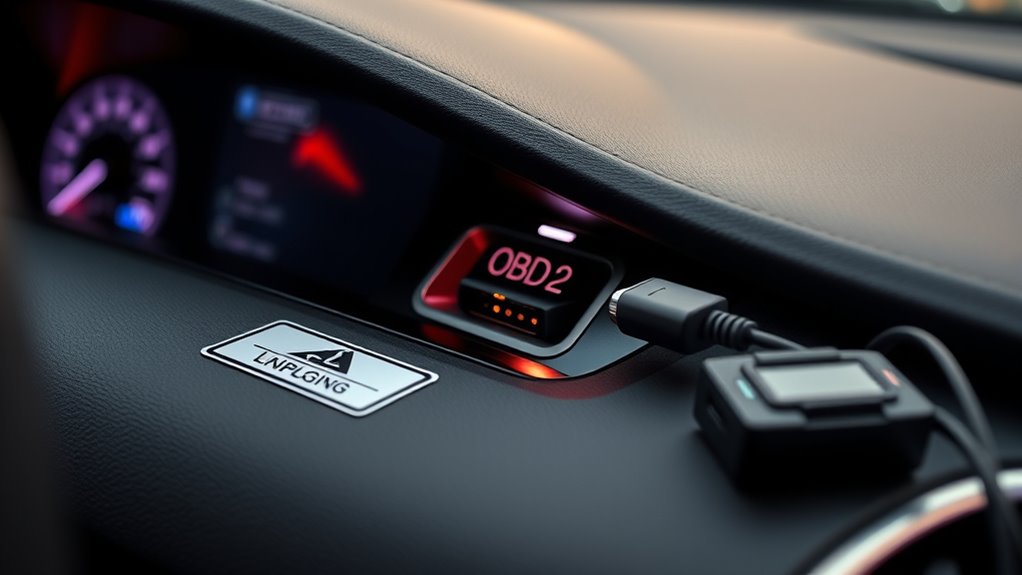
The OBD2 port is a valuable tool for diagnosing vehicle issues, but it also poses safety risks if not handled properly. When you plug in a device, it’s essential to contemplate your vehicle’s security and the compatibility of the device you’re using. Not all OBD2 scanners or adapters are created equal, and using incompatible or poorly manufactured devices can jeopardize your vehicle’s security and your safety.
First, you need to be aware that some third-party devices may not be fully compatible with your vehicle’s make and model. Using incompatible hardware can lead to incorrect readings, potential damage to your vehicle’s electronic systems, or even security vulnerabilities. For instance, cheaper or generic scanners might lack proper security protocols, making it easier for malicious actors to access or manipulate your vehicle’s data. Always check that your device is compatible with your specific vehicle and that it comes from a reputable manufacturer. This reduces the risk of unintended consequences and enhances your vehicle’s security.
Ensure your OBD2 device matches your vehicle’s make and model for safe, accurate diagnostics.
Leaving certain devices plugged into your OBD2 port for extended periods can also pose risks. Some devices, especially those that are not designed with robust security measures, could be exploited by hackers if left unattended. These devices might have vulnerabilities that could be accessed remotely, potentially giving unauthorized individuals control over your vehicle’s electronic systems. To protect your vehicle’s security, only keep devices plugged in when actively diagnosing or monitoring, and remove them afterward.
Another important aspect is to avoid leaving devices that aren’t designed for continuous connection plugged in. Once you’re done, unplug your OBD2 scanner or adapter to prevent any potential security breaches. Even if the device itself seems harmless, it’s better to err on the side of caution. Many modern vehicles have sophisticated security features, but these can be bypassed if unsecure devices remain connected for long periods. Secure connection protocols are vital for safeguarding your vehicle’s electronic systems and should always be a consideration when choosing diagnostic tools.
Frequently Asked Questions
Can Leaving an OBD2 Device Plugged in Cause Car Theft?
Leaving an OBD2 device plugged in can increase the theft risk since it might allow unauthorized access to your vehicle’s systems. Thieves could potentially disable security features or manipulate data to steal your car more easily. To protect yourself, unplug the device when not in use, especially if it’s a generic or easily accessible one, reducing the chances of unauthorized access and safeguarding your vehicle from theft.
Are There Any Legal Issues With Using Aftermarket OBD2 Devices?
Using aftermarket OBD2 devices can bring legal liabilities if you ignore legal compliance and aftermarket regulations. You might face fines or legal issues if the device modifies emissions or violates vehicle modification laws. Always check local laws before installing or using these gadgets. Stay safe and legal by verifying that your device complies with regulations, ensuring you don’t inadvertently invite legal problems while enjoying vehicle diagnostics or tuning.
How Often Should I Check My OBD2 Port for Safety?
You should check your OBD2 port regularly for safety, ideally during routine port maintenance or safety inspections. Look for signs of corrosion, loose connections, or any debris that might cause shorts or damage. Make it a habit to inspect the port at least once a month, especially if you notice any electrical issues or if you’ve recently used an aftermarket device. Staying vigilant helps prevent potential hazards and guarantees your vehicle’s safety.
Do All Vehicles Have the Same OBD2 Port Location?
Ever wonder if all vehicles hide their secrets in the same spot? Not quite. OBD2 port locations vary with vehicle make and model, like a treasure map with different landmarks. While most cars place it under the dashboard on the driver’s side, some sit behind panels or near the center console. Always check your vehicle’s manual, because port locations are as unique as your car’s personality.
Can a Faulty OBD2 Device Damage My Vehicle’s Electronics?
Yes, a faulty OBD2 device can cause electronic failure or even vehicle damage. When the device malfunctions, it might send incorrect signals or short circuits through your vehicle’s electronics, risking serious issues. To avoid this, always use high-quality equipment and remove the device when not in use. Keeping an eye on device performance helps prevent potential electronic failures and safeguards your vehicle’s overall health.
Conclusion
So, next time you think leaving that OBD2 device plugged in is no big deal, remember you’re basically inviting a hacker party in your car. Sure, it might seem harmless, but who knows what digital mischief they could cause while you’re busy ignoring the risk. Better safe than sorry—unplug that device and keep your car’s secrets safe from prying eyes. After all, your vehicle’s safety is no joke, even if it’s just a port.
Halloween Picks
halloween
As an affiliate, we earn on qualifying purchases.