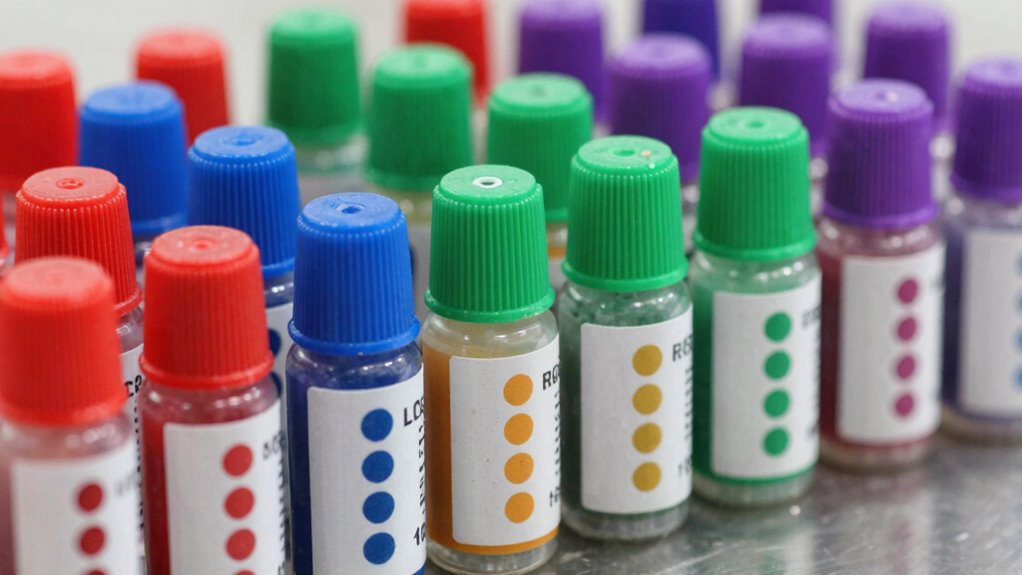
Threadlocker colors indicate their strength and ideal use. Purple is for light, temporary bonds and easy removal. Blue offers medium strength for general, reliable locking. Red is high strength, meant for permanent, heavy-duty fastening that needs heat for removal. Green is a high-strength wicking type, perfect for high-vibration environments and penetrating pre-assembled threads. Knowing which to select helps ensure your projects stay secure and serviceable—if you want to get it just right, there’s more to uncover.
Key Takeaways
- Threadlocker colors indicate strength: purple (light), blue (medium), red (high), green (permanent).
- Purple is for temporary bonds; blue provides reliable securing; red is for permanent locking; green is for high-strength, post-assembly penetration.
- Proper surface cleaning and application techniques are essential for optimal performance of each color.
- Removal methods vary: purple can be loosened easily; red requires heat; green needs heat or special tools.
- Always verify material compatibility and follow manufacturer guidelines for safe, effective use of threadlockers.
Top picks for "threadlocker explain color"
Open Amazon search results for this keyword.
As an affiliate, we earn on qualifying purchases.
Understanding the Basics of Threadlocker Colors
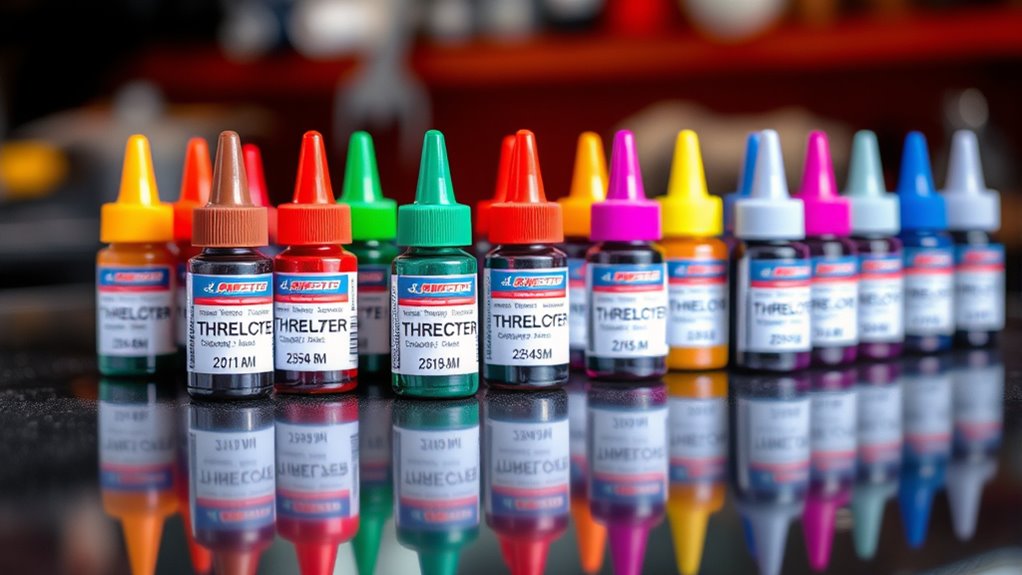
Understanding the basics of threadlocker colors helps you select the right product for your needs. Each color indicates a different strength and purpose, making it easier to match the threadlocker to your application. Purple is low strength and ideal for temporary fixes or delicate electronics, as it’s easy to remove. Blue offers medium strength, suitable for most general-purpose tasks where you want a balance between security and serviceability. Red is high strength, designed for permanent locking in high-vibration, heavy-duty environments, requiring heat for removal. Green is a high-strength, wicking grade for post-assembly use, penetrating fasteners to create a permanent bond. Remember, these colors follow standards but can vary across brands, so always check product data sheets to ensure proper application. Incorporating knowledge of sound vibrations can also assist in understanding how different environments or procedures might influence the effectiveness of threadlockers. Additionally, awareness of piercing care and proper handling techniques can help prevent damage or improper application when working with threaded components. Being mindful of thread engagement is also important, as the depth and quality of thread contact can impact the overall hold strength of the threadlocker. Understanding application techniques can further improve the effectiveness and longevity of the lock, ensuring secure assembly. Moreover, considering environmental conditions such as temperature and exposure to chemicals can help select the most durable threadlocker for specific applications.
Purple Threadlocker: When to Use It
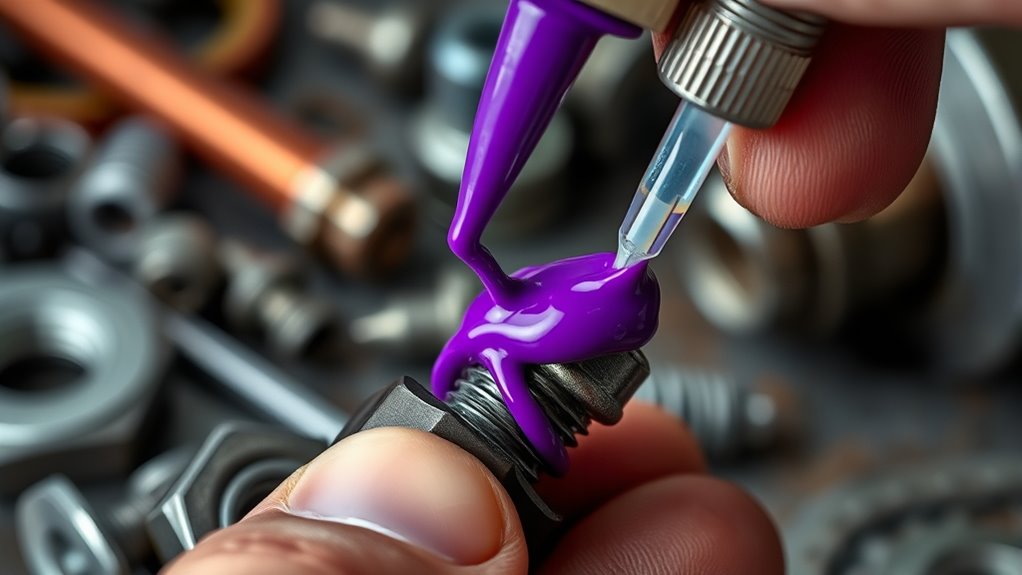
Purple threadlocker is ideal when you need a temporary hold on fasteners that require frequent removal or adjustment. It’s perfect for delicate components like electronics, small instruments, or small engines where you want a secure fit but also easy removal without damage. This low-strength formula allows you to loosen or tighten fasteners with hand tools, making maintenance simple. It minimizes vibration resistance, so it’s suitable for parts that may need to be accessed regularly. Use purple threadlocker when you want to prevent loosening due to vibration but don’t want a permanent bond. It’s a reliable choice for applications that require occasional disassembly, ensuring fasteners stay secure during operation but come apart easily when needed. Understanding threadlocker strength ratings can help you select the most appropriate type for your project, especially in situations where correct application and removal are critical to maintaining equipment integrity. Knowing the proper usage guidelines ensures optimal performance and easy maintenance when using purple threadlocker. Additionally, understanding the horsepower of electric dirt bikes can help inform your decisions about engine maintenance and component fitting, emphasizing the importance of choosing the right threadlocking options for high-performance parts. Proper application techniques can further enhance the effectiveness of purple threadlocker, ensuring fasteners are neither too loose nor overly tight, which can be crucial for equipment safety and longevity.
Blue Threadlocker: Versatile Applications
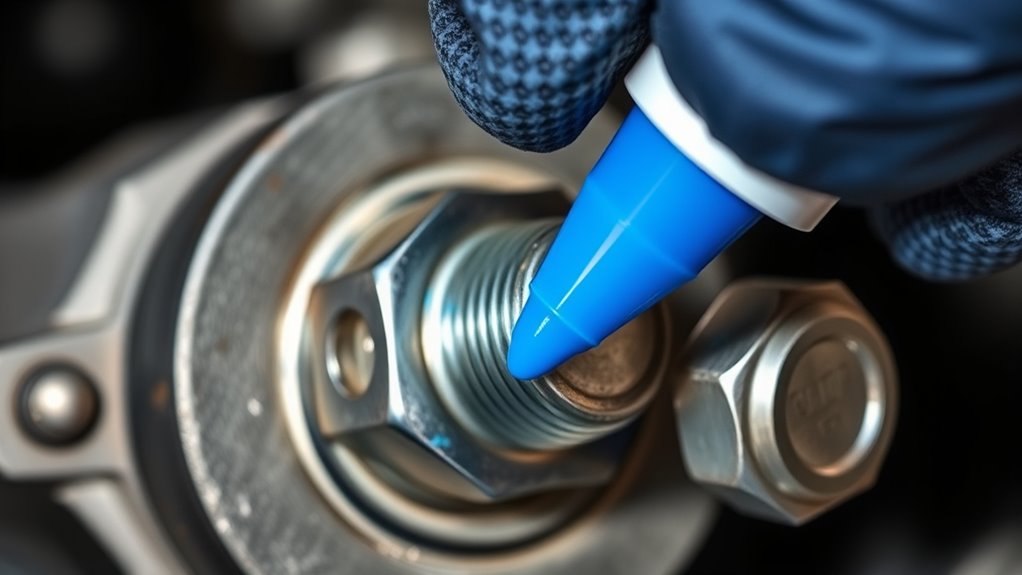
Blue threadlocker is a versatile choice for a wide range of general-purpose applications where moderate vibration and shock are common. It provides a reliable bond that prevents fasteners from loosening due to everyday movement or minor impacts without making disassembly difficult. You can use it on bolts, nuts, and threaded fasteners in machinery, automotive components, and household fixtures. Its medium strength allows you to remove fasteners with standard hand tools when maintenance or adjustments are needed. Products like Loctite 242, 243, or 248 are popular options. Blue threadlocker strikes a balance by securing fasteners securely while still enabling easy removal, making it ideal for parts that require periodic servicing or adjustments without risking damage or excessive effort. Proper application techniques can also help ensure optimal performance and ease of removal when needed.
Red Threadlocker: For Heavy-Duty Locking
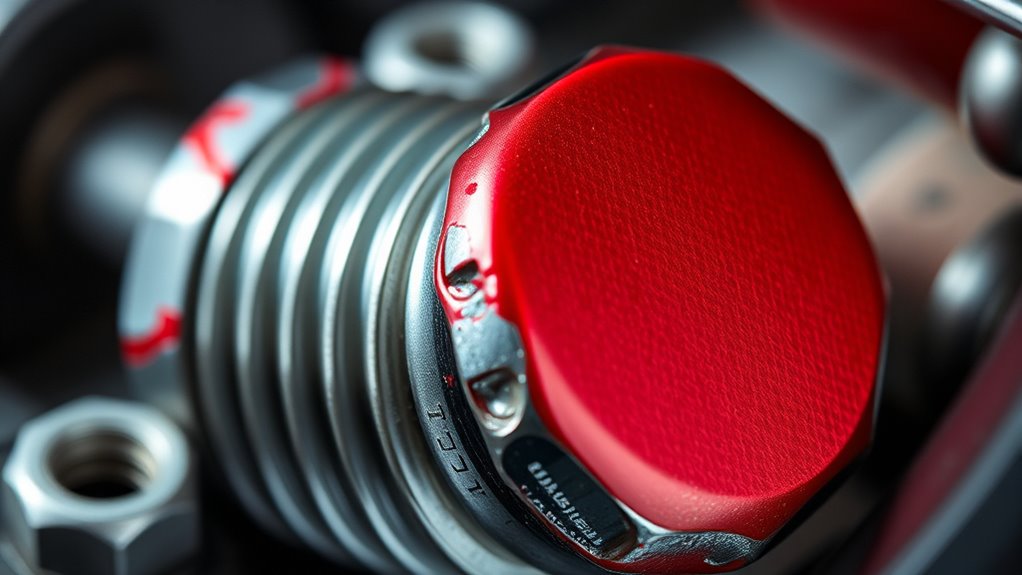
Red threadlocker is designed for applications that demand maximum security and durability. It provides a permanent bond, preventing fasteners from loosening under heavy vibration or shock. When you use red threadlocker, you’re ensuring that critical components stay locked in place, even in high-stress environments. It’s ideal for heavy machinery, automotive parts, and structural applications where disassembly is rarely needed. To remove fasteners secured with red threadlocker, you’ll need to apply heat around 250°C and use proper tools. This high-strength formula is resistant to oils and other contaminants, making it suitable for demanding conditions. Keep in mind, it’s not meant for easy removal or frequent maintenance, so use it where permanent locking is essential and disassembly requires significant effort. Incorporating energy-efficient solutions can further enhance the sustainability of your machinery and reduce overall environmental impact. Additionally, understanding the color codes helps ensure you select the right threadlocker for your specific needs. Proper surface preparation and cleaning often improve adhesion and performance, ensuring a reliable bond. For optimal results, always follow manufacturer guidelines and consider application temperature to ensure proper curing and performance.
Green Threadlocker: Wicking and High Vibration Settings
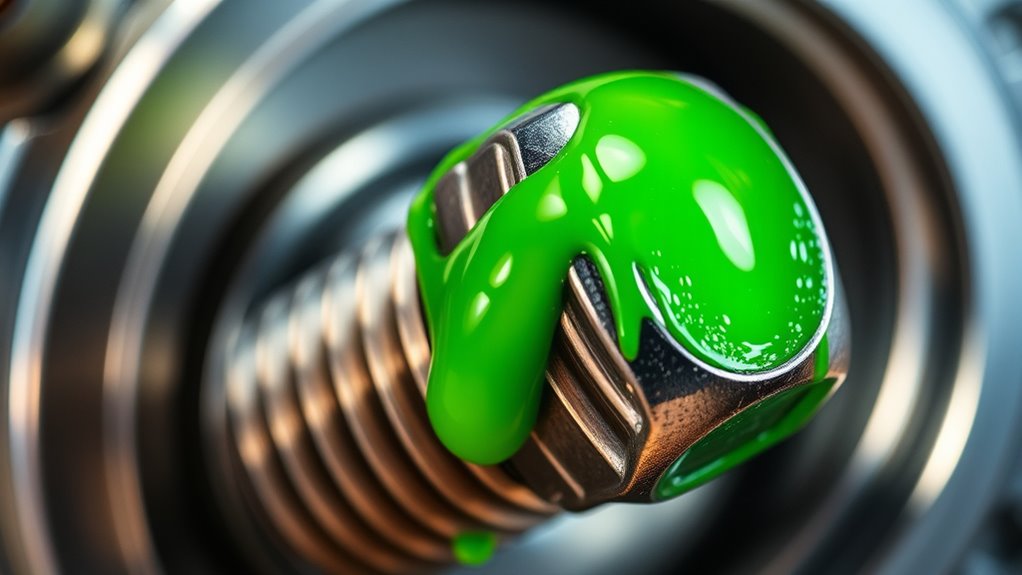
Green threadlockers use a wicking process that allows the adhesive to penetrate preassembled fasteners effectively. They cure quickly on active metals, providing a permanent bond suitable for high-vibration environments. To remove or disassemble, you’ll need heat or specialized tools, especially given their compatibility with various fastener materials. Application techniques are essential to ensure optimal performance and durability of the bond. Additionally, understanding the color coding system helps select the right threadlocker for specific applications. Knowing how to properly apply green threadlockers can significantly improve their effectiveness and longevity. Proper application also depends on selecting the appropriate fastener size to ensure a secure fit and optimal bonding.
Penetration and Cure Process
Because green threadlockers are designed with a high-penetration, wicking formulation, they effectively seep into preassembled fasteners, ensuring a strong bond even in high-vibration environments. When applied, the low-viscosity formula quickly penetrates tiny gaps and threads, reaching metal surfaces that might be inaccessible with thicker adhesives. This wicking action allows the threadlocker to cure on active metals, creating a permanent bond. The curing process begins as the solvent evaporates, leaving behind a robust, high-strength bond that resists loosening from vibrations or shocks. To achieve ideal penetration and curing, clean the surfaces thoroughly before application. Keep in mind, green threadlockers cure without disassembly, so proper surface preparation is essential for maximum performance and long-lasting security.
Suitable Fastener Materials
Green threadlockers are ideal for fasteners made from active metals such as brass, copper, and plated steel, which can chemically bond with the high-penetration formulation. Their low viscosity allows them to wick into preassembled threads, ensuring a secure hold even in high-vibration environments. You’ll want to use green threadlockers when working with:
- Fasteners in electrical equipment and electronics
- Components that require permanent locking without disassembly
- Brass or copper fittings prone to loosening
- Settings with vibration, like machinery or automotive parts
- High-stress assemblies needing a strong, durable bond
Because of their chemical bonding capabilities, green threadlockers are perfect for ensuring fastener security where disassembly isn’t planned. Just remember, they cure on active metals, so proper surface cleanliness is essential.
Removal and Disassembly Tips
To effectively remove green threadlockers, especially on fasteners subjected to high vibrations, applying heat is often the most reliable method. Use a heat gun or torch to raise the temperature around the fastener to about 250°C (482°F). This softens the adhesive, making it easier to break the bond. Once heated, let it cool slightly, then use hand tools like pliers or wrenches to loosen the fastener. Be cautious not to overheat surrounding components. If heat isn’t an option, mechanical methods like drilling or cutting may be necessary, but these can damage the fastener or substrate. Always wear safety gear and work carefully to avoid injury. Properly heating and then applying mechanical force is your best bet for disassembling high-strength green threadlocked fasteners. Understanding threadlockers’ bonding strength can help you choose the right removal method.
Matching Threadlocker Strength to Your Needs

Choosing the right threadlocker strength depends on your specific application and how easily you need to remove the fastener later. To match strength to your needs:
Selecting the correct threadlocker strength ensures secure fastening and easy removal when needed.
- Use purple threadlocker for temporary fixes or when frequent disassembly is needed.
- Opt for blue for general-purpose applications where moderate vibration occurs but removal is still possible.
- Choose red for permanent locking on high-vibration, heavy-duty parts that shouldn’t come apart easily.
- Select green for post-assembly locking in high-vibration environments, especially on preassembled parts.
- Consider the environment—high temperatures or exposure to chemicals might influence your choice.
Matching the right strength ensures your fasteners stay secure without causing damage during removal. It’s all about balancing security with serviceability.
Surface Preparation and Application Tips
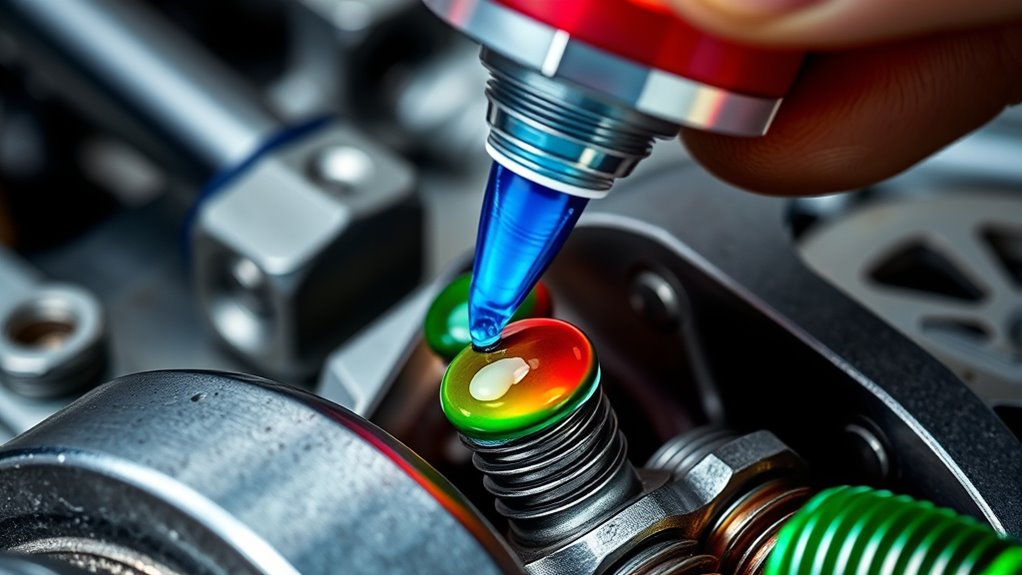
Before applying threadlocker, make sure to clean the fastener surfaces thoroughly to guarantee proper adhesion. Use the right amount of product—too little won’t secure, too much can cause messes or prevent proper curing. Allow enough time for the threadlocker to cure fully, so it provides maximum holding strength.
Clean Fastener Surfaces
Ensuring fastener surfaces are clean is essential for ideal threadlocker performance, as contaminants like oil, dirt, or rust can prevent proper adhesion and weaken the bond. Before applying, thoroughly wipe the surfaces with a degreaser or isopropyl alcohol to remove residues. Use a wire brush or scraper to eliminate rust or debris if needed. Make sure fasteners are dry and free of oil or grease. Proper cleaning helps the threadlocker cure fully and provides maximum holding strength. Remember these tips:
- Use a lint-free cloth for wiping surfaces
- Avoid touching cleaned areas with bare hands
- Remove rust with a wire brush or abrasive pad
- Ensure fasteners are completely dry before application
- Consider using a cleaning solvent for stubborn contaminants
Following these steps guarantees a reliable, long-lasting bond.
Apply Proper Amounts
Applying the right amount of threadlocker is vital for ideal performance. Too much can cause excess to squeeze out and harden outside the joint, making disassembly difficult. Too little may not provide enough bonding strength or vibration resistance. Typically, a small drop or a thin film on the fastener threads is enough. Apply the threadlocker to the clean, dry threads, guaranteeing it penetrates evenly. For larger fasteners, consider applying a few drops or a thin layer around the threads. Avoid overloading the fastener with excess product, which can lead to mess and compromised performance. Use a brush or applicator if needed to control the amount. Remember, precise application ensures proper curing, secure locking, and easier future removal if necessary.
Allow Adequate Curing
Proper surface preparation is essential for the threadlocker to cure effectively and achieve maximum strength. If the surface isn’t clean and dry, the adhesive won’t bond properly, compromising its holding power. Before applying, make sure to remove dirt, grease, or rust. Allow the threadlocker enough time to cure fully before putting the parts into service. Rushing the curing process can weaken the bond and lead to failure. To ensure proper curing:
- Use a lint-free cloth and a suitable cleaner to prep surfaces
- Follow the manufacturer’s recommended curing time
- Avoid exposing freshly applied threadlocker to moisture or dirt
- Do not tighten parts until the adhesive has cured sufficiently
- Be patient—waiting guarantees a strong, reliable bond for the long run
Common Mistakes and How to Avoid Them
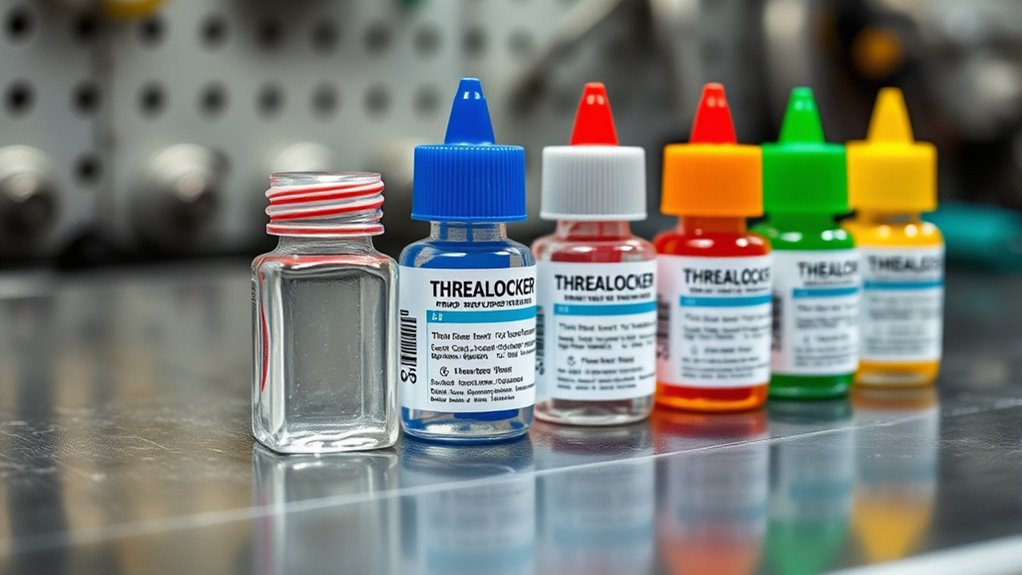
One common mistake is choosing the wrong threadlocker strength for the application, which can lead to either insufficient locking or difficulty in disassembly. Using a weak threadlocker, like purple, on high-vibration or heavy-duty fasteners can cause loosening over time. Conversely, applying a high-strength red threadlocker where quick removal is needed makes disassembly difficult and may damage components. Another mistake is neglecting proper surface preparation; dirty or oily surfaces prevent proper curing and reduce effectiveness. Additionally, using the wrong color for the application’s needs—such as applying blue where a permanent lock is required—can compromise safety and maintenance. Always match the threadlocker to the application’s strength requirements, clean surfaces thoroughly, and double-check the product’s specifications to avoid these common pitfalls.
Compatibility and Safety Considerations

Choosing the right threadlocker isn’t just about strength; it also involves understanding its compatibility with different materials and guaranteeing safety during application. You need to be aware of the substrates you’re working with to prevent damage or ineffective bonding. For example, green threadlockers bond well with active metals like steel but may not work on plastics. Always check product data sheets for compatibility details. Safety is essential—wear gloves, avoid skin contact, and work in well-ventilated areas. Here are some key considerations:
Choose the right threadlocker by checking material compatibility and prioritizing safety for effective bonding.
- Verify material compatibility before application
- Use appropriate personal protective equipment
- Avoid contact with plastics unless specified
- Ensure surfaces are clean and dry
- Store threadlockers properly to prevent accidents
Following these steps helps prevent damage and guarantees safe, effective use.
Choosing the Right Threadlocker for Your Project
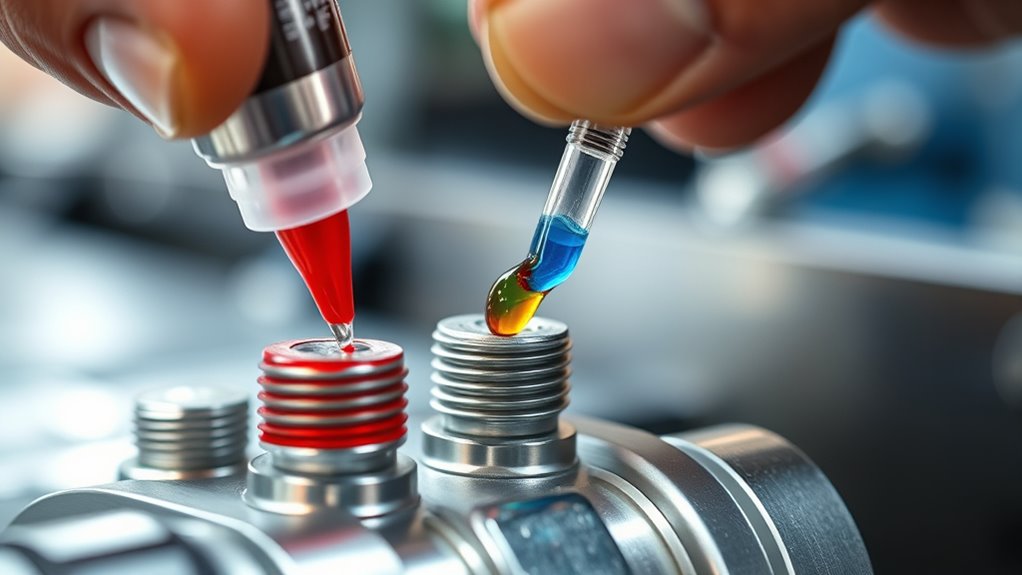
To choose the right threadlocker, you need to match the strength to your application’s requirements. Think about the material you’re working with to guarantee compatibility and prevent damage. Picking the correct strength and considering the substrate will help you secure your project effectively without unnecessary hassle.
Match Strength to Need
Selecting the right threadlocker depends on matching its strength to the specific needs of your project. You want enough holding power without making future disassembly difficult. Consider these factors:
- Use purple for light, temporary locking on electronics or small parts.
- Opt for blue when you need a reliable hold but still want easy removal for servicing.
- Choose red for permanent bonds in high-vibration, heavy-duty applications.
- Green works best when you need high strength and post-assembly penetration.
- Always match the threadlocker’s strength to the task to prevent damage or difficulty during disassembly.
Getting this right ensures your project stays secure without unnecessary hassle later. Picking the correct strength saves time, reduces frustration, and keeps your work efficient and safe.
Consider Material Compatibility
Ever wonder why some threadlockers bond better with certain materials? It all comes down to material compatibility. Not all threadlockers work equally well on every substrate. For example, green high-strength threadlockers cure directly on active metals like steel and stainless steel, forming a strong bond. However, they may not adhere well to plastics or certain non-metallic materials. Conversely, some formulations are designed specifically for plastics or composite materials, preventing damage during removal. Before choosing a threadlocker, verify your materials’ compatibility with the adhesive. Check manufacturer data sheets for guidance. Using an incompatible threadlocker can lead to poor adhesion, damage, or compromised security. Taking the time to match the right threadlocker to your materials guarantees maximum performance and easier maintenance.
Frequently Asked Questions
Can Threadlockers Be Used on Plastic Components Safely?
Yes, you can use threadlockers on plastic components, but you need to choose the right type carefully. Use a low-strength or purple threadlocker, as it’s designed for delicate materials and easy removal. Avoid high-strength options like red or green, which can damage plastics due to their stronger adhesion. Always clean the surfaces thoroughly before application and test on a small area first to prevent any damage.
How Long Does It Take for Each Color of Threadlocker to Cure?
Purple threadlocker typically cures in 10 to 15 minutes, providing quick temporary locking. Blue threadlocker usually takes about 24 hours to fully cure, offering a balance of strength and ease of removal. Red threadlocker, designed for permanent bonds, cures within 24 hours but reaches maximum strength after 24 hours or more. Green threadlocker cures in roughly 24 hours, ensuring a strong, permanent hold. Proper surface cleaning speeds up curing for all colors.
Are There Environmental or Temperature Limitations for Different Threadlockers?
Sure, because your threadlocker is just a delicate snowflake, right? Not quite. You should know that most threadlockers have temperature limits: purple and blue work fine from -65°F to 300°F, while red and green can handle up to 300°F to 300°F or more. Environmental factors like moisture and chemicals matter too. Check the manufacturer’s specs, or risk turning your project into a molten mess or a frozen disaster.
Can Multiple Threadlocker Types Be Applied to the Same Fastener?
Yes, you can apply multiple threadlocker types to the same fastener, but it’s not always necessary or beneficial. Usually, one type suffices based on the desired strength and permanence. If you do use different types, guarantee proper cleaning between applications to prevent contamination. Avoid mixing high and low strength formulas unless specifically recommended, as it could compromise the fastener’s integrity or make future removal more difficult.
What Are the Best Removal Methods for Hardened Red or Green Threadlockers?
Hardened red or green threadlockers are tough to remove, and you might think heating is the only way. In reality, careful mechanical methods like using a chisel or punch can break their bond. Applying heat to around 250°C helps soften them, making removal easier. You can also use chemical solvents designed for threadlockers. Just be cautious to avoid damaging the fastener or surrounding components during removal.
Conclusion
Choosing the right threadlocker can feel overwhelming, but with the right knowledge, you’ll lock everything in place like a master craftsman. Remember, using the wrong color can turn a simple fix into a nightmare, so pay attention to the specifics. With your newfound understanding, you’ll confidently tackle any project, ensuring durability and safety. Trust me, once you get the hang of it, you’ll be a threadlocking legend in your own right!