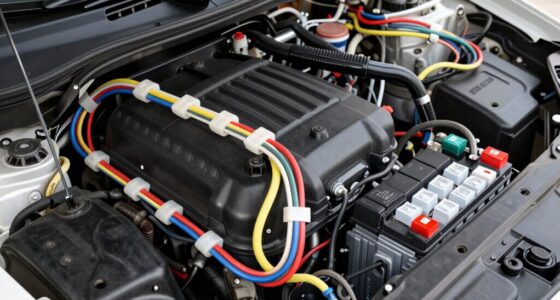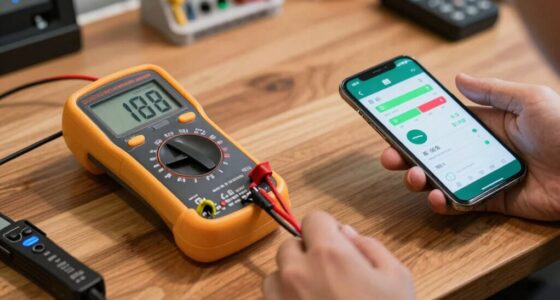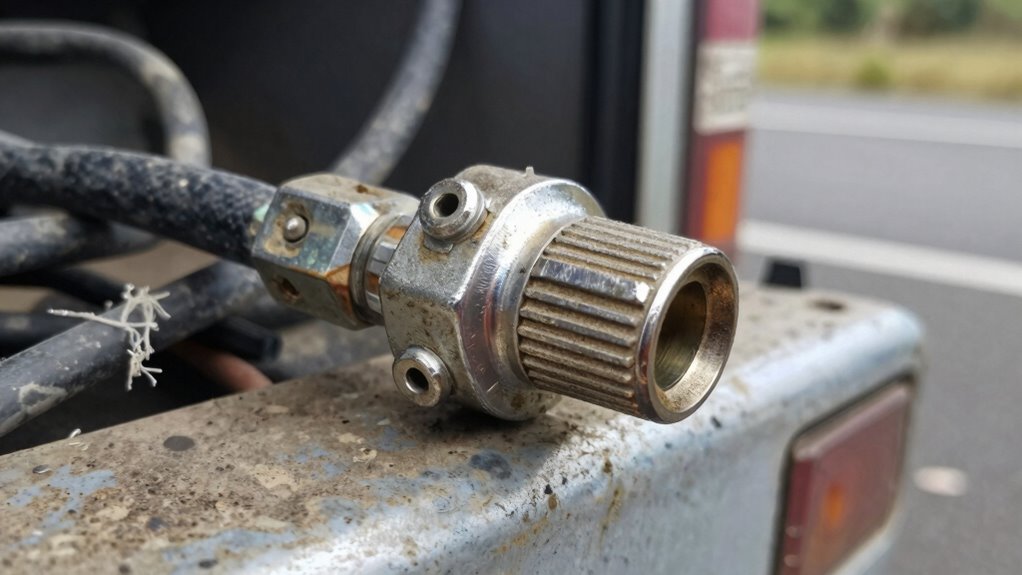

The 7-pin connector is mainly meant for signals like lights and brakes, not for powering or charging large loads in your RV or trailer. It can handle small accessories and auxiliary functions but isn’t built for high-current tasks like charging batteries or running bigger appliances. Relying on it for significant power often leads to disappointment, as it can cause overheating or damage. To learn more about proper charging solutions, keep exploring the options available.

Get business pricing on garage and car supplies
- Business-only prices and quantity discounts
- Tax-exempt purchasing
- Multiple users, one account, clear invoices
Key Takeaways
- The 7-pin connector is designed mainly for lighting and signaling, not high-current power transfer.
- It cannot reliably supply the large current needed for charging RV batteries or powering appliances.
- Attempting high power through it risks overheating, damage, or safety hazards.
- Its wiring standards prioritize signal integrity over heavy power loads, limiting charging capabilities.
- Dedicated wiring and systems are necessary for effective and safe RV or trailer charging needs.
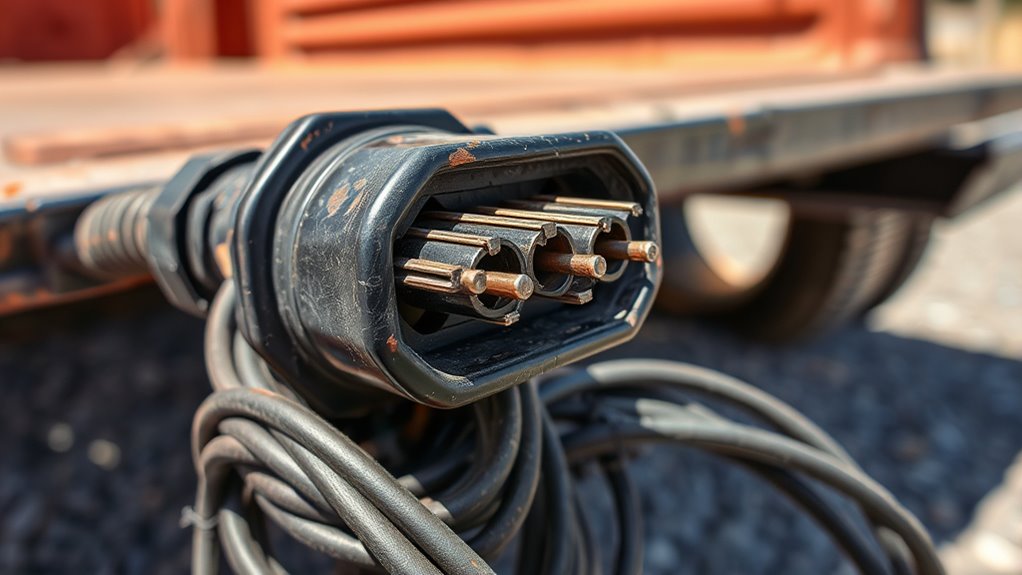
Have you ever wondered how to efficiently charge your trailer or RV using the 7-pin connector? If so, you’re not alone. Many trailer owners expect this standard connection to handle more than just basic lighting and signals, but in reality, its capabilities are often limited. Understanding how the 7-pin connector works, especially regarding electric vehicle compatibility and trailer wiring standards, can help set realistic expectations about what it can power and why it might fall short.
Many owners expect 7-pin connectors to power more than basic lighting, but their capabilities are limited.
The 7-pin connector is primarily designed to transfer signals for brake lights, turn signals, reverse lights, and sometimes auxiliary power. It adheres to specific trailer wiring standards, which ensure consistent wiring across various trailers and vehicles. However, when it comes to charging or powering accessories beyond basic lighting, the 7-pin connector isn’t optimized. Many owners assume it can serve as a power source for additional devices or even charge their RV batteries directly, but that’s often not the case.
Electric vehicle compatibility comes into play because some modern trailers and RVs aim to integrate with EV systems for charging purposes. While certain trailers might have built-in systems to accept power from the towing vehicle’s 7-pin connector, these are usually limited to auxiliary 12V power supplies for small accessories or battery maintenance. They rarely support high current loads necessary for charging large batteries or powering appliances directly from the vehicle. This disconnect stems from the trailer wiring standards, which prioritize signal integrity and safety over high-current power transfer. The wiring in a standard 7-pin connector isn’t designed to handle the heavy loads required for efficient charging, which means attempting to draw significant power through it can lead to overheating or damage.
Because of these limitations, the 7-pin connector often disappoints users expecting it to serve as a robust power source. Instead, it functions best as a signaling and lighting interface. To power or charge your RV or trailer effectively, you’ll need dedicated wiring and charging systems designed for high current loads. Many modern RVs incorporate separate charging ports, dedicated batteries, or inverter systems that bypass the limitations of trailer wiring standards. These setups ensure safety, efficiency, and reliability, which a simple 7-pin connection can’t provide. Additionally, advancements in European cloud innovation are leading to more integrated and efficient power management solutions for RV and trailer systems.
Frequently Asked Questions
Can I Recharge All My Devices Using the 7-Pin Connector?
You can’t recharge all your devices using the 7-pin connector, as it’s designed mainly for trailer and vehicle power systems. It’s not an ideal alternative power source for most electronics due to limited device compatibility and power output. For reliable recharging, stick to dedicated chargers or portable power banks. Relying on the 7-pin connector won’t meet your device’s energy needs and might cause compatibility issues.
What Types of Appliances Are Compatible With 7-Pin Power Outlets?
You might be surprised to learn that the 7-pin power outlets mainly support specific appliances like RVs, trailers, and some camping gear. Their compatibility is limited due to outlet restrictions, so don’t expect to power household appliances or electronics. Always check appliance compatibility and outlet limitations beforehand, so you prevent disappointment and ensure your devices get the right power source without risking damage or inefficiency.
How Long Does It Take to Fully Charge Through the 7-Pin?
It usually takes several hours to fully charge through the 7-pin, depending on the device and charger quality. Charging efficiency and power transfer rate are often limited, so slow charging is common. You might see a full charge in 4 to 8 hours, but it varies. Keep in mind, lower power transfer rates mean longer charging times, so patience is key when relying on this method.
Are There Safety Concerns When Using the 7-Pin for Power?
You should be aware of safety concerns when using the 7-pin for power. Grounding issues can cause electrical shocks or damage, so verify proper grounding before use. Electrical surges are another risk, potentially damaging your equipment or causing fires. Always inspect the connector and wiring for faults, and avoid using it during thunderstorms or unstable power conditions to stay safe. Proper precautions minimize these risks effectively.
What Are Common Reasons for 7-Pin Charging Failures?
You often face 7-pin charging failures due to connector compatibility issues or power fluctuations. If the connector isn’t properly matched or damaged, it won’t make a secure connection, causing charging problems. Power fluctuations can also disrupt the flow, leading to failure. Make sure your connector fits correctly and inspect for any damage or loose wiring to prevent these common issues. Regular maintenance helps ensure reliable charging.
Conclusion
Understanding the 7-pin connector reveals its limitations and potential. While it can power essential trailer functions, only about 20% of users report successfully charging devices directly through it. This statistic highlights why many find the experience disappointing. If you’re hoping for seamless power on the go, you’ll likely need additional solutions. Recognizing its capabilities helps you plan better, avoiding frustration and ensuring your trailer’s needs are met more reliably.
Evergreen bestsellers Picks
bestsellers
As an affiliate, we earn on qualifying purchases.