TL;DR

Get business pricing on garage and car supplies
- Business-only prices and quantity discounts
- Tax-exempt purchasing
- Multiple users, one account, clear invoices
Mercedes-Benz has presented a holographic windshield-display concept among technologies it is considering for future production models. A dashboard projector and specially laminated glass would put selected images on the windshield, but the company has not announced a production vehicle or launch date.
Mercedes-Benz is considering a holographic display that projects images onto a car’s windshield, placing navigation, points of interest and potentially video in the driver and passenger’s field of view. The automaker described the technology among features it is evaluating for future production models, but has not announced a vehicle, release date or decision to put the system into production.
According to a Mercedes-Benz press release, the proposed system combines a projector built into the dashboard with specially laminated windshield glass containing what the company calls “holographic optical elements.” Those elements selectively reflect wavelengths of light from the projector, forming images on the glass. Mercedes says the projected light is concentrated so images can remain visible in direct sunlight.
The company also says the display can be restricted by viewing angle: the driver would not see content intended for the passenger, and the passenger would not see the driver’s display. Mercedes has suggested uses including navigation and points of interest, as well as video. Because the images are projected rather than permanently embedded in the glass, the system could be switched off without leaving a display on the windshield, according to the report.
The windshield concept was not the only technology Mercedes described. The automaker also showed LED projection for rear-window warnings and a power converter intended to manage current in an EV battery pack at the cell level. The company has not provided enough detail to establish when these other technologies might be used or whether they will reach production.
More Display Space, More Driver Questions
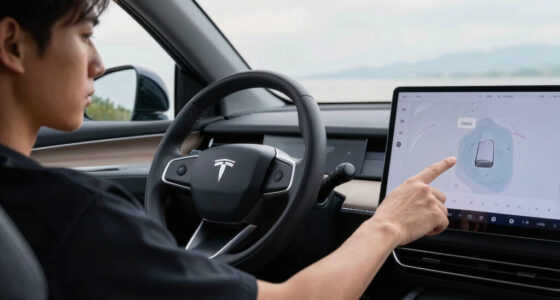
A windshield display could give automakers another way to deliver information without adding a conventional screen to the dashboard. Mercedes’ concept also points toward more digital content inside vehicles, with separate visual content for the driver and passenger. If introduced, it could change where drivers look for directions and alerts, while making the cabin feel more screen-heavy.
That raises a practical question: which projected information helps a driver, and which could distract? Mercedes’ description covers possible functions but does not explain what content would be available while the vehicle is moving, how drivers would control it, or what restrictions would apply. Those details matter because a display that occupies more of the windshield could compete with the road for attention, even if it can be turned off.
The technology is therefore relevant both as a potential interface change and as a safety and usability issue. The announcement is about a system Mercedes is considering, not evidence that the company has resolved those questions or committed to selling it.
Products Worth Considering

Meguiar's G55048 Ultimate Car Care Kit

Chemical Guys 10-Piece Car Wash Kit with Foam Gun

Autel MaxiScope MP608 4-Channel Automotive Oscilloscope
As an affiliate, we earn on qualifying purchases.
Windshield Displays Have Precedents
Projected information is already familiar in a more limited form through head-up displays, which place selected driving information in the driver’s line of sight. The Mercedes proposal would extend that idea across more of the windshield and could show content to passengers as well as drivers. The company says its angle-selective approach would keep the two viewing areas separate.
The concept also fits a wider interest in bringing digital content into cars, although it arrives amid questions about how many screens drivers actually want. The source report notes that Nissan design chief Alfonso Albaisa said in a 2024 interview that he expected the windshield to become a screen. Apple also filed a patent application for similar technology in 2023, according to The Drive; a patent filing does not establish that a product will be released.
Mercedes has previously promoted large cabin displays, including its Hyperscreen and Superscreen. The new concept suggests the company is exploring a different surface for digital information, but the announcement alone does not show that existing dashboard displays will be replaced.
““holographic optical elements””
— Mercedes-Benz, in its press release as described by The Drive
Production Plans Remain Unspecified
Mercedes has not identified a model, market, price or production timetable for the windshield display. It is also unclear whether the company has built a working vehicle prototype, how large the projected image could be, or what controls and content limits would apply while driving.
The automaker’s statements about sunlight visibility and separate viewing angles are company claims; the source material does not provide independent testing results. It also does not specify how the system would perform in different weather or lighting conditions, how it would affect visibility, or what safety and regulatory reviews would be required. Those questions remain open until Mercedes provides technical data or a production announcement.
Awaiting a Vehicle or Launch Date
The next concrete milestone would be a Mercedes announcement naming a production vehicle, giving a schedule, or describing a test program. Until then, the windshield system should be treated as a technology under consideration, not a feature confirmed for sale. Further information would also be needed on operating rules, driver controls, visibility testing and the status of the rear-window projection and EV power-converter concepts.
Key Questions
Has Mercedes-Benz confirmed the windshield display for a production car?
No. Mercedes described it as a technology it is considering for future production models. It has not named a vehicle or confirmed a launch.
How would the projected display work?
Mercedes says a dashboard-mounted projector would send light toward specially laminated windshield glass. Holographic optical elements in the glass would selectively reflect some wavelengths to form images.
What could the display show?
Mercedes has suggested navigation, points of interest and video. The company has not specified which content would be available while driving or how it would be controlled.
Would the driver see what the passenger sees?
Mercedes says the system can use viewing angles to keep the driver’s and passenger’s content separate. The source material does not include independent test results confirming how well that separation works.
When might the technology reach a Mercedes showroom?
No timing has been announced. The system remains a concept under consideration, with no confirmed model, price or release date.
Source: thedrive.com