
The best Honda Prelude performance parts depend on whether you want sharper handling, better cooling, or dependable maintenance rather than a single power shortcut. My best overall pick is the EVIL ENERGY Height-Adjustable Coilovers for drivers prioritizing adjustable suspension, while the Mishimoto Fan Shroud Kit stands out for cooling support and the EPARTS Strut Tower Brace Set offers a simpler chassis upgrade. These parts serve different goals, and fitment, installation demands, and the effect on daily comfort matter as much as the advertised performance benefit. Some upgrades change how the car feels; others mainly support reliability or maintenance. Read on for the full breakdown and a guide to matching each part to your Prelude and plans.

Get business pricing on garage and car supplies
- Business-only prices and quantity discounts
- Tax-exempt purchasing
- Multiple users, one account, clear invoices
Complete the kit


Key Takeaways
- EVIL ENERGY coilovers lead for adjustable handling, but suspension changes demand careful setup and may reduce ride comfort.
- Mishimoto’s fan shroud kit targets cooling, not engine power, so it makes more sense for cooling-system needs than a general performance build.
- EPARTS tower braces are a simpler chassis-focused upgrade than coilovers, though they cannot replace worn suspension components.
- The VMS pulley and plug wires address different engine priorities: rotating-mass changes versus ignition maintenance, with neither serving as a guaranteed power gain.
- The K&N fuel filter is a maintenance-oriented choice, while ECCPP and EVIL ENERGY coilovers warrant extra scrutiny of fitment, setup, and ride goals.
| Mishimoto Performance Aluminum Fan Shroud Kit for Honda Prelude, 1997–2001 |  | Best for Cooling Upgrades | Vehicle compatibility: Honda Prelude, 1997–2001 (title); Honda Accord, 1994–1997 (description) | Material: Aluminum | Included components: Fan shroud and two 12-inch slim electric fans | VIEW LATEST PRICE | See Our Full Breakdown |
| VMS Racing 10.2 mm High-Heat Spark Plug Wire Set for 1992–2001 Honda Prelude H22 DOHC VTEC, Red |  | Best for High-Heat H22 Builds | Compatibility: 1992–2001 Honda Prelude 2.2L H22 DOHC VTEC | Wire thickness: 10.2 mm | Core: Spiral core with Kevlar inner core | VIEW LATEST PRICE | See Our Full Breakdown |
| EPARTS Front and Rear Upper Strut Tower Brace Set for 1992–2001 Honda Prelude |  | Best Chassis-Bracing Value | Vehicle compatibility: 1992–2001 Honda Prelude | Included components: One front upper strut bar and one rear upper strut bar | Bar material: T-6061 aluminum | VIEW LATEST PRICE | See Our Full Breakdown |
| VMS Racing Lightweight Billet Aluminum Crankshaft Pulley for 1993–2001 Honda Prelude 2.2L DOHC VTEC |  | Best OEM-Belt Pulley Upgrade | Fitment: 1993–2001 Honda Prelude 2.2L DOHC VTEC H22A1 and H22A4 | Material: 6061-T6 billet aluminum | Finish: Matte gunmetal, hard-anodized | VIEW LATEST PRICE | See Our Full Breakdown |
| ECCPP Adjustable Coilover Struts for Honda Prelude (1992-2001) |  | Best for Adjustable Ride Height | Fitment: Honda Prelude, 1992–2001 | Position: Front and rear | Adjustment: Adjustable height with independent lower-mount adjustment | VIEW LATEST PRICE | See Our Full Breakdown |
| EVIL ENERGY Height-Adjustable Coilovers for Honda Prelude (1992–2001) | 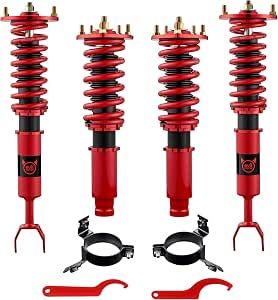 | Best for Ride-Height Tuning | Compatibility: Honda Prelude, 1992–2001 | Height adjustment: 1–3 inches | Structure: Twin-tube | VIEW LATEST PRICE | See Our Full Breakdown |
| K&N PF-1200 High-Performance Fuel Filter for 1988–2004 Honda and Acura Fuel-Injected Gasoline Engines |  | Best Routine Fuel-System Refresh | Model: PF-1200 | Compatible vehicles: 1988–2004 Honda and Acura fuel-injected gasoline engines | Construction: Heavy-duty steel canister | VIEW LATEST PRICE | See Our Full Breakdown |
More Details on Our Top Picks
Mishimoto Performance Aluminum Fan Shroud Kit for Honda Prelude, 1997–2001
I’d put this kit on the shortlist for a 1997–2001 Prelude build that needs a dedicated radiator-airflow upgrade. Its aluminum shroud and two 12-inch fans are intended to direct airflow through the radiator, while the listed 2,300 CFM capacity gives buyers a concrete airflow figure to compare. The lifetime warranty is another point of differentiation from the EPARTS strut brace set, which focuses on chassis response rather than temperature management. This is a supporting performance part, not an engine-power upgrade, and the supplied information does not quantify any cooling improvement on a particular car. I’d also verify fitment before ordering: the title names the Prelude, but the description lists a 1994–1997 Accord, and the two sets of dimensions conflict. Those mismatches make confirmation especially important.
Pros:- Includes a shroud and two 12-inch electric fans
- Listed airflow capacity of 2,300 CFM
- Aluminum construction
- Lifetime warranty
Cons:- Fitment information conflicts between the Prelude title and Accord description
- Overall size and item dimensions are inconsistent
- The listing does not quantify cooling results for a specific Prelude setup
Best for: 1997–2001 Prelude owners addressing cooling needs who can confirm the kit’s fitment and dimensions before purchase.
Not ideal for: Buyers who need unambiguous vehicle fitment or verified dimensions before ordering, since the listing gives conflicting application and size information.
- Vehicle compatibility:Honda Prelude, 1997–2001 (title); Honda Accord, 1994–1997 (description)
- Material:Aluminum
- Included components:Fan shroud and two 12-inch slim electric fans
- Airflow capacity:2,300 CFM
- Voltage:12 volts
- Noise level:50 dB
- Warranty:Lifetime
Our verdict“Choose this kit for a cooling-focused Prelude build only after confirming fitment and dimensions with the seller.”
VMS Racing 10.2 mm High-Heat Spark Plug Wire Set for 1992–2001 Honda Prelude H22 DOHC VTEC, Red
For a Prelude with the specified H22 DOHC VTEC engine, I’d favor this wire set when heat management around the ignition leads is a priority. Its 10.2 mm wires, Kevlar inner core, and silicone insulation rated up to 600°F target a harsher environment than a basic replacement set, including setups with headers. Sealed boots and triple-crimped terminals add useful detail at the connection points. Compared with the VMS Racing crankshaft pulley, this part addresses ignition wiring rather than rotating mass, so the choice depends on the build’s actual need. The major tradeoff is narrow application: it is listed for 1992–2001 2.2L H22 DOHC VTEC Preludes, not every engine or trim in that model span. The listing also does not quantify a power gain, so I’d treat it as a durable ignition component, not a standalone performance claim.
Pros:- Silicone insulation is rated for heat up to 600°F
- Kevlar inner core and six-layer construction
- Sealed boots with triple-crimped terminals
- Compatible with copper, iridium, and platinum spark plugs
Cons:- Fitment is limited to the listed H22 DOHC VTEC engines
- The listing does not provide a quantified performance gain
Best for: Owners of 1992–2001 Prelude 2.2L H22 DOHC VTEC models who need replacement ignition wires suited to a high-heat engine bay.
Not ideal for: Prelude owners with engines outside the specified H22 DOHC VTEC fitment, or buyers expecting a quantified horsepower increase from new wires.
- Compatibility:1992–2001 Honda Prelude 2.2L H22 DOHC VTEC
- Wire thickness:10.2 mm
- Core:Spiral core with Kevlar inner core
- Insulation:TC-1500-HS aerospace silicone
- Heat resistance:Up to 600°F
- Terminals:Sealed boots with triple-crimped terminals
- Part number:100-ERPWIWH22RD
Our verdict“Pick these wires for a correctly specified H22 Prelude exposed to high under-hood heat, not as a general-fit upgrade.”
EPARTS Front and Rear Upper Strut Tower Brace Set for 1992–2001 Honda Prelude
This set stands out for buyers who want to brace both ends of a 1992–2001 Prelude rather than upgrade a single area. It includes front and rear upper strut bars, with T-6061 aluminum bars and steel end plates, and is designed to reduce chassis flex during cornering. Compared with ECCPP’s adjustable coilover struts, the EPARTS set is a targeted chassis-bracing change, not a ride-height or suspension replacement; it may suit a driver who wants a handling-focused addition without changing spring and damper setup. The tradeoff is a less straightforward install: minor modification may be needed, and tools and instructions are not included. Professional installation is recommended in the product information, so I wouldn’t treat this as an easy bolt-on project unless I could confirm the mounting details and handle any required adjustments.
Pros:- Includes both front and rear upper strut bars
- T-6061 aluminum bars keep the brace construction lightweight
- Steel end plates provide the mounting interface
- Designed to reduce chassis flex and improve cornering stability
Cons:- Minor modifications may be required for installation
- Tools and installation instructions are not included
- Professional installation is recommended
Best for: Prelude owners seeking front-and-rear upper chassis bracing who have installation help or are comfortable checking and making minor fitment adjustments.
Not ideal for: Buyers wanting a fully documented, tool-included bolt-on job or a direct upgrade to ride height and damping.
- Vehicle compatibility:1992–2001 Honda Prelude
- Included components:One front upper strut bar and one rear upper strut bar
- Bar material:T-6061 aluminum
- End plate material:Steel
- Color:Silver
- Installation:Minor modification may be required
- Tools and instructions:Not included
Our verdict“Choose this set for a two-end chassis-bracing upgrade if you can accommodate an install that may need adjustment.”
VMS Racing Lightweight Billet Aluminum Crankshaft Pulley for 1993–2001 Honda Prelude 2.2L DOHC VTEC
I’d consider this pulley for a Prelude owner who wants a lighter crankshaft pulley while retaining factory-size belts. CNC-machined 6061-T6 billet aluminum and a hard-anodized finish distinguish it from the EPARTS strut brace set, which changes chassis bracing rather than an engine accessory component. The OEM-size design is intended to retain stock accessory speed, making it a more conservative fitment approach than a pulley that changes belt sizing or accessory ratios. Still, the listed weight is 2 lb 3 oz, and the product information does not provide the original pulley’s weight or quantify any power gain. That leaves the real-world benefit difficult to judge from the listing alone. Fitment is also specific to 1993–2001 2.2L DOHC VTEC H22A1 and H22A4 engines, so I’d confirm the engine code before ordering.
Pros:- CNC-machined 6061-T6 billet aluminum construction
- Uses factory/OEM-size belts
- OEM-size design retains stock accessory speed
- Hard-anodized matte gunmetal finish
Cons:- Fitment is limited to specified H22A1 and H22A4 engines
- The listing does not quantify performance gains
- No stock-pulley weight is supplied for comparison
Best for: 1993–2001 Prelude owners with an H22A1 or H22A4 who want a billet pulley that uses factory-size belts.
Not ideal for: Owners of other Prelude engines or buyers who need a documented power gain or a quantified weight reduction before choosing a pulley.
- Fitment:1993–2001 Honda Prelude 2.2L DOHC VTEC H22A1 and H22A4
- Material:6061-T6 billet aluminum
- Finish:Matte gunmetal, hard-anodized
- Weight:2 lb 3 oz
- Belt size:Factory/OEM size
- Manufacturer part number:100-ERPCP040
- Brand:VMS Racing
Our verdict“This pulley suits H22A1 and H22A4 owners who want a billet replacement with stock-size belt compatibility and modestly documented claims.”
ECCPP Adjustable Coilover Struts for Honda Prelude (1992-2001)
Among these five options, the ECCPP kit makes the broadest suspension change: it is a complete front-and-rear set with adjustable ride height and independent lower-mount adjustment. That setup is more relevant to stance and suspension tuning than the EPARTS strut brace bars, which target chassis flex but do not replace the struts. The product description also claims improvements to steering, braking, and cornering response, though it does not provide test figures or adjustment ranges. I’d treat those as intended outcomes rather than guaranteed results. At 47.4 pounds, the set is substantial to handle during installation, and fitment is limited to 1992–2001 Preludes. This is the pick for someone prepared to replace suspension components and set ride height, not for a buyer seeking a small, easily isolated handling add-on.
Pros:- Complete front-and-rear coilover strut set
- Adjustable ride height for stance customization
- Independent lower-mount adjustment is designed to change height without affecting stroke
- Product description targets improved steering response and reduced cornering roll
Cons:- The 47.4-pound set may be cumbersome to handle during installation
- Fitment is limited to 1992–2001 Honda Prelude models
- The listing does not specify an adjustment range or provide measured handling results
Best for: 1992–2001 Prelude owners planning a full front-and-rear strut replacement who want to adjust ride height for their setup.
Not ideal for: Drivers who want to retain their current struts, need a simpler chassis brace, or do not want to handle a 47.4-pound suspension kit during installation.
- Fitment:Honda Prelude, 1992–2001
- Position:Front and rear
- Adjustment:Adjustable height with independent lower-mount adjustment
- Item weight:47.4 pounds
- Product dimensions:25.79 × 18.11 × 8.07 inches
- Exterior color:Black
- Manufacturer part number:119002-5287-1340555533
Our verdict“Choose ECCPP if you want a full Prelude suspension replacement with adjustable height and are prepared for a substantial installation job.”
EVIL ENERGY Height-Adjustable Coilovers for Honda Prelude (1992–2001)
For Prelude owners who want to change ride height as well as suspension setup, this kit’s 1–3-inch adjustment range gives it a clearer role than the fixed-fit upgrades in this roundup. Its twin-tube construction is intended to favor comfort on uneven roads, while the listed spring rates—10 kg/mm front and 5 kg/mm rear—provide a firmer setup than a basic replacement suspension. Compared with the ECCPP Adjustable Coilover Struts, this kit is described with specific spring rates and fatigue-life information, which gives buyers more detail when comparing setups. The tradeoff is that fitment still needs checking against the exact Prelude, and professional installation is recommended. Choose it for adjustable stance and a stated comfort focus, not as a substitute for verifying handling characteristics or professional setup.
Pros:- Adjustable ride height provides 1–3 inches of range
- Twin-tube design is intended to improve comfort on uneven roads
- Heat-treated steel springs have an anti-corrosion coating
- Lists front and rear spring rates and spring fatigue life
Cons:- Professional installation is highly recommended
- Fitment should be verified for the specific vehicle before purchase
- The product data does not specify damping adjustment
Best for: Prelude owners from 1992–2001 who want adjustable ride height and are prepared to verify fitment and arrange professional installation.
Not ideal for: Drivers seeking a straightforward, do-it-yourself replacement or a suspension upgrade with independently stated handling performance.
- Compatibility:Honda Prelude, 1992–2001
- Height adjustment:1–3 inches
- Structure:Twin-tube
- Front spring rate:10 kg/mm (560 lbs/in)
- Rear spring rate:5 kg/mm (280 lbs/in)
- Spring lengths:Front: 200 mm; rear: 180 mm
- Spring fatigue life:60,000+ cycles
- Material and finish:Steel with anti-corrosion coating; red
Our verdict“Choose this kit if adjustable Prelude ride height is your priority and you can confirm fitment and have it professionally installed.”
K&N PF-1200 High-Performance Fuel Filter for 1988–2004 Honda and Acura Fuel-Injected Gasoline Engines
The PF-1200 is a maintenance-focused choice for a fuel-injected Prelude: its pleated filter media is designed to capture contaminants while maintaining fuel flow, helping protect downstream fuel-system components. Unlike the EVIL ENERGY coilovers, which change suspension height and setup, this filter addresses routine fuel-system protection rather than chassis performance or stance. Its heavy-duty steel canister and stated OEM-replacement standard make it a practical option when replacing a compatible factory-style filter, but the broad Honda and Acura application range is not proof of fit for every Prelude. Check the exact year and engine application before ordering. The three-month warranty is a limitation, and the product information does not claim a power increase, so I’d treat it as a replacement-maintenance part—not a horsepower upgrade.
Pros:- Pleated media is designed to capture fuel contaminants
- Designed to maintain consistent fuel flow
- Heavy-duty steel canister construction
- Designed to meet or exceed OEM replacement standards
Cons:- Compatibility is limited to specified Honda and Acura fuel-injected gasoline engines
- Three-month warranty is limited
- Does not claim a horsepower or other performance gain
Best for: Prelude owners with a compatible fuel-injected gasoline engine who are replacing a worn fuel filter as part of routine maintenance.
Not ideal for: Buyers seeking a measurable power upgrade, or owners who have not confirmed that their exact Prelude application matches the listed compatibility.
- Model:PF-1200
- Compatible vehicles:1988–2004 Honda and Acura fuel-injected gasoline engines
- Construction:Heavy-duty steel canister
- Filter media:Pleated media
- Outer material:Alloy steel
- Diameter:2.44 inches
- Weight:0.25 kg
- Warranty:3 months
Our verdict“Pick the PF-1200 for compatible Prelude fuel-filter maintenance, not as a performance part intended to increase engine output.”
How We Picked
I ranked these seven parts by the job they can reasonably do on a Prelude: affect handling, support cooling, maintain ignition or fuel delivery, or alter engine response. I weighed application fitment, likely installation complexity, usefulness to a real owner, and the tradeoff between performance intent and daily drivability. A part that addresses a clear need ranks ahead of one whose benefit depends heavily on setup or expectations.
The order also reflects how directly each product serves a performance goal, not a claim that every Prelude needs all seven. Adjustable suspension earns the top position for its broad impact on handling, while cooling and chassis bracing follow as more targeted upgrades. Ignition, pulley, and fuel-filter choices rank lower because their benefits depend more on vehicle condition, supporting modifications, and correct installation. I treat exact year, engine, and configuration checks as essential before purchase.
Factors to Consider When Choosing Best Honda Prelude Performance Parts
Prelude upgrades work best as a plan rather than a pile of parts. Before choosing, decide whether your priority is cornering, temperature control, engine response, or dependable operation, then check the car’s condition and exact configuration.
Start With the Car’s Condition
A performance part cannot compensate for tired dampers, leaking hoses, worn mounts, or neglected service items. Inspect the suspension, cooling system, ignition, and fuel delivery before adding upgrades, since existing faults can hide the effect of new parts. On an older Prelude, restoring baseline function may produce a more noticeable improvement than changing a functioning component. Keep a record of current symptoms and service history so you can tell whether a new part addresses a real problem. I would prioritize repairs before modifications when the car has inconsistent handling, overheating, or misfires. This approach also reduces the chance of blaming a new part for an issue that was already present.
Match the Upgrade to Your Driving Goal
Choose parts by outcome, not by a broad “performance” label. Coilovers and tower braces relate to chassis behavior, while a fan shroud supports airflow management and a fuel filter belongs to the delivery and maintenance side of the car. Ignition wires are most relevant when their condition or compatibility calls for replacement; a lightweight pulley is a more specialized choice whose effect depends on the engine setup. Decide whether you want a measurable handling change, stronger reliability, or a refresh of aging components. Combining unrelated parts without a goal can add cost and installation work without creating a cohesive result. A clear priority also helps you judge whether an upgrade has delivered what you wanted.
Check Year, Engine, and Configuration Carefully
Prelude parts may vary by generation, engine, trim, and existing modifications, so a broad model-year range is only a starting point. Confirm the product listing against your car’s exact year and engine code, then check connector, mounting, and routing details where applicable. This matters particularly for engine-bay parts, where small differences can affect fit or installation. Suspension listings also deserve scrutiny: verify the intended chassis and ask whether any supporting hardware or alignment work is needed. Do not assume that a part advertised for several Prelude years fits every configuration without changes. If the seller’s application details are unclear, resolve that before ordering rather than relying on the product name alone.
Budget for Setup, Not Just the Part
Suspension upgrades can call for professional installation, alignment, and later adjustments, so the purchase itself is only part of the commitment. A changed ride height can affect tire wear, clearance, and how the car behaves on rough roads. Braces may be easier to understand as a chassis addition, but they still need correct mounting and should not be treated as a fix for worn bushings or dampers. Engine-bay parts can also require tools, access, or mechanical knowledge that vary by owner. Before choosing a part, account for labor and any follow-up work that protects handling and reliability. Spending more may make sense when the product better matches your intended use or installation needs, not simply because it carries a performance label.
Balance Handling Gains Against Daily Comfort
More adjustment does not automatically mean a better street car. A firm or poorly set suspension can make daily roads less comfortable and may reduce grip on uneven surfaces, even if the car feels more controlled on smooth pavement. Think about commute length, road quality, passenger use, and whether the Prelude sees track days before selecting adjustable suspension. A brace can be a less involved way to pursue chassis feel, but its effect will not be equivalent to replacing or tuning the suspension. If you need one car for varied use, favor a setup with practical adjustment range and a clear path to alignment. Owners focused on occasional spirited driving may value a different balance than those chasing maximum adjustability.
Treat Maintenance Parts and Power Parts Differently
A fuel filter or ignition-wire set can support consistent operation, but replacement should follow fitment and condition rather than an assumption of extra horsepower. A pulley marketed as lightweight is a modification, not a substitute for diagnosing engine performance problems. Keep receipts and note installation details, especially when a part changes engine accessories or service access. If the car is used daily, consider how easy the part is to inspect and replace later. Avoid stacking several changes at once, since that makes troubleshooting more difficult if drivability changes. For an older Prelude, a sound maintenance baseline often gives performance upgrades a better foundation.
Frequently Asked Questions
Which of these parts should I buy first for a street-driven Prelude?
Start with the car’s condition and the problem you want to solve rather than choosing by part category alone. If the suspension is worn, repair or replace the affected components before adding braces or pursuing a new setup. If cooling performance is the concern, inspect the cooling system and confirm the fan arrangement before considering the Mishimoto shroud. For a car running well with no specific fault, the EPARTS brace set offers a more focused chassis route than immediately changing the suspension. The best first purchase is the one that addresses a confirmed need and fits your exact model.
Are coilovers a better handling upgrade than strut tower braces?
They serve different roles, so neither is a universal substitute for the other. Coilovers change the suspension setup and can affect ride height, comfort, and alignment, making them the more involved choice. Tower braces connect structural points and aim to support chassis rigidity, but they do not refresh worn dampers or control suspension motion. If the car needs suspension repair or tuning, address that first; if the suspension is healthy and you want a more limited chassis addition, a brace may suit your plan. The choice depends on the behavior you want and how much setup work you are prepared to take on.
Will a lightweight crankshaft pulley add noticeable power to my Prelude?
A lightweight pulley is not a dependable shortcut to a large power increase, and the result can depend on the engine and accessory setup. Treat the VMS pulley as a specialized modification rather than a replacement for maintenance or engine tuning. Before buying, confirm compatibility with your exact engine and review whether installation affects accessory operation or service requirements. Drivers seeking a clear improvement in handling or cooling may find the coilovers or fan shroud more directly matched to those goals. If the engine has unresolved drivability issues, diagnose those before changing rotating components.
Can I install these parts myself, or should I plan for a shop?
Installation difficulty varies widely across this group, and your tools and mechanical experience matter. Suspension work usually calls for careful assembly and a follow-up alignment, so a shop may be the sensible choice if you lack the right equipment or setup knowledge. Engine-bay components can be more accessible, but incorrect fitment or routing can create new problems. Read the instructions and confirm required tools before purchase, then include labor in your decision. A professional installation is particularly useful when the part changes ride height, alignment, or a system tied to engine operation.
Should I replace the fuel filter or ignition wires as a performance upgrade?
These parts are better viewed as maintenance or condition-dependent replacements than guaranteed power upgrades. A clogged filter or failing ignition wires can contribute to poor running, so replacing a faulty component may restore normal operation. If the existing parts are functioning correctly, a new filter or wire set may not create a change you can feel. Confirm the K&N filter’s application and the VMS wire set’s engine fitment before ordering. For a Prelude with misfires or fuel-delivery symptoms, diagnosis should come before swapping parts at random.
Conclusion
For a single broad handling-focused pick, I recommend the EVIL ENERGY Height-Adjustable Coilovers as best overall, provided you are ready for setup and alignment work. The EPARTS Strut Tower Brace Set is my best value-style chassis choice for owners seeking a more limited upgrade, while the Mishimoto Fan Shroud Kit is the premium-leaning option for a specific cooling goal. Beginners should start with fitment checks and maintenance needs; the K&N fuel filter or VMS plug wires make sense only when the car’s condition or service plan calls for them. For a targeted engine modification, consider the VMS lightweight pulley only after confirming compatibility and understanding its narrower role. Choose based on the Prelude’s actual needs, not the number of performance parts you can add at once.